Colorado Travel Enters Wild New Era With Stunning High Altitude Land Bridge Experience

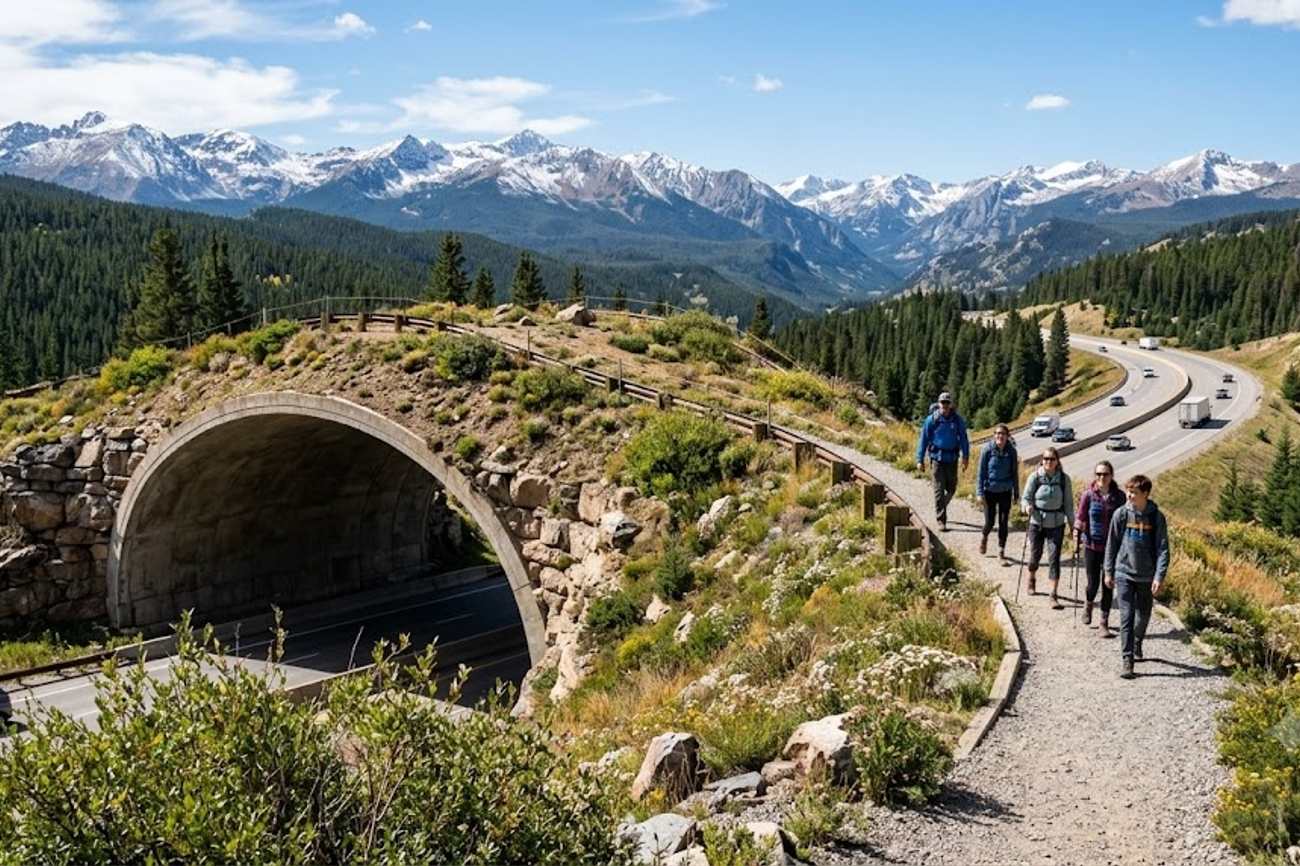
Image generated by AI
Adventure tourism in the United States has shifted from curated sightseeing to high-risk, high-reward wilderness exploration, with Colorado seeing a marked increase in "extreme" trail traffic. While traditional national park visits often center on accessible vistas, the rise of destinations like Devil’s Causeway—where trails narrow to just 3-4 feet at 11,800 feet—signals a pivot toward "challenge-based" travel. This movement mirrors a broader industry trend where travelers are trading comfort for authenticity and physical exertion.
The High-Altitude Pivot: Devil’s Causeway in Numbers
The data surrounding the Devil’s Causeway trail in the Flat Tops Wilderness reveals a specific profile of the modern adventure traveler. This is no longer a casual excursion; it is a technical undertaking defined by precise physical parameters. The route constitutes a 10-mile loop with a total elevation gain of nearly 2,000 feet. The primary draw is the natural land bridge, a rocky ridge that reaches an altitude of 11,800 feet and narrows to a width of only 3 to 4 feet in critical sections.
From a data perspective, the attraction of this site lies in its "exposure"—the steep mountain drops on either side of the narrow ridge. This specific geographic feature transforms a standard hike into a psychological challenge, contributing to a growing market segment of travelers who seek "adrenaline-adjacent" nature experiences. According to data from the World Travel & Tourism Council (WTTC), the demand for experiential travel has surged as consumers move away from passive tourism. In the context of Colorado, this manifests as a migration from the overcrowded corridors of Rocky Mountain National Park toward remote zones like the Flat Tops Wilderness.
Comparative Context: The Shift to Remote Wilderness
The transition from "scenic" to "extreme" hiking can be analyzed by comparing the infrastructure and visitor intent of traditional Colorado landmarks versus remote wilderness areas. Historically, Colorado tourism was anchored by accessible hubs; however, the current trajectory shows a preference for isolation and "raw" environments.
The following table compares the characteristics of traditional scenic tourism against the emerging "Extreme Wilderness" trend exemplified by Devil’s Causeway.
| Metric | Traditional Scenic Tourism (e.g., Garden of the Gods) | Extreme Wilderness Trend (e.g., Devil’s Causeway) |
|---|---|---|
| Average Trail Width | 5 - 15 feet (Paved/Gravel) | 3 - 4 feet (Exposed Ridge) |
| Altitude Profile | Low to Mid-range | High Alpine (11,800 ft) |
| Infrastructure | High (Visitor Centers, Paved Lots) | Low (Remote Wilderness, Limited Services) |
| Visitor Motivation | Sightseeing & Photography | Physical Challenge & Isolation |
| Risk Profile | Low/Managed | High (Rapid Weather Shifts, Exposure) |
| Environmental Impact | High Concentration/High Wear | Low Concentration/Fragile Ecosystems |
This shift is part of a larger regional movement. While the UN Tourism (UNWTO) reports a global increase in nature-based tourism, the U.S. market is seeing a specific divergence: the "over-tourism" of primary hubs is pushing a demographic of experienced hikers into "Tier 2" and "Tier 3" wilderness areas. The Flat Tops Wilderness, characterized by its massive plateaus and alpine lakes, serves as a primary beneficiary of this redistribution of foot traffic.
Practical Traveler Advisory and Strategic Insights
The data suggests that the window for "undiscovered" wilderness is closing as these remote sites gain visibility. For those planning a trip to northwestern Colorado, the following actionable strategies are grounded in the environmental and logistical data of the region:
- Altitude Acclimatization is Mandatory: With the trail peaking at 11,800 feet, travelers arriving from sea level face significant oxygen reduction. To avoid altitude sickness, a 48-hour acclimation period at a mid-range elevation (6,000–8,000 feet) is recommended before attempting the 2,000-foot climb.
- Temporal Windowing: Mountain weather in the Flat Tops is volatile. Data on alpine storm patterns indicates that afternoon lightning and sudden temperature drops are common. Travelers should initiate the 10-mile loop at dawn to ensure the exposed ridge crossing is completed before the typical 2:00 PM storm window.
- Equipment Calibration: Because the path narrows to 3-4 feet, footwear with high lateral stability and superior grip is non-negotiable. Standard walking shoes are insufficient for the exposed rocky ridges.
- Logistical Independence: Unlike national parks, the Flat Tops Wilderness offers minimal services. Travelers must carry 100% of their hydration and navigation tools, as emergency response times in these remote zones are significantly longer than in developed tourist areas.
Forward Projection: The Future of Adventure Tourism
Based on current market movements, we are entering an era of "Niche Extreme" travel. The popularity of Devil’s Causeway is not an isolated incident but a blueprint for how wilderness areas will be marketed and consumed. We expect to see a rise in "technical tourism," where travel agencies begin offering specialized preparation packages—including altitude training and navigation workshops—specifically for these high-exposure routes.
Furthermore, as IATA tracks the recovery and growth of international arrivals, we anticipate a surge in European and Asian "adventure seekers" targeting the American West. This will likely lead to a clash between the "Leave No Trace" principles essential for the fragile 11,800-foot alpine tundra and the increasing volume of visitors. The trajectory suggests that the U.S. Forest Service may eventually implement permit systems for high-exposure ridges to prevent environmental degradation and ensure visitor safety.
The growth of the Flat Tops Wilderness as a destination indicates that the "authentic" travel trend is moving toward the fringes of the map. The value proposition has shifted from "I saw the mountain" to "I conquered the ridge."
FAQ: Colorado Wilderness Trends 2025
Will hiking permits be required for Devil’s Causeway soon? While not currently mandatory for all, the trend toward managing "over-tourism" in remote areas suggests that permit systems are likely as foot traffic increases to protect the fragile alpine tundra.
Is this trail suitable for intermediate hikers? No. Due to the 11,800-foot elevation, 2,000-foot gain, and 3-4 foot narrow ridges, this is classified as an extreme experience. It requires high confidence with heights and previous high-altitude experience.
When is the best time to visit the Flat Tops Wilderness? The peak window is mid-summer to early autumn. This avoids the heavy winter snowpack and provides the best opportunity to see the seasonal wildflowers mentioned in regional ecological reports.
Which gear is most critical for the ridge crossing? High-traction hiking boots and a reliable GPS/topographic map. Because the trail is in a remote wilderness area, cellular service is unreliable, making traditional navigation tools essential for safety.
The era of the tourist is ending; the era of the challenger has begun.
Related Travel Guides
- Cheyenne Autumn Spark Puts Wyoming Makers in the Little America Fall Festival Spotlight
- Cambodia Showcases Angkor Equinox Tourism Spectacle With More than Ten Thousand Participants Celebrating its Heritage
- UK Joins New Zealand and More Global Markets as Darwin Welcomes 300 International Travel Agents for Tourism Push: What You Need to Know
This article is for informational purposes. Flight routes, passenger regulations, visa rules, and transit advisories are subject to change by airlines and aviation authorities. Readers are advised to verify schedules and travel documentation with relevant carriers and border agencies before departure.
Related Stories

Zen Awakening Festival 2026: Florida's Transformational Music, Mindfulness, and Arts Gathering in Fruitland Park

Thailand Tourism Slowdown Tests Small Businesses as Kingdom Pivots to High-Yield Travel and Secondary Provinces