
China Tourism Defies Global Energy Crisis with 2026 Inbound Surge: How Beijing Surmounts Strait of Hormuz Tensions and Rising Oil Prices to Link Europe and Asia via Resilient High-Speed Rail
China's tourism sector has recorded an unprecedented surge in inbound arrivals in early 2026, as relaxed visa policies and a massive high-speed rail network offer a resilient alternative to global energy crisis volatility.

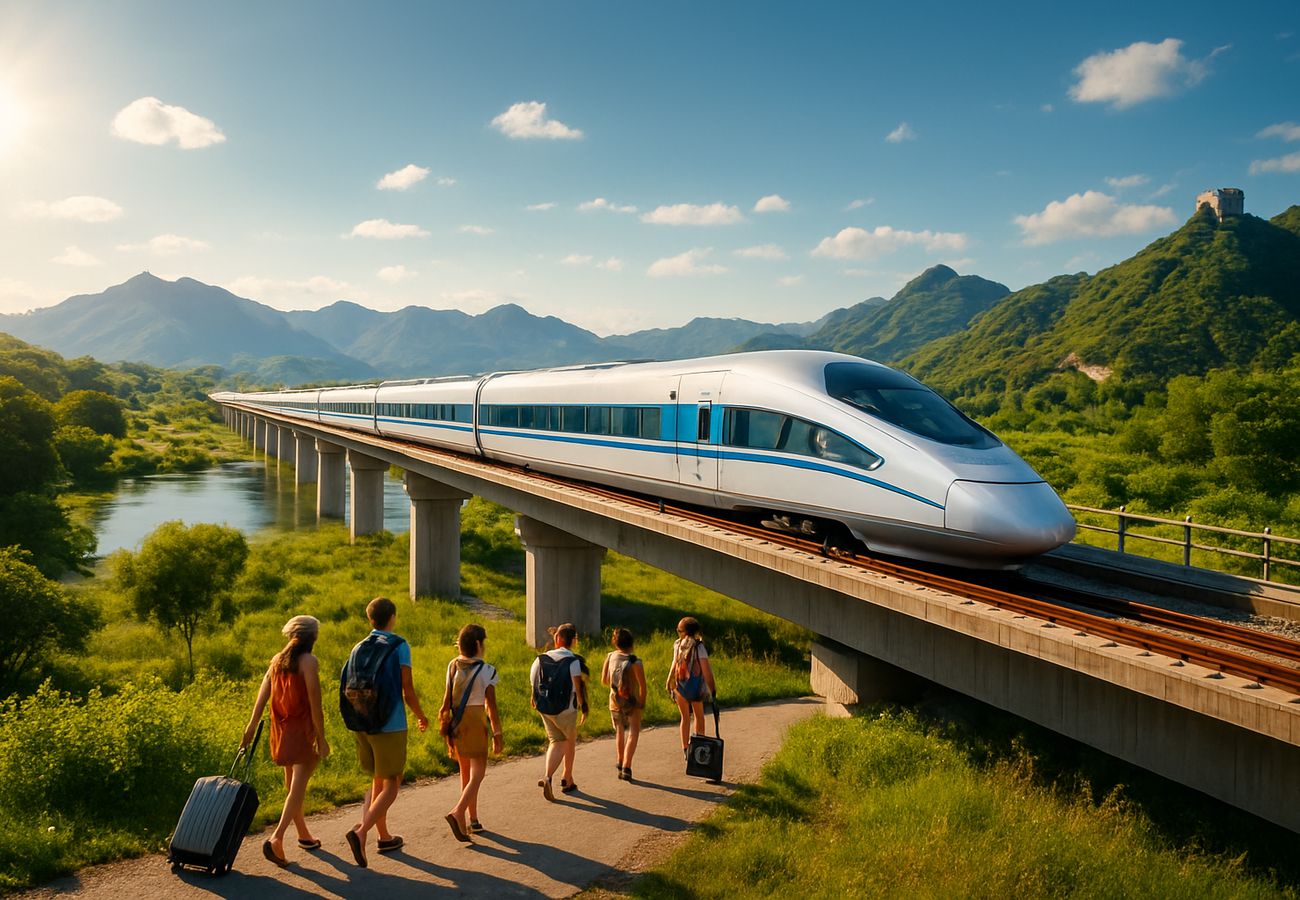
Image generated by AI
Quick Summary
- Arrivals Surge: China recorded a massive uptick in inbound travelers in Q1 2026, driven by a 15-day visa-free policy for 48 countries.
- HSR Dominance: The country is leveraging its High-Speed Rail (HSR) network to offer "low-carbon, low-cost" travel as the global energy crisis inflates aviation overheads.
- Energy Defiance: Growth continues despite the US-Iran conflict and Strait of Hormuz tensions, which have disrupted global maritime and aviation fuel supply chains.
- Expert Insight: Li Huixin, Head of China’s Tourist Office in Budapest, highlights the "long-term trend" of European travelers pivoting toward the Middle Kingdom.
- Strategic Links: Improved air connectivity between Budapest, Beijing, and Shanghai is anchoring the Europe-China corridor.
- Sustainability Goal: Managing the influx at sites like Jiuzhaigou Valley remains a priority for sustainable growth through 2027.
- Source: Exclusive Interview with China National Tourist Office (CNTO), May 7, 2026.
BUDAPEST — In a year defined by the most severe global energy crisis in decades, China’s tourism sector has emerged as the resilient anchor of the Asian travel market. According to breaking reports and an exclusive interview with Li Huixin, Head of China’s Tourist Office in Budapest, on May 7, 2026, the surge in inbound arrivals is nothing short of monumental. This growth is being analyzed by senior global affairs journalists as a vital strategic pivot, occurring precisely as Gulf tensions and the threat of a Strait of Hormuz closure send oil prices to record highs and disrupt traditional long-haul corridors.
Expanded Overview: The Visa-Free Revolution and HSR Resilience
The catalysts for China’s 2026 tourism boom are a combination of radical policy reform and massive infrastructure efficiency. While the US-Iran conflict has led to significant airspace closures and a spike in aviation fuel costs, China’s 15-day visa-free entry for citizens of 48 countries has lowered the primary barrier to entry. Li Huixin observes that this is not merely a post-pandemic recovery, but a fundamental restructuring of how Europe and Asia interact. "The convenience factor is the ultimate currency," says Li. By bypassing the high costs of aviation through a reliance on its internal high-speed rail (HSR) network, China is offering a "resilient sanctuary" for travelers.
Geopolitical Context: Navigating the Strait of Hormuz and Belt and Road Synergy
The broader geopolitical landscape in 2026 has been dominated by the standoff in the Strait of Hormuz. As Saudi Arabia, the UAE, and Qatar work to stabilize global energy flows, the resulting volatility has made traditional maritime and aviation routes more expensive. China, however, has capitalized on its "One Belt One Road" land-based connectivity. By maintaining stable infrastructure and investing in regional synergy, the country has shielded its tourism sector from the worst of the shipping disruptions currently plaguing the global maritime corridors.
Global Energy Impact: High-Speed Rail as a "Low-Fuel" Alternative
Rising oil prices have fundamentally redrawn the travel map for 2026.
- The HSR Advantage: China’s massive high-speed rail network allows travelers to traverse the country with a fraction of the energy cost of short-haul flights.
- Energy Efficiency: By prioritizing rail travel, China has reduced its tourism sector's vulnerability to global fuel price shocks, making it a more affordable destination for the European middle class.
Shipping and Trade Impact: Digital Transformation and Trade Resilience
The ongoing shipping disruption in global trade routes has made the import of standardized hospitality goods more difficult. China has countered this by:
- Localized Hospitality: Utilizing its domestic manufacturing and tech infrastructure to ensure that the tourist experience remains seamless and high-tech.
- Belt and Road Trade: Leveraging land-based trade routes to ensure that its cultural and educational tourism assets remain fully supplied.
Regional Impact: The Pivot of high-spending travelers
Interestingly, travelers from the Gulf States—including Saudi Arabia, the UAE, and Qatar—are increasingly viewing China as a stable, high-tech sanctuary.
- Gulf Integration: As these nations navigate the global energy crisis, high-net-worth travelers are seeking "fortress" destinations that offer a mix of historic culture and futuristic modernism.
- European Growth: Hungary, in particular, has seen a marked increase in Chinese tourist arrivals, with direct flights from Budapest to Beijing and Shanghai opening up new opportunities for the Central European market.
Industry / Expert Analysis: Why China Matters Globally
Aviation and tourism analysts at Reuters and Bloomberg suggest that China’s 2026 performance is a signal of the "Asian Resilience." In an era where the US-Iran conflict makes certain global hubs unpredictable, travelers are prioritizing destinations that offer authenticity, stability, and high-tech efficiency. Li Huixin projects that by 2027, China will become one of the top 5 destinations for European tourists, proving that streamlined policy and resilient infrastructure are the ultimate hedges against global uncertainty.
What Happens Next: Scenarios for the 2027 Integration
As we move toward 2027, several key developments will shape the sector:
- Sustainable Management: Implementing strict visitor limits and eco-friendly practices at sites like Jiuzhaigou Valley and mountain regions.
- Digital Integration: Utilizing China’s advanced tech infrastructure to create a "zero-barrier" travel experience for international visitors.
- Global Connectivity: Expanding the visa-free policy to more countries and increasing the frequency of trans-continental air and land routes.
Conclusion: Reinforcing the Global Risk and Asian Reward
China’s tourism surge in 2026 is a testament to the power of resilience in a world of shipping disruptions and oil price volatility. By surmounting the challenges of the US-Iran conflict and the geopolitical shadow of the Strait of Hormuz, the nation has proven that infrastructure and policy are the ultimate travel currencies. As the world watches the Middle East, China stands as a beacon of stability, proving that cultural heritage and modern efficiency are the keys to a thriving future.
Key Takeaways: China Tourism 2026
- Growth: Massive surge in inbound arrivals (Q1 2026).
- Policy: 15-day visa-free entry for 48 countries.
- Resilience: Success achieved despite the global energy crisis and shipping disruptions.
- Anchor: High-speed rail as an energy-efficient alternative to aviation.
- Links: Improved air connectivity (Budapest, London, Paris, Berlin).
- Goal: China as a Top 5 European destination by 2027.
Related Tourism Reports
Disclaimer
This article is for informational and educational purposes only. It does not constitute legal, financial, or professional advice. While we strive to provide accurate and up-to-date information, travel policies, regulations, and conditions change rapidly. Always verify information with official sources before making travel decisions. Nomad Lawyer makes no representations about the accuracy, reliability, completeness, or suitability of the information provided. Readers should consult qualified professionals for advice specific to their circumstances. The views expressed in this article are those of the author and do not necessarily reflect the views of Nomad Lawyer.
Kunal K Choudhary
Co-Founder & Contributor
A passionate traveller and tech enthusiast. Kunal contributes to the vision and growth of Nomad Lawyer, bringing fresh perspectives and driving the community forward.
Learn more about our team →