China's G331 Border Highway: The Complete 1,240-Kilometer Jilin Frontier Road Trip Guide

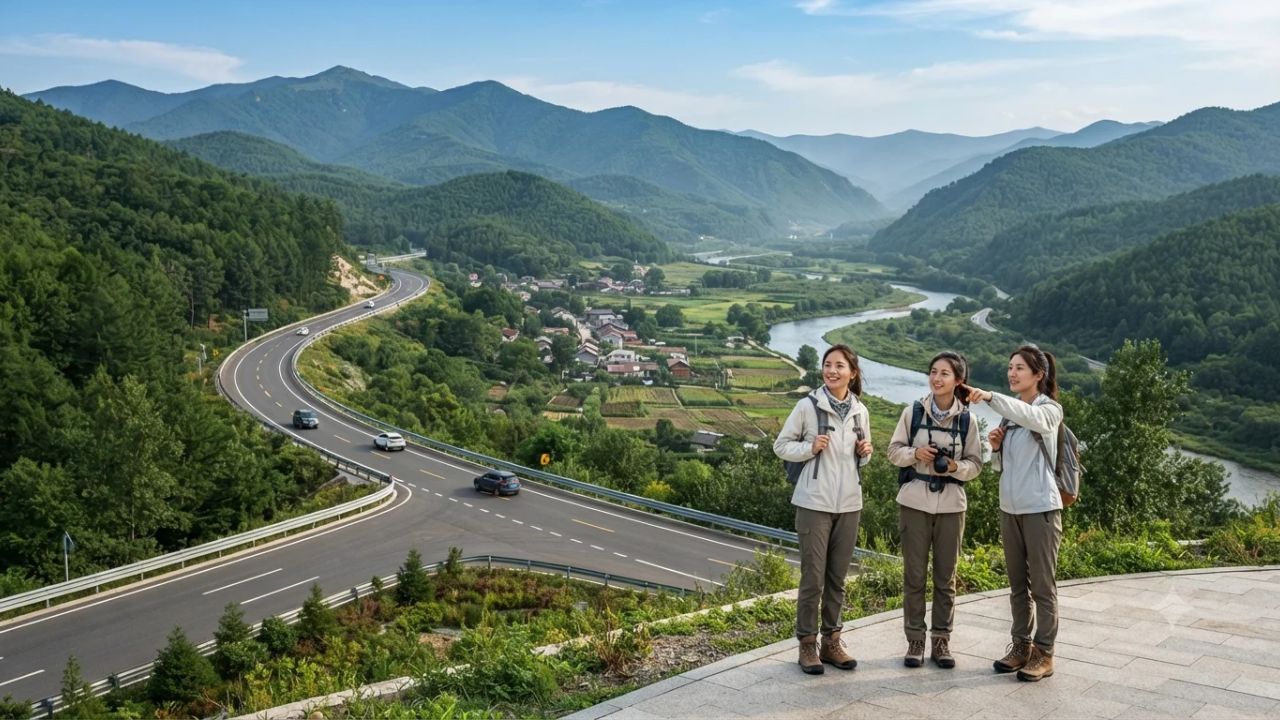
Snaking 1,240 kilometers along China's northeastern perimeter, the newly paved Jilin section of the G331 National Highway connects 216 riverfront villages, 12 border ports, and 45 scenic zones rated AAA-level or above without departing the banks of the Yalu and Tumen rivers. Once a collection of disconnected gravel tracks and impassable mountain switchbacks, this frontier corridor has opened one of East Asia's most dramatic self-drive routes, drawing over 307,000 vehicles during its inaugural combined Mid-Autumn Festival and National Day holiday with peak single-day volumes reaching 50,100 vehicles.
The route anchors a monumental national transit initiative. Alongside the western G219 highway and the coastal G228 artery, the G331 forms part of a continuous 26,000-kilometer perimeter road network tracing China's terrestrial frontiers and coastlines. In Jilin Province, the highway weaves between ancient kingdom tombs, volcanic peaks, Korean ethnic autonomous townships, and the tri-border wetlands where China, Russia, and North Korea meet.
The 1,240-Kilometer Frontier Corridor: From Ji'an to Hunchun
The Jilin segment of the G331 ribbons through 10 county-level administrative divisions, providing an engineered asphalt corridor through terrain that historically isolated provincial border hamlets. Traveling from southwest to northeast, the route follows the natural river borders dividing China from the Korean Peninsula before terminating at the Sea of Japan watershed.
The corridor links two distinct anchor hubs:
| Highway Sector & Hub | Regional Geography | Cultural & Travel Highlights |
|---|---|---|
| Western Portal: Ji'an | Lower Yalu River valley | UNESCO Koguryo tombs, ancient stone pyramids, temperate vineyards |
| Central Highlands | Changbai Mountain volcanic range | Heavenly Lake crater, virgin birch forests, volcanic hot springs |
| Yanbian River Valleys | Mid-Tumen River basin | Korean ethnic culture, traditional tile-roof villages, cold noodle craft |
| Eastern Terminus: Hunchun | Tri-border delta (China-Russia-DPRK) | Record 754,000 port passengers in 2025, Fangchuan observation tower, Russian wellness retreats |
At the western gateway in Ji'an, the highway traces lush river bends beneath terraced orchards. As the road ascends into the volcanic highlands of the Changbai Mountains, drivers pass through dense pine and birch forests that turn brilliant shades of crimson and gold in early autumn. Reaching the eastern plains of the Yanbian Korean Autonomous Prefecture, the route follows the Tumen River into Hunchun, Jilin's sole land-port city connected directly to the Russian Far East.
In 2025, cross-border passenger traffic through Hunchun Port hit a record 754,000 crossings, cementing the city's role as a regional crossroads where Russian language signs, Cyrillic menus, traditional Korean folk traditions, and northeastern Chinese culinary culture converge.
What Makes the G331 Frontier Route Unique
Driving the G331 offers an intimate view of borderland life that generic highway travel misses. Unlike heavily developed tourist circuits, the communities along the Yalu and Tumen rivers have preserved distinct architectural traditions and agricultural practices.
Along the riverbanks, motorists can spot traditional timber farmhouses, ancient stone watchtowers, and fishermen navigating flat-bottom wooden skiffs. In Ji'an, travelers can walk among the stone burial chambers and fortress remnants of the Capital Cities and Tombs of the Ancient Koguryo Kingdom, recognized by the UNESCO World Heritage Centre for their exceptional stone masonry and subterranean wall murals.
Toward Hunchun, the travel experience shifts toward health tourism and multicultural markets. Russian travelers regularly visit Hunchun's specialized medical centers and hot spring resorts for traditional Chinese therapies, while local night markets serve spicy Yanbian beef skewers, iced buckwheat noodles (naengmyeon), and fresh seafood harvested from nearby coastal waters.
Detailed regional route maps and driving regulations can be reviewed through the official China National Tourist Office portal before planning a self-drive itinerary.
Visitor Insider Tips for Driving the G331
Navigating a 1,240-kilometer frontier highway through mountainous borders requires smart preparation:
- Target the Golden Autumn Window: The optimal time to drive the G331 is between September 15 and October 10. During these weeks, the Changbai Mountain forests display dazzling red and amber foliage, and river valley weather remains crisp and dry before early sub-zero winter freezes arrive in late October.
- Rental Car and Navigation Strategy: Pick up your rental vehicle at Changchun Longjia International Airport or Yanji Chaoyangchuan Airport. Ensure your GPS navigation app (such as Amap or Baidu Maps) has offline regional map packs downloaded, as mobile data signals can drop along deep river canyons.
- Respect Sensitive Border Etiquette: Because the G331 runs directly parallel to international boundary rivers, avoid flying recreational camera drones near the riverbanks. Always carry your original passport and Chinese visa, as police checkpoints are positioned at county intersections and bridge crossings.
- Base Yourself in Autonomous Korean Hamlets: Instead of staying in standard concrete city hotels, book nights in traditional hanok-style rural homestays in Yanbian villages. Sleep on heated stone floors (ondol) and enjoy farm-to-table breakfast sets featuring house-made kimchi, wild mountain fern shoots, and soybean paste stew.
- Explore the Tri-Border Point at Fangchuan: Visit the Fangchuan Scenic Area south of Hunchun. From the Dragon Tiger Pavilion observation platform, you can gaze across the Tumen River to see Russian rail tracks, North Korean mountain ridges, and the sparkling horizon of the Sea of Japan.
Cultural and Environmental Context of the Northeast Frontier
The expansion of the G331 highway has revitalized 216 rural border hamlets that previously suffered from youth outmigration. By converting unused village dwellings into boutique guesthouses and opening roadside cooperatives for wild forest mushrooms, ginseng, and river honey, the road provides young residents with compelling economic reasons to remain in their ancestral towns.
The highway's design also reflects strict ecological protections around the Changbaishan Biosphere Reserve. Elevated viaducts and fenced wildlife corridors ensure that Siberian tigers, Amur leopards, and native sika deer can migrate freely across their historic mountain ranges without highway fragmentation.
Community-led tourism associations in border towns like Helong and Tumen actively promote sustainable waste management along the river corridors, ensuring that surging self-drive visitor traffic does not compromise pristine water quality in the Yalu and Tumen basins.
FAQ: Driving China's G331 Highway 2026
How long does it take to drive the Jilin section of the G331? The 1,240-kilometer route takes 5 to 7 days at a relaxed pace, allowing time to visit Ji'an ruins, Changbai Mountain, and the border markets in Hunchun.
Do foreign travelers need special permits to drive the G331? A standard Chinese visa and a valid Chinese temporary driving permit (obtainable at major international airports with your home license) are sufficient for the main highway, though sensitive security zones require staying on marked public roads.
What is the best vehicle type for the route? The newly upgraded highway is fully paved with smooth asphalt. A standard sedan or electric vehicle is suitable, though a crossover or SUV offers extra comfort on elevated mountain bypasses.
Can I cross the border into Russia from Hunchun? Yes. Hunchun Port handles international coach and passenger transit into Russia's Primorsky Krai for travelers holding valid Russian visas or participating in approved cross-border tour groups.
Winding along legendary border rivers under the shadow of sacred volcanic peaks, the G331 turns China's wild northeastern frontier into an unforgettable open road.
Related Travel Guides
This article is for informational purposes. Flight routes, passenger regulations, visa rules, and transit advisories are subject to change by airlines and aviation authorities. Readers are advised to verify schedules and travel documentation with relevant carriers and border agencies before departure.
Related Stories

US State Department Adds Wrongful Detention Warning to China Travel Advisory in 2026

Ayodhya Deepotsav 2026 Logistics Guide: Attending the 30 Lakh Lamp Festival in India