
Chile, Brazil, and Argentina Unify Wildfire Defenses to Safeguard Peak Summer Tourism in 2026
Chile, Brazil, and Argentina deploy over 7,400 firefighters and satellite tracking across 540,000 hectares to protect Route 40, Valparaíso, and Patagonian national parks.

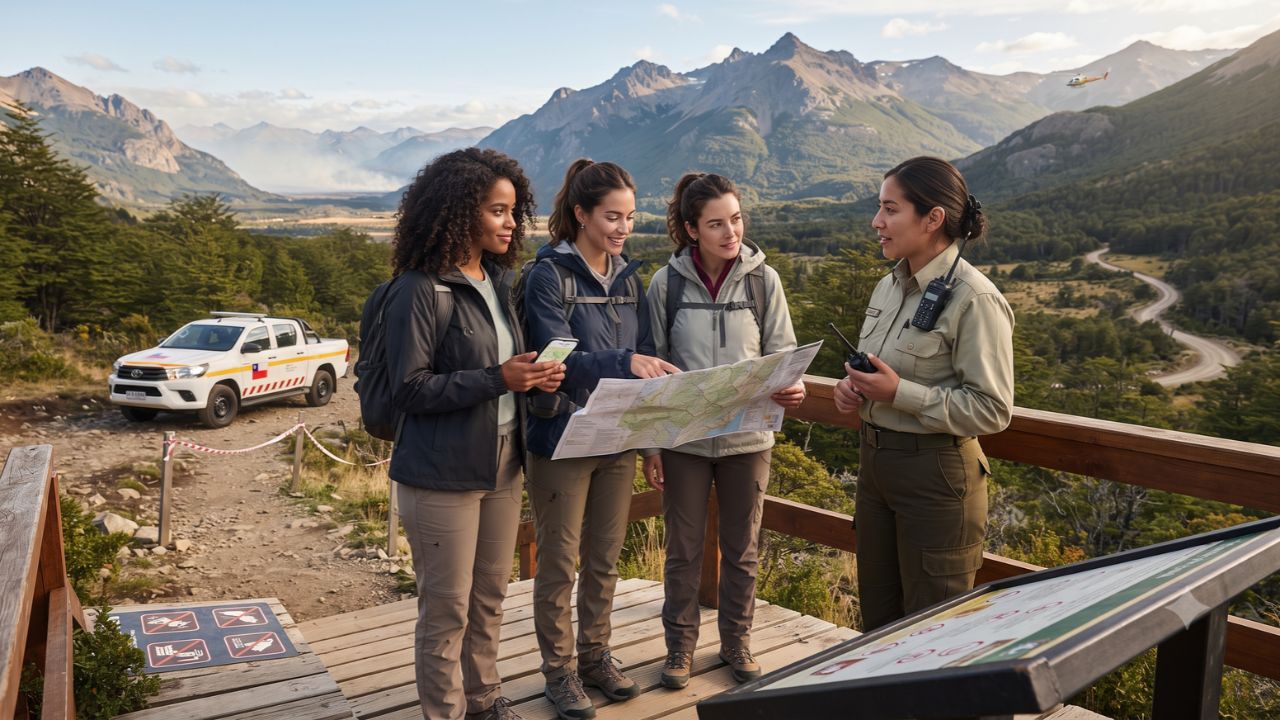
Backed by 4,410 specialized federal firefighters in Brazil and more than 3,000 frontline brigade personnel in Chile, South American governments have mobilized historic civil defense resources to protect regional visitor corridors ahead of the 2026–2027 southern summer holiday season. Spanning over 540,000 combined hectares under active satellite surveillance across Chile and Argentina alone, the unified cross-border emergency framework establishes mandatory evacuation drills for wilderness lodges, automated mobile cell-broadcast alerts, and protected transit corridors along strategic arteries like Argentina's National Route 40 and Chile's Route 68. As extended drought and extreme temperature cycles test the southern continent, public safety institutions are transitioning from ad-hoc forestry firefighting to institutionalized visitor protection protocols.
The regional defense strategy reflects a decisive realization among South American policymakers: the viability of the multi-billion-dollar tourism economy depends directly on environmental safety perception. In destinations ranging from Chile's Valparaíso wine valleys and Biobío forests to Argentina's Los Glaciares National Park and Brazil's tropical ecotourism biomes, uncontained seasonal wildfires threaten both human life and regional connectivity. By integrating tourism boards directly into national disaster command centers, authorities are establishing coordinated risk mitigation standards that ensure major travel corridors remain open, monitored, and resilient.
The Triple-Nation Southern Cone Environmental Defense Architecture
The institutional alignment across Chile, Brazil, and Argentina addresses structural vulnerabilities that previously plagued summer ecotourism. Over the past decade, changing climate patterns transformed wildfire containment from an isolated rural concern into a primary national security priority. In response, governments have replaced fragmented municipal responses with centralized command structures.
In Chile, the Ministry of the Interior and Public Security, operating through the National Disaster Prevention and Response Service (SENAPRED), updated operational directives governing licensed tour operators, mountain guides, and rural lodging providers. Working in tandem with the National Forest Corporation (CONAF), authorities enforce preventive closures of high-risk hiking trails during red-flag meteorological conditions, preventing hikers from becoming trapped in rugged terrain.
Brazil's Ministry of the Environment and Climate Change (MMA) executed a historic expansion of its specialized Prevfogo brigade under IBAMA. Backed by a fivefold operational budget increase compared to the 2019 baseline, Brazil deployed 4,410 specialized federal firefighters equipped with real-time multi-biome satellite detection systems monitoring sensitive buffer zones bordering major national parks in the Amazon, Pantanal, Cerrado, and Pampas.
In Argentina, the Ministry of Security integrated provincial wildfire teams under the National Fire Management Service (SNMF). Enforcing federal allocations under the national Emergency Fire Law, the SNMF established a Unified Patagonia Command to protect the southern holiday circuit. By stationing aerial tanker aircraft and rapid-response ground brigades along National Route 40 (Ruta 40), the agency guarantees continuous surveillance along the primary highway linking Lake Nahuel Huapi, Bariloche, and southern glacial reserves.
Comparative National Capabilities: Firefighting Assets, Budgets, and Warning Systems
The technical architecture uniting South America's wildfire readiness combines specialized personnel, satellite tracking, and public broadcast technologies.
| Operational Indicator / Metric | Chile (CONAF / SENAPRED) | Brazil (IBAMA / Prevfogo) | Argentina (SNMF / Security) |
|---|---|---|---|
| Deployed Firefighting Personnel | Over 3,000 active CONAF firefighters & brigade workers | 4,410 specialized federal firefighters deployed | Unified multi-provincial brigade units & aerial crews |
| Monitored Conservation Land Area | 310,000+ hectares under active satellite surveillance | Multi-biome satellite tracking (Amazon, Cerrado, Pantanal) | 230,000+ hectares protected across southern provinces |
| Early Warning & Alert Platforms | Emergency Alert System (SAE) cell broadcast network | Unified Civil Defense emergency alert systems | Federal SNMF daily fire risk index & highway bulletins |
| Inter-Agency Funding Mechanisms | State emergency allocations for disaster response | Fivefold budget increase relative to 2019 baseline | Emergency Fire Law federal budget allocations |
| Strategic Travel Corridors Protected | Route 68 (Santiago–Valparaíso), Biobío, coastal parks | Ecotourism circuits bordering primary state reserves | National Route 40 corridor, Los Glaciares National Park |
| Lead Tourism Integration Agency | SERNATUR (National Tourism Service) | EMBRATUR (Brazilian Tourist Board) | INPROTUR (National Institute of Tourism Promotion) |
The deployment of real-time early warning technologies represents a vital operational leap. Chile's SAE system delivers localized, multilingual cell-broadcast emergency alerts directly to mobile devices within affected GPS sectors without requiring network registration. In Argentina, the SNMF publishes a standardized daily fire danger index, enabling park rangers to restrict campfire permits, close vulnerable campsites, and stage specialized water-bombing helicopters before ignition sparks spread.
Mandatory Civil Defense Integration Across the Hospitality Sector
A defining feature of the 2026 regulatory framework is the mandatory inclusion of commercial hospitality operators within civil protection systems. Historically, private lodges, eco-resorts, and trekking agencies operated with minimal oversight regarding fire mitigation. Under newly enforced regulations across Chile, Brazil, and Argentina, tourism businesses face strict compliance standards:
First, accommodation providers operating within declared high-risk forest zones must align with automated emergency broadcast networks. Guest orientation procedures must include explicit briefings on emergency evacuation meeting points, assembly locations, and local shelter facilities.
Second, properties adjoining public protected lands must maintain certified defensible space perimeters. Lodges are legally required to clear combustible brush, prune canopy overhangs within a 30-meter radius of guest structures, and maintain pressurized on-site water storage systems equipped with standard fire-hose couplings.
Third, tour operators guiding inside national parks must complete mandatory seasonal evacuation drills supervised by municipal civil defense officers. These practical simulations evaluate vehicular egress timelines, emergency satellite communication reliability, and medical triage procedures, ensuring that commercial operators can evacuate visitor groups before access roads are cut off by advancing smoke plumes.
Expert Analysis: The Legalization of Defensible Space and the Economics of Ecotourism Insurance
The institutionalization of wildfire preparedness across the Southern Cone marks an essential evolution in destination risk governance. For decades, South American ecotourism relied on natural isolation as a core selling point. However, remote wilderness lodges surrounded by dry native forest become deadly entrapment zones when wildfire fronts travel at 20 kilometers per hour through canyon drafts.
For travelers booking this route, the direct consequence is that unmanaged itineraries face sudden operational rerouting. When CONAF in Chile or the SNMF in Argentina issues an extreme fire danger declaration, national park access gates close immediately. Travelers attempting to hike iconic trails in Torres del Paine, the Lake District, or Los Glaciares cannot negotiate exemptions. Furthermore, under newly enforced municipal ordinances, local civil defense directors possess statutory authority to order preemptive mandatory evacuations of rural boutique lodges 24 to 48 hours before an active fire reaches the perimeter.
The pricing pressure this creates means that the cost of operating high-end wilderness tourism in South America is climbing. Establishing defensible fuel breaks, installing commercial sprinkler systems, maintaining on-site water reserves, and retaining certified wilderness safety guides represent substantial capital overheads. High-end lodges in Patagonia and the Chilean wine regions are incorporating dedicated environmental risk surcharges into nightly room rates to offset compliance expenses.
From a travel insurance standpoint, travelers must recognize the precise legal thresholds governing cancellation and interruption coverage. Standard travel insurance policies explicitly exclude claims based merely on "smoke haze," "unpleasant air quality," or "voluntary trip abandonment." Insurance compensation is triggered only when an authorized government agency—such as SENAPRED or the Argentine Ministry of Security—issues an official mandatory evacuation decree or when certified fire damage physically renders booked accommodation uninhabitable. Retaining dated, written government statements and official park closure notices remains vital for navigating post-disaster insurance claims.
Key Takeaways
- Historic Personnel Mobilization: Over 7,410 specialized firefighters—including 4,410 in Brazil and over 3,000 in Chile—are deployed across South American wilderness tourism corridors.
- Massive Satellite Monitoring: More than 540,000 combined hectares across Chile (310,000+ ha) and Argentina (230,000+ ha) are under continuous real-time satellite surveillance.
- Strategic Transit Protections: Unified civil defense protocols focus on keeping arterial roads open, specifically Argentina's National Route 40 and Chile's Route 68 corridor.
- Mandatory Hospitality Compliance: Lodges and tour operators must maintain 30-meter defensible space buffers, conduct seasonal evacuation drills, and integrate cell-broadcast alerts.
- Strict Insurance Triggers: Commercial travel insurance policies require formal, documented civil defense evacuation orders or physical lodge destruction to validate cancellation claims.
FAQ: South America Wildfire Travel Safety and Preparedness 2026
How do travelers receive wildfire alerts in Chile?
Chile's National Disaster Prevention and Response Service (SENAPRED) broadcasts real-time localized alerts via the SAE cell-broadcast system directly to mobile phones in affected geographic sectors.
Are national parks closed during wildfire season in Argentina and Chile?
Parks remain open under normal conditions, but authorities like CONAF and the SNMF execute preemptive, temporary closures of specific trails and camping areas during extreme fire-risk weather days.
Does travel insurance cover trips canceled due to wildfire smoke?
No. Standard policies do not cover voluntary cancellations due to smoke haze or poor air quality. Compensation requires an official mandatory government evacuation order or physical property damage.
Can tourists drive on Argentina's National Route 40 during fire season?
Yes. The National Fire Management Service (SNMF) maintains dedicated emergency corridors along Route 40 with air and ground monitoring to ensure traveler transit remains safe and accessible.
In the fire-prone wilderness of the Southern Cone, the ultimate luxury for travelers is not an isolated mountain lodge, but an ironclad evacuation corridor backed by satellite-linked civil defense.
Related Travel Guides
Disclaimer
This article is for informational and educational purposes only. It does not constitute legal, financial, or professional advice. While we strive to provide accurate and up-to-date information, travel policies, regulations, and conditions change rapidly. Always verify information with official sources before making travel decisions. Nomad Lawyer makes no representations about the accuracy, reliability, completeness, or suitability of the information provided. Readers should consult qualified professionals for advice specific to their circumstances. The views expressed in this article are those of the author and do not necessarily reflect the views of Nomad Lawyer.
Raushan Kumar
Founder & Lead Developer
Full-stack developer with 11+ years of experience and a passionate traveller. Raushan built Nomad Lawyer from the ground up with a vision to create the best travel and law experience on the web.
Learn more about our team →