Luxury Hospitality Gateways Redefine Adventure Tourism: Chile’s Antarctic Staging, Botswana’s Okavango Safari, and Zambia’s Kafue River

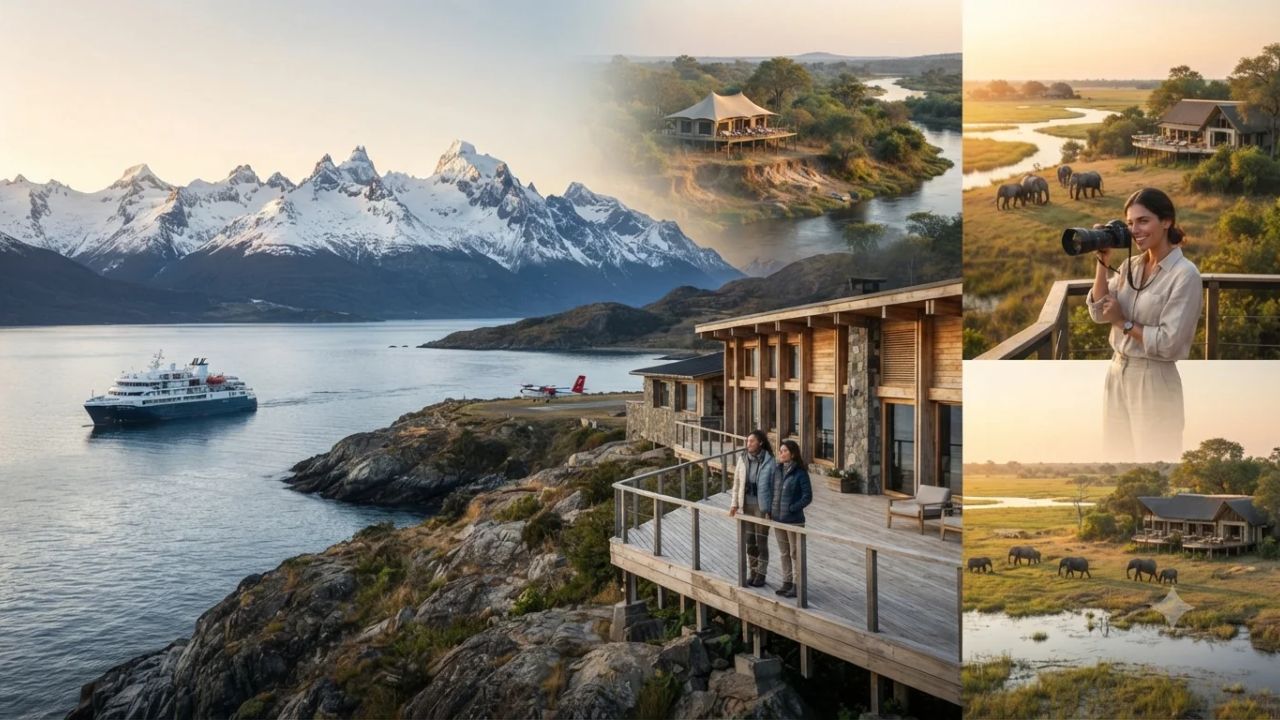
The global landscape of ultra-luxury adventure travel is undergoing an architectural and operational revolution as specialized hospitality gateways increasingly bridge the divide between high-end hospitality and the planet’s most inaccessible frontiers. Rather than treating hotels merely as overnight accommodations before or after an expedition, visionary hospitality developers and luxury cruise operators are transforming lodges into foundational operational nodes that integrate private aviation, specialized maritime transfers, and conservation stewardship. Leading this transformative wave in 2026 are three extraordinary global developments across the Southern Hemisphere: Chile’s newly opened 150-room expedition property The Cormorant at 55 South in Puerto Williams, anchoring Silversea’s fly-cruise Antarctic bridge; Botswana’s eagerly anticipated Singita Elela in the heart of the pristine Okavango Delta; and Zambia’s newly launched Anantara Tented Camp Kafue River, pioneering luxury stilt-elevated safari living in Kafue National Park. Together, these specialist properties illustrate how modern luxury adventure travel has evolved into an interconnected discipline where remote wilderness access, low-impact sustainable engineering, and bespoke guest logistics operate as a unified ecosystem.
Historically, journeying into deep wilderness—whether navigating the sub-polar icy straits of the White Continent or tracking apex predators through seasonal African wetlands—demanded significant physical compromise. International adventurers faced rugged staging hotels, fragmented regional commercial airlines, arduous overland transit across poorly maintained tracks, and basic expedition camps. In 2026, the luxury adventure paradigm has fundamentally shifted. Discerning international travelers now demand that remote exploration be accompanied by architectural excellence, refined gastronomy, wellness amenities, and frictionless logistical coordination. By placing purpose-built luxury properties directly at strategic departure thresholds, operators are eliminating traditional travel frictions, lengthening visitor stays, and creating high-value economic models that fund the conservation of fragile surrounding ecosystems.
========================================================================================
LUXURY HOSPITALITY GATEWAYS: GLOBAL COMPARATIVE EXPEDITION SCORECARD
========================================================================================
Operational Vector        Chile (Antarctic Gateway) Botswana (Wetland Safari) Zambia (Riverine Safari)
----------------------------------------------------------------------------------------
Property Name             The Cormorant at 55 South Singita Elela             Anantara Kafue River
Managing Operator         Silversea (Royal Caribbean)Singita Group            Minor Hotels (Anantara)
Geographic Location       Puerto Williams, Navarino  Okavango Delta           Kafue National Park
Ecological Landscape      Sub-Antarctic / Magellanic Inland Wetland Delta     Riverine Woodland & Savanna
Operational Capacity      150 Guest Rooms           Ultra-low-density suites  13 Luxury Tented Units
2026 Operational Status   Fully Operational (Open)  Opening Scheduled Dec 2026Introduced & Operating
Primary Adventure Hub     Antarctica (King George)   Okavango Concessions     Kafue River & Plains
Integrated Transit Model  Charter Jet + Polar Ship  Bush Airstrip Transfer   Private Air Charter / 4WD
Seasonal Operating Window October through March     Year-Round (Flood Pulses)Year-Round Safari Access
Eco-Engineering Highlight Low-impact modular build  100% Off-grid Solar Grid Elevated 3.5m–14.3m Stilts
Primary Target Traveler   Antarctic Expeditioners    High-yield ConservationistRiver & Wildlife Enthusiasts
========================================================================================
Source: Global Expedition Hospitality Audits & International Luxury Tourism Reports, Nov 2026.
========================================================================================
Chile’s Sub-Antarctic Frontier: The Cormorant at 55 South in Puerto Williams
Chile’s emergence as the world’s preeminent gateway for luxury Antarctic exploration reached a historic milestone with the official opening of The Cormorant at 55 South. Situated on Navarino Island along the southern shore of the historic Beagle Channel, Puerto Williams holds the geographic distinction of being the southernmost permanently inhabited town on Earth (latitude 54°56′ S), surpassing Argentina’s Ushuaia in southerly proximity.
========================================================================================
THE CORMORANT AT 55 SOUTH: PROPERTY & EXPEDITION SPECIFICATION
========================================================================================
Feature Category          Verified Operational Parameter
----------------------------------------------------------------------------------------
Property Ownership        Silversea Cruises (Royal Caribbean Group)
Facility Scale            150 Guest Rooms and Suites
Geographic Coordinates    54°56′0″ S, 67°37′0″ W (Navarino Island, Chile)
Operating Season          Austral Summer: October through March
Expedition Vessel Fleet   Silver Endeavour, Silver Wind, and Silver Cloud
Aviation Staging Hub      Guardiamarina Zañartu Airport (WPU) / Santiago (SCL)
Antarctic Air Terminal    Teniente Rodolfo Marsh Martin Airport (TNM), King George Island
Key Amenities             Patagonian fine-dining restaurant, bar, wellness lounge, gear center
Regional Activities       Beagle Channel kayaking, Dientes de Navarino trekking, Yaghan heritage
Environmental Footprint   Engineered for extreme sub-polar climate; modular low-impact foundation
========================================================================================
1. Eliminating the Dreaded Drake Passage
For decades, the standard path to Antarctica required an arduous two-day voyage across the notorious Drake Passage—a 1,000-kilometer stretch of turbulent open ocean where the Atlantic, Pacific, and Southern Oceans collide. While cherished by maritime traditionalists, the Drake Passage often subjects passengers to violent swells, debilitating seasickness, and unpredictable weather delays.
- Silversea’s "Antarctica Bridge" fly-cruise model completely bypasses the open-ocean crossing by utilizing specialized charter flights between southern Chile and King George Island in Antarctica’s South Shetland archipelago.
- In this operational framework, The Cormorant at 55 South serves as the essential staging post. Instead of passengers spending their pre-cruise nights in transit hotels in Punta Arenas or Santiago, they are flown directly to Navarino Island.
- By providing 150 luxury rooms at the doorstep of the Southern Ocean, Silversea ensures guests acclimate in comfort, receive comprehensive polar safety briefings, undergo mandatory biosecurity boot-washing and gear fittings, and board their charter flights to King George Island in a matter of hours.
========================================================================================
THE FLY-CRUISE POLAR ITINERARY TRANSIT ARCHITECTURE
========================================================================================
Stage  Geographic Vector      Transit Mode     Operational Purpose & Activity
----------------------------------------------------------------------------------------
Leg 1  International -> SCL   Commercial Air   Arrival in Santiago; initial overnight stay
Leg 2  Santiago -> Puerto Wms Private Jet      Charter flight to Guardiamarina Zañartu (WPU)
Leg 3  Puerto Williams Stay   The Cormorant    Pre-expedition staging, gear fitting, dinner
Leg 4  WPU -> King George Is. Antarctic Air    Charter flight over Drake Passage (2 hours)
Leg 5  King George Island     Zodiac Transfer  Embarkation on Silver Endeavour / Wind / Cloud
Leg 6  Antarctic Peninsula    Polar Cruise     6 to 10 days of expedition zodiac landings
Leg 7  King George -> WPU     Antarctic Air    Return flight over Drake Passage
Leg 8  Puerto Williams Stay   The Cormorant    Post-expedition overnight; debrief & relaxation
Leg 9  Puerto Wms -> Santiago Private Jet      Charter flight return; international connections
========================================================================================
2. Immersive Patagonian Tourism on Navarino Island
Beyond its functional role as a polar staging ground, The Cormorant at 55 South introduces luxury travelers to one of South America’s most pristine and culturally significant wilderness areas:
- Dientes de Navarino Wilderness: Guests can explore the dramatic jagged peaks and pristine glacial tarns of the Dientes de Navarino circuit, renowned among global trekkers as the southernmost hiking trail on Earth.
- Yaghan Indigenous Heritage: Puerto Williams is the ancestral home of the Yaghan people, nomadic canoe hunter-gatherers who navigated the frigid channels for over 6,000 years. The hotel integrates guided cultural encounters at the Martin Gusinde Anthropological Museum and partnerships with local community custodians.
- Sub-Antarctic Biodiversity: Excursions take guests into the UNESCO Cabo de Hornos (Cape Horn) Biosphere Reserve, home to miniature sub-polar forests, Magellanic woodpeckers, southern river otters, and vast kelp forest ecosystems.
Botswana’s Wetland Masterpiece: Singita Elela in the Okavango Delta
While Chile masters sub-polar coastal logistics, Botswana continues to set the international benchmark for ultra-luxury wilderness conservation. Scheduled to open in December 2026, Singita Elela represents the acclaimed ecotourism brand’s landmark entry into the world-famous Okavango Delta.
========================================================================================
SINGITA ELELA: OKAVANGO DELTA EXPEDITION PROFILE
========================================================================================
Feature Category          Verified Operational Specification
----------------------------------------------------------------------------------------
Brand / Operator          Singita (Pioneers in African Ecotourism & Conservation)
Opening Timeline          Scheduled for Official Opening in December 2026
Geographic Location       Okavango Delta, Northern Botswana (UNESCO World Heritage Site)
Ecosystem Dynamics        Dynamic alluvial inland delta fed by Angolan seasonal floods
Aviation Logistics        Maun Airport (MUB) / Kasane (BBK) followed by light bush aircraft
Safari Experience Types   Mokoro (dugout canoe) safaris, motorboat excursions, 4x4 game drives
Conservation Foundation   Low-density, ultra-high-yield model funding habitat protection
Renewable Technology      100% off-grid solar photovoltaic microgrid and battery storage bank
Architectural Philosophy  Biophilic, lightly touching the earth; canvas, timber, local reeds
Water Treatment           Closed-loop state-of-the-art biological wastewater recycling
========================================================================================
1. Navigating the Dynamic Hydrology of the Delta
The Okavango Delta is an ecological wonder: a permanent wetland surrounded by the Kalahari Desert, created by annual floodwaters that travel over 1,000 kilometers from the Angolan highlands.
- The water arrives between May and August, swelling the delta to more than twice its dry-season surface area and transforming arid savanna into an intricate maze of sparkling lagoons, channels, and palm-fringed islands.
- Operating luxury hospitality within this fluid environment requires extraordinary engineering and logistical expertise. Ground access routes frequently become submerged during seasonal high-water periods, making vehicular transit impossible.
- In 2026, severe seasonal flooding temporarily closed key supply corridors surrounding the Moremi Game Reserve before strategic infrastructure reopened. Singita Elela’s operational blueprint directly addresses these environmental realities by integrating private light-aircraft transfers, purpose-built elevated wooden boardwalks, and a versatile fleet of customized electric safari vehicles and specialized shallow-draft boats.
========================================================================================
THE HYDROLOGICAL CYCLE & SAFARI SEASONALITY IN THE OKAVANGO DELTA
========================================================================================
Month Range        Hydrological Stage          Wildlife Movement & Safari Dynamics
----------------------------------------------------------------------------------------
Jan – March        Summer Rains (Low Delta)    Lush green landscapes; predator calving season;
                                               abundant migrant birdlife; mostly 4x4 drives
April – May        Angolan Waters Arrive       Floodwaters enter northern delta; waterways
                                               begin rising; channels open for boat transits
June – August      Peak Flood Phenomenon       Delta reaches maximum water volume; peak season;
                                               prime mokoro canoeing; concentrated big game
Sept – October     Dry Spring / Evaporation    Water recedes; intense predator-prey activity
                                               around shrinking waterholes; exceptional visibility
Nov – December     First Summer Rainfalls      Transitional period; elephant herds gather;
                                               Singita Elela scheduled December launch window
========================================================================================
2. High-Value, Low-Impact Conservation Economics
Singita’s presence in Botswana reinforces the nation’s celebrated "High-Value, Low-Volume" tourism doctrine:
- By deliberately restricting lodge capacity to a small number of ultra-luxurious suites, the environmental footprint is kept minimal, while the generated revenue per guest is maximized.
- Nightly rates across Singita’s premier African properties—commanding between R50,000 and R60,000+ per adult per night during peak seasons—directly underwrite extensive anti-poaching units, wildlife veterinary care, ecological monitoring, and community empowerment initiatives.
- Singita Elela features complete off-grid solar energy installations and a fully self-contained staff village, ensuring that the luxury experience does not place operational strain on the fragile wilderness ecosystem.
Zambia’s Elevated Riverine Sanctuary: Anantara Tented Camp Kafue River
In Southern Africa’s interior, Zambia has expanded its luxury tourism frontier with the 2026 introduction of Anantara Tented Camp Kafue River. Developed by Minor Hotels under its luxury Anantara banner, the 13-unit development marks a major expansion into Kafue National Park—one of the largest, oldest, and most pristine national parks on the African continent.
========================================================================================
ANANTARA TENTED CAMP KAFUE RIVER: TECHNICAL & OPERATIONAL PROFILE
========================================================================================
Feature Category          Verified Engineering Specification
----------------------------------------------------------------------------------------
Operating Group           Minor Hotels (Anantara Hotels, Resorts & Spas)
Key Location              Private Concession along the Kafue River, Kafue National Park
Total Unit Inventory      13 Bespoke Units: 9 Pool Villas, 3 Horizon Suites, 1 Presidential
Structural Elevation      Raised 3.5 meters on stilt pillars above natural ground level
Canopy Observation Height 3 Horizon Terrace Suites soar to 14.3 meters for panoramic views
Aviation Gateways         Kenneth Kaunda Int'l (LUN, Lusaka) & Livingstone (LVI)
Airstrip Transfer         Dedicated bush charter flight to local airstrip + short 4x4 drive
Alternative Overland      Scenic 4x4 overland expedition transfer (~4 hours from Lusaka)
River Excursions          Specialized electric and low-emission motorboats on Kafue River
Land Safaris              Open 4x4 game drives, tracking walks, nocturnal predator safaris
Sustainability Systems    Solar power generation, biological greywater treatment, modular builds
========================================================================================
1. Elevated Architectural Engineering on the Kafue River
Spanning over 22,400 square kilometers, Kafue National Park features dramatic seasonal variations in river height. Rather than clearing ground or constructing heavy masonry barriers that disrupt natural hydrology, Anantara implemented an innovative elevated architectural framework:
- 3.5-Meter Stilt Platforms: All 13 tented villas are perched approximately 3.5 meters above the ground on slender, high-tensile stilt pillars. This elevation allows seasonal floodwaters to flow beneath the structures without hindrance and ensures that large mammal migratory corridors—including elephants, hippos, and leopards—remain entirely uninterrupted.
- 14.3-Meter Horizon Terrace Suites: To offer unparalleled birdwatching and river viewing, three specialized suites rise to an astonishing 14.3 meters above the forest floor, positioning guests within the upper canopy overlooking the river bends.
- Prefabricated Eco-Canvas Architecture: Structural elements were manufactured off-site and transported via specialized low-impact vehicles, preventing heavy construction disruption in the protected national park.
========================================================================================
ZAMBIA SAFARI LOGISTICAL FLOW: DUAL-GATEWAY CONNECTIVITY
========================================================================================
Route Component           Option A: Private Aviation Charter Option B: Guided Overland 4x4
----------------------------------------------------------------------------------------
International Gateway     Kenneth Kaunda Airport (LUN)       Kenneth Kaunda Airport (LUN)
Domestic Transfer Hub     Lusaka Charter Terminal            Private 4WD Expedition Vehicle
Transit Mode              Twin-engine turboprop charter      Customized 4x4 safari cruiser
Transit Time              Approximately 45 minutes           Approximately 4 hours
Terminal Arrival Point    Kafue Concession Bush Airstrip     Direct to Camp Entrance
Final Mile Transport      10-minute game drive to camp       Arrives directly at welcome pavilion
Baggage Constraints       Soft-sided luggage, 15-20 kg max   Generous overland storage capacity
Visual Experience         Aerial panorama of Kafue drainage  Scenic transition through Zambian rural heartland
========================================================================================
2. Diversifying Zambia’s Safari Portfolio Beyond South Luangwa and the Zambezi
Zambia has long been celebrated as the birthplace of the walking safari, primarily centered on South Luangwa National Park and the Lower Zambezi:
- The introduction of Anantara Tented Camp Kafue River propels Kafue into the top tier of international luxury safari destinations.
- The property combines traditional walking safaris with tranquil river cruises, allowing guests to encounter rare aquatic and terrestrial species—including red lechwe antelopes, African wild dogs, cheetahs, and over 500 species of resident and migratory birds.
- By integrating wellness pavilions, private plunge pools, and refined safari dining, the camp demonstrates that untamed African wilderness and high-end luxury can coexist harmoniously.
Cross-Destination Matrix: Comparing Chile, Botswana, and Zambia
While sharing the common ambition of connecting luxury travelers with remote nature, Chile, Botswana, and Zambia employ distinctly different operational, architectural, and commercial strategies tailored to their unique environments.
========================================================================================
COMPREHENSIVE COMPARISON: THREE STRATEGIC HOSPITALITY MODELS
========================================================================================
Operational Dimension     Chile (The Cormorant)     Botswana (Singita Elela)  Zambia (Anantara Kafue)
----------------------------------------------------------------------------------------
Primary Function          Expedition Transit Node   Immersive Wilderness Base Destination Safari Lodge
Guest Length of Stay      Short (1-2 nights pre/post)Long (4-7 nights safari) Moderate (3-5 nights)
Structural Scale          150 rooms (High capacity) Ultra-low-density suites  13 luxury tented units
Key Landscape Hazard      Sub-polar gales, freezes  Seasonal flood surges     River rises, wildlife paths
Dominant Mobility Asset   Polar expedition vessels  Mokoros & 4x4 cruisers    River boats & 4x4 vehicles
Aviation Dependence       Heavy commercial charter  Light bush aircraft       Private charter & 4WD
Core Economic Driver      Fly-cruise tour packages  Ultra-high-yield lodging  Safari packages & wellness
Conservation Mechanism    Antarctic biosecurity &   Direct reserve leases,    National park concessions &
                          Cape Horn biosphere funds anti-poaching units       community anti-poaching
Community Engagement     Yaghan cultural center    Botswana citizen training Local guiding academies &
                          & local supplier sourcing & village infrastructure  Kafue regional employment
========================================================================================
1. Functional Distinctions: Staging Node vs. Wilderness Immersion
- Chile’s The Cormorant at 55 South operates primarily as an advanced staging gateway. Its 150-room scale reflects the passenger complement of modern luxury expedition ships like the Silver Endeavour. Guests do not spend their entire holiday at the hotel; rather, it functions as a luxurious, biosecure launching pad that ensures smooth transitions between long-haul commercial flights, sub-Antarctic charter aircraft, and polar cruise vessels.
- Botswana’s Singita Elela and Zambia’s Anantara Kafue River, by contrast, are deep-immersion destination lodges. Guests travel to these properties to remain in situ, exploring the surrounding ecosystem through guided safaris, river excursions, and wellness rituals over extended multi-night itineraries.
2. Environmental Engineering Solutions
Each property solves a distinct environmental challenge through innovative architecture:
- In Chile, The Cormorant must withstand harsh sub-Antarctic winds, horizontal sleet, and sub-zero temperatures. It utilizes high-efficiency insulation, triple-glazed panoramic windows, and modular construction techniques that conserve thermal energy.
- In Botswana, Singita Elela must adapt to shifting water channels and unstable sandy soils. It employs flexible, biophilic canvas and timber designs anchored to minimal concrete footings, completely powered by solar energy to prevent fossil-fuel contamination of the pristine wetland water table.
- In Zambia, Anantara Kafue River solves seasonal river flooding and elephant migration by raising its entire footprint onto 3.5-meter stilts, with specialized suites reaching 14.3 meters into the riverine tree canopy.
========================================================================================
SUSTAINABILITY & ENVIRONMENTAL INFRASTRUCTURE MATRIX
========================================================================================
Infrastructure Sector     Chile (Puerto Williams)   Botswana (Okavango)       Zambia (Kafue River)
----------------------------------------------------------------------------------------
Primary Power Source      Local grid + backup power 100% Off-grid Solar PV    Solar Photovoltaic Array
Energy Storage Bank       Thermal retention systems Lithium-ion battery bank  Central battery system
Water Sourcing            Pristine mountain streams Purified delta water      Borehole & river filtration
Wastewater Treatment      Municipal connection & bioEnclosed biological plant Enclosed septic & reed bed
Construction Footprint    Compact coastal footprint Zero permanent concrete  Raised stilt foundations
Wildlife Passage Impact   Fenced urban boundary     Open wildlife movement    Unrestricted beneath stilts
Biosecurity Controls      Strict Antarctic protocolsVehicle wash & bioguard   Eco-friendly camp products
========================================================================================
Global Tourism Implications: The Future of Integrated Expedition Gateways
The coordinated expansion of luxury hospitality gateways across Chile, Botswana, and Zambia signals profound structural shifts in the global tourism economy, with far-reaching consequences for aviation planning, regional development, and conservation funding.
========================================================================================
GLOBAL ADVENTURE TOURISM IMPACT & REGIONAL REPERCUSSIONS
========================================================================================
Economic / Tourism Vector Strategic Industry Benefit   Key Structural Limitation
----------------------------------------------------------------------------------------
Aviation Connectivity     Catalyzes dedicated charter  Dependent on seasonal weather;
                          and direct turboprop routes  limited commercial airline seats
Regional Diversification  Distributes wealth outside   High logistical costs for supply chains
                          traditional urban capitals   in extreme remote destinations
Local Employment Growth   Creates specialized careers  Requires extensive hospitality training
                          in guiding and conservation  and language education programs
Conservation Financing    Generates direct concession  Vulnerable to global economic downturns
                          fees and anti-poaching funds and geopolitical travel shifts
Visitor Length of Stay    Encourages extended travel   High room rates limit market access
                          across regional ecosystems   to ultra-high-net-worth segment
========================================================================================
1. The Growth of Private and Specialist Aviation Networks
Remote luxury gateways cannot function without specialized aviation infrastructure. The success of properties like The Cormorant, Singita Elela, and Anantara Kafue River is tightly intertwined with private charter aviation:
- In Chile, the entire fly-cruise model relies on specialized BAe 146 or Avro RJ regional jets capable of landing on the short gravel runway of King George Island in Antarctica.
- In Botswana and Zambia, high-end tourism sustains an entire fleet of Cessna Grand Caravans, Pilatus PC-12s, and twin-engine turboprops linking international hubs in Johannesburg, Lusaka, and Maun directly to bush airstrips.
- This creates an integrated aviation ecosystem that provides wealthy travelers with frictionless door-to-wilderness journeys while generating high-value aeronautical revenues for regional aviation operators.
2. High-Yield Conservation and Community Integration
Perhaps the most critical contribution of luxury hospitality gateways is their ability to generate massive conservation funding from a relatively tiny physical and environmental footprint:
- Conventional mass tourism often exerts severe pressure on municipal infrastructure, produces high volumes of waste, and degrades fragile natural environments.
- By contrast, ultra-luxury gateways operate on a high-yield model where a handful of visitors contribute substantial nightly concession fees, park entrance taxes, and conservation levies.
- These revenues directly fund armed anti-poaching patrols in Kafue, wildlife research and veterinary interventions in the Okavango, and scientific research and biosecurity protocols in the Beagle Channel and Antarctica.
- Additionally, these properties provide high-paying employment, culinary and guiding training, and entrepreneurial supply-chain opportunities for local indigenous and rural communities who previously had few alternatives to extractive industries.
Frequently Asked Questions
What is The Cormorant at 55 South and where is it located?
The Cormorant at 55 South is a dedicated 150-room luxury hotel developed by Silversea Cruises in Puerto Williams, located on Navarino Island in southern Chile. Situated on the southern shore of the Beagle Channel, it is the southernmost hotel of its scale in the world and serves as a premier staging post for Antarctic fly-cruise expeditions.
How does Silversea's Antarctic fly-cruise program work from Chile?
Instead of crossing the turbulent Drake Passage by ship (which takes two full days each way), passengers fly from Santiago to Puerto Williams on private charters, spend a night at The Cormorant at 55 South for briefings and gear fitting, and then take a two-hour flight directly to King George Island in Antarctica to board their expedition ship. The return follows the reverse itinerary.
When is The Cormorant at 55 South open to guests?
The property operates seasonally from October through March, corresponding with the austral summer and the active Antarctic expedition season when weather conditions permit flights to King George Island and polar cruise operations.
What makes Singita Elela in Botswana unique?
Singita Elela is a new ultra-luxury safari property scheduled to open in December 2026 in Botswana’s Okavango Delta. It introduces Singita’s renowned conservation-led ecotourism model to one of the world’s most dynamic wetland ecosystems, combining luxury suites with mokoro (canoe) safaris, 4x4 game drives, and 100% off-grid solar infrastructure.
How does seasonal flooding affect travel in the Okavango Delta?
Annual floodwaters from Angola swell the Okavango Delta between May and August, submerging roads and altering wildlife movements. Safari lodges like Singita Elela adapt by utilizing light aircraft for airstrip transfers, elevated wooden boardwalks, and a combination of specialized boats and high-clearance 4x4 vehicles to navigate changing water levels.
Where is Anantara Tented Camp Kafue River located?
Anantara Tented Camp Kafue River is situated within a private concession along the banks of the Kafue River inside Kafue National Park in western Zambia. It was introduced in 2026 by Minor Hotels under its luxury Anantara brand.
Why are the villas at Anantara Kafue River built on stilts?
All 13 luxury tented units are elevated 3.5 meters above the ground on stilt pillars (with three Horizon Terrace Suites reaching 14.3 meters) to allow natural seasonal river flooding to pass underneath unimpeded and to ensure that large wildlife—such as elephants, hippos, and big cats—can migrate freely beneath the structures without human conflict.
How do travelers reach Anantara Tented Camp Kafue River?
Guests can fly into Kenneth Kaunda International Airport in Lusaka or Livingstone, followed by an arranged private charter flight to a nearby bush airstrip and a short vehicle transfer. Alternatively, travelers can arrange a scenic four-hour 4x4 road transfer directly from Lusaka.
How do room rates compare across these remote luxury properties?
Rates across ultra-luxury safari and expedition properties operate at the very peak of the hospitality industry. Safari lodges in the Singita portfolio, for example, command between R50,000 and R60,000+ (approximately $2,800 to $3,500+ USD) per adult per night during peak periods, reflecting the all-inclusive nature of private guiding, fine dining, charter logistics, and substantial conservation levies.
What are the main activities available to guests at these three gateways?
- In Chile: Beagle Channel kayaking, Dientes de Navarino hiking, Yaghan cultural museum visits, and Antarctic expedition landings.
- In Botswana: Traditional mokoro dugout canoe excursions, motorized boat safaris, open 4x4 game drives, and birdwatching.
- In Zambia: Kafue River boat safaris, day and night game drives, guided walking safaris, and wellness therapies in elevated forest pavilions.
Strategic Outlook: The Evolution of Remote Luxury Hospitality Gateways
The simultaneous rise of luxury hospitality gateways in Chile, Botswana, and Zambia marks the dawn of a new epoch in international adventure travel. In an increasingly interconnected world where conventional destinations face the strains of overtourism, affluent global explorers are placing an unprecedented premium on pristine wilderness, seclusion, and authentic natural encounters.
However, modern travelers are no longer willing to endure disjointed logistics, unvetted transport, or indifferent service to reach the ends of the earth. By harmonizing architectural ingenuity with private charter aviation, marine transport, and deep conservation commitments, operators like Silversea, Singita, and Anantara are proving that luxury hospitality can serve as a powerful force for destination stewardship. As these properties demonstrate in 2026, the future of adventure tourism lies in creating sustainable, highly integrated gateways that protect the very wonders that inspire global travelers to explore.
Related Travel Guides
- American Airlines AI Rebooking Errors Trigger Corporate Duty-of-Care Crisis: AURA Algorithm, Premature Seat Cancellations, and DOT Rights
- Lukomir Village Travel Guide: Hiking Bosnia’s Highest Highland Settlement, Via Dinarica Trails, and Medieval UNESCO Stećci
- Corporate Traveler Launches CT Pay Across Five Global Markets: Slashing Invoices by 96% in $1.7-Trillion Business Travel Sector
- Delta Air Lines Flight Delays Sweep Across USA as Technical Glitch Hits Holiday Travel: Weight and Balance Breakdown at Atlanta Hub
This article is for informational purposes. Flight routes, passenger regulations, visa rules, and transit advisories are subject to change by airlines and aviation authorities. Readers are advised to verify schedules and travel documentation with relevant carriers and border agencies before departure.
Related Stories
Six Senses The Palm Dubai Opens on Palm Jumeirah: Coral Architecture, Longevity Clinic, and Biophilic Luxury Living
Anantara Tented Camp Kafue River Opens in Zambia: 2026 Luxury Safari Logistics Guide