Chile Atacama Desert Leads Global Dark-Sky Astrophotography Boom Featuring Over Three Hundred Clear Nights Annually in September 2026

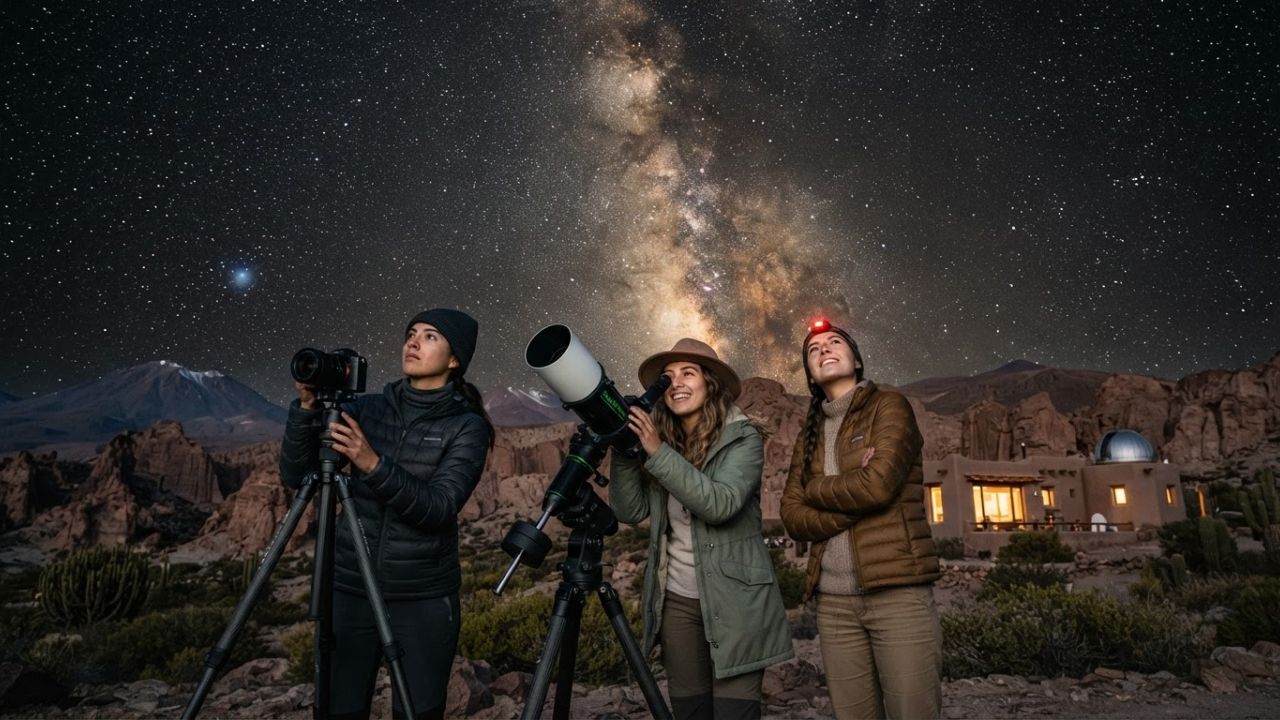
Image generated by AI
Civil aviation authorities, national dark-sky sanctuaries, and specialized expedition operators report record growth in nocturnal astro-tourism, with Chile's Atacama Desert establishing itself as the world's premier gateway for high-altitude astrophotography and deep-space observation. Boasting over 300 clear nights annually, extreme atmospheric dryness, and minimal light pollution, the Atacama region anchors a global dark-sky travel movement that includes protected reserves across New Zealand, Namibia, and Scotland in September 2026.
Official tourism statistics published on September 4, 2026, confirm that international travelers are increasingly departing light-polluted metropolitan areas to seek out remote, certified dark-sky preserves. Rather than traditional beach resorts or urban sightseeing, astro-tourists are booking high-altitude desert shuttles, open-air wilderness star-bed lodges, and professional observatory tours that blend digital night-sky photography with indigenous celestial folklore.
Environmental agencies emphasize that dark-sky reserve status protects fragile nocturnal ecosystems while generating sustainable, low-impact economic receipts for remote wilderness communities.
Global Dark-Sky Sanctuaries and Astronomical Gateways
1. Atacama Desert, Chile: The Global Astrophotography Capital
- Climatic and Geographical Advantages: Located in northern Chile, the Atacama Desert features a hyper-arid plateau at altitudes exceeding 2,400 meters Above Sea Level, guaranteeing over 300 cloudless nights per year.
- Scientific and Amateur Infrastructure: The region hosts professional facilities (including the European Southern Observatory sites at Paranal and La Silla) alongside specialized amateur astrophotography lodges equipped with high-aperture telescopes and resident astronomers. Airport access connects via El Loa Airport (CJC) in Calama.
2. Aoraki Mackenzie Reserve, New Zealand: Alpine Night Skies and Polynesian Lore
- Light-Management Protections: Located on New Zealand's South Island, the Aoraki Mackenzie International Dark Sky Reserve enforces regional light-emission controls to preserve unblemished views of the Southern Cross and the Milky Way core.
- Māori Celestial Navigation: Stargazing expeditions incorporate traditional Māori celestial navigation history and cultural storytelling associated with Matariki (the Pleiades star cluster), accessed via Christchurch International Airport (CHC) and State Highway 8.
3. NamibRand Nature Reserve, Namibia: Desert Dune Canopy and Open-Air Hospitality
- Zero Light Pollution Environment: Situated in the Namib Desert, NamibRand Nature Reserve ranks among Africa's premier International Dark Sky Reserves.
- Open-Air Star Beds: Eco-lodges across the reserve feature outdoor star beds, allowing guests to sleep directly beneath unpolluted southern hemisphere constellations. Transit connects via Hosea Kutako International Airport (WDH) in Windhoek.
4. Scotland, United Kingdom: Northern Lights and Celtic Mythology
- Official Dark-Sky Designations: Galloway Forest Park and the Isle of Coll deliver atmospheric stargazing framed by wild coastlines and ancient woodlands.
- Aurora Borealis & Celtic Lore: Visitors observe the Northern Lights (Aurora Borealis) alongside Celtic astronomical folklore, accessed via Glasgow Airport (GLA) or CalMac ferries from Oban.
Verified Global Dark-Sky Destinations and Specifications
| Destination Region | Key Location | Primary Astronomical Highlight | Cultural & Immersive Element | Transit Hub & Primary Access |
|---|---|---|---|---|
| Chile | Atacama Desert | >300 Clear Nights Annually (Hyper-arid climate) | High-end astrophotography lodges & observatories | El Loa Airport (CJC) / Santiago (SCL) |
| New Zealand | Aoraki Mackenzie Reserve | Alpine Southern Hemisphere Milky Way view | Māori celestial navigation & Pleiades (Matariki) | Christchurch Intl (CHC) / State Hwy 8 |
| Namibia | NamibRand Nature Reserve | Unpolluted desert sky above sand dunes | Eco-lodges featuring open-air star beds | Hosea Kutako (WDH) / 4x4 Desert Routes |
| Scotland | Galloway Forest & Isle of Coll | Official UK Dark-Sky status & Aurora view | Celtic folklore, myth-laden storytelling | Glasgow (GLA) / CalMac Ferry from Oban |
Traveler Logistics Guide (Information Gain)
Chile Atacama Aviation and High-Altitude Transit
- Air-to-Ground Routing: Fly from Santiago (SCL) to El Loa Airport (CJC) in Calama (2-hour domestic flight). From CJC airport, pre-book an authorized transfer shuttle to San Pedro de Atacama (98 kilometers / 1 hour 15 minutes drive).
- Altitude Acclimation Protocol: San Pedro sits at 2,400 meters altitude, while high-altitude observation plateaus (such as ALMA or Chajnantor) reach 5,000 meters. Spend at least 24 hours in San Pedro before embarking on high-altitude night tours, and maintain hydration to prevent acute mountain sickness (AMS).
- Camera Gear Protection: The hyper-arid Atacama environment carries fine desert dust and low humidity. Store digital camera bodies and optical lenses in sealed, anti-static hard cases, and use red-spectrum headlamps (620-670nm) to protect night-adapted vision.
New Zealand Aoraki Mackenzie Overland Logistics
- Self-Drive Routing: Drive 3 hours from Christchurch (CHC) via State Highway 8 to Lake Tekapo or Mount Cook Village.
- Tour Booking Margins: Book guided night tours at the Mount John Observatory at least 3 weeks in advance during winter and equinox stargazing windows.
Infrastructure Impact Assessment
Establishing protected dark-sky reserves provides a proven economic model for remote wilderness regions. By enacting regional light-mitigation ordinances and limiting commercial development near observatory zones, civil authorities protect scientific research infrastructure while attracting high-value, low-impact eco-tourists.
This specialized travel footprint drives sustainable year-round hotel occupancy, supports local transport operators, and safeguards nocturnal wildlife corridors across South America, Australasia, Africa, and Europe.
Frequently Asked Questions
Why is Chile's Atacama Desert considered the top destination for astrophotography?
The Atacama Desert features high altitude, extreme dryness, and minimal cloud cover, guaranteeing over 300 clear nights per year with virtually zero light pollution.
What airport serves travelers visiting the Atacama Desert in Chile?
El Loa Airport (CJC) in Calama is the primary aviation hub, located 98 kilometers (1 hour 15 minutes drive) from San Pedro de Atacama.
What indigenous traditions are integrated into New Zealand's dark-sky tours?
Tours in the Aoraki Mackenzie Reserve integrate Māori celestial navigation traditions and cultural storytelling surrounding Matariki (the Pleiades star cluster).
How do visitors travel to the Isle of Coll in Scotland for dark-sky viewing?
Travelers can take a CalMac ferry service from Oban on the Scottish mainland directly to the Isle of Coll.
Related Travel Guides
This article is for informational purposes. Flight routes, passenger regulations, visa rules, and transit advisories are subject to change by airlines and aviation authorities. Readers are advised to verify schedules and travel documentation with relevant carriers and border agencies before departure.
Related Stories
Ayodhya Deepotsav 2026 Logistics Guide: Attending the 30 Lakh Lamp Festival in India

WTM London 2026: AI Booking Shifts and Global Tourism Growth Forecasts for 1.57 Billion Arrivals