
Chicago APTA 2026: How 12,000 Transit Experts Are Stress-Testing Chicago's Regional Mobility
With 12,000 global mobility experts descending on McCormick Place, Chicago is using APTA 2026 to validate its new regional transit governance and integrated fare systems.

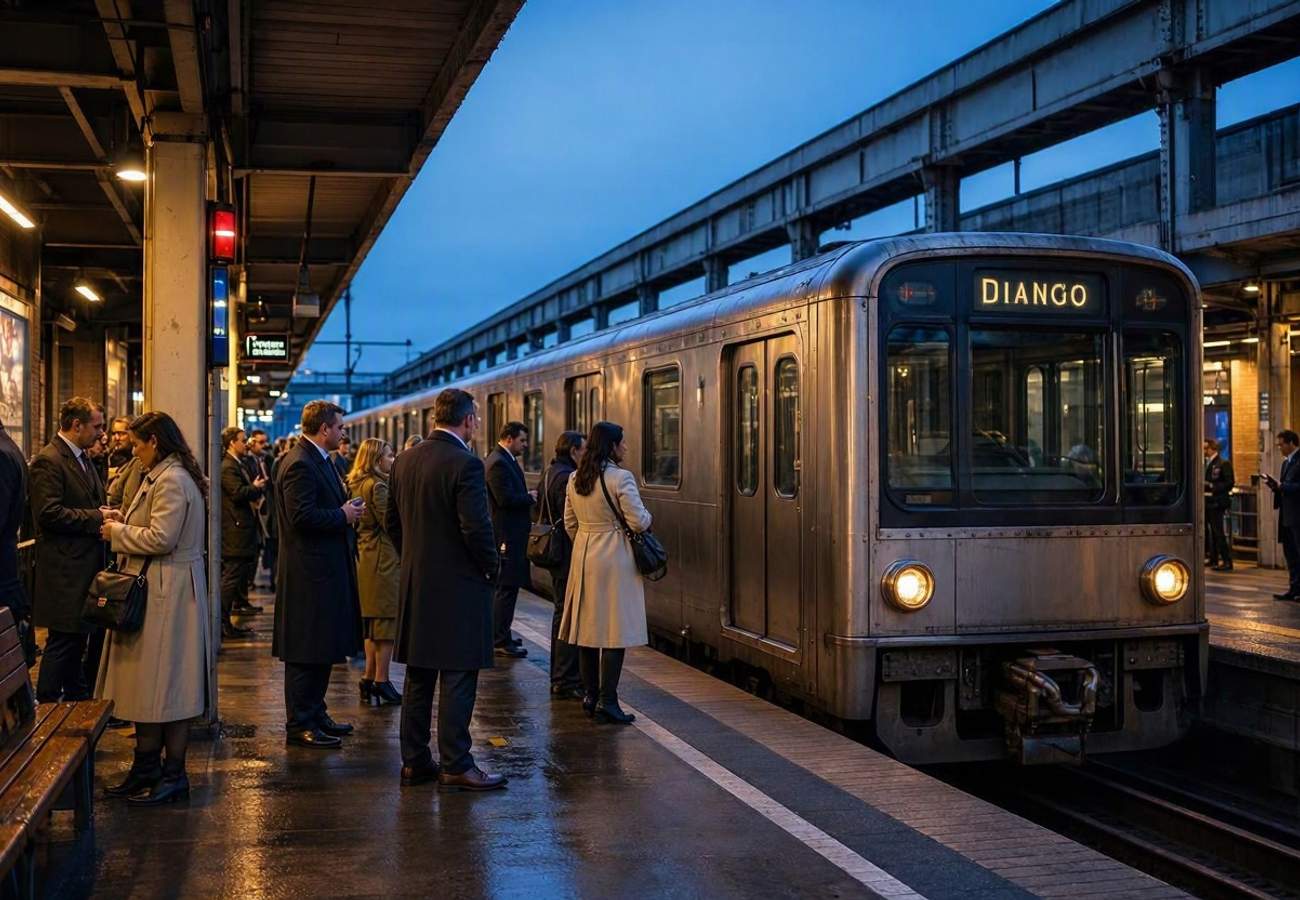
Image generated by AI
12,000 transit professionals are descending on Chicago from October 4 to 7, 2026, effectively turning the city into a living laboratory for the American Public Transportation Association (APTA) annual gathering. This is not merely a conference; it is a high-stakes audit of Chicago's regional infrastructure. By bringing the world's leading experts in artificial intelligence, green fleets, and integrated fare systems to the city, Chicago is placing its passenger networks under the scrutiny of the very people qualified to dismantle its inefficiencies.
The Convention Economy as a Transit Stress Test
The scale of this event is dictated by the venue. McCormick Place, recognized by Choose Chicago as the largest convention center in the Western Hemisphere, operates on a massive scale with over 2.6 million square feet of exhibition space. With approximately three million annual visitors, the facility does not exist in a vacuum; its viability depends entirely on the "last mile" connectivity provided by airports, rail, and pedestrian corridors.
When a single event attracts thousands of specialized delegates, it creates a temporary urban transport surge. For Chicago, the arrival of APTA 2026 serves as a real-time trial for how the city handles concentrated demand spikes. This is particularly vital given Chicago's recent tourism trajectory. In 2025, the city saw 56.8 million visitors who contributed a record $21.5 billion in spending. The hotel sector mirrored this growth, generating $2.9 billion in revenue and recording 8.2 million leisure room nights.
Regional Integration and the NITA Shift
The timing of this conference coincides with a fundamental shift in how the Chicago metropolitan area manages movement. On September 1, 2026, the Northern Illinois Transit Authority (NITA) officially began operations. This new governing body is tasked with the coordination of planning and funding across three distinct agencies: the CTA, Metra, and Pace.
For the international traveler, the distinction between these agencies is usually invisible and irrelevant. A visitor does not care which authority manages a specific bus or train; they require a seamless answer to five basic questions: where to board, the cost, the payment method, transfer points, and arrival times. The American Public Transportation Association (APTA) discussions on unified fare systems are designed to solve exactly this friction.
Regional Connectivity Data Breakdown
The transition to a coordinated regional system is backed by rigorous data analysis. NITA recently conducted a service coordination study to identify bottlenecks in the visitor journey.
| Metric | Data Point | Impact on Traveler |
|---|---|---|
| Total Connections Analyzed | 140,000+ | Identification of systemic gaps in regional flow |
| Transfer Locations Studied | 60+ | Optimization of hub-and-spoke connectivity |
| Target Transfer Window | 3 to 15 Minutes | Reducing "perceived distance" for non-locals |
| Annual McCormick Place Visitors | ~3 Million | High-volume baseline for transit planning |
| 2025 Total City Visitors | 56.8 Million | Scale of infrastructure demand |
| 2025 Tourism Spending | $21.5 Billion | Economic justification for transit investment |
Expert Analysis: The "Perceived Distance" Paradox
From a logistics standpoint, the most critical takeaway from the NITA study is the focus on the 3-to-15-minute transfer window. In aviation and urban transit, there is a concept known as "perceived distance." A hotel located five miles from a convention center can feel closer than one located two miles away if the former offers a seamless, single-payment transit link while the latter requires three different tickets and a 20-minute wait.
For travelers booking trips to Chicago in 2026, the direct consequence of these reforms is a gradual erosion of the "agency barrier." When CTA, Metra, and Pace operate under a unified NITA strategy, the city "compresses." This allows visitors to stay in more affordable neighborhoods outside the South Loop without sacrificing accessibility to the downtown core.
However, the pricing pressure created by these integrated systems often leads to a shift in fare structures. As Chicago moves toward a "seamless journey," we can expect a move away from fragmented ticket sales toward account-based ticketing (ABT), where the system calculates the best fare across multiple modes of transport automatically.
Key Takeaways
- Institutional Overhaul: The launch of NITA on September 1, 2026, marks the first time CTA, Metra, and Pace have been coordinated under a single regional planning umbrella.
- Economic Scale: With 56.8 million visitors in 2025, Chicago's transit performance is now a primary driver of its $21.5 billion tourism economy.
- Efficiency Targets: NITA is targeting transfer windows of 3-15 minutes to make suburban hotels and attractions more viable for convention delegates.
- Infrastructure Audit: APTA 2026 acts as a live audit, testing AI-driven passenger management and green fleet integration under peak load.
FAQ: Chicago Transit 2026
Do I need different tickets for CTA, Metra, and Pace in 2026? While NITA is working toward unified fare systems, travelers should check for integrated payment options. The goal is a single-payment experience, but some legacy systems may still require separate validation during the transition.
How does the new NITA authority affect my travel time? NITA focuses on reducing transfer times at over 60 key locations. You should see more synchronized schedules between suburban Metra trains and city CTA buses, reducing wait times.
Is McCormick Place easily accessible via public transport? Yes, it is a major hub. However, during large events like APTA 2026, expect concentrated surges. Use real-time passenger information systems to avoid peak congestion.
What is the "green fleet" mentioned in the APTA conference? It refers to the transition of city buses and shuttles to hydrogen propulsion and electric power to reduce the carbon footprint of mass convention travel.
The success of Chicago's transit experiment will determine if the city remains a global convention powerhouse or a cautionary tale of infrastructure lag.
Related Travel Guides
Disclaimer
This article is for informational and educational purposes only. It does not constitute legal, financial, or professional advice. While we strive to provide accurate and up-to-date information, travel policies, regulations, and conditions change rapidly. Always verify information with official sources before making travel decisions. Nomad Lawyer makes no representations about the accuracy, reliability, completeness, or suitability of the information provided. Readers should consult qualified professionals for advice specific to their circumstances. The views expressed in this article are those of the author and do not necessarily reflect the views of Nomad Lawyer.
Kunal K Choudhary
Co-Founder & Contributor
A passionate traveller and tech enthusiast. Kunal contributes to the vision and growth of Nomad Lawyer, bringing fresh perspectives and driving the community forward.
Learn more about our team →