
Thailand and Southeast Asian Hubs Pivot Tourism Strategies as Middle East Conflict Cuts 5.2 Million Airline Seats in 2026
Southeast Asian tourism undergoes a historic power shift as Thailand, Vietnam, and Malaysia adapt to a 5.2 million seat capacity drop and surging fuel costs driven by Middle East instability.

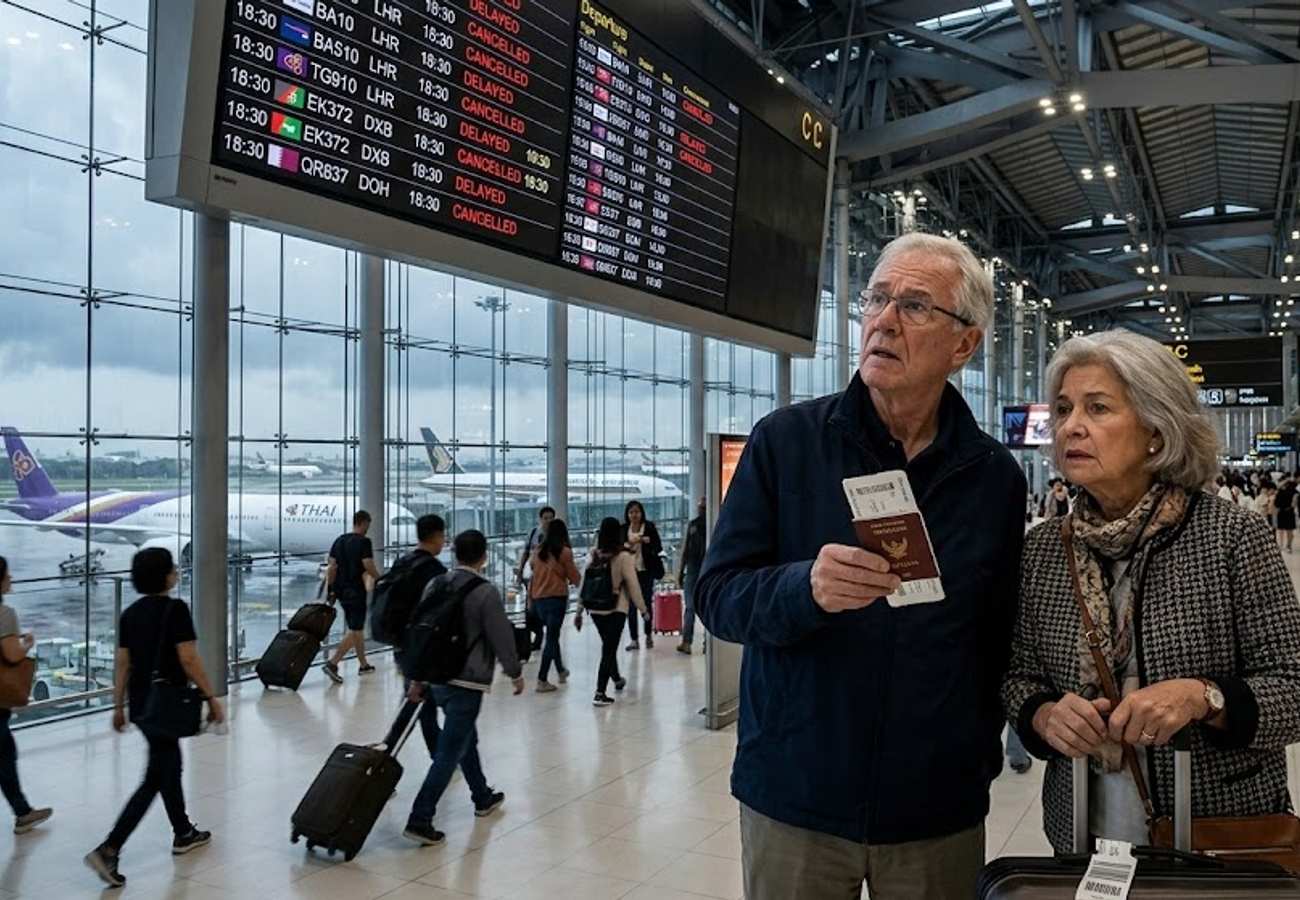
Image generated by AI
Southeast Asian aviation and tourism sectors are undergoing a structural realignment as geopolitical instability in the Middle East and the Strait of Hormuz crisis trigger massive capacity reductions and fuel price spikes across the region.
The second half of 2026 has seen a convergence of war-risk insurance hikes, soaring energy costs, and a significant reduction in international flight availability. This environment is forcing a strategic pivot toward regional connectivity, with hubs like Bangkok, Kuala Lumpur, and Singapore emerging as critical alternatives to traditional Gulf aviation corridors.
The 2026 Aviation Disruption: By the Numbers
The scale of the disruption is driven primarily by the US–Israel–Iran conflict and the precarious status of the Strait of Hormuz. This has created a chain reaction affecting operating expenses and seat availability.
Between May and October 2026, more than 5.2 million airline seats were removed from Southeast Asian flight schedules. The loss is distributed heavily across the region's primary gateways:
- Thailand: ~1.1 million seats removed.
- Malaysia: ~1.1 million seats removed.
- Fuel Costs: Jet fuel prices have more than doubled since the onset of the conflict.
- Crude Oil Benchmarks: Brent crude surpassed $100 per barrel in March 2026, eventually peaking at approximately $126 per barrel.
Regional Performance and Market Resilience
While the broader region faces economic pressure, individual nations are experiencing varying levels of recovery and stability.
Thailand and Malaysia: Strategic Hub Adaptation
Thailand continues to leverage its robust infrastructure to maintain its status as a regional anchor. Bangkok is increasingly serving as a primary connecting point for carriers bypassing disrupted Middle Eastern airspace. Similarly, Kuala Lumpur International Airport is being positioned as a vital link for routes connecting Europe, Asia, and Australia.
Vietnam: The Regional Outperformer
Vietnam has emerged as the most resilient market in Southeast Asia. International arrivals remain at least 35% above 2019 levels. Growth metrics show a 23% year-over-year increase in April 2026 and a 17% increase in May 2026. This growth is attributed to aggressive government measures to reduce fuel-related taxes and a diversified tourism product.
Philippines and Indonesia: Economic Headwinds
The Philippines reports a slower recovery, with international arrivals 22–30% lower than 2019 figures. The nation is battling 7.2% inflation and record weakness of the Philippine Peso against the US dollar. Indonesia is facing similar currency volatility, with the Indonesian Rupiah hitting record lows in June 2026, complicating airline operations and import costs for the tourism sector.
Southeast Asia Transit Impact Matrix (2026)
| Country | Seat Capacity Loss (May-Oct 2026) | Arrival Trend vs 2019 | Primary Economic Pressure | Strategic Response |
|---|---|---|---|---|
| Thailand | ~1.1 Million | Stable/Resilient | High Jet Fuel Costs | Pivot to regional hubbing |
| Malaysia | ~1.1 Million | Recovering | Fuel Subsidy Strain | Alternative EU-AU routing |
| Vietnam | Moderate | +35% | Energy Costs | Fuel tax reductions |
| Philippines | High | -22% to -30% | 7.2% Inflation / Currency | Focus on long-term appeal |
| Indonesia | Moderate | Volatile | Rupiah Depreciation | Focus on Bali/Jakarta hubs |
Traveler Logistics Guide: Navigating the 2026 Shift
With millions of seats removed and fuel surcharges increasing, travelers must adjust their booking and transit strategies.
1. Optimizing Connections Avoid relying on single-ticket long-haul flights via traditional Middle Eastern hubs if stability is a concern. Instead, utilize "Regional Hubbing" by booking flights into Bangkok (BKK) or Singapore (SIN) and using secondary regional carriers for the final leg.
2. Managing Fare Volatility Due to Brent crude hitting $126 per barrel, "fuel surcharges" are now dynamic. Travelers should prioritize airlines that offer "all-in" pricing or use flexible booking platforms that allow for fare-locks to avoid sudden spikes in ticket costs.
3. Digital Transit and Customs To mitigate delays at congested hubs like BKK and KUL, travelers are encouraged to use digital arrival cards and biometric processing (such as Thailand's updated e-visa and customs portals) to expedite movement through terminals.
4. Layover Strategy Given the volatility of flight schedules in 2026, a minimum layover of 4–6 hours is recommended for international-to-regional transfers. This provides a buffer for the operational delays currently affecting carriers adjusting to redesigned flight paths.
Infrastructure and Regional Impact Assessment
The current crisis is accelerating a "Tourism Power Shift." The reliance on long-haul connectivity from the West is being replaced by a denser, more integrated intra-Asian network.
The removal of 5.2 million seats is not merely a loss but a catalyst for regional airlines to increase frequencies between secondary cities (e.g., connecting Da Nang to Phuket or Manila to Kuala Lumpur). This shift reduces the dependence on global "super-hubs" and fosters a more resilient, decentralized tourism ecosystem. However, the financial burden of high fuel costs remains the primary barrier to a full regional recovery.
The Southeast Asian travel corridor is no longer just a destination, but a critical strategic bypass for global aviation.
Related Travel Guides
Disclaimer
This article is for informational and educational purposes only. It does not constitute legal, financial, or professional advice. While we strive to provide accurate and up-to-date information, travel policies, regulations, and conditions change rapidly. Always verify information with official sources before making travel decisions. Nomad Lawyer makes no representations about the accuracy, reliability, completeness, or suitability of the information provided. Readers should consult qualified professionals for advice specific to their circumstances. The views expressed in this article are those of the author and do not necessarily reflect the views of Nomad Lawyer.
Kunal K Choudhary
Co-Founder & Contributor
A passionate traveller and tech enthusiast. Kunal contributes to the vision and growth of Nomad Lawyer, bringing fresh perspectives and driving the community forward.
Learn more about our team →