
Chennai Port Expands Cruise Network with 21 Voyages Linking India and Sri Lanka in 2026
Chennai Port establishes itself as a primary South Asian hub with a 21-voyage seasonal expansion connecting Indian coastal cities and Sri Lankan ports via a new 4,103 sqm terminal.

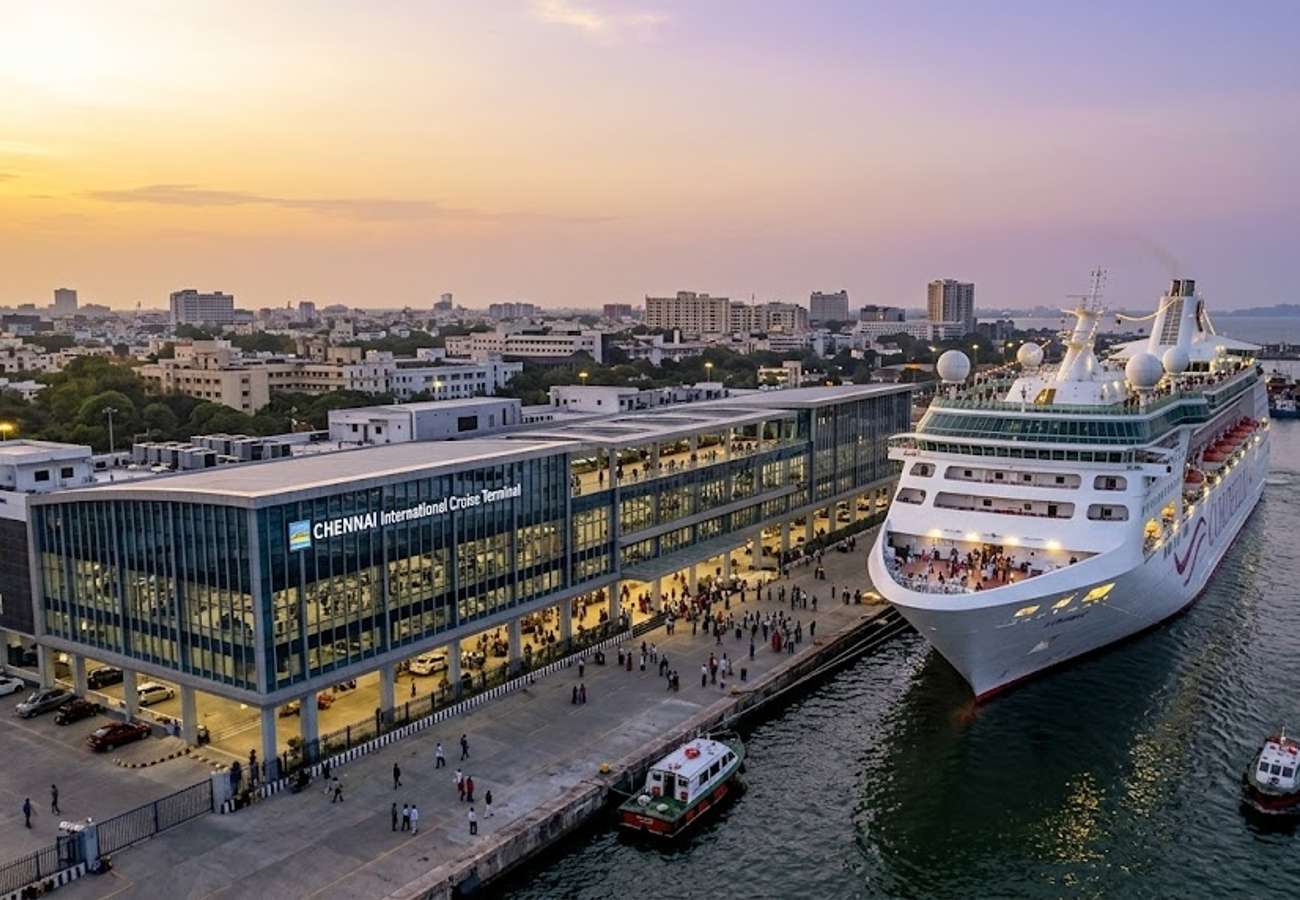
Image generated by AI
Chennai Port has launched a strategic maritime expansion featuring 21 planned voyages that integrate South Indian coastal hubs with key Sri Lankan ports. This growth is underpinned by a new 4,103 square metre international terminal designed to eliminate embarkation bottlenecks.
The arrival of the M.V. Empress marks a shift in regional maritime logistics, positioning Chennai as a primary homeport for seasonal cruising in South Asia. The expansion focuses on three pillars: increased voyage frequency, specialized port infrastructure, and integrated cultural hospitality. By linking domestic Indian destinations with international Sri Lankan ports, the program creates a seamless corridor for coastal exploration.
Regional Route Specifications and Port Connectivity
The current seasonal program operates as a hybrid network, blending domestic coastal hops with international transit. The following table outlines the primary destinations served under the new expansion.
| Transit Category | Destination Port | Country | Key Feature |
|---|---|---|---|
| International | Hambantota | Sri Lanka | Strategic Deep-water Access |
| International | Trincomalee | Sri Lanka | Eastern Coast Connectivity |
| International | Kankesanthurai | Sri Lanka | Northern Port Access |
| Domestic | Visakhapatnam | India | Eastern Coastal Link |
| Domestic | Puducherry | India | Regional Cultural Hub |
| Homeport | Chennai (West Quay) | India | Primary Embarkation Point |
Infrastructure Analysis: West Quay International Terminal
To sustain the influx of passengers from 21 scheduled voyages, the Chennai Port Authority has operationalized a modernized international cruise passenger terminal at West Quay. The facility is engineered to reduce transit friction and accelerate the movement of passengers from ship to shore.
The terminal spans 4,103 square metres and possesses a throughput capacity of 800 passengers per hour. From a logistics standpoint, the integration of customs and immigration counters within the same footprint as security and baggage scanning is a significant upgrade over fragmented port layouts.
Key Facility Specifications:
- Throughput: 800 passengers/hour.
- Total Area: 4,103 square metres.
- Logistics Features: Central air conditioning, advanced baggage scanners, and dual-side escalators (East and West).
- Passenger Amenities: Integrated lounges and on-site cafeteria to minimize external transit needs during processing.
Traveler Logistics Guide: Navigating South Asian Coastal Transit
From a ground-level perspective, the best way to navigate this new cruise corridor is to treat Chennai as the central logistics node. For those connecting from international flights to the M.V. Empress or similar vessels, the streamlined West Quay terminal reduces the typical "port chaos" associated with large-scale embarkation.
Connection and Documentation Advice:
- Immigration Flow: Since customs and immigration are now integrated into the 4,103 sqm terminal, passengers should ensure all visas for Sri Lanka (ETA) and India are digitally verified prior to arrival to utilize the fast-track processing.
- Layover Strategy: For those combining these cruises with land travel in Tamil Nadu, the terminal's location at West Quay provides direct access to Chennai's urban center. We recommend arriving at the terminal at least 4 hours prior to departure to experience the cultural reception and avoid peak processing windows.
- Baggage Handling: Use the advanced baggage scanners provided in the terminal; ensure all luggage is tagged specifically for the port of disembarkation (e.g., Trincomalee or Visakhapatnam) to avoid sorting delays.
Infrastructure Impact Assessment
This expansion represents more than a seasonal increase in tourism; it is a structural shift in how South India and Sri Lanka are connected. By establishing a reliable homeport in Chennai, the region reduces its reliance on long-haul air travel for coastal city-hopping.
The ability to process 800 passengers per hour ensures that Chennai can scale its operations to accommodate larger vessels beyond the M.V. Empress. Furthermore, the inclusion of Kankesanthurai and Trincomalee suggests a strategic intent to revitalize northern and eastern Sri Lankan port usage, potentially stimulating local economies through high-spend cruise demographics.
The integration of high-capacity infrastructure with cultural hospitality transforms Chennai Port from a mere transit stop into a destination anchor for the Indian Ocean.
Related Travel Guides
Disclaimer
This article is for informational and educational purposes only. It does not constitute legal, financial, or professional advice. While we strive to provide accurate and up-to-date information, travel policies, regulations, and conditions change rapidly. Always verify information with official sources before making travel decisions. Nomad Lawyer makes no representations about the accuracy, reliability, completeness, or suitability of the information provided. Readers should consult qualified professionals for advice specific to their circumstances. The views expressed in this article are those of the author and do not necessarily reflect the views of Nomad Lawyer.
Preeti Gunjan
Contributor & Community Manager
A passionate traveller and community builder. Preeti helps grow the Nomad Lawyer community, fostering engagement and bringing the reader experience to life.
Learn more about our team →