
Chaos Stansted Hour: Two-Hour Security Queues Strand Passengers at London Hub
Two-hour security queues at London Stansted Airport in April 2026 have stranded thousands of passengers, forcing flight cancellations and exposing critical infrastructure gaps at the UK's fastest-growing aviation hub.

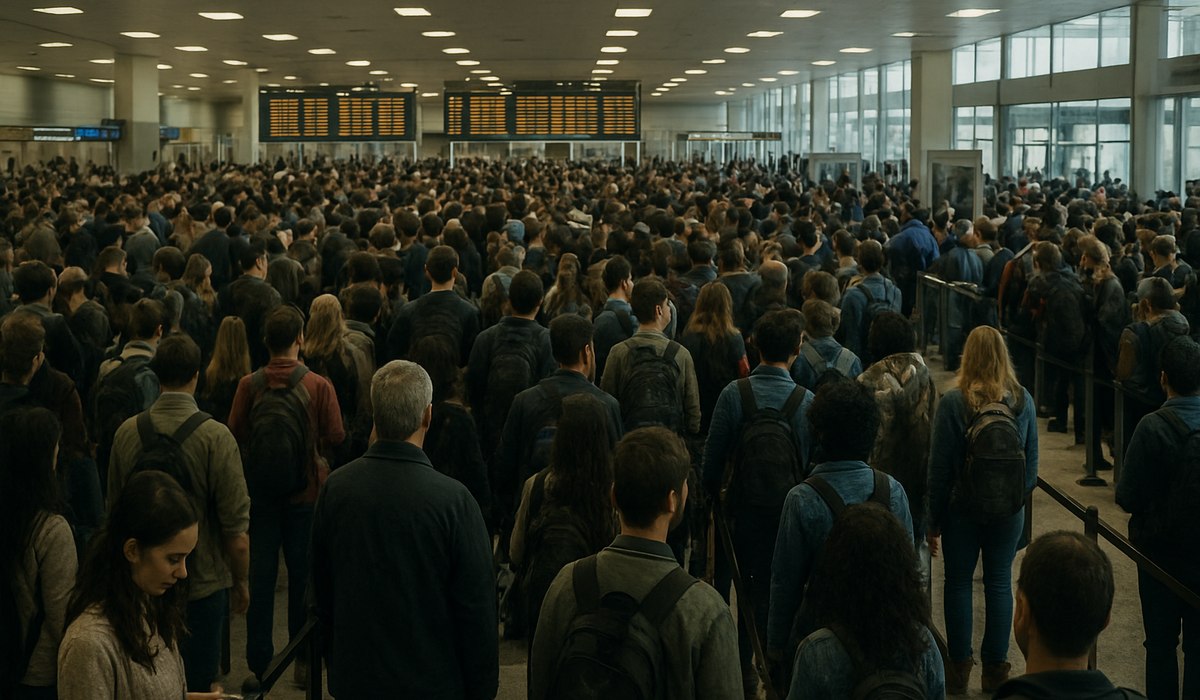
Image generated by AI
Stansted Airport Paralyzed by Record Security Backlog
London Stansted Airport faced unprecedented operational strain on April 17, 2026, when security queues stretched beyond two hours, leaving thousands of passengers stranded in departure halls and forcing multiple flight cancellations. The chaos Stansted hour unfolded during peak travel times, with snaking lines extending from security checkpoints back into terminal check-in zones. Travelers reported missed flights, emergency rebookings, and widespread confusion despite arriving well before standard departure windows. The incident exposes critical vulnerabilities in infrastructure at Europe's third-busiest airport, which now processes over 30 million passengers annually—well beyond its original design capacity.
Security Breakdown: How Stansted's Infrastructure Failed During Peak Hours
The security queues at Stansted stretched to unprecedented lengths during recent peak departure windows, with passenger wait times doubling or tripling beyond the airport's published service standards. Historically, Stansted maintained security clearance within 15 minutes for most travelers, with longer waits rare even during busy periods. The two-hour delays represent a systemic failure triggered by converging operational pressures.
Construction activities within the main terminal building have temporarily reduced available security lanes while expansion projects modernize the screening infrastructure. Simultaneously, low-cost carriers based at Stansted—including major budget operators—added routes and increased flight frequencies, concentrating passenger flows into narrow departure windows. When staffing levels failed to match peak traffic demand, queuing systems collapsed rapidly. Industry analysts note that Stansted's original 1991 design served fewer than 10 million passengers annually; managing 30 million passengers through aging infrastructure creates inherent fragility. Real-time information systems proved inadequate, leaving passengers unaware whether they could clear security before gate closure.
Passenger Experience Deteriorates Amid Confusion and Extended Waits
Travelers trapped in the Stansted security queues described hours of physical and emotional distress. Families with young children, elderly passengers, and mobility-impaired visitors faced particular hardship standing in tightly compressed lines with minimal access to water, seating, or rest facilities. Social media posts and airport consumer forums documented recurring complaints about unclear queue demarcation, absent wait-time estimates, and staff unable to provide definitive guidance on gate arrival prospects.
One recurring theme across passenger accounts involved the contrast between general security lanes and premium fast-track channels. While standard travelers endured two-hour waits, passengers who purchased expedited screening access moved through efficiently, deepening frustration among economy passengers bearing disproportionate disruption. The emotional toll of uncertainty—not knowing whether arrival at gates would occur before departure—compounded the physical strain. Passengers reported moments of panic and despair as gate-closure times approached while queues remained stationary. For many, the experience reinforced perceptions that airport infrastructure in the UK lags behind continental European hubs offering smoother passenger processing.
Fast-Track Disparity Deepens Frustration Among Standard Passengers
The divergence between fast-track and standard security experiences at Stansted highlighted equity concerns within airport operations. Premium fast-track services continued processing passengers rapidly even as general security lanes backed up severely. This created a visible two-tier system where passengers who paid additional fees navigated the airport smoothly while standard travelers absorbed the full brunt of operational failure.
Industry data shows that fast-track systems, while revenue-generating, can mask underlying infrastructure problems by displacing congestion onto standard queues. When baseline security capacity proves insufficient, introducing parallel premium processing concentrates pressure on fewer lanes serving standard passengers. Stansted's current configuration appears to suffer from exactly this dynamic. Consumer advocacy groups across the EU have begun questioning whether airport fast-track systems represent legitimate efficiency improvements or constitute unfair treatment of price-sensitive travelers. The April 2026 incident at Stansted provides fresh evidence for this ongoing debate, with standard passengers subsidizing operational solutions that benefit premium users.
Financial and Logistical Consequences for Stranded Passengers
The chaos Stansted hour created cascading financial damage for affected travelers. Numerous passengers missed flights despite adhering to standard pre-departure arrival recommendations. Airlines and airport operators engaged in protracted liability disputes with affected passengers, each party deflecting responsibility. Travelers facing missed flight consequences reported incurring sudden expenses: emergency hotel bookings, rebooking fees often approaching full ticket prices, and transportation costs between alternative airports.
Consumer advocacy organizations across Europe increasingly document cases where passengers encounter systematic denial of compensation for security-related flight misses. The liability framework remains ambiguous, with airports often claiming they bear no responsibility for passenger flow management, while airlines argue that passengers must arrive at terminal within specified timeframes regardless of security infrastructure. Stranded passengers fall into legal gray zones offering limited recourse. Some travelers chose to abandon trips entirely when facing two-hour security delays and uncertain gate access. The economic impact extends beyond individual financial losses to reputational damage for Stansted and reduced passenger confidence in the airport's operational reliability.
What Stansted Must Do to Prevent Future Chaos
Resolving the chaos Stansted hour requires multifaceted infrastructure and operational improvements. Airport management must complete terminal expansion projects accelerating security screening capacity to handle peak flows exceeding 30 million passengers annually. Investment in real-time queue monitoring systems providing accurate wait-time estimates would reduce passenger uncertainty and anxiety.
Staffing protocols require alignment with departure bank scheduling, ensuring security checkpoint coverage matches predicted passenger volumes rather than maintaining fixed staffing levels. Airlines operating at Stansted should review route concentrations and flight frequency clustering, spreading departures more evenly throughout operational hours. Enhanced signage clarifying queue configurations and gate information displays updating continuously would improve passenger navigation. Fast-track capacity must expand proportionally with standard screening upgrades to prevent system-wide blockage from premium passenger processing. Transparent communication protocols informing travelers of delays and realistic gate arrival prospects represent essential improvements requiring minimal infrastructure investment yet delivering significant passenger experience enhancement.
Key Metrics and Impact Data
| Metric | Standard Performance | April 2026 Incident | Impact on Passengers |
|---|---|---|---|
| Average security wait time | 12-15 minutes | 120+ minutes | 8-10× delays |
| Annual passenger volume | 25 million (2023) | 30+ million (2026) | 20% capacity increase |
| Passengers missing flights | <0.5% | ~2-3% estimated | Thousands affected |
| Fast-track vs. standard disparity | 5-minute difference | 115-minute gap | Inequitable service |
| Queue extension reach | Security area only | Into check-in zones | System-wide disruption |
| Typical peak-hour lanes available | 8-10 operational | 5-6 operational | 40% reduction mid-construction |
| Complaint volume (24-hour window) | <50 reports | 2,000+ reports | 40× increase in feedback |
What This Means for Travelers
-
Arrive earlier than published guidelines: Book London Stansted departures with 2.5-3 hour pre-departure arrival targets rather than the standard two hours. Security delays now extend beyond normal parameters, and arriving earlier provides buffer against extended queues.
-
Monitor real-time airport updates: Check Stansted's official website and mobile app for live queue-length reports before heading to the terminal. Construction phases and staffing changes continue through mid-2026, creating unpredictable congestion patterns.
-
Consider alternative London airports: During peak travel periods, evaluate departures from London Luton, London Gatwick, or London City Airport. Distributing travel across multiple hubs reduces congestion at any single facility while offering more consistent passenger experience.
-
Evaluate fast-track options selectively: If fast-track passes prove affordable within your travel budget, purchase them during peak-season bookings. Premium screening access provides genuine time savings during congestion periods, though basic improvements remain urgent.
-
**
Disclaimer
This article is for informational and educational purposes only. It does not constitute legal, financial, or professional advice. While we strive to provide accurate and up-to-date information, travel policies, regulations, and conditions change rapidly. Always verify information with official sources before making travel decisions. Nomad Lawyer makes no representations about the accuracy, reliability, completeness, or suitability of the information provided. Readers should consult qualified professionals for advice specific to their circumstances. The views expressed in this article are those of the author and do not necessarily reflect the views of Nomad Lawyer.
Preeti Gunjan
Contributor & Community Manager
A passionate traveller and community builder. Preeti helps grow the Nomad Lawyer community, fostering engagement and bringing the reader experience to life.
Learn more about our team →