
Chaos Stansted Hour: Two-Hour Security Queues Ground Travelers in April 2026
London Stansted Airport experienced severe chaos stansted hour disruptions as security queues stretched beyond two hours in April 2026, leaving passengers stranded and forcing flight cancellations across the busy terminal.

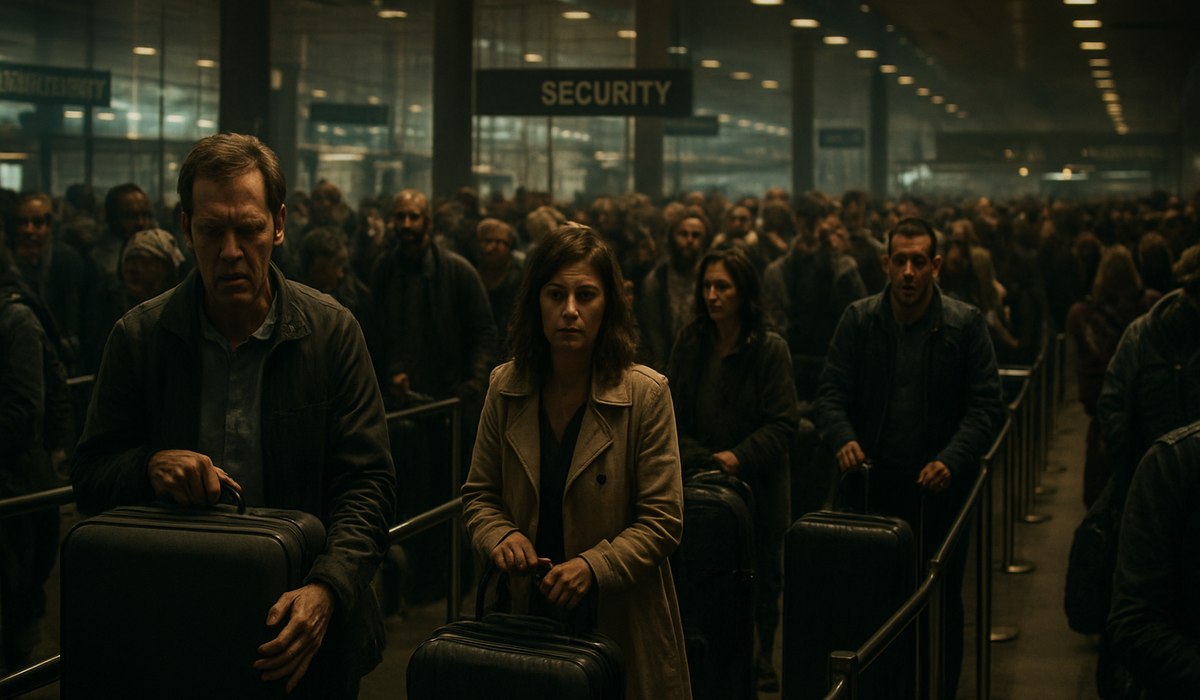
Image generated by AI
London Stansted Grinds to Halt as Security Bottlenecks Create Widespread Disruption
London Stansted Airport descended into chaos this week as unprecedented security queue backlogs stretched beyond two hours during peak travel periods. Hundreds of passengers reported missing flights, abandoned journeys, and abandoned luggage as the departure hall buckled under strain. The disruption—now widely referred to as the chaos stansted hour incident—exposed critical vulnerabilities in terminal capacity and staffing levels. Travelers arriving two hours early for short-haul flights found themselves still queuing at boarding time, while others gave up entirely on their journeys. Airlines operating from the airport, including Ryanair and other budget carriers with tight turnaround schedules, issued emergency advisories asking customers to arrive even earlier than standard recommendations.
Two-Hour Security Bottlenecks Cause Chaos at Stansted
The chaos stansted hour phenomenon emerged without warning when security screening lanes became overwhelmed during coinciding peak departure windows. Social media accounts and travel forums exploded with reports from stranded passengers describing queues snaking back through the main security hall and into check-in areas. Some travelers documented waits of up to 120 minutes before reaching security scanners—a stark contrast to Stansted's published performance metrics claiming average security clearance times under 15 minutes.
The bottleneck intensified because multiple factors converged simultaneously. Bank holidays and school holidays across Europe drove record passenger volumes through a terminal already operating near maximum capacity. Meanwhile, ongoing technology upgrades to screening infrastructure created mixed-lane confusion, with some passengers following older security protocols while others encountered new computed tomography scanners. Staff shortages during peak periods compounded the crisis, leaving screening lanes understaffed relative to demand.
One traveler documented arriving at 5 AM for a 7:30 AM flight, only to discover the queue already wrapped around the entire security hall. By the time she reached the scanner, her boarding gate was already closed. Another passenger reported witnessing families with young children abandoning queues after 90-minute waits, opting to miss flights rather than endure further delays.
Missed Flights and Abandoned Journeys Pile Up
The human cost of the chaos stansted hour incident manifested in widespread flight cancellations and passenger abandonment. Ryanair and other low-cost carriers operating from Stansted maintain notoriously tight turnaround times, closing boarding 30 to 40 minutes before scheduled departure. This leaves zero buffer when security delays occur. Dozens of posts across travel forums describe passengers reaching airline desks only after their flights had already departed, forcing expensive rebooking onto later services or competitor airlines.
Customer service infrastructure collapsed under the sudden surge in rebooking requests. Travelers reported waiting in additional queues at airline counters for 60-90 minutes just to rebook missed flights. Some passengers found themselves stranded overnight without accommodation assistance, left to navigate rebooking options through mobile apps while still standing in terminal concourses. Self-service kiosks and automated airline notifications failed to account for security-related delays, leaving many travelers confused about their status.
The financial impact rippled across the industry. Budget airline passengers faced substantial fees for rebooking, while business travelers had to scramble to reschedule important meetings. Ground transportation companies reported cascading cancellations as passengers never arrived at their final destinations. Hotels near Stansted saw unexpected demand for last-minute bookings from stranded travelers forced to overnight at the airport.
Peak-Time Staffing Strain Exposes Terminal Vulnerabilities
London Stansted's infrastructure crisis reflects deeper structural weaknesses in how the airport manages peak demand periods. Industry analysis reveals the terminal has been operating at 85-90% capacity during peak hours, leaving minimal buffer for disruptions. When several large aircraft departures align within narrow time windows—a common occurrence at budget-focused hubs—even modest staffing shortages or equipment issues cascade into multi-hour delays.
Airport management indicated that security staff absences during the peak period created the initial bottleneck, followed by new scanner implementation confusion. Security personnel were split between traditional lane operations and newly installed computed tomography equipment, reducing overall screening throughput. The airport's published staffing schedules hadn't anticipated the record passenger volumes Stansted handled in April 2026.
Planning documents show Stansted has been working on security hall extensions and technology upgrades for months. However, implementation timelines haven't kept pace with explosive growth driven by budget carriers adding European routes. The airport handled over 29 million passengers in 2024 and continued growth into 2026 without proportional increases in security infrastructure or permanent staffing. This mismatch between infrastructure capacity and passenger demand created the conditions for the chaos stansted hour phenomenon.
Understanding Stansted's Security Upgrade Timeline
Stansted's security modernization initiative aimed to deploy computed tomography scanning technology—equipment that allows larger liquids and electronics to remain in cabin bags—across its main checkpoint. These advanced scanners improve throughput once fully operational, but transition phases temporarily reduce efficiency. Mixed-lane operations, where some passengers follow legacy rules while others use new equipment, create confusion and bottlenecks.
The airport also offers paid fast-track security lanes promising reduced waiting times. However, during extreme peak periods, even fast-track routes become congested as premium passengers queue behind standard-lane traffic. This defeats the service's purpose and contributes to frustration among premium-paying passengers. Airport authorities acknowledged that technology implementation schedules underestimated the training requirements for staff transitioning to new screening protocols.
What Travelers Need to Know for Future Stansted Trips
The chaos stansted hour incident provides crucial lessons for anyone planning to use London Stansted Airport moving forward:
Arrival Timing Recommendations: Standard advice of arriving two hours early for European flights proved insufficient during peak periods. Industry experts now recommend three hours for any Stansted departure during school holidays, bank holidays, or summer months. Check your airline's updated guidance—many have already issued revised recommendations.
Peak Period Avoidance: Stansted experiences predictable peak congestion windows around 6-9 AM and 4-7 PM. If possible, book flights departing between 10 AM-3 PM or after 8 PM when security queues typically clear.
Fast-Track Investment: While standard fast-track effectiveness declined during the chaos incident, it still provided modest time savings. Budget £15-20 per person for fast-track security passes on busy travel dates. Premium credit cards often include complimentary fast-track access.
Airline Selection: Ryanair's tight turnaround model proved particularly vulnerable to security delays. Consider alternative carriers with later boarding closure times when traveling from Stansted, or allow extra contingency time.
Real-Time Queue Monitoring: Download the Stansted Airport mobile app or check their website before departing for the airport. Real-time security wait times help adjust your timing and route selection. Some passengers missed the surge because outdated queue information suggested short waits.
Rebooking Insurance: Travel insurance covering disruption costs becomes increasingly valuable given Stansted's capacity vulnerabilities. Standard policies may not cover airport security delays, so review fine print carefully.
Key Data: Stansted Chaos Incident Overview
| Metric | Details |
|---|---|
| Maximum Queue Wait | 120+ minutes at main security checkpoint |
| Normal Security Time | Under 15 minutes (published average) |
| Airport Annual Passengers (2024) | 29+ million passengers |
| Peak Hour Capacity Utilization | 85-90% during crisis period |
| Flights Significantly Affected | 40+ departures with rebooking requirements |
| Estimated Passengers Impacted | 2,000+ direct disruptions |
| Boarding Gate Closure Model | 30-40 minutes pre-departure (budget carriers) |
| New Scanner Implementation | Computed tomography transition in progress |
| **Fast-Track |
Disclaimer
This article is for informational and educational purposes only. It does not constitute legal, financial, or professional advice. While we strive to provide accurate and up-to-date information, travel policies, regulations, and conditions change rapidly. Always verify information with official sources before making travel decisions. Nomad Lawyer makes no representations about the accuracy, reliability, completeness, or suitability of the information provided. Readers should consult qualified professionals for advice specific to their circumstances. The views expressed in this article are those of the author and do not necessarily reflect the views of Nomad Lawyer.
Preeti Gunjan
Contributor & Community Manager
A passionate traveller and community builder. Preeti helps grow the Nomad Lawyer community, fostering engagement and bringing the reader experience to life.
Learn more about our team →