
Chaos Airports Flights: 34 Cancellations, 272 Delays Paralyze Australia and New Zealand
Thirty-four flight cancellations and 272 delays swept across Australian and New Zealand airports in 2026, stranding hundreds of passengers during peak travel season. Weather, staffing shortages, and razor-thin scheduling margins triggered cascading chaos at major hubs.

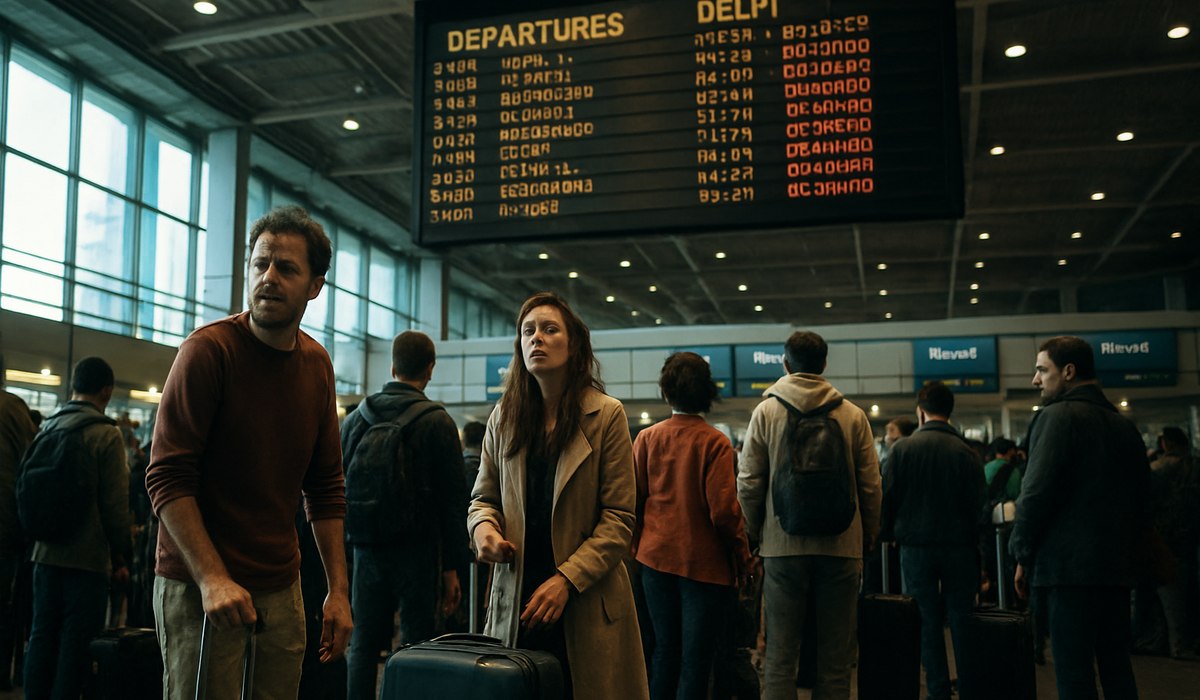
Image generated by AI
Breaking: Massive Disruption Hits Australasian Aviation Network
Sydney, Melbourne, and Auckland airports descended into chaos on April 27, 2026, as 34 flight cancellations and 272 delays crippled departure and arrival schedules across Australia and New Zealand. Hundreds of nomadic professionals, business travelers, and leisure passengers found themselves stranded at major hubs during the peak southern hemisphere travel season. The disruption exposed a critical vulnerability in airline scheduling: minimal spare capacity means even minor operational shocks trigger system-wide chaos across multiple airports and routes.
Scale of Disruption Across Australasian Hubs
The April 2026 incident affected dozens of flights across trans-Tasman routes and domestic services linking Australia's eastern corridor. Sydney Airport (SYD), Melbourne Airport (MEL), and Auckland Airport (AKL) bore the brunt of operational stress, with departure halls rapidly overwhelmed by frustrated passengers seeking alternative flights or rebooking assistance.
Flight-tracking data revealed the disruption was far from evenly distributed. Peak morning departures and early evening waves—when schedule density reaches maximum—experienced the worst delays. Aircraft and crews fell out of rotation, triggering knock-on delays on seemingly unrelated routes hours later. Passengers reported queuing for three to five hours at customer-service desks. Security lanes extended into check-in areas. Departure lounges overflowed with travelers sleeping in seats, uncertain when they'd finally leave.
Major airlines operating in the region, including Qantas, Virgin Australia, Air New Zealand, and regional carriers, all reported significant schedule impacts. The ripple effect extended to connecting flights within Australia and across the Tasman Sea to New Zealand. This wasn't a single airport failure—it was systemic network stress revealing fragile interconnections in Australasian aviation.
Cascading Delays: How One Problem Becomes Many
Modern airline operations depend on precise aircraft rotations and crew scheduling. When a single flight is canceled or delayed, the domino effect is immediate and severe. A morning delay pushes the afternoon rotation back, which then postpones evening departures. Crews hit regulatory duty-time limits, forcing additional cancellations even on unrelated routes.
The April 2026 disruption followed this exact cascade pattern. Early morning weather or technical issues forced several cancellations. Aircraft that should have been positioned for afternoon flights sat idle. Crews rested or were reassigned, breaking subsequent planned rotations. By midday, the system was in freefall. Evening flights—normally on schedule—faced unexpected cancellations because no aircraft or crew were available.
This cascading effect is why aviation analysts worry about highly optimized scheduling. Airlines maximize aircraft utilization to reduce costs. Each plane flies 8–10 segments daily with minimal turnaround time. There's almost zero buffer. In a well-functioning system, efficiency is excellent. But when disruption occurs—weather, maintenance, staffing gaps—the entire network fractures.
Recovery is equally complex. Airlines can't simply add extra flights because gates, ground crews, and air traffic control slots are already fully booked. Stranded passengers must wait for the next available seat, often 12–24 hours later. This explains why the April 27 incident generated hundreds of overnight accommodation requests and countless missed onward connections.
Root Causes: Weather, Staffing, and Scheduling Vulnerabilities
Three interconnected factors drove the April 2026 chaos airports flights crisis. First, adverse weather impacted key Australian and New Zealand locations simultaneously, reducing visibility and forcing air traffic control to slow arrival rates. Second, ongoing staffing pressures in ground operations, crew management, and maintenance continued hampering the industry's post-pandemic recovery. Third, ultra-tight scheduling margins left zero room for operational flexibility.
Aviation specialists have documented that Australian and New Zealand carriers are still rebuilding capacity post-pandemic. Pilot and cabin crew training pipelines remain stretched. Maintenance slots are fully booked. Ground crew rosters operate near maximum utilization. Industry observers describe this as "recovery fragility"—the system looks healthy on paper but lacks resilience.
When weather and staffing constraints hit simultaneously, even a minor technical fault at one airport cascades across the network. Airlines cannot quickly hire extra crew, lease additional aircraft, or add maintenance slots. The system lacks spare capacity.
Air traffic management constraints also amplified delays. During congestion, arrivals are placed into holding patterns and departures slowed. These constraints extend block times and exhaust crew duty limits. Once crews reach regulatory maximums, aircraft cannot operate as planned, triggering further cancellations.
International passenger-rights organizations have tracked this pattern globally. Weather and technical failures are largely unavoidable. But the scale of disruption is amplified by airline scheduling decisions that prioritize efficiency over resilience.
What This Means for Nomadic Professionals and Remote Workers
For digital nomads, location-independent professionals, and remote workers, the April 2026 Australasian disruption carries critical lessons. Chaos airports flights events happen regularly during peak travel periods. If your income depends on reaching a client meeting, visa run deadline, or accommodation change, a 24-hour delay can derail your entire month.
The incident revealed that major Australasian hubs—Sydney, Melbourne, Auckland—are not immune to systemic disruption. Nomadic professionals relying on frequent inter-regional travel face genuine scheduling risk. A missed flight doesn't just cost time; it disrupts visa timelines, accommodation bookings, and client commitments.
This doesn't mean avoiding Australasian routes. It means traveling with explicit buffers. Build 24-hour gaps between critical connections. Book flexible accommodations near major hubs. Maintain airline-agnostic backup routes (e.g., flying via Brisbane or Christchurch if Sydney is disrupted). Monitor FlightAware for real-time operational data before booking.
Remote workers with flexible schedules gain an advantage during chaos airports flights events. If your flight is canceled, you can work from the airport or a nearby hotel. Employees with rigid meeting schedules face far greater risk.
Traveler Action Checklist
If you're booked on flights across Australia and New Zealand, or considering travel during peak periods, follow these steps:
-
Check real-time flight status on FlightAware at least 24 hours before departure. Look for historical delay patterns on your specific route.
-
Book flexible accommodations near major airports. If your flight is canceled, you need same-day alternatives. Airbnb and airport hotels offer free cancellation within 24 hours.
-
Verify your airline's delay/cancellation policy before booking. Check US DOT passenger rights standards for reference (Australian carriers follow similar rules).
-
Purchase travel insurance that covers flight cancellations and delays exceeding 12 hours. Standard policies often exclude weather, so read exclusions carefully.
-
Build buffer time into tight connections. If you must connect between flights, allow minimum 3 hours on domestic + international routes. Avoid tight same-terminal transfers during peak travel hours.
-
Register with your airline's app for real-time notifications. Most carriers push delay/cancellation alerts 2–4 hours before departure, giving you time to reschedule.
-
Carry essential items in your carry-on bag. Medications, valuables, and important documents should never travel in checked luggage during disruption events.
-
Document everything. Save screenshots of booking confirmations, cancellation notices, and delay announcements. You'll need these for compensation claims under EU Regulation 261/2004 or equivalent Australian/New Zealand standards.
-
**Contact your airline within 24
Disclaimer
This article is for informational and educational purposes only. It does not constitute legal, financial, or professional advice. While we strive to provide accurate and up-to-date information, travel policies, regulations, and conditions change rapidly. Always verify information with official sources before making travel decisions. Nomad Lawyer makes no representations about the accuracy, reliability, completeness, or suitability of the information provided. Readers should consult qualified professionals for advice specific to their circumstances. The views expressed in this article are those of the author and do not necessarily reflect the views of Nomad Lawyer.
Raushan Kumar
Founder & Lead Developer
Full-stack developer with 11+ years of experience and a passionate traveller. Raushan built Nomad Lawyer from the ground up with a vision to create the best travel and law experience on the web.
Learn more about our team →