
Cannes Expands European Visitor Appeal Across Film Heritage, Luxury Hospitality, and Maritime Tourism
European travelers from Germany, Belgium, the UK, and Switzerland are driving year-round tourism growth in Cannes, France.

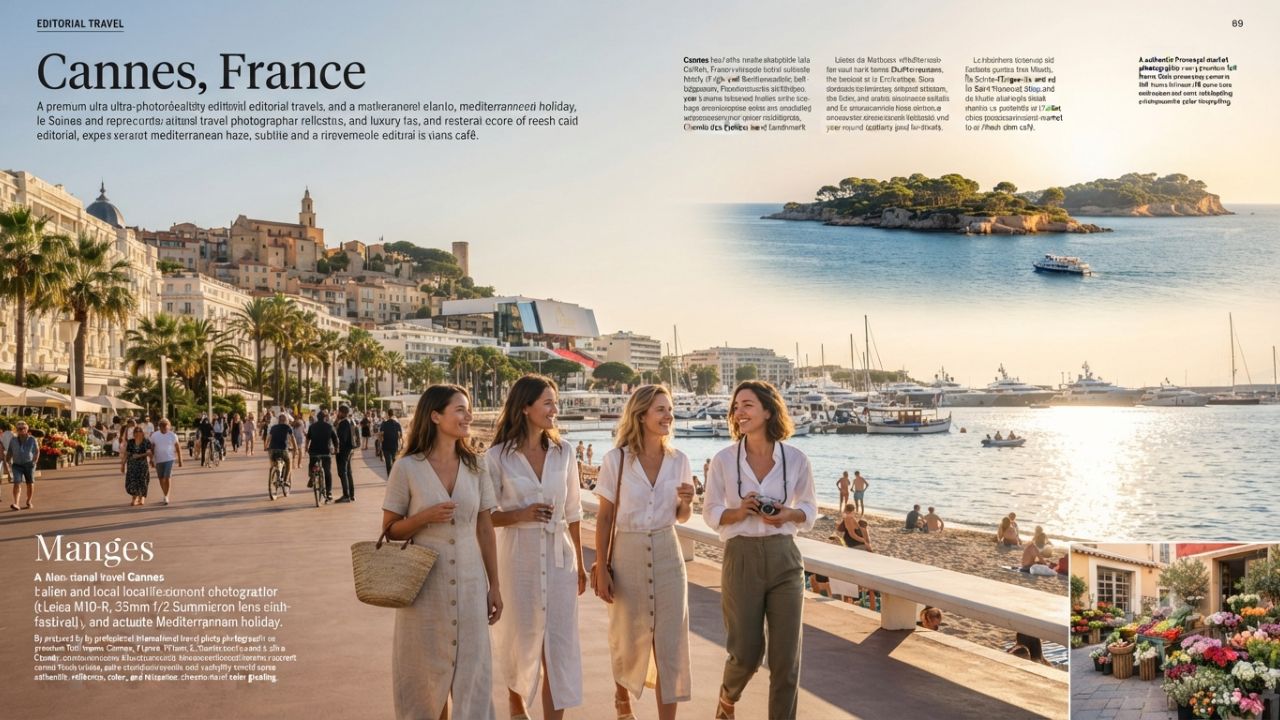
Image generated by AI
Travelers from Germany, Belgium, the United Kingdom, and Switzerland are fueling a year-round tourism expansion in Cannes, combining international film culture with coastal recreation and medieval Provençal heritage across the Alpes-Maritimes department.
Located on the French Riviera in southeastern France, Cannes is expanding its visitor economy well beyond the two-week footprint of its May film festival. Backed by civic upgrades at Marché Forville and multi-modal transit links to Nice Côte d'Azur Airport, the destination is establishing itself as a year-round center for luxury hospitality, eco-tourism, and historical exploration according to official destination metrics from France.fr.
Year-Round Visitor Economy Anchors French Riviera Growth
Moving past seasonal peak travel cycles, Cannes in 2026 is operating a mature, multi-season tourism model. While primary European source markets—Germany, Belgium, the UK, and Switzerland—continue to drive inbound volume into France, their travelers arrive to find a city balancing historic preservation with urban modernization.
Civic infrastructure projects, including major roof renovations at the historic Marché Forville and temporary producer halls, enhance daily commerce without disrupting visitor access. Enduring cultural anchors like the Palais des Festivals et des Congrès, the three-kilometer promenade along La Croisette, and the protected natural environment of the Lérins Islands support diverse travel itineraries ranging from luxury shopping to historical sightseeing.
Primary Tourist Landmarks and Experience Matrix
Cannes organizes its diverse cultural, coastal, and heritage assets into distinct geographical zones across the city and neighboring offshore reserves.
| Major Landmark | Geographic Location | Principal Visitor Experience | Primary Tourism Sector |
|---|---|---|---|
| Palais des Festivals | Waterfront / City Center | Famed 24 red-carpeted steps, Chemin des Étoiles handprints, guided tours | Film & Cultural Tourism |
| La Croisette | 3 km Waterfront Boulevard | Belle-Époque palace hotels (Carlton, Martinez), private beach clubs, fashion boutiques | Luxury & Coastal Tourism |
| Le Suquet | Historic Hillside District | Medieval cobblestone streets, Église Notre-Dame d’Espérance, panoramic bay views | Heritage Tourism |
| Marché Forville | Base of Le Suquet | Provençal agricultural market, seasonal Niçoise produce, socca street food | Culinary Tourism |
| Lérins Islands | 15-min Ferry from Quai Laubeuf | Île Sainte-Marguerite (Fort Royal) & Île Saint-Honorat (Cistercian Abbey vineyards) | Island & Eco-Tourism |
European Market Breakdown: Traveler Behaviors and Access Routes
European travel volume to Cannes relies on tailored transportation infrastructure and market-specific travel preferences across key feeder nations.
1. German Travelers: Film Culture, Architecture, and Regional Gastronomy
German visitors frequently combine historical sightseeing with coastal relaxation. Arriving via high-speed rail connections or direct flights from Frankfurt and Munich, German tourists focus on walking itineraries connecting the Palais des Festivals with the elevated medieval quarter of Le Suquet. German holidaymakers prioritize authentic culinary experiences, sourcing regional provisions from the temporary 2026 producer halls at Marché Forville and shopping along the pedestrianized Rue Meynadier.
2. Belgian Visitors: High-Speed TGV Access, Luxury Retail, and Island Reserves
Connected directly via TGV rail services departing from Brussels-Midi, Belgian travelers view Cannes as a destination where luxury retail intersects with maritime heritage. La Croisette and the parallel Rue d’Antibes serve as primary shopping corridors. Off the coast, Belgian visitors organize 15-minute boat trips from Quai Laubeuf to explore the natural reserves and eucalyptus groves of Île Sainte-Marguerite.
Cannes Offshore Island Transit Corridor
├── Departure Point  : Quai Laubeuf at the Old Port of Cannes
├── Transit Time     : 15-Minute Passenger Ferry Crossing
├── Option A         : Île Sainte-Marguerite (Fort Royal & Underwater Eco-Museum)
└── Option B         : Île Saint-Honorat (Active Monastic Heritage & Cistercian Vineyard)
3. United Kingdom Travelers: Cinematic Heritage and Historic Palace Hospitality
Continuing a tourism legacy dating back to Lord Brougham in the 1830s, British travelers remain heavily engaged with Cannes' high-society heritage and luxury hospitality. Visitors arriving via Eurostar connections or short-haul flights into Nice focus on the historic palace facades along La Croisette, including the Carlton and Hotel Martinez. UK tourists also explore maritime history at the Old Port and visit the Museum of World Explorations (Musée des Explorations du Monde) housed inside Le Suquet's historic château.
4. Swiss Visitors: Road Transit, Monastic Vineyards, and Coastal Wellness
Swiss travelers—frequently arriving via a four-hour drive down the A8 autoroute or TGV Lyria trains from Geneva—prioritize natural landscapes and serene island itineraries. The monastic heritage of Île Saint-Honorat represents a key attraction, where Cistercian monks continue to cultivate active vineyards surrounding the historic Lérins Abbey. Swiss tourists balance island excursions with fine dining along the bay and architectural walking tours through Le Suquet.
Film Tourism as a Permanent Economic Asset
While the Cannes Film Festival commands international headlines for two weeks each May, cinema functions as a permanent, year-round tourism driver. The Palais des Festivals et des Congrès acts as an accessible public monument where international visitors photograph the 24 red-carpeted steps (montée des marches) and follow the Chemin des Étoiles handprint trail embedded in surrounding footpaths.
Film-related tourism seamlessly channels pedestrian traffic directly into adjacent commercial sectors, boosting foot traffic for luxury boutiques along La Croisette, harbor dining at the Old Port, and historic walking routes leading up to Le Suquet.
European Transit Logistics and Connectivity Guide
Efficient multi-modal transit networks connect international European hubs directly to the heart of Cannes.
- Air Gateway (Nice Côte d’Azur Airport - NCE): Serves as the primary international air gateway for the French Riviera.
- Zou! Airport Express Bus 81: Operates direct, non-stop transfers from NCE Terminal 2 to Gare SNCF Cannes in 45 to 60 minutes.
- Regional TER Rail Network: Provides frequent coastal train links from Nice Saint-Augustin station directly into central Cannes.
- TGV & High-Speed Rail: Handles direct international services linking Cannes with Paris, Brussels, and Geneva.
- A8 Autoroute (La Provençale): Facilitates direct highway access for European road-trip travelers.
Why This Matters
Cannes demonstrates how an international destination can successfully leverage world-class event branding to build a resilient, multi-season visitor economy. For European travelers, the combination of high-speed rail access, direct airport express transfers, and diverse cultural assets makes Cannes an adaptable destination for short weekend breaks and extended coastal holidays alike.
For the French tourism sector, Cannes serves as a vital economic engine that balances high-yield luxury hospitality with accessible public heritage. By protecting delicate island ecosystems on the Lérins Islands while renovating traditional food halls like Marché Forville, Cannes maintains its international destination prestige while routing tourism spending directly into local Provençal communities.
FAQ: Cannes Tourism & European Travel 2026
What are the main attractions in Cannes outside the Film Festival?
Key year-round attractions include the red-carpeted steps at the Palais des Festivals, the 3 km Croisette promenade, the historic Le Suquet district, Marché Forville, and the offshore Lérins Islands.
How do travelers get from Nice Airport to Cannes?
The dedicated Zou! Airport Express Bus 81 provides a direct 45-to-60-minute transfer from Nice Côte d'Azur Airport (Terminal 2) to Gare SNCF Cannes. Regional TER trains also connect the two cities.
How do visitors reach the Lérins Islands from Cannes?
Passenger ferries depart regularly from Quai Laubeuf at the Old Port of Cannes, completing the offshore crossing to Île Sainte-Marguerite and Île Saint-Honorat in 15 minutes.
What historic sites can travelers explore on the Lérins Islands?
Île Sainte-Marguerite features Fort Royal, famous as the prison of the Man in the Iron Mask, while Île Saint-Honorat houses an active 11th-century Cistercian monastery and working vineyards.
Related Travel Guides
Disclaimer
This article is for informational and educational purposes only. It does not constitute legal, financial, or professional advice. While we strive to provide accurate and up-to-date information, travel policies, regulations, and conditions change rapidly. Always verify information with official sources before making travel decisions. Nomad Lawyer makes no representations about the accuracy, reliability, completeness, or suitability of the information provided. Readers should consult qualified professionals for advice specific to their circumstances. The views expressed in this article are those of the author and do not necessarily reflect the views of Nomad Lawyer.
Raushan Kumar
Founder & Lead Developer
Full-stack developer with 11+ years of experience and a passionate traveller. Raushan built Nomad Lawyer from the ground up with a vision to create the best travel and law experience on the web.
Learn more about our team →