The Mexican Caribbean Shift: Cancún Airport Sees 846,000 Fewer International Arrivals as Luxury Expands

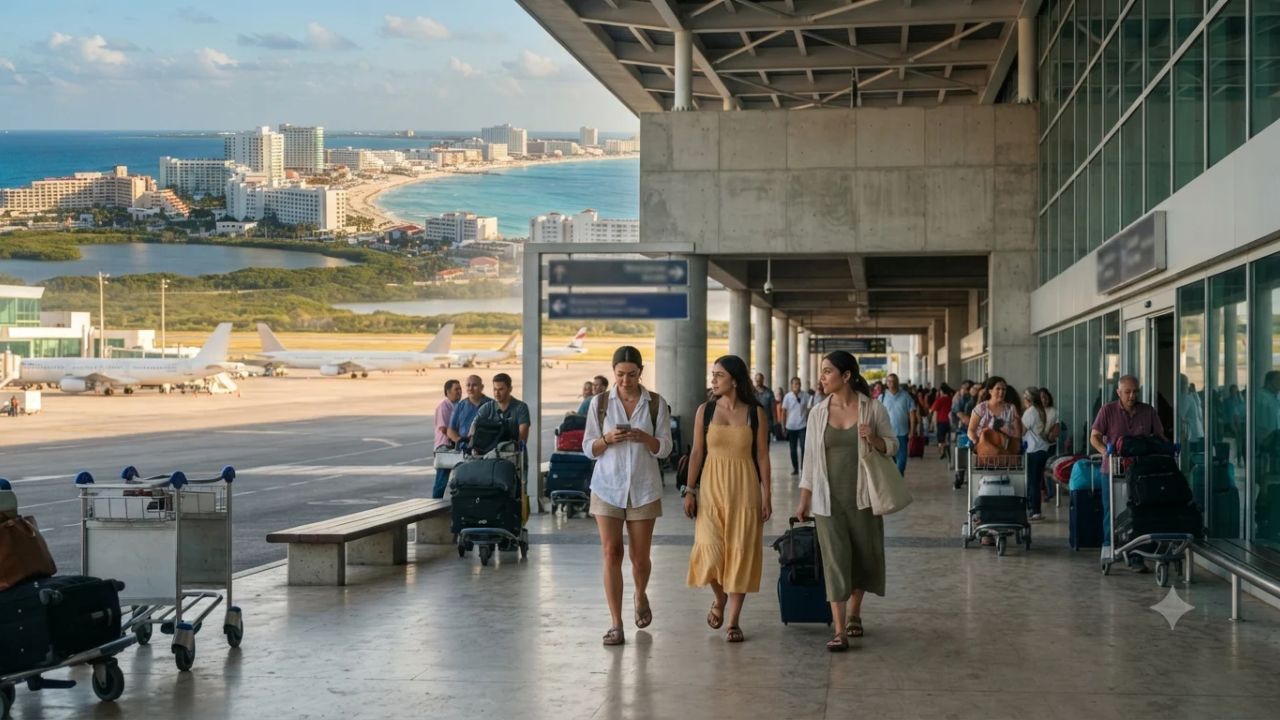
Even as Cancún International Airport recorded 845,714 fewer international passengers between January and August 2026—a 6.1 per cent dip that sharpened into a 15 per cent foreign arrival drop in August alone—luxury hospitality investors are doubling down on the Mexican Caribbean. While mass-market package tourism cools from record pandemic highs, premier global brands are pushing northward and into upscale marinas, headlined by the upcoming 500-room Grand Hyatt Cancun Beach Resort in Puerto Cancún and the 160-room St. Regis Costa Mujeres Resort.
The latest operating statistics released by airport operator ASUR reveal a destination transitioning from sheer volume toward high-yield experiential travel. Between January and August, the airport handled 12.93 million overseas travelers compared with 13.78 million during the same timeframe in 2025. Yet, far from signaling a decline in appeal, this recalibration allows independent travelers to experience the turquoise waters of Quintana Roo, ancient Mayan sanctuaries, and cenote networks with substantially shorter wait times and uncrowded beaches.
The Numbers Behind the Passenger Shift: An 8-Month Breakdown
The passenger traffic data highlights a clear divergence between resilient domestic travel and softening international leisure flights. Total passenger movements through Cancún International Airport reached 19.28 million travelers across the first eight months of 2026, marking a 5.7 per cent contraction from the 20.44 million recorded across the equivalent period in 2025.
The foreign arrival slowdown peaked during August 2026, when international passenger numbers dropped to 1.19 million from 1.40 million in August 2025—a monthly loss of more than 210,000 international flyers. In contrast, domestic Mexican passenger volume proved far more stable, dipping only 0.6 per cent in August and 4.8 per cent year-to-date (from 6.66 million to 6.34 million passengers).
| Operational Metric (ASUR) | Jan–Aug 2025 Benchmark | Jan–Aug 2026 Performance | Percentage Change |
|---|---|---|---|
| International Arrivals | 13.78 million passengers | 12.93 million passengers | -6.1% (-845,714 travelers) |
| August International Volume | 1.40 million passengers | 1.19 million passengers | -15.0% (>210,000 travelers) |
| Domestic Passenger Traffic | 6.66 million passengers | 6.34 million passengers | -4.8% (Resilient base) |
| August Domestic Volume | Stable baseline | Minor adjustment | -0.6% (Near-flat) |
| Combined Airport Total | 20.44 million passengers | 19.28 million passengers | -5.7% overall |
While North American and European charter traffic has softened, hotel developers are looking beyond raw airport headcounts. Discerning travelers are staying longer, booking standalone villas, and seeking culturally immersive boutique lodges away from the dense high-rise towers of Boulevard Kukulcán.
What Sets the New Mexican Caribbean Apart: Beyond the Mega-Resorts
The Mexican Caribbean is undergoing a geographic and aesthetic dispersion. Savvy travelers are increasingly bypassing the traditional 1970s Hotel Zone in favor of low-density coastal enclaves and historic Mayan heritage corridors.
To the north of downtown Cancún, the secluded coastline of Costa Mujeres features mangrove-fringed shorelines and shallow turquoise sandbars protected from open-ocean currents. Properties like the 160-key St. Regis Costa Mujeres provide private boat moorings and marine access directly across to Isla Mujeres. Meanwhile, in Puerto Cancún, the new 500-room Grand Hyatt Cancun Beach Resort combines golf courses and superyacht slips with direct access to downtown culinary districts.
Beyond resort gates, the region serves as the gateway to the world's second-largest barrier reef system and the ancient settlements of the Maya civilization. Sites such as Tulum, Cobá, and the UNESCO-listed biosphere reserve of Sian Ka'an—cataloged by UNESCO World Heritage—showcase coastal wetlands, mangrove lagoons, and undisturbed coral gardens that remain pristine when explored with certified local eco-guides.
Official regional itineraries and seasonal cultural festivals can be explored via the Caribe Mexicano tourism portal.
Visitor Insider Tips: Timing, Local Feasts, and Transport Hacks
Navigating Cancún and the Riviera Maya like a seasoned local allows you to avoid tourist markups and discover authentic regional culture:
- Bypass the Airport Taxi Gauntlet: Never accept unsolicited taxi offers inside the terminal building. Pre-book private ground transfers online or walk directly to the official ADO air-conditioned express coach stop located outside Terminal 2, 3, and 4. ADO buses run every 20 minutes to downtown Cancún and Playa del Carmen for a fraction of private car tariffs.
- Dine in Downtown Cancún's Parque Las Palapas: Skip overpriced resort buffets and take a ten-minute taxi into downtown Cancún. Parque Las Palapas fills with food carts serving authentic Yucatecan cochinita pibil (citrus-marinated pork slow-roasted in banana leaves), panuchos, and freshly pressed churros dusted in cinnamon sugar.
- Visit Cenotes Early in the Morning: Avoid organized tour-bus crowds at famous sinkholes along the Ruta de los Cenotes near Puerto Morelos by arriving at opening time (8:30 AM). You will enjoy crystal-clear freshwater caverns and limestone formations in tranquil solitude.
- Take the Ultramar Ferry to Isla Mujeres from Puerto Juárez: Instead of paying premium charter prices from the Hotel Zone, board the local passenger ferry from Gran Puerto in Puerto Juárez. The 20-minute crossing costs less and drops you directly at Playa Norte's powdery white sands.
- Respect Reef-Safe Sunscreen Protocols: When swimming in cenotes or snorkeling along the Mesoamerican Reef, state environmental laws prohibit chemical sunscreens containing oxybenzone and octinoxate. Wear UPF 50+ long-sleeve rashguards or use certified 100% biodegradable zinc oxide lotions.
Cultural and Environmental Context: Sustainable Stewardship on the Coast
The recalibration of visitor volume provides a welcome breathing space for Quintana Roo's fragile coastal ecosystems. The Mesoamerican Barrier Reef, subterranean aquifer rivers, and coastal mangrove forests have faced growing pressure from unchecked shoreline development and wastewater disposal over recent decades.
Lower arrival density enables municipal environmental bodies to accelerate reef restoration programs and coral nursery propagation in partnership with local diving cooperatives. Furthermore, luxury properties in Costa Mujeres are subject to stricter environmental zoning, preserving wider mangrove buffer zones that protect the coastline from storm surges and provide sanctuary for nesting sea turtles and manatees.
By channeling travel spending directly into locally owned Mayan cooperatives—such as community-managed ecotourism tours in Punta Allen and bee-keeping sanctuaries producing rare Melipona honey—visitors help safeguard indigenous heritage while ensuring tourism revenue remains within local communities.
FAQ: Visiting Cancún and Quintana Roo in 2026
Why did international passenger numbers drop at Cancún Airport in 2026?
International traffic fell by 6.1% (845,714 passengers) between January and August as post-pandemic travel normalized and travelers diversified into alternative regional destinations.
Is it safe and easy to travel outside the Cancún Hotel Zone?
Yes, the Riviera Maya, Costa Mujeres, and Puerto Morelos are well-policed tourist corridors with safe toll highways and reliable ADO intercity bus connections.
What is the best time of year to visit the Mexican Caribbean?
The shoulder months of November to early December and April to May offer warm sunny weather, calm seas, reduced hotel rates, and fewer crowds than the peak winter holidays.
Which new luxury resorts are opening in the Cancún region?
Major openings include the 500-room Grand Hyatt Cancun Beach Resort in Puerto Cancún and the 160-room St. Regis Costa Mujeres Resort north of the city.
[Beneath the swaying palms and ancient limestone arches, the Mexican Caribbean proves that true luxury begins when the crowds recede.]
Related Travel Guides
- El Salvador Travel 2026: Pacific Beaches, Volcano Trails, and Cultural Resurgence
- Wyoming Small Town Gem: Keyhole State Park Near Moorcroft Becomes 2026 Travelers' Secret
- Canada's $2.2M Arctic Breakthrough: Federal Investment Unlocks Indigenous Tourism Gold in Nunavut, Yukon, Northwest Territories 2026
This article is for informational purposes. Flight routes, passenger regulations, visa rules, and transit advisories are subject to change by airlines and aviation authorities. Readers are advised to verify schedules and travel documentation with relevant carriers and border agencies before departure.
Related Stories
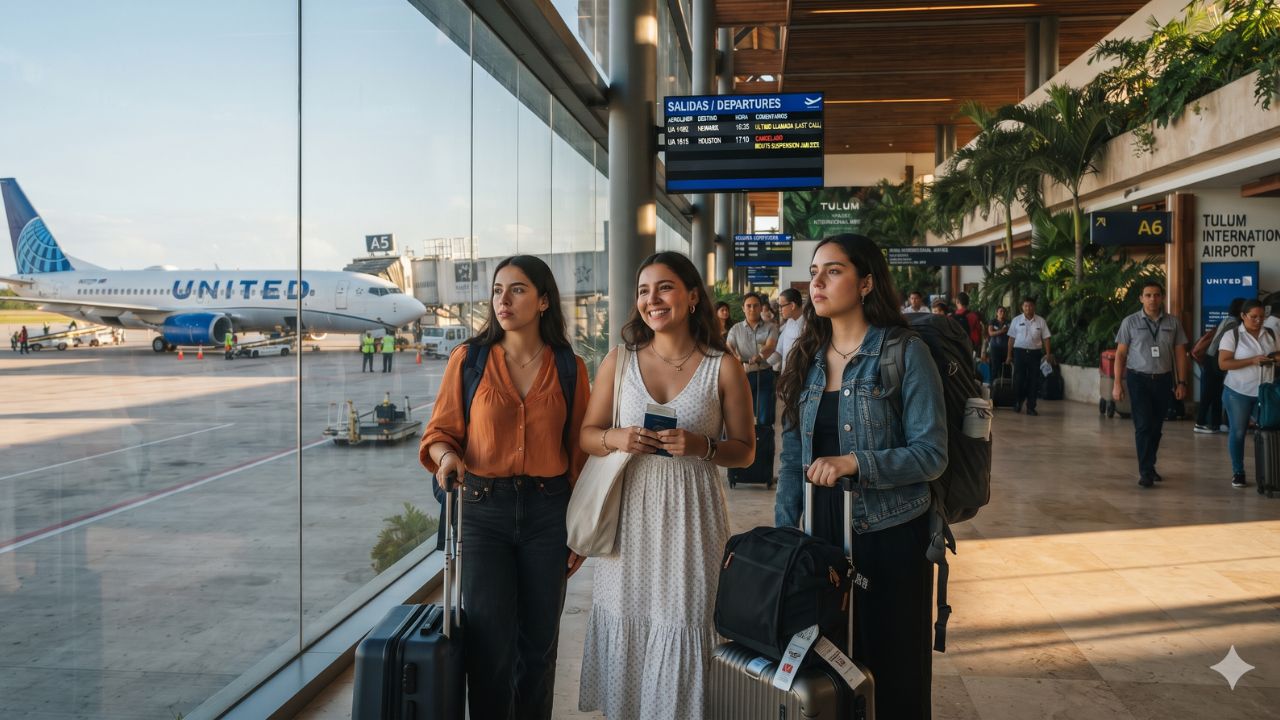
United Airlines Exits Tulum Airport in January 2027: Riviera Maya Travel Guide and Cancún Transit Alternatives

South Africa's Addo Elephant National Park Welcomes Woman-Owned Epitome Spa to Boost Inclusive Tourism 2026