
Cross-Border Travel Crisis: Canada's Boycott Costs Upstate NY $4.5B
Canadian tourism to Upstate New York plummets 30%+ in late 2025-early 2026 due to political tensions and boycott—resulting in $4.5 billion economic loss. Niagara Falls duty-free sales down 80%. What's happening at the U.S.-Canada border.

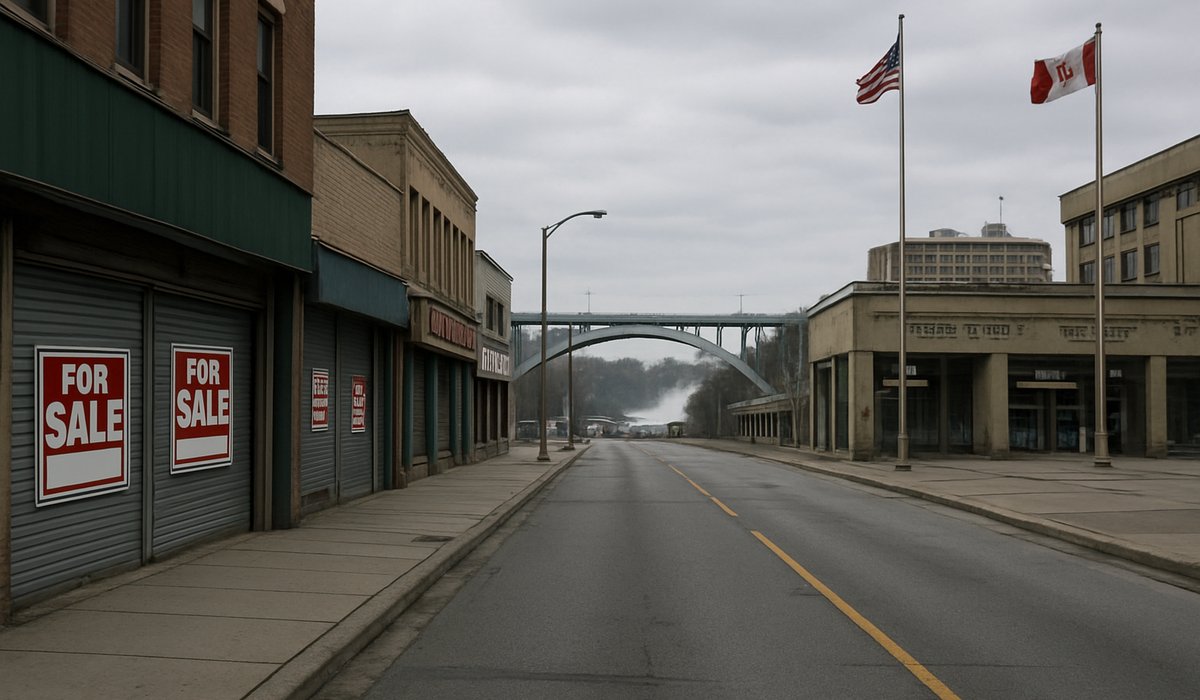
Image generated by AI
Quick Summary
- Stunning Economic Loss: Canadian tourism to Upstate New York dropped 30%+ causing $4.5 billion economic damage since late 2025
- Duty-Free Collapse: Retail sales in Niagara Falls down 80% as Canadian shoppers abandon cross-border travel
- Political Fallout: U.S.-Canada tensions, retaliatory tariffs, and border hostility drive Canadian boycott of American destinations
- Business Crisis: Small businesses in Lewiston, Niagara Falls, and Buffalo facing closures and mass layoffs
- Strategic Pivot: U.S. tourism boards shift from Canadian markets to domestic Pennsylvania/Ohio focus
Upstate New York Reels From Historic Cross-Border Tourism Collapse
Canada's growing boycott of U.S. travel destinations has triggered an unprecedented economic catastrophe for Upstate New York's border communities, erasing $4.5 billion in tourism revenue and leaving businesses desperate. Since late 2025, Canadian visitor arrivals to iconic destinations like Niagara Falls and Buffalo have nosedived by more than 30%—marking the steepest decline in cross-border tourism history. Political tensions, economic anxieties, and perceptions of American hostility have transformed the once-vibrant U.S.-Canada border into a commercial graveyard where tourism-dependent businesses face permanent closure.
The crisis represents far more than tourism statistics. It reflects fundamental deterioration in bilateral relations and Canadian public sentiment toward the United States as a travel destination.
The Political Crisis Fueling the Boycott
Escalating political and economic hostility between the U.S. and Canada has created the primary catalyst for the tourism collapse.
Retaliatory Tariffs and Economic Uncertainty
Retaliatory tariff exchanges between Washington and Ottawa have created widespread economic anxiety. Canadian consumers face higher prices on U.S. goods; U.S. goods become more expensive in Canada. This economic friction directly impacts consumer spending and travel willingness. Canadians increasingly question whether U.S. travel represents value when purchasing power deteriorates amid tariff warfare.
Border Hostility and Immigration Enforcement
Beyond economic tensions, border environment perceptions have shifted dramatically. Reports of intensified Immigration and Customs Enforcement (ICE) activities and aggressive border scrutiny have created perception of American hostility toward Canadian visitors. Media coverage amplifying border tensions has reinforced public anxiety about crossing into the United States.
Annexation Rhetoric and Political Messaging
Political statements regarding border annexation and heightened nationalist rhetoric have further alienated Canadian public opinion. What many Americans view as political theater, Canadians interpret as genuine American hostility toward Canadian sovereignty. This messaging shift fundamentally altered how Canadians perceive U.S. destinations.
The $4.5 Billion Economic Catastrophe
The cascading economic impact defies simple quantification—but the $4.5 billion loss represents only direct tourism spending.
Revenue Collapse Across Sectors
- Duty-free retail: 80% sales decline in Niagara Falls
- Hospitality: 20-30% revenue drops across hotels and restaurants
- Transportation: Reduced border traffic affecting regional logistics
- Entertainment and attractions: Significantly reduced visitor footfall
- Food services: Dramatic decline in restaurant and café patronage
Multiplier effects magnify these losses. When tourism spending decreases, workers get laid off. Those workers reduce spending in their communities. Their reduced spending impacts other local businesses. This economic cascade extends far beyond initial tourism loss.
Business Sector Devastation
Individual businesses report catastrophic impacts. Retail establishments specializing in duty-free goods report 80% sales declines. Restaurants dependent on cross-border traffic face 20-30% revenue drops. Hotels see occupancy rates plummet as Canadian visitors simply stop arriving.
These aren't abstract statistics. They represent real business closures, job eliminations, and individual family financial ruin.
Lewiston and Niagara Falls: Border Towns in Crisis
For decades, Lewiston and Niagara Falls thrived on cross-border commerce. That prosperity has evaporated almost overnight.
Hub of Cross-Border Activity
Historically, these communities represented the economic engine of U.S.-Canada cross-border commerce. Canadian visitors would cross for retail shopping, dining, entertainment, and experience American attractions. During peak seasons, border towns bustled with activity. Shopping destinations catered specifically to Canadian visitors. Restaurants welcomed multilingual staff.
2026 Reality: Abandoned Storefronts
Current conditions reveal dramatic reversal. Once-crowded retail districts show empty storefronts. Restaurants operate with skeleton staffing. Hotels offer dramatic rate reductions searching for any customers.
The psychological impact on border communities proves devastating. Entire town identities centered on cross-border commerce suddenly lack purpose.
Duty-Free Retail Sector Collapse
Duty-free shopping represented Lewiston and Niagara Falls' primary retail draw. Canadian visitors specifically targeting duty-free opportunities drove substantial retail traffic. The 80% sales decline essentially eliminates primary business models for many retailers.
Many established retailers now face impossible choices: continue operating at catastrophic financial loss or close operations. Some declare bankruptcy. Others desperately search for alternative utility of their commercial spaces.
Corporate Mobility Managers Flee the Border
International corporate decision-makers have essentially blacklisted Upstate New York border communities for business travel and events.
Hotel Rate Volatility and Planning Uncertainty
Corporate mobility managers advise avoiding U.S. border towns due to unpredictable hotel pricing and operational uncertainty. The tourism collapse left hoteliers desperate for bookings, creating rate volatility that challenges corporate budget planning. Last-minute pricing changes and availability fluctuations create unacceptable coordination difficulties for large corporate events.
Meeting Relocation Strategy
Major corporations now explicitly avoid scheduling cross-border business activities in Buffalo, Niagara Falls, and Lewiston. Instead, events relocate to:
- Canadian cities (Toronto, Montreal, Vancouver)
- Third-party neutral locations
- U.S. interior cities with stable economic conditions
This corporate departure compounds local economic deterioration. Business travel represents high-value revenue stream. Its loss magnifies tourism sector devastation.
Tourism Marketing Transformation: From Ontario to Ohio
Faced with catastrophic Canadian market collapse, Upstate New York tourism organizations have fundamentally reorganized their marketing strategies.
Destination Niagara USA's Strategic Pivot
Organizations like Destination Niagara USA—historically focused on capturing Ontario and Quebec markets—have completely reoriented marketing efforts. Rather than targeting Canadian border proximity, marketing now emphasizes domestic "drive markets" like Pennsylvania and Ohio.
This pivot represents admission of strategic defeat in Canadian markets. Tourism boards essentially concede that Canadian visitation won't recover in foreseeable future.
Domestic Market Development
The shift toward Pennsylvania and Ohio residents reflects realistic assessment of near-term economic prospects. Domestic tourists represent more reliable, stable customer base than politically boycotting Canadians.
Marketing budgets formerly dedicated to Canada now target American tourist sources. Digital advertising, travel partnerships, and promotional campaigns increasingly emphasize domestic appeal.
Non-Retail Economic Diversification
Beyond domestic marketing, tourism boards invest in infrastructure and attractions less dependent on cross-border retail traffic. Event centers, convention facilities, and conference infrastructure increasingly receive development funding. These assets generate revenue through corporate events and conventions rather than day-tripper retail.
Historical Comparison: Pre-2025 Prosperity to 2026 Crisis
The contrast between pre-2025 conditions and current reality illuminates the severity of economic disruption.
Pre-2025: Cross-Border Tourism Stability
Before late 2025, cross-border tourism operated with predictable consistency:
- Regular weekend cross-border shopping trips
- Sporting event travel (Buffalo Bills, hockey games)
- Attraction visits (Niagara Falls viewing)
- Retail therapy and mall shopping
- Dining and entertainment experiences
Canadian visitors represented approximately 30-40% of many border-area businesses' customer base. This Canadian traffic provided economic foundation enabling business viability.
2026: Tourism Market Collapse
Current conditions represent complete reversal:
- 30%+ decline in Canadian visitor numbers
- 80% duty-free retail sales reductions
- Empty border shopping districts
- Hotel occupancy crises
- Mass business layoffs and closures
The shift from prosperity to crisis transpired in remarkably short timeframe—demonstrating how quickly political tensions translate into concrete economic damage.
FAQ: Essential Questions About Cross-Border Travel Crisis
Q: Will Canadian tourism recover to pre-2025 levels? A: Recovery depends on political climate normalization. Absent resolution of U.S.-Canada tensions and border hostility perception shift, recovery timeline remains uncertain. Some analysts project years of depressed markets; others suggest potential permanent visitor reduction.
Q: Are other U.S.-Canada border regions experiencing similar declines? A: Yes, though severity varies. Detroit, Seattle, and other border communities report significant Canadian visitor declines, though often less severe than Upstate New York. Niagara Falls' retail specialization concentrated Canadian dependency, making economic impact particularly acute.
Q: What businesses face highest risk of closure? A: Duty-free retail, hospitality, and tourism attractions face greatest closure risk. Businesses with diversified revenue streams and reduced Canadian dependency survive better. Communities with broader economic foundations than tourism show more resilience.
Q: Can Upstate New York recover economically without Canadian tourists? A: Partial recovery appears possible through domestic market development and economic diversification. However, full pre-2025 prosperity seems unlikely without Canadian market normalization. Permanent structural economic reorganization appears increasingly probable.
Q: What's the timeline for potential recovery? A: Political normalization represents prerequisite for recovery. Without fundamental U.S.-Canada relations improvement, recovery timeline extends years or longer. Conservative analysts project 5-10 year recovery period minimum.
The Uncertain Path Forward
Upstate New York border communities face perhaps the most uncertain economic moment in decades.
Without political-climate resolution, the tourism collapse may prove permanent. Businesses that survived early downturn phase now face decisions regarding long-term viability. Some will diversify; some will relocate; some will simply close.
The broader implication suggests how vulnerable border economies remain to political disruption. Economic prosperity built on cross-border exchange proves fragile when bilateral political relations deteriorate. Border communities require either political stability or economic diversification—often they achieve neither.
For travelers, the situation reflects troubling broader trends: increasing politicization of travel, selective destination boycotts based on political messaging, and reduction of cross-border commerce. As travel becomes increasingly politicized, border communities remain most vulnerable to resulting economic catastrophe.
Disclaimer
This article is for informational and educational purposes only. It does not constitute legal, financial, or professional advice. While we strive to provide accurate and up-to-date information, travel policies, regulations, and conditions change rapidly. Always verify information with official sources before making travel decisions. Nomad Lawyer makes no representations about the accuracy, reliability, completeness, or suitability of the information provided. Readers should consult qualified professionals for advice specific to their circumstances. The views expressed in this article are those of the author and do not necessarily reflect the views of Nomad Lawyer.
Preeti Gunjan
Contributor & Community Manager
A passionate traveller and community builder. Preeti helps grow the Nomad Lawyer community, fostering engagement and bringing the reader experience to life.
Learn more about our team →