
Camiguin Island Targets 824,000 Annual Visitors by 2028 Amid Massive Infrastructure Pivot
Camiguin is scaling its tourism infrastructure to accommodate a projected 824,000 annual visitors by 2028, shifting focus from raw arrival numbers to international market diversification and sustainable community economic distribution.

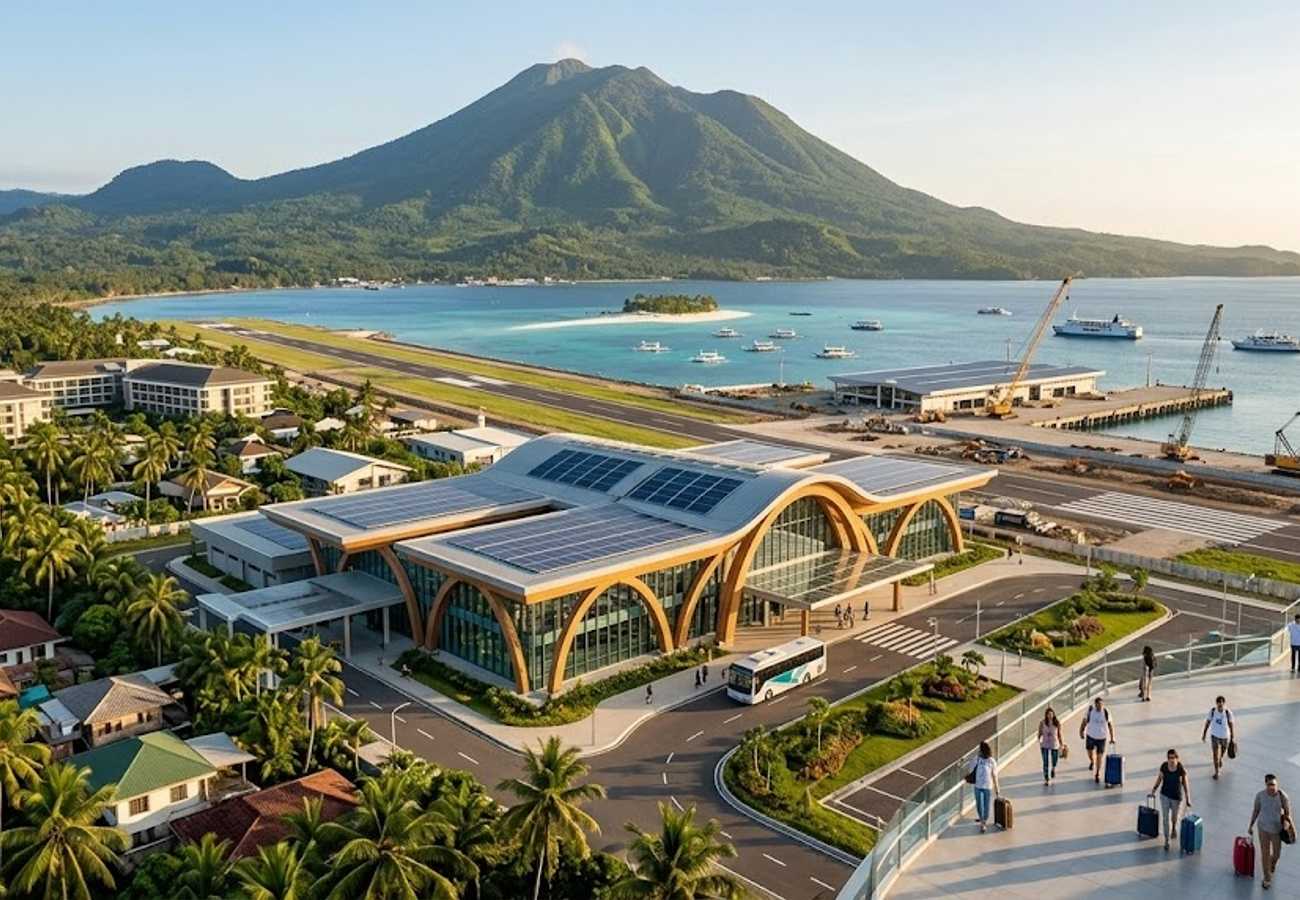
Image generated by AI
824,000 annual visitors is the ambitious benchmark set by the provincial government of Camiguin by 2028, a target that would effectively double the island's current tourism footprint. This aggressive growth trajectory follows a period of rapid acceleration, where the province saw its visitor count climb from 288,558 in 2024 to 397,818 in 2025—a sharp 23.32 per cent increase in a single year.
The Shift Toward International Diversification
While the domestic market remains the bedrock of the island's economy, the provincial administration is pivoting toward a more globalized visitor profile. In 2025, the breakdown of arrivals revealed a heavy reliance on local travel, with 376,322 domestic tourists compared to 21,496 international arrivals. This means that foreign visitors currently represent only about 6 per cent of the total volume.
The strategic objective outlined in the provincial roadmap is to elevate the international share to 15 per cent by 2028. To achieve this, Camiguin has identified specific high-value source markets, namely Germany, France, the United States, and Spain. The logic behind this shift is not merely numerical; international travelers typically exhibit longer average lengths of stay and higher per-capita spending, which reduces the seasonal volatility associated with domestic holiday peaks.
Infrastructure Capacity and Quality Benchmarks
The leap to nearly a million visitors creates an immediate tension between demand and existing capacity. Currently, the island's hospitality sector is composed of 170 tourism establishments providing a total of 1,312 rooms. However, a significant gap exists between total capacity and certified quality. Only 127 of these establishments are accredited by the Department of Tourism (DOT), and only 581 rooms carry the DOT quality-assured classification.
To prevent the "overtourism" pitfalls seen in other Philippine hubs, Governor Xavier Jesus Romualdo has signaled that expansion must be systemic. The province is focusing on five critical pressure points:
| Infrastructure Sector | Current Status/Focus | 2028 Objective |
|---|---|---|
| Accommodation | 1,312 total rooms | Increase DOT-accredited quality-assured rooms |
| Transport | Localized networks | Runway development and port enhancements |
| Water & Utilities | Basic provincial supply | Scaled capacity for high-volume arrivals |
| Digitalization | Traditional booking | Implementation of "Smart Tourism" systems |
| Market Mix | 6% International | 15% International share |
Expert Analysis: The "Value over Volume" Gamble
For the modern traveler, the direct consequence of Camiguin's 2025–2028 Action Plan is a transition from a "hidden gem" experience to a structured destination. The provincial government is attempting a difficult balancing act: scaling arrivals while simultaneously increasing the average length of stay.
From a logistical standpoint, the focus on runway and port improvements is the primary catalyst. Without these, the 824,000-visitor target remains a mathematical aspiration rather than a reality. However, the real economic shift is the attempt to decentralize tourism income. By pushing for longer stays, the province aims to move spending away from the primary transit hubs and into the hands of local artisans, fishers, and farmers.
The pricing pressure this creates is twofold. As the island seeks "quality-assured" DOT status for more rooms, travelers should expect a rise in average daily rates (ADR) for accommodation. The shift toward European and North American markets typically necessitates a higher tier of service and luxury, which may price out the budget-conscious domestic traveler over time. If Camiguin successfully integrates its International Air Transport Association (IATA) standards into its airport upgrades, the island will move from a secondary destination to a primary international gateway.
Key Takeaways
- Aggressive Growth: Camiguin aims to reach 824,000 annual visitors by 2028, more than doubling its 2025 figure of 397,818.
- Market Pivot: The province intends to increase the proportion of international tourists from 6% to 15%, targeting the US, Spain, France, and Germany.
- Quality Gap: While there are 1,312 rooms available, only 581 are currently classified as DOT quality-assured, indicating a major push for hospitality upgrades.
- Infrastructure Focus: Key developments are centered on runway expansion and port improvements to facilitate easier access.
- Economic Distribution: The strategy prioritizes "longer stays" to ensure tourism revenue reaches farmers and local suppliers beyond the hotel sector.
FAQ: Camiguin Tourism 2026-2028
Is Camiguin becoming too crowded for tourists? While visitor numbers grew 23.32% between 2024 and 2025, the government is implementing a "Smart Tourism" plan to manage flow and protect natural assets before hitting the 824,000-visitor mark in 2028.
How can I get to Camiguin in 2026? Access is currently via ports and local flights. However, the province is actively developing its runways and port facilities to increase capacity and frequency for both domestic and international arrivals.
What is the "DOT quality-assured" label? It is a certification from the Philippine Department of Tourism ensuring that an establishment meets specific standards of service, safety, and facility quality. Only 581 rooms in Camiguin currently hold this status.
Why is the island targeting European and American tourists? International visitors from these regions typically stay longer and spend more per day, which helps diversify the economy and reduces reliance on the domestic travel calendar.
The transition from a secluded sanctuary to a high-capacity hub will determine if Camiguin remains a paradise or becomes a cautionary tale of rapid expansion.
Related Travel Guides
Disclaimer
This article is for informational and educational purposes only. It does not constitute legal, financial, or professional advice. While we strive to provide accurate and up-to-date information, travel policies, regulations, and conditions change rapidly. Always verify information with official sources before making travel decisions. Nomad Lawyer makes no representations about the accuracy, reliability, completeness, or suitability of the information provided. Readers should consult qualified professionals for advice specific to their circumstances. The views expressed in this article are those of the author and do not necessarily reflect the views of Nomad Lawyer.
Naina Thakur
Contributor & Travel Specialist
Travel enthusiast and legal writer covering visa regulations, responsible tourism, and cultural journeys across global destinations.
Learn more about our team →