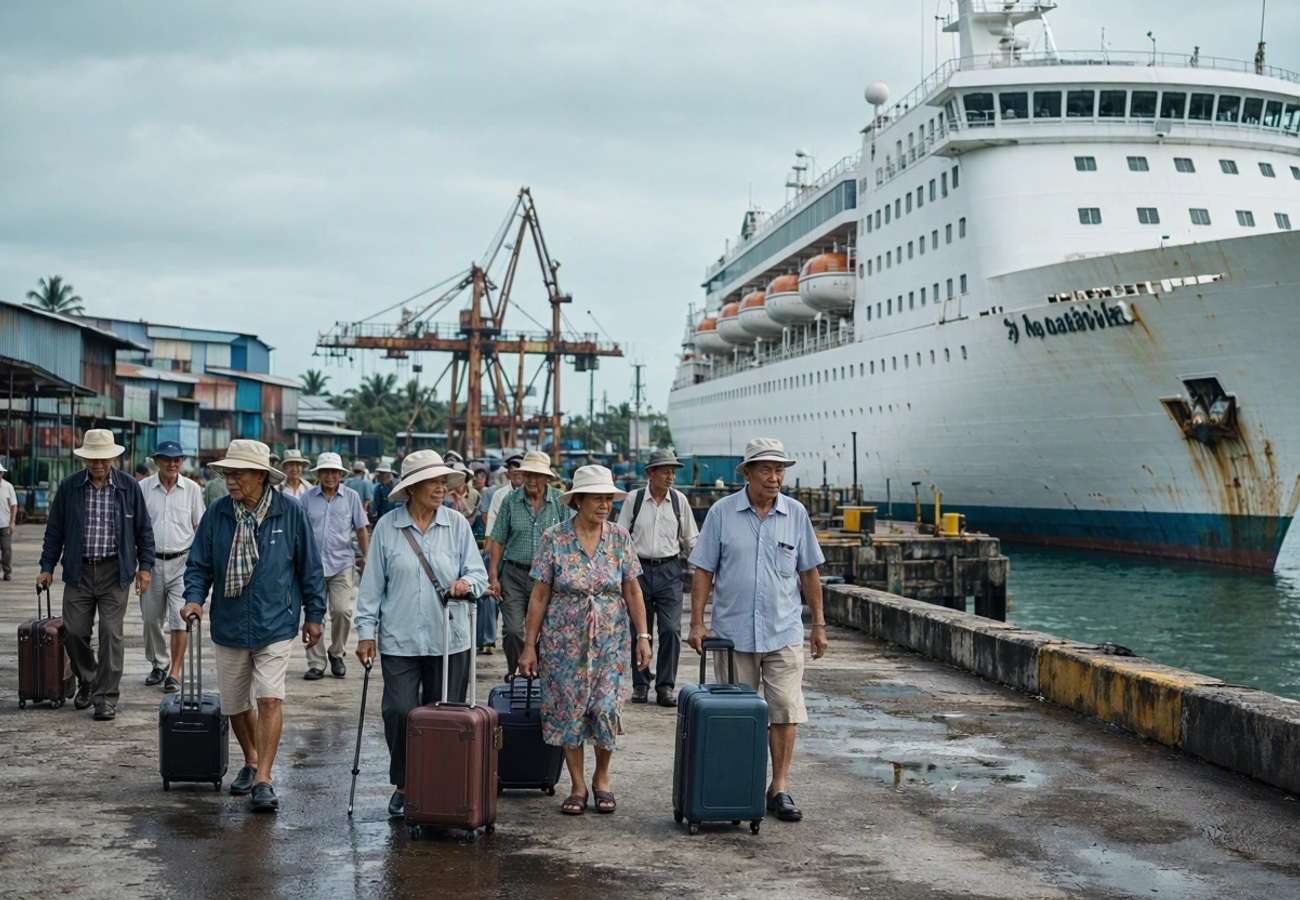
Cambodia Cruise Travel Crisis as Florida Operator Suspends Global Voyage and Leaves 203 Residents Stranded in Sihanoukville

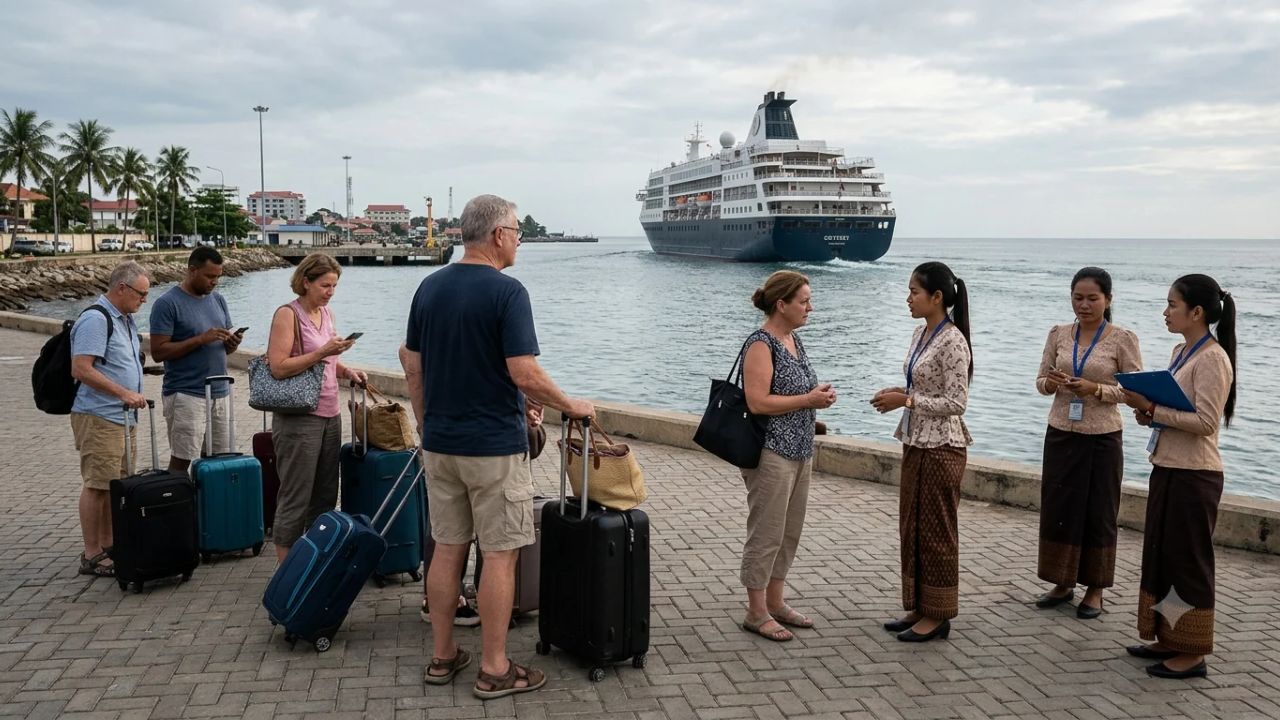
SIHANOUKVILLE — A profound humanitarian and financial emergency has unfolded along Cambodia’s southwestern coastline after Florida-based cruise operator Villa Vie Residences abruptly suspended the global voyage of its residential vessel, the MV Odyssey, leaving 203 passengers stranded ashore after the ship departed without them on November 3, 2026. Citing an unprecedented fourfold surge in monthly operating expenses driven by astronomical marine bunker fuel costs across East Asian bunkering hubs, the company halted operations indefinitely, effectively evicting residents who had liquidated land-based homes, pensions, and life savings to purchase perpetual ocean living accommodations. The sudden stranding at the Sihanoukville Autonomous Port (PAS) has triggered urgent consular interventions from Western diplomatic missions, exposed the precarious legal status of residential cruise buyers, and dealt a severe blow to the emerging residential seafaring sector.
The abrupt termination of the voyage marks the climax of mounting operational strains that have plagued the venture since its inception. Promoted as an innovative, continuous-circumnavigation residential community, the 33-year-old vessel set sail from Belfast, Northern Ireland, in October 2024 following five months of technical delays, extensive shipyard repairs, and regulatory inspections. Marketed heavily toward retirees, remote professionals, and lifestyle travelers, the company sold staterooms under long-term leases and outright ownership arrangements ranging from US$230,000 to more than US$300,000, promising indefinite global travel without the burdens of traditional homeownership. Instead, residents found themselves abruptly disembarked on Cambodian soil, scrambling for temporary hotel rooms, coordinating onward flights, and facing the catastrophic prospect of total financial loss.
          CHRONOLOGY OF THE MV ODYSSEY CAMBODIA DISRUPTION (2026)

  [ MAY - OCT 2024 ]  Vessel undergoes prolonged drydock & refit in Belfast
                      Technical delays push launch back by four months
                             |
                             v
  [ OCT 2024 - mid 2026 ] Circumnavigation voyage commences across Atlantic & Med
                          Vessel transits toward East Asia amidst rising bunker costs
                             |
                             v
  [ LATE 2026 ]       Asian marine fuel prices spike to $2,000 - $3,000 / tonne
                      Monthly vessel operating expenses balloon from $400k to $2M
                      Per-cabin monthly fuel surcharges escalate to $6,000 - $8,000
                             |
                             v
  [ 3 NOVEMBER 2026 ] Villa Vie Residences suspends global voyage in Sihanoukville
                      MV Odyssey departs Cambodia WITHOUT its 203 passengers
                      Company CEO announces intent to seek Chapter 11 bankruptcy
                             |
                             v
  [ 4 - 5 NOV 2026 ]  Nearly 100 passengers stranded in Sihanoukville hotels
                      US Embassy in Phnom Penh deploys consular welfare assistance
                      Immigration authorities monitor 30-day tourist visa clocks
The Financial Collapse: Escalating Fuel Surcharges and Cash Burn
The operational collapse of the MV Odyssey was precipitated by an acute liquidity crisis stemming from global marine energy market disruptions. According to internal operating figures disclosed by Villa Vie Residences management, the cost of marine gas oil and very low sulfur fuel oil (VLSFO) across regional Asian bunkering terminals surged from historical baselines of approximately US$700 per metric tonne to unprecedented highs ranging between US$2,000 and US$3,000 per tonne. For a legacy passenger vessel consuming between 700 and 800 metric tonnes of fuel each month to sustain propulsion, electrical power generation, air conditioning, and water desalination, this price escalation proved mathematically insurmountable.
The vessel's monthly baseline operating expenditures skyrocketed from roughly US$400,000 to an unmanageable US$2 million—a fivefold expansion that depleted corporate cash reserves within weeks. To mitigate the cash drain, the operator initially attempted operational adjustments, implementing slow-steaming protocols to reduce hourly fuel consumption, bypassing scheduled ports of call, and restructuring regional sailing trajectories. However, when these maritime adjustments failed to stabilize balance sheets, management transferred the financial burden directly onto the ship's resident community.
       MONTHLY OPERATING EXPENSE ESCALATION: MV ODYSSEY (2026)

   BASELINE OPERATING MODEL               CRISIS OPERATING PROFILE
  +--------------------------+           +--------------------------+
  | Fuel Price: $700 / tonne |           | Fuel Price: $2,000-$3,000|
  | Monthly Burn: 750 tonnes |           | Monthly Burn: 750 tonnes |
  | Operating Cost: $400,000 |           | Operating Cost: $2,000,000|
  | Cabin Surcharge: $1,800  |           | Cabin Surcharge: $6k-$8k |
  +--------------------------+           +--------------------------+
               |                                      |
               +-----------------> 400% INCREASE ----->
               |
               v
  [ CATASTROPHIC CASH DEPLETION & SUDDEN INSOLVENCY ]
Monthly maintenance and fuel surcharges assessed to individual cabin holders were abruptly raised from contractually agreed levels of US$1,800 per month to punitive fees ranging between US$6,000 and US$8,000 per cabin. For the majority of residents—many of whom were living on fixed retirement annuities, private pension disbursements, or modest investment returns—these exorbitant monthly levies made continued residency impossible. As payment defaults accumulated and working capital evaporated, the operator exhausted its credit lines, leaving the ship vulnerable to fuel arrest by regional marine bunkering creditors.
Confronted with imminent insolvency, the company's chief executive officer announced that the business intended to seek Chapter 11 bankruptcy reorganization in the United States. While bankruptcy protection offers corporate debtors temporary relief from creditor enforcement actions, it provides zero immediate financial liquidity for stranded passengers, whose substantial initial capital investments are categorized as unsecured liabilities within complex corporate holding structures.
The Disembarkation Crisis at Sihanoukville Autonomous Port
The physical eviction of the 203 residents at Sihanoukville Autonomous Port was executed with minimal advance notice, sparking confusion and distress along the quayside. Passengers reported receiving written directives instructing them to vacate their living quarters immediately, with shipboard security personnel restricting re-entry once luggage was transferred to the pier. On November 3, 2026, the MV Odyssey cast off its mooring lines and sailed out into the Gulf of Thailand, leaving its resident community on the docks without arranged transport, verified onward ticketing, or designated emergency housing.
By November 4, local tourism and municipal officials in Preah Sihanouk province confirmed that nearly one hundred displaced passengers remained in Sihanoukville, securing short-term accommodations in coastal hotels and guesthouses. Other residents who possessed independent financial resources departed immediately, booking long-distance private taxis to Phnom Penh to secure commercial flights toward Bangkok, Singapore, or European transit hubs.
              GEOGRAPHIC DISPERSION OF DISPLACED RESIDENTS

  +--------------------------------------------------------------------------+
  |        SIHANOUKVILLE AUTONOMOUS PORT: 203 RESIDENTS DISEMBARKED         |
  +--------------------------------------------------------------------------+
          |                                                   |
          v                                                   v
   [ LOCAL RETENTION: ~100 RESIDENTS ]        [ OVERLAND & REGIONAL DEPARTURE ]
   * Sheltered in Sihanoukville Hotels        * Private Taxis to Phnom Penh (PAS)
   * Awaiting Consular Documentation          * Commercial Flights via Bangkok/SG
   * Managing Chronic Medical Needs           * Cross-Border Transit to Thailand
   * Severe Financial Constraints             * Seeking Independent Repatriation
For elderly residents, the sudden displacement produced acute personal hardship. Numerous passengers had entrusted their entire personal estates to the vessel, surrendering long-term rental leases and selling domestic property in North America, the United Kingdom, and Australia prior to embarking on the promised multi-year voyage. Essential prescription medications, specialized mobility aids, and sentimental family heirlooms were in some instances left locked aboard the departed vessel, requiring local healthcare clinics and municipal emergency services to provide emergency pharmaceutical supplies and physical assistance.
Local hospitality establishments and business owners in Sihanoukville mobilized rapidly to accommodate the sudden influx of stranded travelers, offering discounted lodging rates, translation support, and airport shuttle services. However, municipal authorities emphasized that regional businesses cannot shoulder the systemic financial fallout of a collapsed international shipping enterprise, calling on international consular agencies to accelerate repatriation logistics.
The Legal Reality: Real Estate Ownership vs. Maritime Licensing
The disaster in Sihanoukville brings into sharp focus the profound legal disconnect between traditional real estate ownership and residential cruise contracts. Throughout promotional marketing campaigns, residential cruise developers routinely employ familiar real estate terminology, describing staterooms as "condominiums at sea," "floating villas," and "deeded lifetime homes." In legal reality, maritime law does not recognize fractional real estate titles aboard commercial ocean-going vessels.
When an individual purchases a cabin on a residential ship, they do not acquire real property or an equity stake in the underlying vessel. Instead, they execute a revocable contractual maritime license—a personal occupancy agreement that grants temporary permission to reside aboard the ship subject to maritime safety rules, operating schedules, and company solvency. This contractual relationship creates extreme vulnerability for consumer purchasers under international maritime law:
        LEGAL COMPARISON: RESIDENTIAL CRUISE VS. REAL PROPERTY

   LEGAL PARAMETER            CONVENTIONAL REAL ESTATE   RESIDENTIAL CRUISE LICENSE
  +-------------------------+--------------------------+----------------------------+
  | Title Ownership         | Deeded Title / Real Prop | Unsecured Contract License |
  | Insolvency Protection   | In rem asset security    | Unsecured creditor claim   |
  | Operational Risk        | Governed by civil law    | Maritime law & flag states |
  | Underlying Asset Risk   | Stationary land / unit   | Mobile hull / bunker debts |
  | Priority of Liens       | Mortgage recorded locally| Maritime liens trump cabin |
  | Regulatory Recourse     | Consumer protection laws | Limited maritime oversight |
  +-------------------------+--------------------------+----------------------------+
Under international admiralty jurisprudence, maritime liens take absolute legal priority over passenger claims. If a cruise operator defaults on fuel payments, crew wages, harbor dues, or shipyard maintenance bills, maritime creditors possess the legal authority to execute an in rem arrest of the vessel in any international jurisdiction where the ship docks. In the event of a forced judicial auction:
- First-Priority Liens: Crew wage claims and port harbor authorities receive immediate financial settlement from auction proceeds.
- Second-Priority Liens: Marine fuel suppliers, salvage operators, and shipyards holding statutory maritime liens recover outstanding balances.
- Preferred Ship Mortgages: Commercial lending institutions holding primary ship mortgages claim remaining liquidity.
- Unsecured Creditors: Displaced residential passengers occupy the lowest tier of recovery, sharing pro-rata fractions of whatever residual capital remains after institutional debts are cleared—a figure that frequently equates to zero.
Additionally, unlike shore-based developers who are legally required in many jurisdictions to hold customer deposits in segregated, audited escrow accounts until construction and operational milestones are verified, residential cruise operators frequently channel passenger capital directly into general working capital accounts. When operational crises emerge, these funds are consumed by day-to-day burn rates, leaving consumers with uncollectible breach-of-contract claims against insolvent shell corporations registered in offshore jurisdictions.
Consular Operations and Cambodian Immigration Obligations
The sudden stranding of 203 foreign nationals has generated complex diplomatic and regulatory challenges for the Royal Government of Cambodia and Western consular representatives. Foreign travelers arriving in Cambodia typically enter under standard tourist visas (Type T), which grant a single-entry stay of thirty days. For passengers aboard the MV Odyssey, immigration clocks began ticking immediately upon passing through port customs at Sihanoukville.
Under Cambodian immigration statutes, foreign visitors who exceed their authorized visa validity periods face mandatory overstay fines assessed at US$10 per day for the first thirty days, escalating to formal detention, judicial deportation, and multi-year entry blacklists for extended overstays. Displaced passengers remaining in Sihanoukville or Phnom Penh must actively coordinate with the Cambodian General Department of Immigration to secure official visa extensions or emergency transit exit permits.
       CONSULAR & IMMIGRATION EMERGENCY PROTOCOL IN CAMBODIA

   [ Sihanoukville Autonomous Port Disembarkation ]
                          |
                          v
   [ 30-Day Cambodian Tourist Visa Window Begins ]
   * $10 / Day Overstay Penalty Applies After 30 Days
   * Passport Minimum Validity: 6 Months Mandatory
                          |
                          v
   +-----------------------------------------------------------------------+
   |              EMERGENCY CONSULAR ASSISTANCE COORDINATION               |
   |  * US Embassy in Phnom Penh & Western Diplomatic Missions             |
   |  * Replacement of Emergency Passports & Travel Certificates           |
   |  * Repatriation Loans for Destitute Citizens (Title 22 USC § 2671)    |
   |  * Medical Prescriptions & Critical Health Verification               |
   +-----------------------------------+-----------------------------------+
                                       |
                                       v
   [ Coordinated Repatriation Flights via Phnom Penh International (PNH) ]
The United States Embassy in Phnom Penh, alongside diplomatic missions representing the United Kingdom, Canada, and Australia, has deployed consular assistance officers to assist affected citizens. Under federal statutory frameworks—including Title 22 of the United States Code—consular officers can provide critical administrative and welfare services:
- Emergency Travel Documentation: Issuing expedited emergency photo passports for travelers whose travel documents were lost, damaged, or expired during extended sea voyages.
- Direct Welfare Verification: Conducting wellness visits in Sihanoukville hotels to ensure elderly and medically vulnerable citizens have access to necessary prescription drugs and medical care.
- Repatriation Assistance: In cases of certified financial destitution where stranded passengers cannot purchase return commercial airline tickets, consular services can administer federal repatriation loans to finance direct one-way travel to the citizen's home country, requiring repayment upon return.
- Liaison with Immigration Authorities: Collaborating with Cambodian border officials to waive or streamline administrative exit penalties for travelers caught in involuntary transit disruptions.
The US Department of State maintains a Travel Advisory for Cambodia advising travelers to exercise increased caution due to regional crime and unexploded ordnance in rural border regions, urging stranded cruise passengers to avoid unauthorized overland transit corridors and utilize verified commercial transport links between Sihanoukville and the capital.
Structural Hazards of Mid-Market Residential Vessel Conversions
The collapse of the MV Odyssey is not an isolated anomaly, but the latest manifestation of a deeply flawed commercial model: the speculative conversion of aging, mid-market cruise hulls into perpetual residential communities. Over the past three decades, the cruise industry has witnessed repeated attempts by independent entrepreneurs to launch affordable residential ships, virtually all of which have foundered due to capital starvation, engineering degradation, and spiraling drydock costs. When commercial cruise lines retire vessels exceeding twenty-five years of service, they do so because the exponential cost curve of maintaining aging hulls outpaces passenger revenue. Startup ventures acquiring these retired hulls frequently underestimate the immense capital reserves required to satisfy international classification society rules, flag-state maritime administrations, and International Maritime Organization (IMO) statutory covenants.
Built in 1993 at the Union Naval de Levante shipyard in Valencia, Spain, the MV Odyssey originally sailed as the Crown Dynasty before operating under multiple commercial names, including the Braemar for Fred. Olsen Cruise Lines. At 33 years of age, maintaining a 24,000-gross-ton vintage passenger vessel requires extraordinary, non-negotiable capital expenditure. Legacy marine diesel-electric machinery, outdated piping networks, aging electrical switchboards, and corroded steel plates demand continuous, specialized maintenance that escalates exponentially with vessel age. In addition, international maritime safety conventions—including the International Convention for the Safety of Life at Sea (SOLAS) and MARPOL environmental conventions—mandate comprehensive Special Periodic Surveys every five years. During these mandatory shipyard drydocks, classification societies inspect hull plate thickness via ultrasonic testing, overhaul emergency propulsion generators, certify fire-suppression systems, and mandate expensive retrofits such as ballast water treatment systems and low-sulfur exhaust abatement scrubbers. The five-month delay the Odyssey experienced in Belfast during 2024 was a direct consequence of unexpected steel renewals and stern thruster repairs that rapidly drained the startup's initial pre-sale cash balances.
          THE VICIOUS CYCLE OF AGING RESIDENTIAL SHIP CONVERSIONS

   [ Speculative Acquisition of 30+ Year Old Retired Cruise Hull ]
                               |
                               v
   [ Heavy Capital Expenditure in Shipyard Refit & Life Extension ]
   * Chronic Engineering Delays (e.g., Belfast 5-Month Overrun)
   * Depletion of Pre-Sale Capital Reserves Before Launch
                               |
                               v
   [ Inadequate Institutional Cash Reserves & No Fuel Hedging ]
   * Vulnerability to Spot-Market Bunker Fuel Shocks
   * Fixed Passenger Maintenance Levies Fail to Cover Real Costs
                               |
                               v
   [ Punitive Surcharges Imposed -> Passenger Default -> Insolvency ]
The table below contrasts the high-risk operational profile of mid-market conversions like the MV Odyssey and the defunct Life at Sea project against established, institutionally capitalized luxury residential platforms:
| Operational Parameter | MV Odyssey (Villa Vie Residences) | Life at Sea (Miray Cruises - 2023) | The World (Residences at Sea) |
|---|---|---|---|
| Vessel Age at Launch | 31 Years (Built 1993) | 31 Years (Built 1992 - AIDAaura) | Custom Newbuild (Built 2002) |
| Target Market Demographic | Mid-Market Retirees & Nomads | Budget-Minded Global Travelers | Ultra-High-Net-Worth Individuals |
| Entry Price Point | US$230,000 – US$300,000+ | US$30,000/year rental packages | US$2,000,000 – US$15,000,000+ |
| Corporate Ownership Structure | Private Startup / Florida LLC | Regional Turkish Ferry Operator | Resident-Owned Shareholder Corp |
| Bunker Fuel Hedging | Zero Institutional Hedging (Spot) | Zero Institutional Hedging (Spot) | Multi-Year Hedging & Deep Reserves |
| Passenger Legal Recourse | Unsecured Licensee / Evicted | Unsecured Registrant / Cancelled | Direct Shareholder Voting Rights |
| Operational Outcome | Voyage Suspended in Cambodia | Collapsed Prior to Maiden Voyage | Continuous Operation Since 2002 |
The fundamental vulnerability separating successful residential projects from failed ventures lies in capitalization and governance. The World, which has operated continuously as a luxury residential vessel since 2002, was constructed as a purpose-built newbuild rather than a retrofitted secondhand hull. More importantly, it is owned entirely by its ultra-wealthy residents through a collective management corporation. Annual maintenance dues on The World frequently exceed hundreds of thousands of dollars per residence, supported by multi-million-dollar emergency contingency reserves that insulate operations against sudden bunker fuel spikes.
Mid-market startups, by contrast, attempt to offer lifetime ocean living at price points comparable to modest suburban apartments. When spot fuel prices double or catastrophic engine maintenance arises, these undercapitalized operators possess zero financial buffer, inevitably culminating in sudden cancellations, strandings, and bankruptcy filings.
Strategic Advisory: Navigating Maritime Insolvency and Protecting Capital
For travelers evaluating long-term residential cruise proposals, or those currently navigating the logistical and financial aftermath of a maritime operational collapse, taking structured protective measures is critical to mitigating exposure. The following advisory outlines practical strategies for safeguarding financial capital and managing emergency transit situations:
                  CRISIS MITIGATION & DUE DILIGENCE WORKFLOW

 [ STEP 1: VERIFY FINANCIAL ESCROW & REGULATORY LICENSING ]
 * Demand proof that purchase funds reside in an independent escrow account
 * Verify Federal Maritime Commission (FMC) performance bonds for US sailings
 * Confirm UK ATOL / ABTA or European consumer insolvency guarantees
                          |
                          v
 [ STEP 2: AUDIT ADMIRALTY TITLE & CONTRACTUAL COVENANTS ]
 * Refuse contracts that classify payments as non-refundable licenses
 * Require formal clauses defining operator fuel-surcharge maximum caps
 * Mandate independent marine engineering survey reports before committing
                          |
                          v
 [ STEP 3: SECURE SPECIALIZED CARRIER INSOLVENCY INSURANCE ]
 * Procure standalone travel insurance with Financial Failure / Insolvency rider
 * Verify medical evacuation policies cover emergency land airlifts ($100k+)
 * Maintain access to emergency liquid credit lines outside shipboard accounts
                          |
                          v
 [ STEP 4: EXECUTE RAPID EMBASSY & IMMIGRATION LIAISON ]
 * Register with the US Smart Traveler Enrollment Program (STEP) or equivalent
 * Secure stamped consular affidavits explaining involuntary transit stranding
 * Retain admiralty legal counsel specializing in maritime creditor claims
- Conduct Exhaustive Due Diligence on Maritime Escrow Accounts: Never transfer capital investments, cabin purchase funds, or long-term lease payments directly into an operator’s operating bank account. Legitimate maritime developments must maintain customer funds inside independent, third-party fiduciary escrow structures released only upon certified operational milestones. Verify whether the operator possesses formal performance and financial responsibility bonds issued by statutory maritime regulators, such as the US Federal Maritime Commission (FMC) or European consumer travel protection bodies.
- Review Contractual Clauses Governing Surcharges and Maritime Liens: Before executing any residential maritime contract, engage an independent maritime admiralty attorney to review the fine print. Examine provisions detailing fuel surcharge escalation formulas, force majeure cancellation clauses, and maintenance fee reassessments. Ensure the contract includes an explicit financial cap on monthly operational surcharges and defines the operator’s legal obligations to provide immediate hotel accommodation, verified repatriation flights, and full deposit refunds in the event of voyage suspension.
- Maintain Dedicated Financial Insolvency and Evacuation Insurance: Conventional standard travel insurance policies routinely exclude losses caused by corporate bankruptcy or financial default of a travel carrier. Travelers embarking on extended voyages must procure specialized standalone insurance policies featuring explicit Financial Default and Carrier Insolvency riders. Additionally, ensure emergency medical evacuation coverage provides minimum policy limits of US$250,000, guaranteeing helicopter air-ambulance and medical repatriation coverage regardless of whether the ship remains operational.
- Register with Diplomatic Consular Programs Immediately: When embarking on extended multi-country sea voyages, register your complete itinerary with your home country's diplomatic registry, such as the US Department of State Smart Traveler Enrollment Program (STEP) or the UK Foreign, Commonwealth & Development Office (FCDO) travel registration system. In the event of an abrupt shipboard eviction or emergency port stranding, registered travelers receive direct consular alerts, evacuation coordination, and emergency diplomatic access.
- Secure Physical Custody of Vital Legal and Medical Records: When residing aboard a ship for extended durations, never leave original birth certificates, deeds, physical passports, emergency cash reserves, or irreplaceable medical records unattended in cabin safes. Maintain digital encrypted cloud backups of all contractual agreements, payment receipts, and identification documents, and keep an emergency travel bag containing thirty days of essential prescription drugs, duplicate eyeglasses, and primary identification ready for immediate disembarkation.
The unfolding disaster of the MV Odyssey in Sihanoukville serves as a sobering reminder of the complex risks inherent in unregulated residential cruising. Until international maritime governing bodies establish stringent consumer escrow protections, mandatory bonding requirements, and enforceable resident rights, ocean travelers must approach floating retirement schemes with extreme caution, prioritizing legal security and financial solvency over romantic promises of perpetual global circumnavigation.
Related Travel Guides
- Lisbon and Porto Lead Portugal Cruise Revolution with Shore Power and Regional Dispersion by 2027
- Uniworld Unveils Mekong Mystique Luxury River Ship for 2028 Vietnam and Cambodia Voyages
- Calgary International Airport Transforms Domestic Travel with Nine Security Lanes and CT Technology
- Auckland Advances New Zealand's Long-Haul Travel with Economy Skynest Sleep Cabins
- Brunei Unveils Centralized Tourism Booking Platform Ahead of Visit Brunei Year 2027
This article is for informational purposes. Flight routes, passenger regulations, visa rules, and transit advisories are subject to change by airlines and aviation authorities. Readers are advised to verify schedules and travel documentation with relevant carriers and border agencies before departure.
Related Stories
Villa Vie Residences MV Odyssey Suspends World Voyage in Cambodia as Fuel Costs Surge 2026
Villa Vie Odyssey Residents Stranded in Cambodia After 'Cruise for Life' Financial Collapse 2026