
Buenos Aires Aeroparque Undergoes USD 200 Million Overhaul with Six Boarding Bridges Amid 114% Traffic Surge
Aeropuertos Argentina commits USD 200 million to expand Jorge Newbery Aeroparque with six jet bridges and 14,000 square meters of terminal space as part of a nationwide USD 1.5 billion master plan.

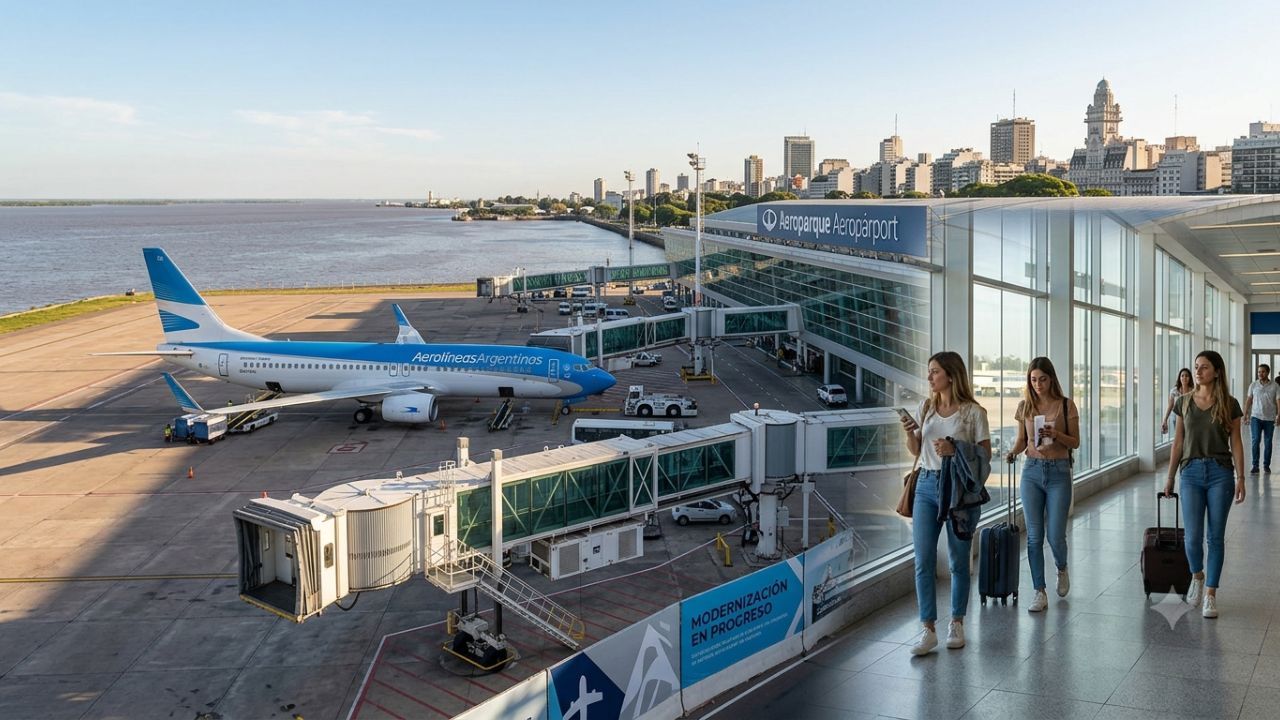
A projected 114 percent surge in passenger traffic across Argentina has triggered a USD 200 million terminal modernization at Buenos Aires Jorge Newbery Airport, spearheading a nationwide USD 1.5 billion airport master plan. The infrastructure overhaul, spearheaded by primary airport concessionaire Aeropuertos Argentina, will install six new jet boarding bridges, add 14,500 square meters of new terminal surface area, and renovate an additional 3,100 square meters within the city-center facility widely known as Aeroparque (AEP). The development serves as the flagship project within a five-year capital program designed to modernize 35 airports across the republic.
As South America's southern cone experiences accelerating demand for domestic and cross-border connectivity, Aeroparque's constrained waterfront footprint has emerged as a high-density operational bottleneck. Situated directly on the Río de la Plata minutes from downtown Buenos Aires, the airport serves as the primary gateway for corporate commuters and tourists traveling onward to Patagonia, Mendoza, Bariloche, and Iguazú Falls. By replacing tarmac bus transfers with direct contact gates and expanding passenger departure zones, the project aims to improve aircraft turnarounds and ease chronic peak-hour terminal congestion.
Urban Terminal Constraints and the Nationwide Infrastructure Plan
The USD 200 million expansion at Jorge Newbery Airport addresses severe space limitations that have challenged the terminal since regional flights to neighboring South American nations were restored. Unlike Ministro Pistarini International Airport (EZE) in suburban Ezeiza, which possesses extensive land reserves for long-haul intercontinental widebody flights, Aeroparque is physically hemmed in by the city grid and the river shoreline.
To resolve these spatial limits, the modernization program reconfigures the airside passenger flow through substantial physical additions:
| Project Milestone / Dimension | Technical Specification | Operational Impact & Strategic Objective |
|---|---|---|
| Direct Capital Expenditure | USD 200 Million | Dedicated terminal, apron, and boarding bridge funding at Aeroparque |
| New Boarding Gate Contact Bridges | 6 Direct Jet Bridges | Eliminates tarmac shuttle bus transfers; protects passengers during adverse weather |
| New Terminal Surface Area | 14,500 Square Meters | Expands dedicated boarding areas, retail concessions, and circulation corridors |
| Renovated Terminal Area | 3,100 Square Meters | Reconfigures legacy security screening, waiting zones, and gate hold rooms |
| Total Dedicated Boarding Area | 14,000 Square Meters | Relieves passenger crowding during morning and evening departure waves |
| Broader Concession Master Plan | USD 1.5 Billion Investment | Comprehensive capital expenditure spanning 35 airports across Argentina |
| Implementation Horizon | Five-Year Capital Rollout | Coordinated execution overseen by civil aviation regulators |
| National Traffic Growth Forecast | +114% Passenger Growth | Projected volume expansion driving terminal and runway enhancements |
The installation of six direct passenger boarding bridges represents a critical operational shift for airlines operating narrowbody fleets, such as Aerolíneas Argentinas, Flybondi, and JetSMART. Boarding aircraft via outdoor apron stairs and motorized tarmac buses frequently introduces boarding delays, particularly during winter rainstorms and high-wind events off the river. Transitioning flights to contact gates accelerates passenger boarding and deplaning cycles, reducing turnaround times on high-frequency domestic trunk routes.
Decompressing Regional Transit Between Aeroparque and Ezeiza
Buenos Aires operates a dual-airport system where passenger traffic is structurally partitioned between Aeroparque (AEP) and Ezeiza (EZE). Aeroparque handles the vast majority of domestic routes alongside regional flights connecting Argentina with Brazil, Chile, Uruguay, and Paraguay. Ezeiza accommodates transatlantic and long-haul flights from North America and Europe.
Because transferring between the two facilities requires an overland road journey of 30 to 50 kilometers across metropolitan traffic, international tourists entering through Ezeiza frequently face logistical friction when connecting to domestic flights departing from Aeroparque. By enlarging Aeroparque's airside surface area to 14,000 square meters, the airport operator expands capacity to process connecting regional passengers, easing the daily load on inter-terminal transit corridors.
The expansion also supports provincial tourism circuits. International visitors traveling to Argentina rely on domestic air corridors to reach distributed natural attractions across vast geographical distances:
- Southern Glaciers and Lakes: Daily services to San Carlos de Bariloche, El Calafate, and Ushuaia.
- Wine and Agricultural Corridors: Heavy corporate and leisure flights linking Buenos Aires to Mendoza and Salta.
- Subtropical Border Regions: High-frequency routes connecting Aeroparque with Puerto Iguazú for Iguazú Falls.
Providing a modern 14,000-square-meter boarding facility prevents departure gates from exceeding maximum holding capacities when flight banks depart simultaneously for regional hubs during morning and late-afternoon travel windows.
Expert Analysis: Turnaround Economics, Deregulation, and Airline Yields
For travelers booking domestic and regional flights across Argentina, the direct consequence of Aeroparque’s terminal expansion is improved schedule reliability and reduced exposure to tarmac delays. In commercial airline operations overseen by the Administración Nacional de Aviación Civil (ANAC), gate occupancy efficiency directly dictates aircraft utilization rates. When an airline can turn around an Airbus A320 or Boeing 737 in 35 minutes via a boarding bridge instead of 50 minutes using apron buses, it unlocks additional daily flight hours across its operating fleet.
According to economic efficiency benchmarks published by the International Air Transport Association (IATA), airport infrastructure constraints impose measurable cost penalties on airlines through engine idling, delayed pushbacks, and missed connection windows. In an aviation market undergoing regulatory deregulation, market liberalization, and increased low-cost carrier penetration, slot access at Aeroparque is fiercely contested due to its central downtown location.
However, constructing a 14,500-square-meter terminal expansion within an active, land-constrained urban airport requires complex operational phasing. Flight gates will undergo rolling temporary closures while contractors erect the six new jet bridges and integrate structural foundations. Passengers traveling through Aeroparque during the multi-year construction window must anticipate altered terminal walking routes, temporary gate reassignments, and ongoing airside construction buffers until the new facilities are fully commissioned.
Key Takeaways
- Substantial Aeroparque Investment: Aeropuertos Argentina is investing USD 200 million to expand and modernize Buenos Aires Jorge Newbery Airport (Aeroparque).
- Direct Terminal Enhancements: The project adds six direct boarding bridges, 14,500 square meters of new terminal surface area, and renovates 3,100 square meters of existing facilities.
- Nationwide Airport Master Plan: The development serves as the anchor of a USD 1.5 billion investment program spanning 35 Argentine airports over the next five years.
- Projected Traffic Surge: The capital rollout is designed to accommodate an anticipated 114 percent expansion in nationwide passenger volumes.
- Passenger Advantage: Adding six contact jet bridges significantly curtails reliance on tarmac shuttle buses, improving flight boarding efficiency during severe weather conditions.
FAQ: Buenos Aires Aeroparque Expansion 2026
What improvements are included in the USD 200 million Aeroparque project?
The project adds six new passenger boarding bridges, 14,500 square meters of new terminal surface area, and renovates 3,100 square meters of existing space to create a 14,000-square-meter boarding area.
What is the broader USD 1.5 billion airport plan in Argentina?
Airport operator Aeropuertos Argentina announced a five-year, USD 1.5 billion investment program to modernize and expand 35 airports nationwide to handle an expected 114 percent increase in passenger volume.
What is the primary difference between Aeroparque and Ezeiza in Buenos Aires?
Aeroparque (AEP) is located in downtown Buenos Aires handling domestic and regional South American flights, while Ezeiza (EZE) is situated 30 kilometers outside the city, handling long-haul international flights.
Will the construction at Aeroparque cause flight cancellations?
No flight cancellations have been announced. Construction will be executed in phases, though travelers should expect temporary gate reassignments and active construction zones during works.
Urban airport expansions demonstrate that terminal efficiency and direct contact gates remain vital to unlocking domestic air travel in growing aviation markets.
Related Travel Guides
Disclaimer
This article is for informational and educational purposes only. It does not constitute legal, financial, or professional advice. While we strive to provide accurate and up-to-date information, travel policies, regulations, and conditions change rapidly. Always verify information with official sources before making travel decisions. Nomad Lawyer makes no representations about the accuracy, reliability, completeness, or suitability of the information provided. Readers should consult qualified professionals for advice specific to their circumstances. The views expressed in this article are those of the author and do not necessarily reflect the views of Nomad Lawyer.
Kunal K Choudhary
Co-Founder & Contributor
A passionate traveller and tech enthusiast. Kunal contributes to the vision and growth of Nomad Lawyer, bringing fresh perspectives and driving the community forward.
Learn more about our team →