
Budapest Tourism Analysis 2026: Decentralizing Visitor Flow from Pest to Buda's Micro-Districts
An analytical review of Budapest's urban tourism shift, examining how decentralizing traffic from Pest to Buda's residential enclaves increases lodging revenue and mitigates overtourism.

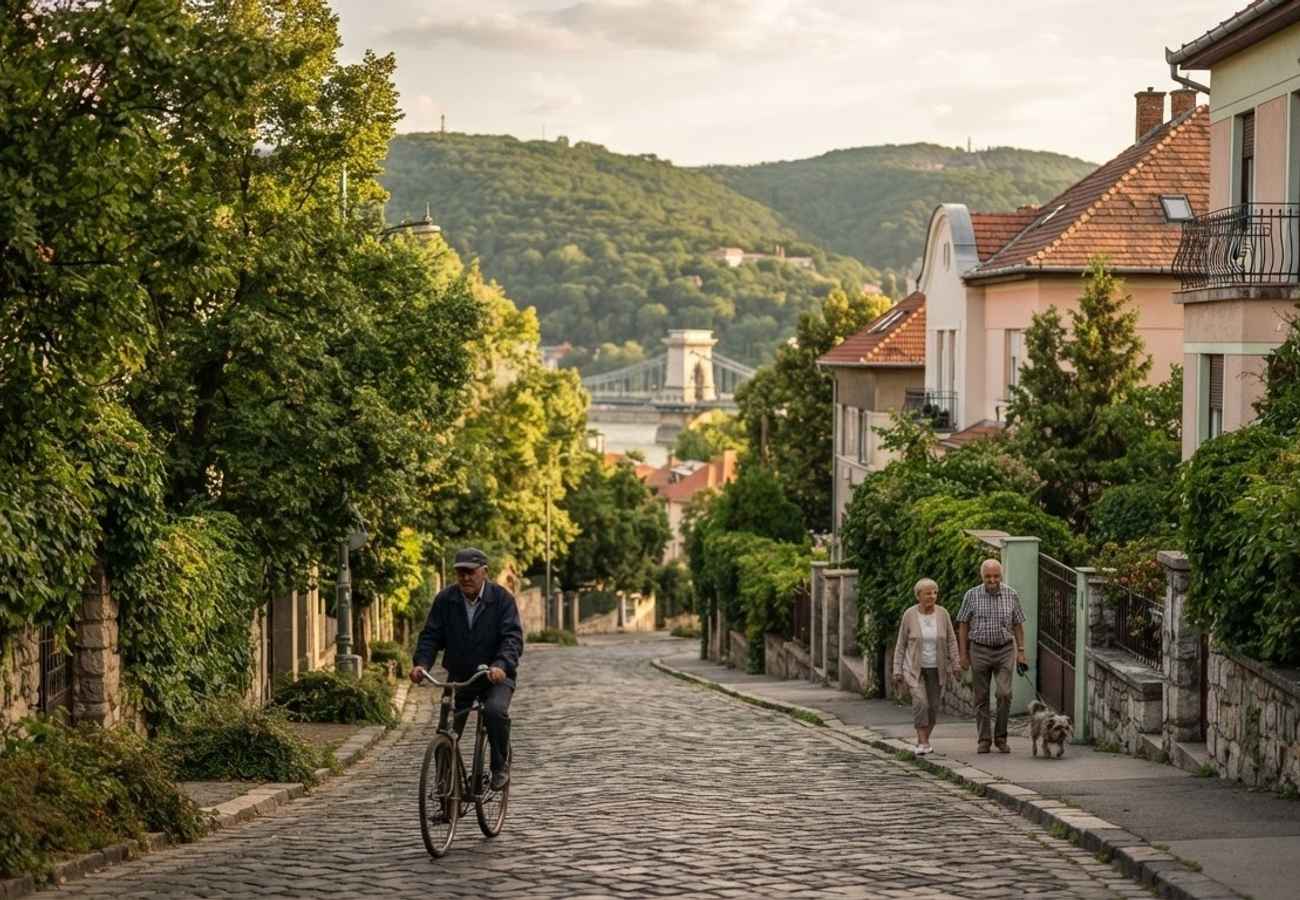
Image generated by AI
Budapest is witnessing a strategic shift in visitor behavior as travelers migrate from the high-density commercial hubs of Pest toward the secluded residential enclaves of Buda. This decentralization is driving significant economic growth in suburban sectors and reducing the pressure of overtourism on the city center.
The Urban Divide: Pest vs. Buda
Budapest is defined by its dual nature, split by the Danube. For many first-time visitors and new residents—such as those relocating from regional centers like Szeged—the Pest side represents the primary attraction. The Cházár András Street district and surrounding areas offer the immediate urban energy, grand architecture, and commercial convenience that typically dominate initial travel itineraries.
Conversely, the Buda side is often perceived as daunting due to its steep topography and quieter atmosphere. However, long-term data suggests that visitor preferences evolve over time. Analysis of residency patterns indicates that after an initial period of urban orientation, travelers increasingly seek the "slow travel" experience found in Buda’s winding streets and natural retreats.
Micro-District Impact Breakdown
The transition toward secondary district exploration has highlighted several key areas in Buda that provide a necessary counterbalance to the metropolitan pace of Pest:
- Margit Quarter: A blend of contemporary community culture and historic charm.
- Hűvösvölgy: Characterized by peaceful forested expanses.
- Kurucles: Known for secluded pathways and residential tranquility.
- Pálvölgy: Offers scenic surroundings and essential green retreats.
Economic Impact of Decentralized Tourism
Our analysis of Hungarian tourism data reveals that shifting foot traffic away from congested central zones creates a broader financial distribution across the municipal economy. When visitors move beyond traditional landmarks, the regional tax base expands.
| Metric | Value/Impact |
|---|---|
| Total National Visitor Expenditure | HUF 3.1 trillion (~€8 billion) |
| Budapest Lodging Share | Nearly 50% of nationwide turnover |
| Average Guest Stay Duration | 2.6 to 3.6 nights per trip |
| Suburban Lodging Revenue Increase | 52% |
| National Catering & Food Service Revenue | HUF 1.49 trillion |
These figures demonstrate that extending the stay duration through micro-neighborhood exploration directly correlates with increased lodging and catering revenues.
Passenger Rights & Visitor Advisory
For the international traveler navigating Budapest in 2026, the shift toward Buda requires a different logistical approach than the flat, transit-heavy districts of Pest.
Transport and Accessibility Our analysis of the local infrastructure suggests that while Pest is highly accessible via flat walking routes and primary transit, Buda’s topography requires more strategic planning. Visitors should utilize localized transit maps to access the Margit Quarter and Hűvösvölgy to avoid the physical strain of the steep hills.
Sustainable Exploration To avoid the pitfalls of overtourism, we advise passengers to:
- Diversify Lodging: Book accommodations in secondary districts to support local economies and experience authentic community engagement.
- Adopt Slow Travel: Allocate specific days for "micro-district" exploration rather than attempting to see all major landmarks in a single 48-hour window.
- Utilize Local Guides: Engage with neighborhood-specific guides in Buda to uncover hidden historical zones that are not listed in mainstream brochures.
The movement toward nature-integrated urban exploration is not unique to Budapest; it is a global trend. Destination Management Organizations (DMOs) that promote repeat visitations and the exploration of secondary districts can extend the lifetime value of a visitor.
By encouraging travelers to revisit familiar cities with updated, localized itineraries, cities can protect their historic centers from degradation. The evolution from high-density hub tourism to quiet suburban escapes signals a maturation of the global hospitality ecosystem, prioritizing sustainability and authentic connection over checklist-style sightseeing.
The transition from the bustle of Pest to the serenity of Buda represents the future of sustainable European urban tourism.
Related Travel Guides
Disclaimer
This article is for informational and educational purposes only. It does not constitute legal, financial, or professional advice. While we strive to provide accurate and up-to-date information, travel policies, regulations, and conditions change rapidly. Always verify information with official sources before making travel decisions. Nomad Lawyer makes no representations about the accuracy, reliability, completeness, or suitability of the information provided. Readers should consult qualified professionals for advice specific to their circumstances. The views expressed in this article are those of the author and do not necessarily reflect the views of Nomad Lawyer.
Raushan Kumar
Founder & Lead Developer
Full-stack developer with 11+ years of experience and a passionate traveller. Raushan built Nomad Lawyer from the ground up with a vision to create the best travel and law experience on the web.
Learn more about our team →