
Bryce Canyon Flash Flood Rescue Strands 11 Hikers on Utah Trails
Garfield County rescuers evacuated 11 hikers stranded by sudden monsoonal flash flooding on Queen's Garden and Navajo Loop trails in Bryce Canyon.

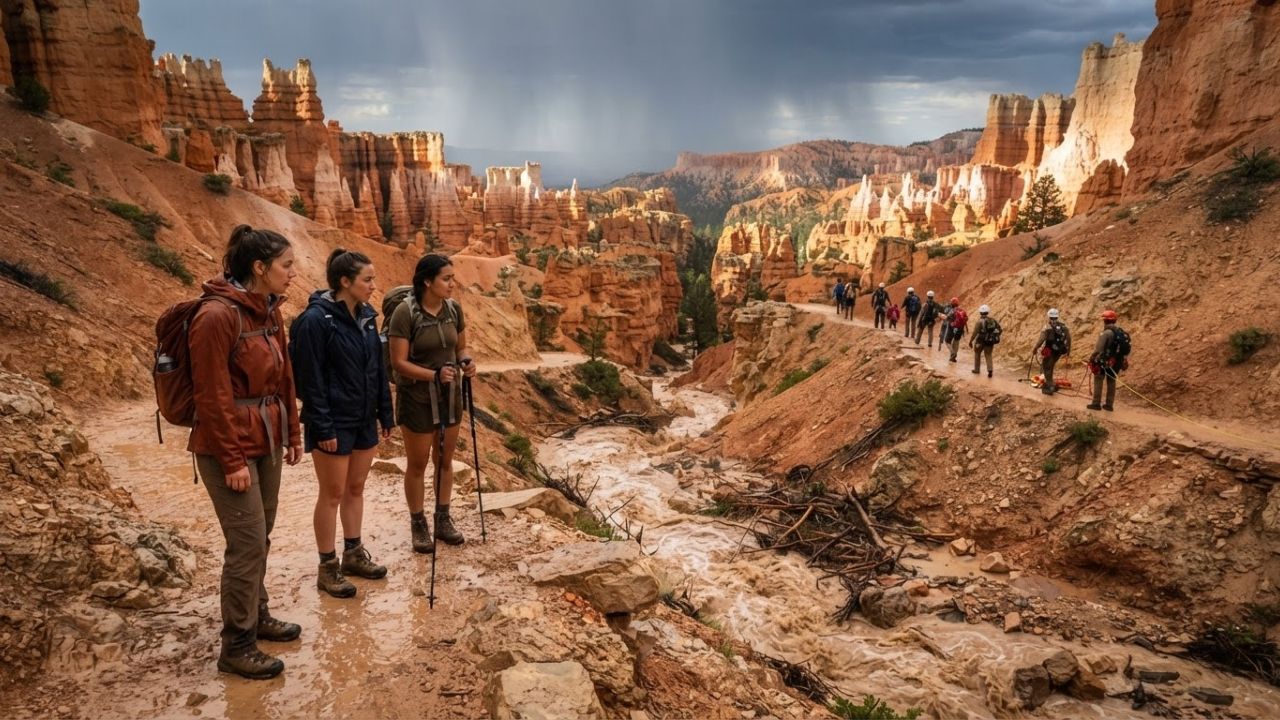
Image generated by AI
An emergency rescue at Bryce Canyon National Park on Saturday, August 28, 2026, has highlighted slot canyon hazards after 11 hikers were trapped by sudden flash flooding. Emergency teams evacuated the stranded visitors without fatalities, drawing renewed attention to the historical dangers of desert storm runoff in U.S. national parks.
The Local Trend Revealed
Monsoon weather systems can quickly turn dry hiking trails into high-risk drainage paths. The incident at Bryce Canyon occurred when afternoon thunderstorms flooded several popular trails, trapping four separate adult groups:
- Rescue Logistics: The hikers became stranded at approximately 2:30 PM on trails including Fairyland Loop, Navajo Loop, Queen’s Garden, and Peek-a-Boo Loop. Garfield County Search and Rescue, local EMS, and the National Park Service (NPS) deployed 15 to 20 emergency personnel to coordinate the evacuation.
- Casualty Assessment: Two hikers showing symptoms of hypothermia were transported to a regional hospital, while the remaining nine were medically cleared and released.
- Monsoon Risks: August and September bring rapid atmospheric shifts across southern Utah. Storms occurring miles upstream can channel debris-laden runoff into narrow canyons even when the skies directly overhead are clear.
- Slot Canyon Hazards: The NWS issues flash flood potential ratings (Not Expected, Possible, Probable, Expected) to warn hikers before they enter narrow slot canyons, where steep rock faces offer no path to higher ground.
Historical Flash Flood Fatalities in U.S. Parks
While the Bryce Canyon evacuation ended successfully, major historical flash floods have resulted in at least 12 confirmed visitor deaths across the national park network:
- Rocky Mountain National Park, Colorado (1982): The failure of the Lawn Lake Dam sent a massive flood wave through the Roaring River valley, resulting in 3 visitor deaths.
- Zion National Park, Utah (2014 & 2015): A flood in Zion Canyon's The Narrows caused 1 death in 2014. The following year, a sudden flood in Keyhole Canyon killed 7 canyoneers, marking one of the deadliest modern slot canyon events.
- Grand Canyon Region, Arizona (2024): A flash flood near Havasu Creek swept away a hiker, who was later found deceased.
- Death Valley National Park, California (2015 & 2022): Historic rainfall in 2022 temporarily trapped around 1,000 visitors and workers, though both events resulted in zero fatalities.
Mortality data compiled by the NPS between 2014 and 2019 records 2,149 total visitor deaths from all causes across 300+ million annual visits. Major documented flash floods account for approximately 0.5 percent of those deaths (roughly 0.004 deaths per 100,000 visits), making the individual risk extremely low (approximately 0.000004 percent), but concentrated during specific monsoonal events.
Local Community & Environmental Value
For the visitor, the real impact of safety-conscious travel is the direct support of rural gateway towns. Spending travel budgets at independent, family-run motels or dining at local diners in Tropic and Panguitch helps sustain the local economy of Garfield County during the off-peak periods.
Environmental preservation is supported through green transport and trail stewardship. Utilizing the free Bryce Canyon Shuttle instead of private vehicles reduces vehicle emissions and limits congestion in fragile subalpine environments. Additionally, staying strictly on designated paths protects native vegetation and prevents soil erosion during storms, aligning with guidelines monitored by the Utah Office of Tourism and park rangers.
Visitor Insider Tips for Southwest Hikes
Travel specialists recommend the following practices:
- Use the Free Park Shuttle: Avoid parking gridlock at popular overlooks by using the free Bryce Canyon Shuttle from Bryce Canyon City, which runs every 10 to 15 minutes during peak periods.
- Observe the Off-Peak Window: Visit southern Utah during the late autumn (October to November). The summer monsoon thunderstorms have subsided, temperatures are perfect for hiking, and the crowds have cleared.
- Sample Regional Culinary Specialties:
- Try a slice of hot Dutch oven cobbler (baked in cast-iron pots over coals) at local lodges.
- Sample traditional Navajo tacos (frybread topped with beans, meat, and cheese) at regional diners.
- Respect Natural Soil Crusts: Stay on marked trails. Southern Utah's cryptobiotic soil crusts take decades to recover from a single off-trail step. Pack out all garbage. Tipping of 15 to 20 percent is standard for local outfitters and guides.
- Explore Under-the-Radar Overlooks: Drive to the southern end of the park to Rainbow Point and Yovimpa Point (above 9,000 feet elevation) to view the Grand Staircase without the crowds of the main amphitheater.
Tourism Outlook
The long-term impact of flash flood awareness campaigns will shape how slot canyon access is managed in the Southwest. By integrating real-time weather alerts from the National Weather Service (NWS) with trailhead closures, the National Park Service aims to protect visitors while maintaining access to southern Utah's geological attractions.
FAQ: Bryce Canyon Flash Flood Rescue
How many hikers were rescued in the 2026 Bryce Canyon flood? Emergency teams rescued 11 hikers traveling in four separate adult groups after they were stranded by rising water.
What trails were affected by the Bryce Canyon flooding? The flooding affected popular pathways, including Fairyland Loop, Navajo Loop, Queen’s Garden, and Peek-a-Boo Loop.
How many visitor deaths have been caused by major flash floods in U.S. parks? Major officially documented flash floods have caused at least 12 confirmed visitor deaths in U.S. national parks and nearby protected areas.
What is the deadliest flash flood in recent national park history? The 2015 Keyhole Canyon flood in Zion National Park is one of the deadliest, resulting in the deaths of 7 canyoneers.
Related Travel Guides
Disclaimer
This article is for informational and educational purposes only. It does not constitute legal, financial, or professional advice. While we strive to provide accurate and up-to-date information, travel policies, regulations, and conditions change rapidly. Always verify information with official sources before making travel decisions. Nomad Lawyer makes no representations about the accuracy, reliability, completeness, or suitability of the information provided. Readers should consult qualified professionals for advice specific to their circumstances. The views expressed in this article are those of the author and do not necessarily reflect the views of Nomad Lawyer.
Raushan Kumar
Founder & Lead Developer
Full-stack developer with 11+ years of experience and a passionate traveller. Raushan built Nomad Lawyer from the ground up with a vision to create the best travel and law experience on the web.
Learn more about our team →