
Brussels Airport Travel Chaos: Brussels Airlines and Qatar Airways Cancel Three Flights Amid 61 Delays in July 2026
Brussels Airport faces significant operational disruption as Brussels Airlines and Qatar Airways cancel three flights and report 61 delays, impacting major European and international routes including Copenhagen, Edinburgh, Antalya, Palma de Mallorca, and Las Palmas during peak summer travel season.

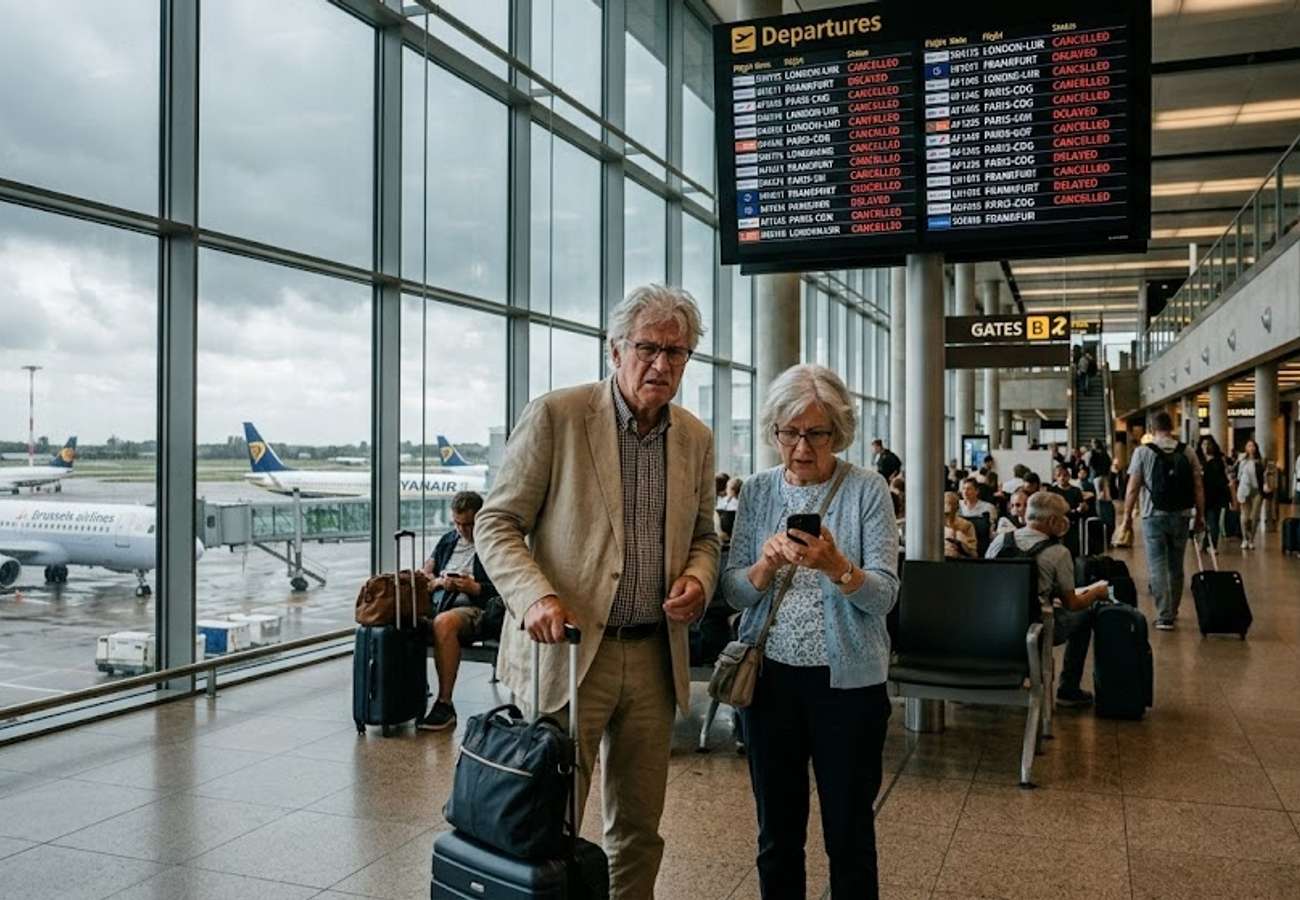
Image generated by AI
Brussels Airport (BRU) experienced significant operational disruption on July 5, 2026, as Brussels Airlines and Qatar Airways cancelled three flights across their respective networks. The cancellations, compounded by 61 delayed services, created cascading connectivity challenges for passengers travelling to key European and international destinations.
The disruption primarily affected leisure and business routes including Copenhagen, Las Palmas, Palma de Mallorca, Antalya, and Edinburgh. With Brussels Airport serving as Belgium's primary international gateway, even limited schedule perturbations can trigger broader network effects across connecting traffic throughout the day.
Flight Disruption Summary
| Airline | Cancelled Flights | Delayed Flights | Key Affected Routes |
|---|---|---|---|
| Brussels Airlines | 2 | 60 | Copenhagen, Las Palmas, Palma de Mallorca, Edinburgh, Antalya |
| Qatar Airways | 1 | 1 | Doha connections, international long-haul routes |
Data sourced from FlightAware, reflecting real-time operations as of July 5, 2026.
Brussels Airlines Bears the Brunt
Brussels Airlines, Belgium's flag carrier and a member of the Lufthansa Group, accounted for the majority of the disruption with two cancelled flights and 60 delayed services. This volume of delays signals considerable operational strain across the airline's network.
The 60 delayed flights represent a substantial portion of the carrier's daily schedule from Brussels. This disruption level affects not only direct passengers but also those relying on Brussels as a connecting hub for onward travel across Europe, Africa, and the Middle East.
The high delay-to-cancellation ratio suggests systemic operational pressure rather than isolated incidents. When an airline delays 60 flights in a single day, the root cause typically involves staffing constraints, aircraft availability, or external factors such as air traffic control restrictions.
Qatar Airways Experiences Limited Impact
Qatar Airways, the Doha-based carrier, experienced a more contained disruption with one cancelled flight and one delayed service. While smaller in scale, any cancellation on the Brussels-Doha route carries significant consequences for connecting passengers.
A single cancellation on a long-haul route can strand passengers for 24 hours or more, particularly when alternative same-day options are limited. The minimal delay count suggests the cancellation may have been an isolated operational issue rather than a systemic problem affecting the carrier's broader European operations.
Network-Wide Route Impact
The disruption rippled across an extensive route network from Brussels Airport. Affected destinations spanned Scandinavian cities including Copenhagen, Helsinki, and Oslo. Southern European leisure routes to Las Palmas, Palma de Mallorca, Alicante, and Malaga faced schedule changes during peak summer travel season.
Turkish destinations including Antalya, Izmir, and Istanbul experienced disruption, while UK routes to Edinburgh, Manchester, and London also faced delays. The breadth of affected destinations illustrates how concentrated hub operations amplify localised disruptions into network-wide challenges.
Additional affected routes extended to German cities including Berlin, Hamburg, and Munich, as well as African destinations such as Accra, Abidjan, and Douala. The disruption also touched Middle Eastern and Asian connections through Doha, Abu Dhabi, Beijing, Shanghai, and Chongqing.
Strategic Business Implications
The July 5 disruption highlights several strategic considerations for both carriers and the airport operator. For Brussels Airlines, 60 delays across a single day's operations raises questions about schedule resilience during peak summer demand. The airline's role within the Lufthansa Group network means disruptions at Brussels can cascade into connecting traffic at Frankfurt, Munich, and Zurich.
Passengers missing connections due to Brussels-origin delays may require overnight accommodation and rebooking, increasing operational costs for the carrier. These costs compound quickly when dozens of flights run behind schedule simultaneously.
Summer 2026 has seen intense competition among European carriers for leisure traffic. Schedule reliability directly influences passenger booking decisions. When carriers experience high delay rates, price-sensitive leisure travellers may shift to competitors offering more dependable service on comparable routes from alternative Belgian or neighbouring Dutch airports.
For Qatar Airways, maintaining schedule integrity on the Brussels-Doha route is strategically critical. The route competes with other Gulf carriers serving Belgium, and consistent reliability differentiates the product in a crowded premium long-haul market. A single cancellation, while operationally minor, can influence corporate contract negotiations and frequent flyer loyalty.
Passenger Rights Under EU Regulation 261/2004
Passengers affected by these cancellations may be entitled to compensation under EU Regulation 261/2004. The regulation provides for compensation of up to €600 for long-haul flight cancellations, depending on the distance of the flight and the notice period provided by the airline.
EU261 compensation applies when cancellations fall within the airline's control. Weather-related disruptions and air traffic control issues typically fall outside the compensation framework. Passengers should document their communications with the airline and retain all booking confirmations and boarding passes.
Both Brussels Airlines and Qatar Airways must offer affected passengers the choice between a full refund and alternative transportation to the final destination. Meals and accommodation must be provided where applicable under the regulation's duty of care provisions.
Operational Resilience at Brussels Airport
Brussels Airport serves as a critical hub for both business and leisure travel. When 60 flights experience delays simultaneously, terminal capacity becomes strained across check-in counters, security screening, and gate availability.
The airport operator must balance the needs of disrupted passengers with maintaining normal operations for unaffected flights. Real-time information systems become critical during such events, as passengers need accurate updates to make rebooking decisions and adjust their travel plans accordingly.
Passenger Guidance and Next Steps
Travellers scheduled to fly with either carrier from Brussels should take several practical steps immediately. Check flight status directly on the airline's website or app before departing for the airport. Arrive with additional time to accommodate longer processing times at check-in and security.
Ensure contact information on file with the airline is current, as automated rebooking notifications are sent via email and SMS. Passengers with connecting flights should monitor both the operating carrier's status and any partner airline updates for the most current information.
When disruptions occur, rebooking through partner airlines within the same alliance can provide faster alternatives than waiting for the original carrier to resolve the issue. Brussels Airlines operates within Star Alliance, while Qatar Airways is a member of Oneworld, giving passengers access to extensive partner networks for rebooking.
Broader Industry Context
The Brussels disruption occurs within a broader context of European aviation challenges in summer 2026. Air traffic control capacity constraints, staffing considerations at several major hubs, and strong post-pandemic travel demand have created a demanding operational environment across the continent.
Airlines operating at high load factors during peak season have limited ability to reaccommodate disrupted passengers. A single cancellation can require rebooking across multiple alternative flights or even alternative carriers, creating a ripple effect throughout the day's schedule.
The data from FlightAware underscores the importance of real-time monitoring for both airlines and passengers. As operations evolve throughout the day, early-morning cancellations can trigger afternoon delays as aircraft and crews fall out of position, extending the disruption well beyond the initial incident.
Even three cancelled flights can unravel an entire day's schedule when sixty more are running late.
Related Travel Guides
Disclaimer
This article is for informational and educational purposes only. It does not constitute legal, financial, or professional advice. While we strive to provide accurate and up-to-date information, travel policies, regulations, and conditions change rapidly. Always verify information with official sources before making travel decisions. Nomad Lawyer makes no representations about the accuracy, reliability, completeness, or suitability of the information provided. Readers should consult qualified professionals for advice specific to their circumstances. The views expressed in this article are those of the author and do not necessarily reflect the views of Nomad Lawyer.
Raushan Kumar
Founder & Lead Developer
Full-stack developer with 11+ years of experience and a passionate traveller. Raushan built Nomad Lawyer from the ground up with a vision to create the best travel and law experience on the web.
Learn more about our team →