
British Airways' Lost Decade: How an Airline Cloaked Its Game-Changing Business Class Innovation in Complacency
Breaking airline news and aviation industry updates for 2026.

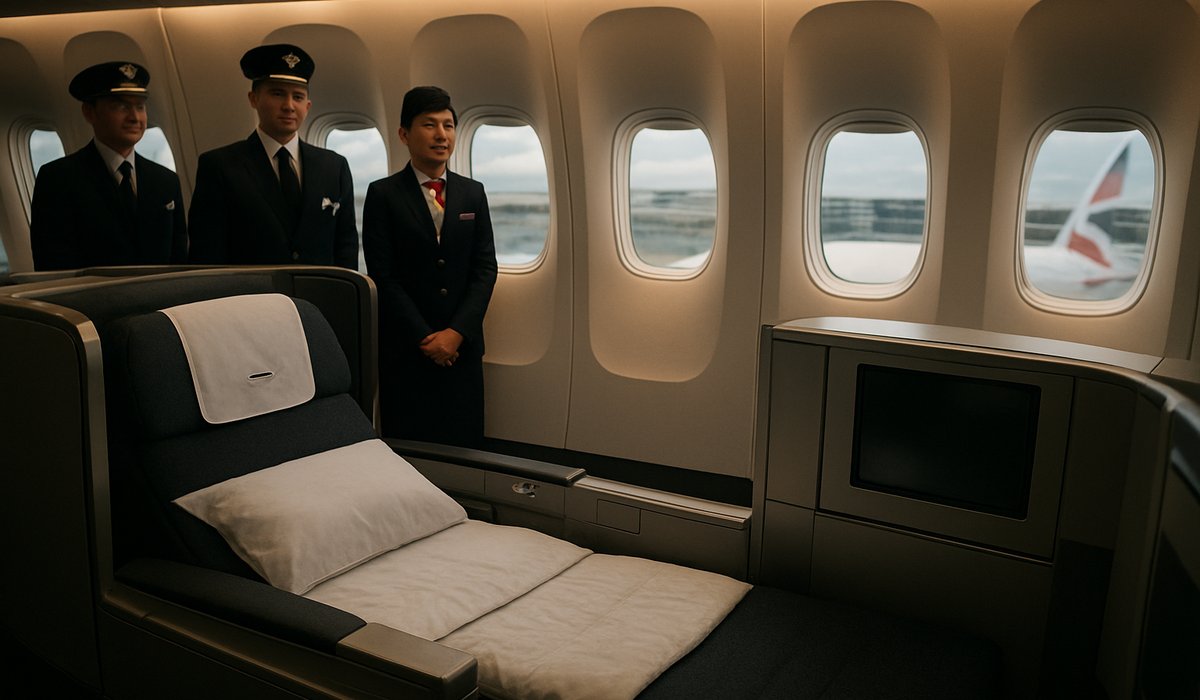
Image generated by AI
British Airways' Lost Decade: How an Airline Cloaked Its Game-Changing Business Class Innovation in Complacency
The carrier that revolutionized premium air travel in 2000 squandered its competitive advantage by refusing to evolve for nearly two decades
The Breakthrough That Changed Premium Aviation
British Airways fundamentally reshaped the business class experience in 2000 when it introduced the aviation industry's first fully lie-flat bed seat—a revolutionary concept that transformed how premium passengers experienced long-haul travel. The innovation was groundbreaking, setting a new standard for luxury air travel and positioning the airline as a pioneer in passenger comfort technology.
However, what should have been the beginning of continuous enhancement became a cautionary tale of corporate stagnation. While competitors observed BA's success and began developing their own advanced premium seating solutions, British Airways maintained the same core design philosophy for nearly 19 years, fundamentally undermining its first-mover advantage.
Industry Innovation vs. Competitive Complacency
In the highly competitive landscape of premium aviation, technological advancement typically follows a predictable cycle: one airline introduces an innovation, competitors analyze the concept, and the industry collectively leapfrogs toward the next evolution. British Airways shattered this pattern through what industry analysts characterize as strategic inertia.
The decision to retain outdated seating technology during a period when rivals invested heavily in ergonomic design, in-seat entertainment systems, and passenger amenity upgrades represented a significant miscalculation. Airlines including Emirates, Singapore Airlines, and Cathay Pacific capitalized on the opportunity, developing next-generation business class products that offered superior comfort, connectivity, and personalized services.
The Cost of Standing Still
This extended stagnation had tangible consequences for British Airways' premium revenue and brand positioning. As competitors continuously refined their business class offerings, the airline's failure to meaningfully innovate created a perception of complacency among discerning business travelers—the very demographic most sensitive to product quality and willing to pay premium fares for superior experiences.
The broader aviation industry witnessed how rapid product development cycles could strengthen market positioning and justify premium pricing. Meanwhile, British Airways' static approach allowed premium passengers alternative options that offered demonstrably superior in-flight experiences.
Strategic Lessons for the Aviation Sector
This episode underscores a critical principle in competitive industries: innovation without evolution becomes obsolescence. The airline industry's most successful carriers understand that maintaining technological leadership requires continuous investment and refinement, not resting on historical achievements.
British Airways' experience serves as a benchmark case study in how market leadership can erode when organizations fail to balance operational efficiency with product development—a lesson particularly relevant as airlines navigate post-pandemic recovery and intensifying competition for premium revenue streams.
FAQ: Business Class Innovation and Airline Competitiveness
Q: When did British Airways introduce the lie-flat business class seat? A: British Airways launched the world's first fully lie-flat business class bed in 2000, marking a significant advancement in premium aviation comfort.
Q: Which airlines have since developed superior business class products? A: Emirates, Singapore Airlines, Cathay Pacific, and other major carriers have invested in next-generation seating technology with advanced ergonomic design and enhanced amenities.
Q: How do lie-flat business class seats impact airline revenue? A: Premium seating innovations justify higher ticket pricing and attract business travelers willing to pay significant premiums for superior comfort—a critical revenue stream for international carriers.
Q: What factors drive business class product development in the aviation industry? A: Competitive pressure, passenger expectations, technological advancement, and the need to justify premium pricing all drive airlines to continuously upgrade their business class offerings.
Q: How has business class competition evolved since 2000? A: The industry has shifted from basic lie-flat designs to advanced features including direct aisle access, enhanced in-flight entertainment, premium bedding, and personalized service offerings.
Related Travel Guides
-
Papal Flight Disrupted: Pope Leo XIV Forced Off Iberia A320 After Engine Fails to Start in Tenerife
-
Cockpit Culture Wars: How Airbus and Boeing Training Divide the Aviation Pilot Community
External Resources
Disclaimer
This article is for informational and educational purposes only. It does not constitute legal, financial, or professional advice. While we strive to provide accurate and up-to-date information, travel policies, regulations, and conditions change rapidly. Always verify information with official sources before making travel decisions. Nomad Lawyer makes no representations about the accuracy, reliability, completeness, or suitability of the information provided. Readers should consult qualified professionals for advice specific to their circumstances. The views expressed in this article are those of the author and do not necessarily reflect the views of Nomad Lawyer.
Kunal K Choudhary
Co-Founder & Contributor
A passionate traveller and tech enthusiast. Kunal contributes to the vision and growth of Nomad Lawyer, bringing fresh perspectives and driving the community forward.
Learn more about our team →