
Cockpit Culture Wars: How Airbus and Boeing Training Divide the Aviation Pilot Community
Breaking airline news and aviation industry updates for 2026.

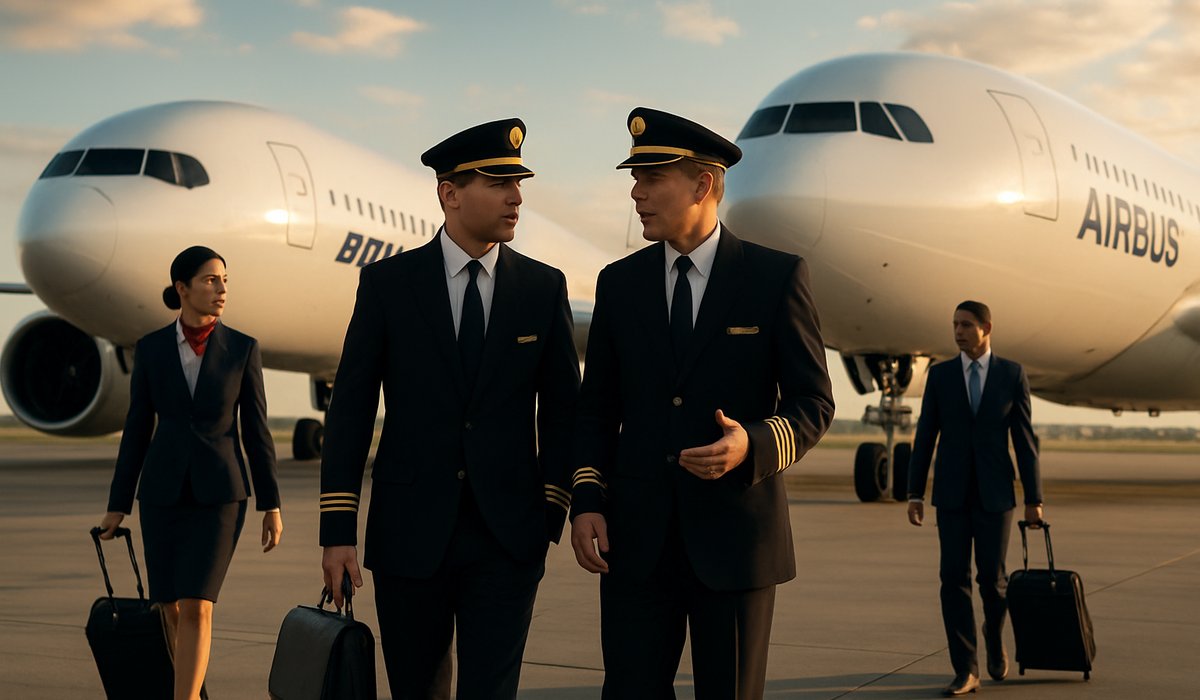
Image generated by AI
Cockpit Culture Wars: How Airbus and Boeing Training Divide the Aviation Pilot Community
Fundamental design philosophies create starkly different flying experiences, shaping pilot careers and preferences across the global aviation industry
The Great Divide in Commercial Aviation
The aviation industry's two dominant aircraft manufacturers have created fundamentally opposing approaches to cockpit design and automation, spawning a longstanding divide among professional pilots that shapes career trajectories and flying philosophies across the globe. Airbus and Boeing's contrasting engineering philosophies—refined through decades of aircraft development—result in dramatically different piloting experiences that extend far beyond surface-level controls and switches.
Automation Versus Manual Control: The Philosophical Split
Pilots transitioning between the two manufacturers frequently encounter what industry professionals describe as competing visions for modern flight operations. Airbus aircraft are engineered around extensive automation systems and computer-mediated flight control, which many pilots characterize as offering a refined, technologically sophisticated cockpit environment. This "glass cockpit" philosophy prioritizes redundancy, system reliability, and reduced pilot workload through advanced automation protocols.
Boeing's design approach, by contrast, maintains more direct mechanical relationships between pilot input and aircraft response. Experienced Boeing pilots often describe this methodology as delivering authentic hands-on flying—a more tactile engagement with the aircraft's capabilities that appeals to those valuing fundamental aeronautical skill development.
The Airbus A220: A Middle Ground Emerges
Bombardier's entry into this competitive landscape with the CSeries aircraft—later rebranded as the Airbus A220 following Airbus's acquisition stake—represents an attempt to bridge this philosophical gap. The A220 incorporates hybrid design elements that combine Airbus's automation advantages with more intuitive manual control characteristics, creating a transitional platform for pilots navigating between manufacturer systems.
Career Implications and Industry Patterns
Professional pilots typically commit to manufacturer specialization throughout their careers, developing deep expertise in either Airbus or Boeing systems. While cross-platform transitions remain technically possible, the fundamental differences in cockpit architecture, automation logic, and flight control systems discourage frequent manufacturer switching. Most airline pilot career development follows linear progression paths—pilots trained on Airbus variants generally advance through additional Airbus aircraft types, while Boeing pilots similarly progress through Boeing's expanding portfolio.
This specialization phenomenon shapes global aviation workforce dynamics, as airlines strategize fleet composition decisions knowing that pilot training requirements and career flexibility depend largely on manufacturer standardization. The choice between Airbus and Boeing fundamentally influences not just aircraft acquisition costs and maintenance logistics, but also long-term human capital development strategies.
Industry Impact and Future Implications
As airlines worldwide navigate fleet modernization amid volatile jet fuel prices, environmental regulations, and economic pressures, the Airbus-Boeing divide remains a critical operational consideration. Training costs, pilot availability, and workforce retention strategies all flow directly from these fundamental manufacturing differences.
Frequently Asked Questions
What are the main differences between Airbus and Boeing cockpit designs? Airbus emphasizes computer-mediated automation and redundant safety systems, while Boeing maintains more direct mechanical control relationships and manual flying engagement.
Can pilots easily transition between Airbus and Boeing aircraft? While technically possible, most pilots specialize in one manufacturer due to fundamentally different cockpit systems, automation logic, and flight control philosophies. Cross-training requires significant additional certification.
How does the Airbus A220 compare to other commercial aircraft? The A220 incorporates hybrid design elements balancing Airbus's automation with more intuitive manual control, offering a middle ground between pure Airbus and Boeing approaches.
Why do airlines choose between Airbus and Boeing beyond aircraft capability? Fleet decisions impact long-term pilot training costs, career development structures, maintenance logistics, and operational standardization—making manufacturer choice a strategic workforce decision.
Which aircraft type do pilots prefer? Preferences vary significantly; some favor Airbus's automation efficiency, while others prefer Boeing's hands-on flying experience. Preference often develops during initial training rather than representing objective superiority.
Related Travel Guides
Flight Delay Compensation Guide 2026
Understanding Airline Route Changes
Airport Security Process Updated (2026)
External Resources
Disclaimer
This article is for informational and educational purposes only. It does not constitute legal, financial, or professional advice. While we strive to provide accurate and up-to-date information, travel policies, regulations, and conditions change rapidly. Always verify information with official sources before making travel decisions. Nomad Lawyer makes no representations about the accuracy, reliability, completeness, or suitability of the information provided. Readers should consult qualified professionals for advice specific to their circumstances. The views expressed in this article are those of the author and do not necessarily reflect the views of Nomad Lawyer.
Preeti Gunjan
Contributor & Community Manager
A passionate traveller and community builder. Preeti helps grow the Nomad Lawyer community, fostering engagement and bringing the reader experience to life.
Learn more about our team →