
British Airways Diversion Leaves Hundreds Stranded in Newfoundland
British Airways flight BA195 diverted to St. John's, Newfoundland on March 31, 2026 after a mid-Atlantic medical emergency, leaving hundreds of passengers stranded for days with limited luggage access and poor communication.

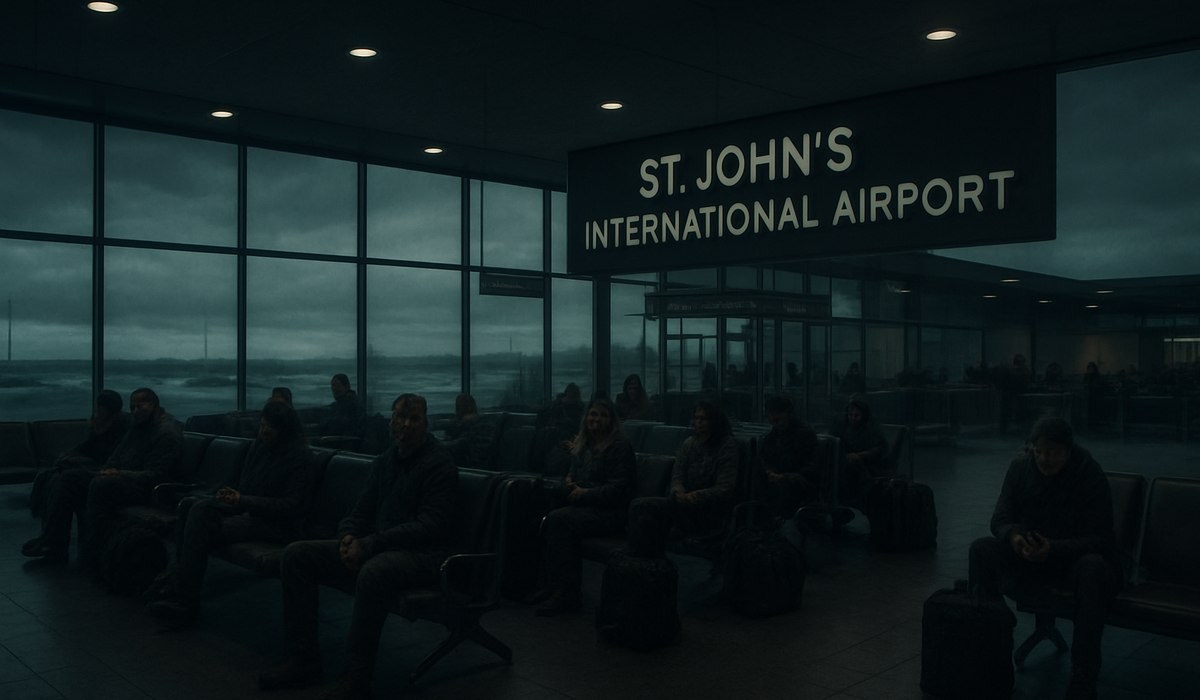
Image generated by AI
Transatlantic Flight Diverted Over Medical Emergency
British Airways flight BA195 experienced an unscheduled diversion to St. John's, Newfoundland on March 31, 2026, after crew members responded to a medical situation aboard the Boeing 787-10. The London Heathrow to Houston service made a controlled landing at St. John's International Airport, where the affected passenger received immediate medical attention. What began as a precautionary safety decision has since escalated into a significant customer service controversy, with hundreds of travelers reporting days of disruption, limited baggage access, and frustratingly sparse communication from the airline.
Mid-Atlantic Medical Emergency Triggers Diversion
Transatlantic flights crossing the North Atlantic rely on a strategic network of coastal airports for emergency diversions. St. John's International Airport serves as one of the most frequently used alternate landing sites for aircraft experiencing technical or medical incidents during eastbound and westbound crossings. According to aviation safety protocols, crew members must prioritize passenger health in such situations, and the decision to divert BA195 followed standard procedures recognized across the industry.
The controlled landing executed by the flight crew demonstrated no emergency evacuation was necessary. The aircraft taxied to a remote stand, allowing ground services to assess the medical situation while maintaining normal airport operations. Industry commentators have consistently emphasized that medical emergencies fall outside an airline's direct control and should not trigger punitive measures. However, the British Airways diversion highlighted a critical distinction: while the emergency itself was unavoidable, the company's subsequent ground-level response became the focus of passenger complaints and industry scrutiny.
For travelers planning transatlantic journeys, understanding diversion protocols and your rights during involuntary route changes remains essential knowledge. Consult the International Air Transport Association guidelines for comprehensive information on diversion procedures and passenger protections.
Passengers Report Days Stuck in St. John's
Travelers stranded following the British Airways diversion described extended waiting periods before rebooking onto alternative flights. Multiple accounts across travel forums and social media platforms documented delays spanning up to two days, with passengers uncertain about departure timelines or their final destination arrangements. The uncertainty compounded the frustration for individuals who expected to reach Houston within their original scheduled window.
Newfoundland's late-winter climate presented an unexpected challenge for passengers arriving in spring attire. Freezing temperatures and lingering snow created physical discomfort for travelers without access to appropriate clothing stored in checked baggage. The inability to retrieve luggage during the extended disruption remained one of the most frequently cited complaints in post-incident reports. Several passengers reported spending their first night in airport terminals or temporary accommodations without personal belongings, medications, or warm layers essential for survival in sub-zero conditions.
St. John's, while charming as a destination, lacks the hotel and ground-handling infrastructure of major international hubs. The sudden demand for temporary accommodation strained local inventory, forcing some passengers to wait hours for room assignments or travel to distant hotels requiring additional transportation arrangements. These logistical constraints cascaded into communication breakdowns, with passengers receiving conflicting information about meals, transportation, and final routing decisions.
Customer Service Failures on the Ground
Communication failures emerged as the dominant theme in passenger complaints following the British Airways diversion. Travelers reported receiving more detailed flight information from third-party tracking applications than from official airline announcements. The absence of timely, transparent updates left passengers unable to make informed decisions about accommodation, meal planning, or personal arrangements during their unexpected layover.
British Airways eventually provided hotel accommodations and meal vouchers, but the process lacked uniformity and clarity. Some passengers received assistance immediately, while others navigated bureaucratic uncertainty about what support they were entitled to claim. The company's initial response appeared reactive rather than proactive, suggesting ground-level coordination challenges during large-scale disruptions in smaller markets.
Travel industry analysts emphasize that effective crisis communication becomes exponentially more important in secondary airports with limited handling capacity. When a major airline faces disruption in a location with fewer alternative flight options and constrained hotel availability, clear, frequent communication transforms from a customer service preference into an operational necessity. The BA195 incident demonstrates how communication gaps can escalate operational challenges into reputational damage.
What This Means for Transatlantic Travelers
The British Airways diversion incident underscores several important considerations for passengers booking transatlantic flights:
-
Medical diversions remain possible: Transatlantic routes cross remote ocean regions where diversions to coastal airports represent standard safety protocol. Pack medications, medical documentation, and essential items in carry-on luggage rather than relying solely on checked baggage access.
-
Know your regulatory protections: European Union and UK compensation rules typically classify medical emergencies as extraordinary circumstances that can limit mandatory compensation eligibility. However, airlines remain responsible for providing reasonable care during disruptions, including meals, accommodation, and communication.
-
Choose airlines with strong handling networks: Verify your airline maintains robust ground operations agreements at potential diversion airports. Major carriers with established infrastructure at secondary hubs typically respond more effectively to unexpected disruptions.
-
Monitor flight-tracking applications: During disruptions, real-time flight data often becomes available through apps before official airline communications. Have backup information sources ready during travel.
-
Document expenses and communications: Photograph meal receipts, hotel confirmations, and transportation expenses. Screenshot airline communications and timestamps documenting when you received information about rebooking or compensation.
-
Request compensation and reimbursement promptly: British Airways offered affected passengers 500-pound electronic vouchers, but further compensation may apply depending on individual circumstances. Submit formal claims within regulatory timeframes to preserve your rights.
Key Data Table: BA195 Diversion Overview
| Metric | Details |
|---|---|
| Flight Number | BA195 |
| Origin Airport | London Heathrow (LHR) |
| Intended Destination | Houston (IAH) |
| Diversion Airport | St. John's International (YYJ) |
| Aircraft Type | Boeing 787-10 Dreamliner |
| Diversion Date | March 31, 2026 |
| Trigger | Medical emergency on board |
| Passengers Affected | Estimated 250+ travelers |
| Average Disruption Duration | 24-48 hours |
| Airline Response | Hotel accommodation, meal vouchers, 500-pound voucher, rebooking assistance |
| Primary Complaints | Baggage access, communication delays, rebooking uncertainty |
Compensation Offers and Regulatory Context
British Airways issued a public apology and committed 500-pound electronic vouchers to affected passengers, alongside pledges of direct contact regarding additional support and expense reimbursement. The carrier's response acknowledges responsibility for ground-level service failures while maintaining that the initial diversion resulted from extraordinary circumstances beyond operational control.
Medical emergencies occupy a unique position within airline compensation frameworks. Under UK and EU regulations, extraordinary circumstances—including medical situations—can limit mandatory compensation eligibility when they trigger subsequent delays. This regulatory distinction generates ongoing debate within consumer advocacy circles, with critics arguing that while emergency triggers remain outside airline control, passenger care decisions during the disruption remain entirely within company responsibility.
The incident reinforces an expanding gap between formal regulatory minimums and passenger expectations regarding service standards during involuntary disruptions. Airlines increasingly face scrutiny not for the diversion itself, but for communication transparency, accommodation quality, and baggage accessibility decisions made during extended delays. Review the Civil Aviation Authority guidance on passenger rights and extraordinary circumstances classifications for comprehensive regulatory context.
FAQ
What compensation am I entitled to if my British Airways flight diverts?
Medical emergencies typically qualify as extraordinary circumstances under UK and EU regulations, potentially limiting mandatory compensation. However, airlines must provide reasonable accommodation, meals, and communication during disruptions. Individual entitlements vary based on flight circumstances and passenger-incurred expenses. Review your airline's specific policies and consult regulatory
Disclaimer
This article is for informational and educational purposes only. It does not constitute legal, financial, or professional advice. While we strive to provide accurate and up-to-date information, travel policies, regulations, and conditions change rapidly. Always verify information with official sources before making travel decisions. Nomad Lawyer makes no representations about the accuracy, reliability, completeness, or suitability of the information provided. Readers should consult qualified professionals for advice specific to their circumstances. The views expressed in this article are those of the author and do not necessarily reflect the views of Nomad Lawyer.
Preeti Gunjan
Contributor & Community Manager
A passionate traveller and community builder. Preeti helps grow the Nomad Lawyer community, fostering engagement and bringing the reader experience to life.
Learn more about our team →