British Airways A380 Miami Incident Sparks Inflight Battery Alert: Power Bank Rules and Travel Safety

While passengers casually carry multiple portable chargers across continents, slipping a single loose lithium-ion power bank into checked baggage remains an international civil aviation violation that carries substantial federal fines.
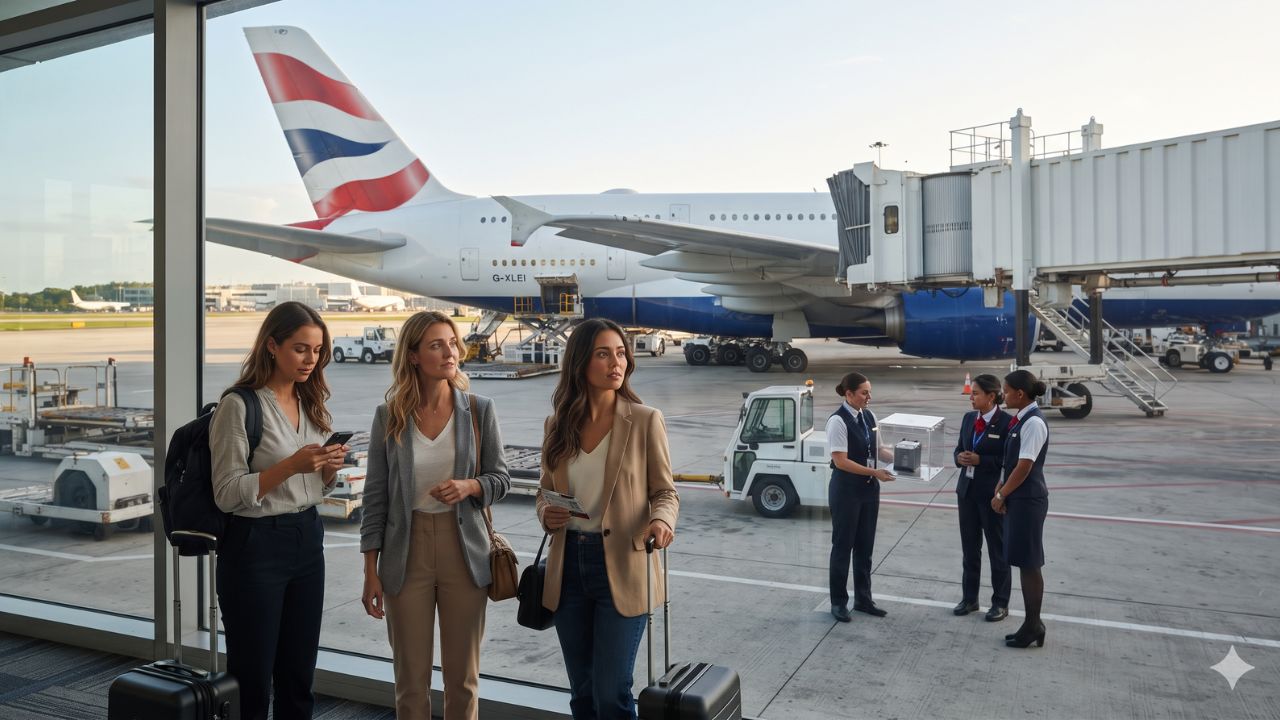
On the evening of 12 November 2026, the immense double-deck cabin of a British Airways Airbus A380-800 preparing for an overnight transatlantic crossing was halted at the gate at Miami International Airport (MIA). Flight BA026, registered as G-XLEI and scheduled to depart at 5:10 pm local time bound for London Heathrow (LHR), was brought to an immediate standstill when an overheating portable power bank began emitting extreme thermal radiation inside the passenger cabin. The swift tactical response of the flight crew prevented an inflight fire hazard, spotlighting the strict global safety rules governing portable batteries aboard commercial aircraft.
Gate Incident Analysis: Flight BA026 and Jet Bridge Reconnection
Boarding had concluded and cabin doors were secured when flight attendants identified a malfunctioning consumer power bank undergoing thermal acceleration. Recognizing the imminent risk of thermal runaway—where overheating internal lithium cells release oxygen and ignite self-sustaining chemical fires—the flight deck took decisive preventive action.
Rather than proceeding toward the runway or attempting to contain a volatile battery while airborne over the Atlantic, the pilots contacted ground control and requested that airport personnel immediately reconnect the passenger boarding bridge. Once the jet bridge was repositioned against the forward fuselage, the aircraft door was reopened, and the defective charging unit was safely transferred to ground ground crews for hazardous disposal.
Following comprehensive checks by cabin safety officers, flight BA026 received pushback clearance and took off from Miami’s Runway 27 at 5:41 pm local time, exactly 31 minutes behind schedule. Taking advantage of favorable high-altitude jet streams over the North Atlantic, the superjumbo made up its lost transit time, touching down at London Heathrow at approximately 6:40 am local time on 13 November, directly matching its scheduled arrival time with zero reported injuries or airframe damage.
| Flight & Incident Parameter | Official Recorded Detail | Aviation Safety Regulation |
|---|---|---|
| Flight Number & Route | British Airways BA026: Miami (MIA) to London Heathrow (LHR) | Flagship daily transatlantic long-haul service |
| Aircraft Model & Registration | Airbus A380-800 (Registration: G-XLEI) | World's largest commercial passenger airliner |
| Scheduled Departure Time | 5:10 pm local time, 12 November 2026 | Boarded and prepared for gate pushback |
| Actual Departure Time & Runway | 5:41 pm local time (Runway 27) | 31-minute gate hold to remove battery hazard |
| Arrival Timestamp | 6:40 am local time, 13 November 2026 | Arrived on time at London Heathrow Terminal 5 |
| Battery Chemistry / Hazard | Rechargeable Lithium-ion / Thermal Runaway | High risk of spontaneous combustion and toxic smoke |
| Cabin Baggage Mandate | Strict Carry-on Only (Prohibited in cargo hold) | Mandated by FAA, CAA, and ICAO global frameworks |
The Science of Thermal Runaway and Cargo Hold Dangers
The Miami occurrence illustrates why global regulators maintain zero tolerance for loose batteries in airliner cargo holds. Rechargeable lithium-ion batteries power smartphones, tablets, cameras, and external power banks by packing high energy density into miniature casings.
When a lithium cell suffers microscopic manufacturing flaws, internal short circuits, puncture damage, or extreme temperature variations, it can enter thermal runaway. Temperatures inside the battery can spike to over 600 degrees Celsius (1,100 degrees Fahrenheit) in seconds, releasing flammable electrolytes and dense smoke.
If this reaction occurs in the passenger cabin, cabin crew trained in hazardous materials handling can quickly deploy fire-containment bags and cool the device with non-alcoholic liquids. Conversely, if an overheating battery is buried inside checked luggage within an unmonitored cargo hold, automated cargo fire-suppression systems (halon gas) can knock down open flames but cannot easily extinguish the internal chemical heat reaction of a lithium battery, risking catastrophic airframe damage.
International Passenger Battery Regulations
To prevent cargo fires, international aviation safety organizations enforce unambiguous capacity limits and carriage protocols:
Under rules set by the Federal Aviation Administration (FAA) and the UK Civil Aviation Authority (CAA), all spare lithium batteries and external power banks must be transported exclusively within passenger carry-on luggage.
Power banks rated up to 100 watt-hours (Wh)—which includes approximately 95 percent of consumer phone chargers—are permitted without airline prior approval. Chargers rated between 100 Wh and 160 Wh require explicit airline approval before check-in, with a strict limit of two spare batteries per traveler. Any battery exceeding 160 Wh is entirely banned from passenger aircraft.
Watt-Hour Calculation Formula:
Watt-hours (Wh) = Volts (V) x Ampere-hours (Ah)
Example: A 20,000 mAh (20 Ah) power bank operating at 3.7 V = 74 Wh (Permitted in Carry-on)
Visitor Insider Tips
- Check Battery Markings: Aviation security screeners at international hubs like Miami, London Heathrow, and Singapore will confiscate unmarked power banks. Ensure your charger displays clear manufacturer printing stating its milliampere-hour (mAh) or watt-hour (Wh) rating.
- Protect Terminal Contacts: Never carry loose batteries with exposed metal terminals rolling freely in your backpack next to coins, keys, or metal pens. Keep chargers inside protective neoprene sleeves or cover the ports with electrical tape to prevent accidental short circuits.
- Never Pack Power Banks in Gate-Checked Bags: If an airline gate agent announces that overhead bins are full and insists on checking your roll-aboard suitcase at the jet bridge, you must open your suitcase and remove all power banks, e-cigarettes, and spare batteries before handing the bag over.
- Monitor Charging Heat: Avoid charging devices while sleeping on long-haul flights. If your phone or power bank feels hot to the touch, smells metallic, swells, or begins smoking, notify flight attendants immediately. Do not attempt to move or douse the device yourself.
Cultural and Environmental Context
Modern travelers exist in an hyper-connected digital culture where smartphones serve as boarding passes, currency wallets, and communication lifelines. This heavy digital reliance has fueled exponential growth in consumer battery consumption.
However, cheap uncertified replacement chargers purchased through online discount marketplaces often lack integrated thermal protection circuits and quality-tested separators. When budget-conscious travelers pack low-cost electronics, they unintentionally import substantial safety risks into pressurized cabins.
Airlines are countering this by installing dedicated high-output USB-C ports at passenger seats on modern long-haul fleets, reducing the need for personal power banks. At the end of life, disposing of damaged lithium batteries in standard municipal airport trash creates serious landfill fires. Travelers should utilize designated battery recycling kiosks located in major terminal hubs to ensure hazardous electronic waste is processed responsibly.
FAQ: Inflight Power Bank Safety 2026
Can I pack a portable power bank in my checked suitcase?
No. International aviation laws strictly prohibit spare lithium-ion batteries and power banks in checked luggage. They must be carried inside the passenger cabin.
What is the maximum power bank size allowed on commercial flights?
Power banks up to 100 watt-hours (Wh) are permitted in carry-on baggage. Chargers between 100 Wh and 160 Wh require airline approval, while those over 160 Wh are banned.
What happened to British Airways flight BA026 in Miami?
An overheating power bank was detected after boarding, prompting the crew to reconnect the jet bridge and remove the device. The flight departed 31 minutes late and arrived on time in London.
What should I do if my battery begins overheating during a flight?
Alert the cabin crew immediately. Flight attendants are trained to isolate overheating electronics using specialized fire-containment bags and cooling procedures.
Related Travel Guides
- American Airlines Adds Four Daily Miami Flights to St. Thomas Guide
- Asia Flight Alert: Over 4,700 Flights Delayed Across Major Hubs
- Air France AF702 Declares Emergency and Diverts to Paris
By understanding battery chemistry and packing chargers strictly in cabin bags, travelers help ensure safe skies across every intercontinental journey.
This article is for informational purposes. Flight routes, passenger regulations, visa rules, and transit advisories are subject to change by airlines and aviation authorities. Readers are advised to verify schedules and travel documentation with relevant carriers and border agencies before departure.
Related Stories
British Airways Revives Long-Haul Meal Pre-Orders on Las Vegas Flights: Inside the World Traveller Plus Dining Trial
UK Government Warns Air Passengers: Uncharged Electronics May Be Barred From Flights in 2026