
Travel Latin Brazil Sets Continent-Wide Tourism Alliance for WTM 2026
Brazil leads nine Latin American nations in unprecedented tourism collaboration for World Travel Market 2026, reshaping regional competitiveness against Asia and Europe.

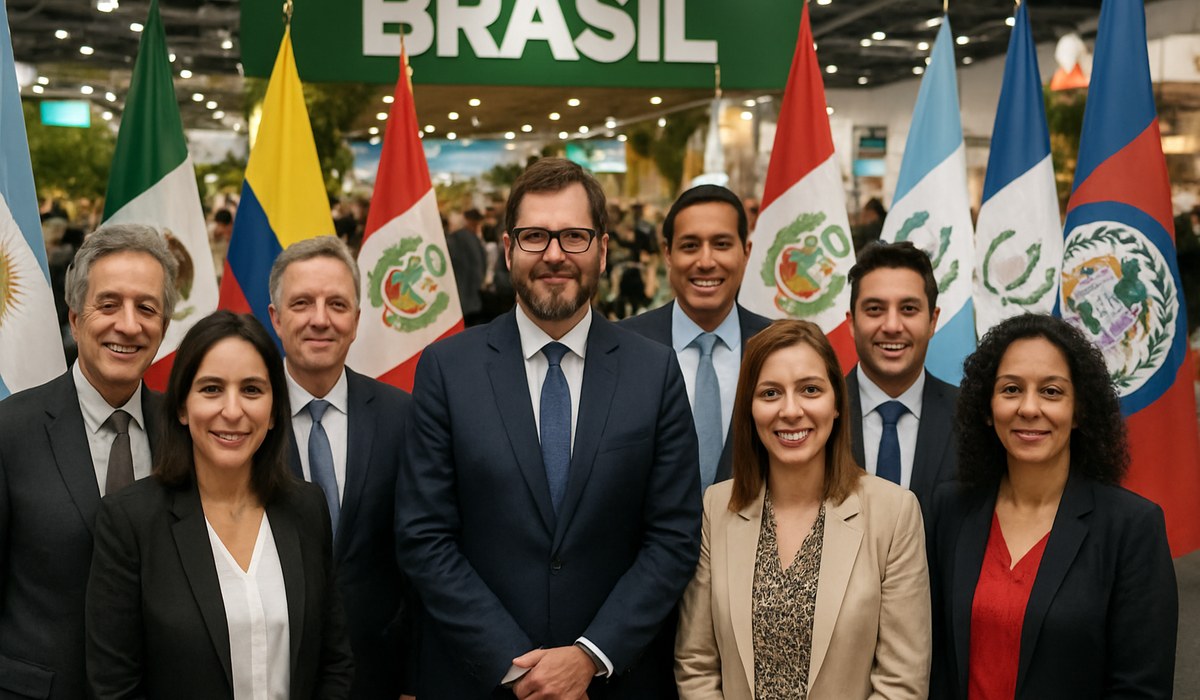
Image generated by AI
Quick Summary • Brazil orchestrates the largest cross-border tourism partnership in Latin American history for World Travel Market 2026 • Nine nations including Argentina, Mexico, Colombia, Peru, Costa Rica, Guatemala, and Belize join unified marketing push • Initiative marks strategic shift from individual nation branding to continental identity positioning • Regional collaboration aims to capture greater share of global tourism spending projected to exceed $11.4 trillion by 2027
In an unprecedented show of regional unity, Brazil is orchestrating the largest cross-border tourism collaboration in Latin American history, bringing together nine nations under one banner for World Travel Market Latin America 2026. The continental alliance, announced this week, represents a fundamental departure from decades of fragmented national tourism strategies and positions the region as a unified powerhouse ahead of the industry's premier trade event.
Brazil's Ministry of Tourism confirmed that Argentina, Mexico, Colombia, Peru, Costa Rica, Guatemala, and Belize have committed to the collaborative showcase, with additional Caribbean nations expected to join before the event launches in São Paulo next month. According to UNWTO regional tourism data, Latin America currently captures just 3.8% of global international arrivals despite possessing some of the world's most diverse cultural and natural assets.
Nine Nations, One Vision: The Scale of Latin America's Tourism Alliance
The travel latin brazil initiative consolidates marketing budgets from participating nations into a single coordinated presence spanning over 12,000 square meters at World Travel Market Latin America 2026. Tourism Minister Carlos Figueiredo stated during Thursday's announcement that the alliance represents "the most ambitious regional tourism project since the formation of Mercosur," referring to the South American trade bloc established in 1991.
Individual country pavilions will operate within an overarching "Latin America Connected" branded zone, featuring unified visa information resources, cross-border itinerary planning services, and joint sustainability commitments. Mexico's Tourism Secretary indicated the collaboration could reduce individual marketing costs by up to 40% while tripling audience reach compared to standalone national exhibitions.
The timing aligns strategically with infrastructure investments accelerated by preparations for the FIFA World Cup 2026, creating momentum similar to how major sporting events driving regional travel generate sustained tourism interest. Costa Rica's participation signals growing recognition that even nations with established tourism brands benefit from collective positioning against heavyweight competitors.
Guatemala and Belize's inclusion extends the alliance beyond South America's traditional powerhouses, addressing long-standing criticism that regional tourism organizations favor larger economies. Panama, Uruguay, and several Caribbean nations are negotiating participation terms that could expand the coalition to fifteen countries by the event's opening day.
What World Travel Market 2026 Means for Travelers
Practical benefits for international visitors emerge from this consolidated approach. A unified digital platform launching in April will enable travelers to book multi-country itineraries through a single transaction interface, addressing one of the most frequently cited barriers to extended Latin American travel. Currently, planning trips across multiple nations requires navigating separate visa processes, disconnected booking systems, and incompatible payment infrastructures.
The alliance introduces standardized tourism quality certifications across participating nations, similar to Europe's Hotelstars Union rating system. Accommodations, tour operators, and restaurants meeting agreed-upon standards will display a "Latin America Verified" badge, reducing the information asymmetry that often pushes travelers toward more familiar Asian and European destinations.
Travelers can expect enhanced air connectivity as the collaboration includes coordinated route development discussions with major carriers. Brazil's flag carrier is negotiating regional pass products allowing unlimited flights between member nations for fixed prices, mirroring successful models in Europe and Southeast Asia. Colombia's growing appeal to international travelers exemplifies the region's increasing accessibility despite occasional challenges.
Budget-conscious travelers benefit most significantly. Joint purchasing agreements for marketing and event presence free up resources that several nations plan to redirect toward tourism infrastructure in underserved regions. Peru announced plans to use savings from World Travel Market participation to expand English-language signage throughout Cusco and the Sacred Valley.
The coordinated approach addresses safety perception issues through shared crisis communication protocols and joint security standards. When incidents occur, unified response frameworks prevent the reputational damage that historically affected entire regions due to isolated events in single countries.
Economic Impact: Why Regional Unity Matters Now
Latin America's fragmented tourism marketing has allowed Asia and Europe to dominate growth trajectories despite comparable or superior natural and cultural offerings. The World Travel & Tourism Council's Latin America economic impact report projects the region's tourism GDP contribution could reach $385 billion by 2028 if current growth rates hold, yet this represents less than 8% of the global travel economy.
Brazil's leadership in forging this alliance stems from recognition that individual Latin American nations lack the marketing weight to compete against nation-brands like Singapore, Japan, or France. Combined, the nine participating countries represent a population exceeding 570 million and cultural diversity spanning Amazonian rainforests, Caribbean beaches, Andean peaks, colonial architecture, and contemporary metropolitan centers.
Argentina's peso devaluation created unexpected tourism competitiveness in 2025, attracting record visitor numbers from North America and Europe. The World Travel Market 2026 alliance allows other nations to capitalize on Argentina's momentum through bundled marketing that positions the entire region as offering exceptional value without relying solely on currency fluctuations.
Mexico's participation carries particular weight given its position as Latin America's second-largest tourism economy after Brazil. Tourism analysts at Skift's analysis of regional tourism alliances note that Mexico joining Brazil-led initiatives signals confidence that collaboration enhances rather than dilutes strong national brands.
The economic calculus extends beyond immediate tourism receipts. Regional airline capacity investments, hotel development pipelines, and tourism workforce training programs gain efficiency through coordinated planning. Costa Rica's sustainable tourism expertise, for example, will inform environmental standards across the alliance, potentially attracting travelers prioritizing ecological responsibility.
Infrastructure financing becomes more attractive to international investors when backed by multi-nation commitments rather than individual country proposals. Development banks have already expressed interest in funding cross-border tourism corridors linking Peru's Machu Picchu with Bolivia's Uyuni Salt Flats and northern Argentina's wine regions.
How This Changes Latin America's Competitive Position
The unified World Travel Market 2026 presence directly challenges established regional tourism leaders. Europe has long dominated through Schengen visa convenience and integrated transportation networks, while Asia's tourism boom rode coordinated ASEAN marketing and infrastructure development. Latin America's historical fragmentation left the region punching below its weight despite world-class assets.
Competitive positioning analysis reveals the alliance targets three key traveler segments: North American retirees seeking extended winter escapes, European adventure travelers aged 25-40, and emerging middle-class Asian tourists exploring beyond familiar regional circuits. Each segment requires different messaging that individual nations struggled to deliver cost-effectively.
The collaboration learns from strategies employed by regions like how Asian destinations are positioning themselves, where Singapore and Hong Kong promote complementary rather than competitive identities. Similarly, Brazil and Argentina now market as gateway-plus-destination pairs rather than zero-sum competitors for the same traveler.
Digital marketing efficiency improves dramatically through shared content creation and influencer partnerships. A single campaign featuring travel across multiple countries generates more engagement than parallel national efforts, while production costs split among participants. Guatemala expects its per-visitor marketing cost to decline by 35% through alliance participation.
The alliance creates defensive advantages against emerging competitors. African tourism boards increasingly position their continent as offering similar adventure and wildlife experiences at lower costs. Latin America's coordinated response emphasizes cultural depth, infrastructure maturity, and geographical proximity to major North American markets.
Industry stakeholders report heightened interest from tour operators who previously found multi-country Latin American packages too complex to develop. Unified participation standards and streamlined booking systems remove operational barriers that historically limited package tour offerings to single nations or subregions.
FAQ: World Travel Market Latin America 2026
When and where is World Travel Market Latin America 2026 taking place?
The event runs April 22-24, 2026, at the Expo Center Norte in São Paulo, Brazil. This marks the first edition featuring the unified nine-nation pavilion under Brazil's coordination.
Will travelers need separate visas to visit participating countries?
Current visa requirements remain unchanged, but the alliance launches a centralized information portal in April 2026 detailing requirements for all member nations. Several countries are exploring mutual visa waiver agreements expected to take effect later in 2026.
How does this alliance affect airfares between Latin American countries?
While the coalition doesn't directly set airline pricing, participating nations committed to supporting expanded route networks and regional air pass programs. Brazil's flag carrier plans to announce a multi-country flight pass in May 2026.
Are smaller countries being overshadowed by Brazil and Mexico?
Alliance terms ensure proportional representation relative to tourism capacity rather than overall national GDP. Guatemala and Belize receive dedicated pavilion spaces and equal voice in joint marketing decisions, according to published participation agreements.
What sustainability commitments come with this tourism push?
All participating nations adopted baseline environmental standards for promoted accommodations and tour operators, with Costa Rica leading the certification framework development. Individual countries maintain authority over domestic environmental policies while agreeing to minimum regional standards.
Related Coverage:
Disclaimer
This article is for informational and educational purposes only. It does not constitute legal, financial, or professional advice. While we strive to provide accurate and up-to-date information, travel policies, regulations, and conditions change rapidly. Always verify information with official sources before making travel decisions. Nomad Lawyer makes no representations about the accuracy, reliability, completeness, or suitability of the information provided. Readers should consult qualified professionals for advice specific to their circumstances. The views expressed in this article are those of the author and do not necessarily reflect the views of Nomad Lawyer.
Raushan Kumar
Founder & Lead Developer
Full-stack developer with 11+ years of experience and a passionate traveller. Raushan built Nomad Lawyer from the ground up with a vision to create the best travel and law experience on the web.
Learn more about our team →