
Travel Latin Brazil: Eight Nations Unite for Market Dominance in 2026
Brazil leads eight Latin American nations in unified World Travel Market 2026 strategy targeting 150 million regional arrivals and reshaping global travel dynamics.

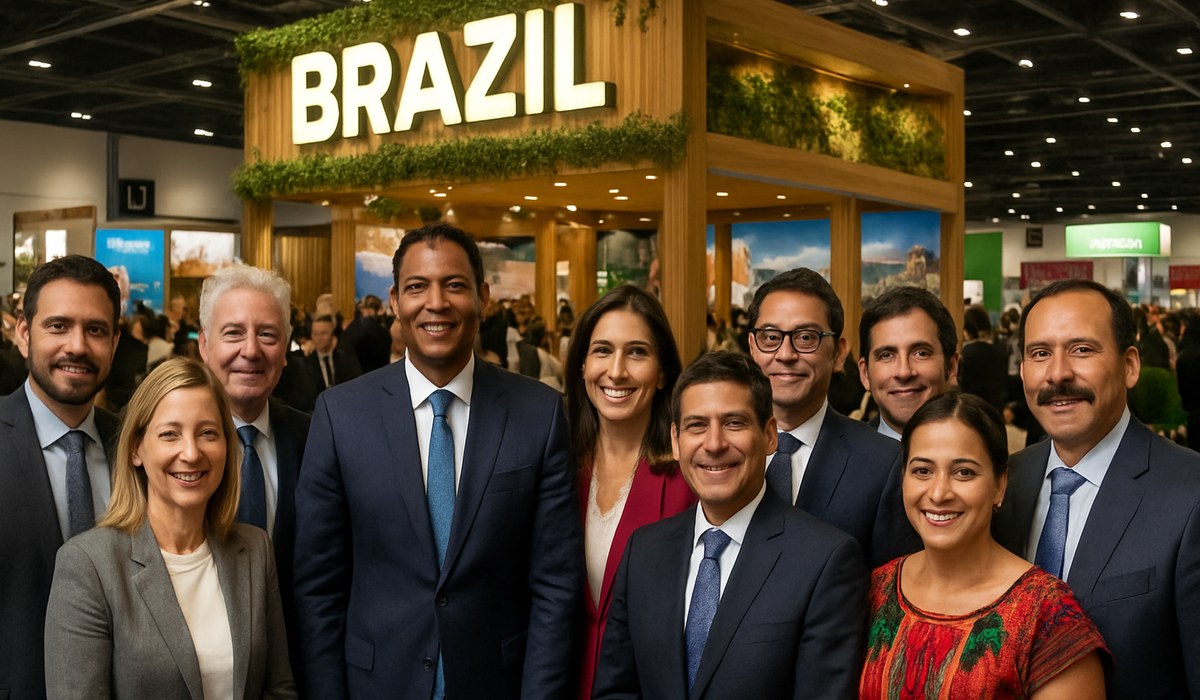
Image generated by AI
**> Quick Summary
• Brazil orchestrates unprecedented eight-nation coalition for World Travel Market Latin America 2026 • Regional bloc targets 150 million international visitors by 2030, representing 38% increase over 2019 levels • Combined tourism GDP contribution from participating nations could reach $400 billion annually by decade's end • Unified marketing approach directly challenges European and Asian destination dominance in long-haul travel segments**
Eight Latin American nations are joining forces in an ambitious bid to transform the region into the world's fastest-growing tourism corridor, with Brazil spearheading a unified presence at the 2026 World Travel Market that could reshape global travel patterns for the next decade. The coalition—encompassing Argentina, Mexico, Colombia, Peru, Costa Rica, Guatemala, and Belize—represents the most comprehensive collaborative tourism marketing effort ever attempted in the Western Hemisphere. Industry executives privately acknowledge this strategic pivot comes as Mediterranean and Southeast Asian destinations continue capturing disproportionate shares of recovery-phase international travel spending.
Brazil's Ministry of Tourism confirmed the regional alliance will debut at World Travel Market Latin America 2026, scheduled for São Paulo this October. The announcement arrives as according to UN World Tourism Organization data, Latin America recorded just 94 million international arrivals in 2023, lagging significantly behind Europe's 715 million and Asia-Pacific's 324 million visitors. Tourism ministers from participating countries signed a joint declaration in Brasília establishing shared marketing budgets, coordinated visa policies for third-country nationals, and unified sustainability standards across resort developments.
Why Eight Nations Are Betting Big on Unified Tourism Marketing
The strategic rationale behind travel Latin Brazil's coalition extends beyond simple promotional synergy. Traditional bilateral tourism promotion has proven inadequate against integrated marketing machines operated by European Union tourism boards and ASEAN member states. Each participating nation brings distinct competitive advantages: Mexico's proximity to North American source markets, Costa Rica's established eco-tourism reputation, Peru's archaeological treasures, Colombia's emerging culinary scene, and Argentina's wine country appeal.
Fernando Silva, Brazil's Secretary of International Tourism Affairs, stated the unified approach will concentrate resources on high-yield visitor segments currently underrepresented in Latin American arrival statistics. "Business travelers, wellness tourists, and multi-country itinerary planners represent our fastest growth opportunity," Silva explained at the Brasília signing ceremony. "No single country can afford the marketing spend required to penetrate European, Middle Eastern, and Asian source markets effectively."
The coalition's shared intelligence reveals troubling trends individual countries couldn't address alone. Average length of stay across Latin American destinations remains stuck at 7.2 nights compared to 12.4 nights for comparable Caribbean and European Mediterranean trips. Repeat visitation rates hover at just 18% versus 34% for competing long-haul destinations. These metrics suggest travelers view Latin America as single-trip bucket-list territory rather than a recurring vacation preference—a perception the unified marketing campaign explicitly targets.
Travel industry analysts note the coalition timing capitalizes on shifting geopolitical travel patterns. Chinese outbound tourism, once overwhelmingly focused on European capitals, increasingly seeks new destinations as visa restrictions tighten. Gulf Cooperation Council nationals, representing high per-capita spending tourists, express growing interest in Latin American cultural tourism following successful Saudi Arabian promotional efforts. The eight-nation bloc positions itself to capture these emerging flows before European destinations adjust their own marketing strategies.
The Economic Stakes: Latin America's $400 Billion Tourism Opportunity
The World Travel & Tourism Council projects that tourism's direct contribution to Latin American GDP could surge from $284 billion in 2024 to $411 billion by 2030 if the region captures its proportional share of global travel growth. Currently, Latin America accounts for just 8.7% of worldwide international tourism receipts despite representing 8.4% of global population—a parity that masks enormous untapped potential.
Mexico remains the coalition's economic heavyweight, generating $31 billion in international tourism receipts during 2024. Yet Mexico's success paradoxically highlights the problem: three-quarters of its visitors originate from the United States, creating vulnerability to economic cycles and exchange rate fluctuations. The unified marketing strategy specifically targets European, Asian, and Middle Eastern source markets where Mexico's current penetration remains negligible.
Brazil's $19 billion tourism economy faces different constraints. Despite possessing Latin America's largest domestic travel market, international visitors represented only 6.8 million arrivals in 2024—fewer than Croatia, a country with 2% of Brazil's population. Infrastructure deficits, complex visa requirements for key source markets, and limited international flight connectivity have historically constrained growth. The coalition framework establishes reciprocal visa waivers among member states and coordinated negotiations with global airline alliances to address these structural barriers.
Argentina contributes unique value through its established wine tourism infrastructure and Patagonian adventure travel offerings. The country's 2024 economic reforms eliminated previous currency control restrictions that deterred international visitors. Colombia and Peru collectively recorded 11.2 million international arrivals in 2024, but both struggle with persistent safety perception issues in North American and European source markets—concerns the coalition's communications strategy addresses through coordinated messaging emphasizing modernized infrastructure and improved security metrics.
Costa Rica, Guatemala, and Belize anchor the Central American segment. Costa Rica's $4.6 billion tourism economy demonstrates mature market positioning, while Guatemala and Belize offer emerging archaeological and marine tourism products. The inclusion of these smaller economies ensures geographic coverage from Mexico's northern border to Argentina's southern reaches, enabling multi-country itineraries that extend visitor stays and increase per-trip expenditure.
Infrastructure and Connectivity: Can the Region Handle Projected Growth?
Ambitious arrival targets mean little without corresponding infrastructure capacity. The coalition's technical working groups identified critical bottlenecks requiring immediate investment: international airport expansion, inter-country transportation links, and accommodation supply in secondary cities. Current hotel room inventory across the eight nations totals approximately 2.1 million keys, with occupancy rates averaging 68% in 2024. Meeting 150 million annual arrivals would require an additional 400,000 rooms assuming current average length of stay metrics.
Hospitality groups expanding across Latin America have accelerated development timelines in response to government commitments secured through the coalition framework. Mexico announced tax incentives for resort construction in Oaxaca, Chiapas, and Yucatán Peninsula locations outside Cancún and Playa del Carmen. Brazil committed $8.3 billion in public-private partnership funding for airport upgrades in Salvador, Recife, and Manaus—cities positioned as Amazon and coastal tourism gateways.
Air connectivity represents perhaps the most significant infrastructure challenge. Currently, just 14 direct flight routes connect Latin American capitals with European cities, compared to 67 routes linking European and North African destinations. Asian connectivity proves even more limited, with only São Paulo and Mexico City offering regular direct service to major Asian hubs. The coalition negotiated a joint procurement framework enabling member states to offer coordinated subsidies and guaranteed passenger volumes to airlines launching new intercontinental routes.
Colombia's infrastructure priorities focus on domestic connectivity supporting multi-destination itineraries. The country committed to completing highway upgrades linking Bogotá, Medellín, and Cartagena by late 2026, reducing overland travel times that currently discourage tourist circulation. Peru accelerated rail modernization projects connecting Lima with Cusco and Arequipa, addressing complaints about aging equipment on these critical tourist corridors. Yet regional connectivity challenges remain significant, particularly regarding safety standards and emergency response capabilities that international travelers expect.
The coalition's sustainability working group established binding environmental standards for new tourism infrastructure. All participating nations agreed to mandate renewable energy provision for resort developments exceeding 200 rooms, establish marine protected area buffers around coastal tourism zones, and implement carrying capacity limits at major archaeological and ecological sites. These commitments respond to research showing European travelers increasingly select destinations based on environmental credentials—a competitive arena where Latin American destinations currently underperform against Nordic and Alpine competitors.
Major sporting events driving regional tourism infrastructure provide additional catalyst momentum. Mexico's co-hosting of the 2026 FIFA World Cup accelerates stadium, transportation, and accommodation projects with tourism applications extending beyond the tournament. Brazil's ongoing preparations for major international conferences through 2028 similarly advance infrastructure timelines. The coalition's coordinated calendar ensures major promotional campaigns align with infrastructure completion dates rather than creating expectations exceeding current delivery capacity.
What World Travel Market 2026 Means for Travelers and Industry
World Travel Market Latin America 2026 will showcase the coalition's unified pavilion spanning 4,200 square meters—triple the combined individual booth space member nations occupied at the 2025 event. The pavilion's design emphasizes regional circuit tourism, with joint promotional materials highlighting 14-day, 21-day, and 28-day itineraries crossing multiple countries. This represents a deliberate departure from previous single-destination marketing approaches that failed to capture extended-stay visitors.
Tour operators attending the São Paulo event will negotiate directly with the coalition's joint contracting office, streamlining procurement processes that previously required separate negotiations with each national tourism board. Standardized service level agreements, unified liability frameworks, and reciprocal licensing for tour guides working across borders eliminate friction points that historically discouraged European and Asian operators from developing multi-country Latin American packages.
For travelers, tangible benefits emerge through coordinated visa policies taking effect January 2027. Citizens of European Union member states, Japan, South Korea, and Gulf Cooperation Council countries will receive automatic 90-day visa waivers valid across all eight coalition nations upon entry to any member state. Previously, visitors faced separate visa applications for each country, with processing times and documentation requirements varying significantly. The simplified framework positions Latin America competitively against Southeast Asia's coordinated visa schemes.
The coalition announced joint tourism cards offering discounted admission to 187 museums, archaeological sites, and national parks across member countries. Modeled after European city pass programs, the Latin America Discovery Card will be available for 7-day ($149), 14-day ($249), and 30-day ($399) periods, with proceeds shared among participating cultural institutions. Transportation benefits include discounted inter-country flights and bus services operated by regional carriers.
Pricing transparency initiatives address long-standing traveler frustrations about inconsistent tourism service costs. The coalition established recommended pricing bands for common tourist services—airport transfers, guided day tours, restaurant meals—calibrated to local cost structures but presented in standardized format across member countries. While not mandatory, participating service providers receive official coalition certification and preferential placement in joint marketing materials.
Safety and security coordination represents perhaps the most significant qualitative improvement for travelers. The coalition established a 24/7 multilingual tourist assistance hotline operating across all eight nations, with trained operators accessing coordinated police and medical response networks. Real-time incident reporting feeds unified travel advisory systems, replacing previous fragmented national warnings that often exaggerated localized security concerns to entire countries.
FAQ: Latin America's Tourism Coalition
What exactly did Brazil announce regarding travel Latin Brazil and partner countries?
Brazil has organized eight Latin American nations—Argentina, Mexico, Colombia, Peru, Costa Rica, Guatemala, and Belize—into a unified tourism marketing coalition that will present jointly at World Travel Market Latin America 2026. The alliance establishes shared marketing budgets, coordinated visa policies, unified sustainability standards, and integrated promotional campaigns targeting 150 million regional annual arrivals by 2030. This represents the most comprehensive collaborative tourism effort in the Western Hemisphere's history.
When will travelers see practical benefits from this coalition?
The first tangible changes take effect January 2027 when the unified visa waiver system launches for citizens of European Union nations, Japan, South Korea, and Gulf Cooperation Council countries. The Latin America Discovery Card providing discounted cultural site access becomes available in October 2026. Coordinated airline route subsidies are expected to produce new direct flights from European and Asian hubs beginning late 2026, with full implementation throughout 2027.
How does this coalition compare to similar efforts in other regions?
The Latin American coalition most closely resembles the ASEAN Tourism Strategic Plan covering Southeast Asian nations, though with faster implementation timelines for visa coordination. Unlike the European Union's fragmented national tourism promotion approaches, the Latin American model centralizes marketing spend while preserving individual country brand identities. The coalition's binding environmental standards exceed those established by most competing regional tourism frameworks.
Will this increase travel costs to Latin America?
Industry projections suggest the opposite effect. Coordinated airline negotiations and increased competition from new route launches should reduce airfare costs by 12-18% on European and Asian origins by late 2027. The standardized pricing framework for ground services eliminates price gouging common in poorly regulated tourism economies. However, increased demand for limited accommodation in popular secondary cities may drive hotel rates higher in destinations like Cartagena, Cusco, and Granada until new supply comes online.
Which travelers benefit most from these changes?
Multi-country itinerary planners gain the most significant advantages through simplified visa processes, integrated transportation options, and standardized service frameworks. Adventure and eco-tourism travelers benefit from coordinated sustainability standards and improved safety infrastructure. Business travelers gain from streamlined visa procedures and reciprocal service provider licensing. Single-destination beach resort visitors may see fewer immediate benefits, as much of the coalition's infrastructure addresses multi-country tourism challenges.
Related Articles:
Disclaimer
This article is for informational and educational purposes only. It does not constitute legal, financial, or professional advice. While we strive to provide accurate and up-to-date information, travel policies, regulations, and conditions change rapidly. Always verify information with official sources before making travel decisions. Nomad Lawyer makes no representations about the accuracy, reliability, completeness, or suitability of the information provided. Readers should consult qualified professionals for advice specific to their circumstances. The views expressed in this article are those of the author and do not necessarily reflect the views of Nomad Lawyer.
Raushan Kumar
Founder & Lead Developer
Full-stack developer with 11+ years of experience and a passionate traveller. Raushan built Nomad Lawyer from the ground up with a vision to create the best travel and law experience on the web.
Learn more about our team →