
North American Travelers Drive Historic Surge in Brazil Tourism
Brazil welcomed 608,068 North American travelers between January and July, showing a positive growth of 2.87% over the previous year.
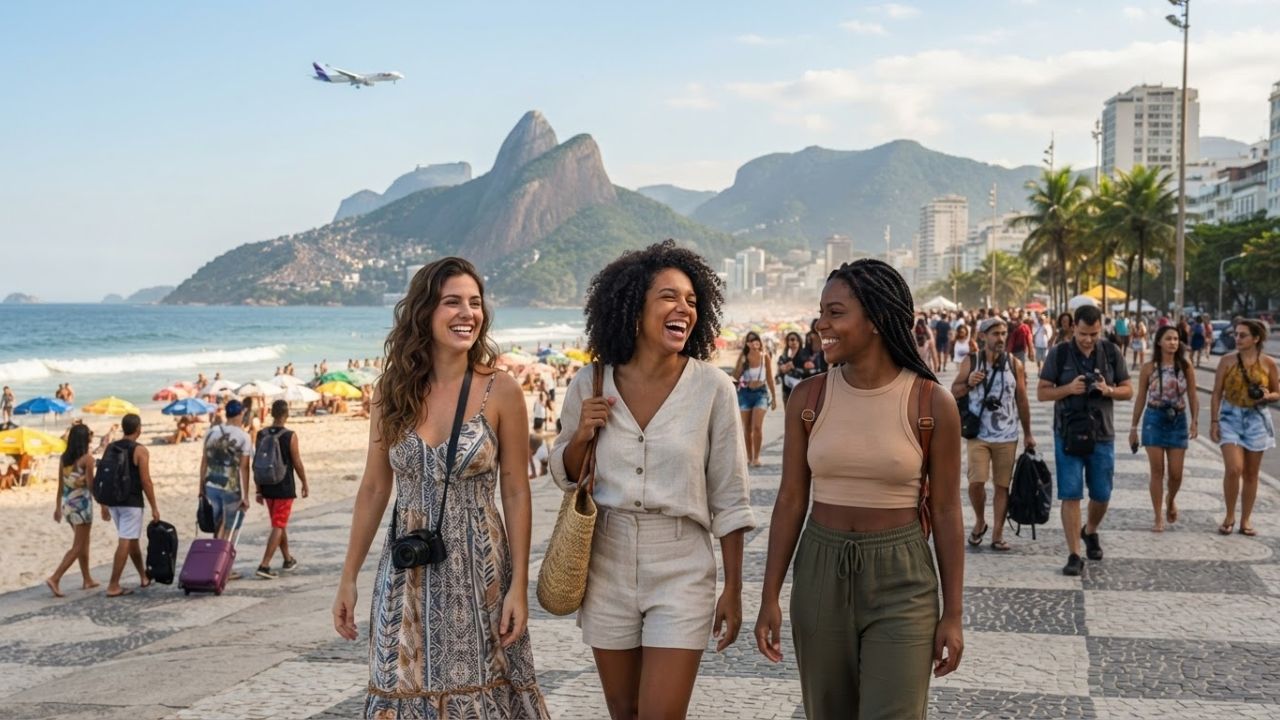
Image generated by AI
Brazil has welcomed a record 608,068 North American travelers between January and July of 2016, representing a 2.87 percent growth compared to the same period during the previous year. According to figures monitored by the Ministry of Tourism of Brazil, this upward trend has continued into 2026, with the country receiving 5.87 million international visitors during the first seven months of the year.
Air Capacity Growth and Regional Gateway Performance
The expansion of direct air networks between the United States and Brazil has played a key role in supporting international visitor growth. Direct seating capacity rose from 2,333,526 in 2023 to a projected 2,650,446 in 2026, representing a 13.6 percent capacity increase. During the same period, scheduled flight operations rose by 15.5 percent, increasing from 8,533 to 9,852 flights, as monitored by the National Civil Aviation Agency of Brazil (ANAC).
São Paulo remained the primary entry point for North American visitors, processing 341,501 arrivals. Concurrently, Rio de Janeiro recorded the fastest growth rate among North American travelers, welcoming 190,353 tourists between January and July, a 16 percent increase compared to the previous year. Other regional gateways also recorded gains, including Paraná with 26,198 arrivals, the Federal District with 14,066 visitors, and Amazonas with 9,686 arrivals.
Diversification of North American Visitor Demographics
July emerged as a particularly strong month for North American arrivals, with combined visitors from the United States, Mexico, and Canada reaching 78,507, representing a 10.96 percent year-on-year increase and the highest July total since 2013.
- United States: Remained Brazil's second-largest international source market. American arrivals grew by 18 percent in April, 13 percent in May, 1.2 percent in June, and 10.7 percent in July. July alone brought 60,888 American visitors, marking the strongest July results from the US since 2013.
- Mexico: Recorded 80,274 arrivals between January and July, representing a 25.38 percent increase compared to the same period in the previous year.
- Canada: Welcomed 70,977 Canadian visitors during the first seven months, marking a 14.64 percent increase compared to the prior year.
According to survey data compiled by the Brazilian Tourist Board (Embratur), American tourists stayed an average of 7.7 nights and spent approximately US$1,404.68 per trip. The primary motivations for travel were culture (14 percent), beach tourism (12 percent), and luxury relaxation (12 percent).
Sustainable Community Initiatives and Rainforest Conservation
To distribute tourism revenues directly to resident communities, travelers are encouraged to choose locally owned guest houses (pousadas) and eat at neighborhood-based scale-weight restaurants (restaurantes por quilo) rather than global corporate chains.
Eco-tourism is also a major focus for local authorities. In sensitive areas like the Amazon rainforest or the Atlantic Forest, visitors are urged to hire local guides certified by regional environmental groups, such as the Amazonas Sustainable Foundation. Bypassing mass-market tour groups in favor of community-led conservation tours directly aids local families and promotes long-term ecological preservation.
Insider Destination Advice for North American Travelers
Local specialists suggest several tips to enhance your Brazilian itinerary:
- Observe the Off-Peak Window: The best time to visit Brazil is during the spring window of September to October. Temperatures are mild, and you can secure lower rates for flights and accommodations before the summer peak and Carnival crowds arrive.
- Observe Local Etiquette: Brazilians are warm and communicative. When greeting others, women often exchange one or two light air kisses on the cheeks, while men share a friendly handshake or a pat on the shoulder. Always say Por favor (please) and Obrigado (if you identify as male) or Obrigada (if you identify as female) to show respect.
- Sample Culinary Specialties: Visit a local neighborhood churrascaria to try traditional rodizio-style meats, or enjoy Feijoada (black bean and pork stew), which is traditionally served on Saturdays. Pair your meal with fresh Água de Coco (coconut water) from a beach kiosk in Rio.
- Explore Under-the-Radar Spots: In Rio de Janeiro, visit Parque Lage at the base of Corcovado for a peaceful morning walk. In São Paulo, check out the street art at Beco do Batman in Vila Madalena, or hike the trails of Parque da Cantareira to see the local wildlife and panoramic city views.
FAQ: Brazil Tourism Expansion
How many international visitors did Brazil receive in the first seven months of 2026? Brazil welcomed 5.87 million international visitors during the first seven months of 2026, marking the second-highest result in the country's history.
Which Brazilian city recorded the fastest tourism growth from North America? Rio de Janeiro recorded the fastest growth, welcoming 190,353 North American visitors, a 16 percent increase compared to the previous year.
What is the average spending and duration of stay for US travelers in Brazil? US tourists stayed an average of 7.7 nights and spent an average of US$1,404.68 per trip.
Which North American country recorded the highest year-on-year growth to Brazil? Mexico recorded the highest growth rate, with arrivals rising by 25.38 percent to reach 80,274 visitors.
Related Travel Guides
Disclaimer
This article is for informational and educational purposes only. It does not constitute legal, financial, or professional advice. While we strive to provide accurate and up-to-date information, travel policies, regulations, and conditions change rapidly. Always verify information with official sources before making travel decisions. Nomad Lawyer makes no representations about the accuracy, reliability, completeness, or suitability of the information provided. Readers should consult qualified professionals for advice specific to their circumstances. The views expressed in this article are those of the author and do not necessarily reflect the views of Nomad Lawyer.