
Brazil Airports Flight Disruption: 53 Cancelled, 239 Delayed Nationwide
Severe weather and airspace restrictions cause 53 cancellations and 239 delays at major Brazilian airports including GRU.

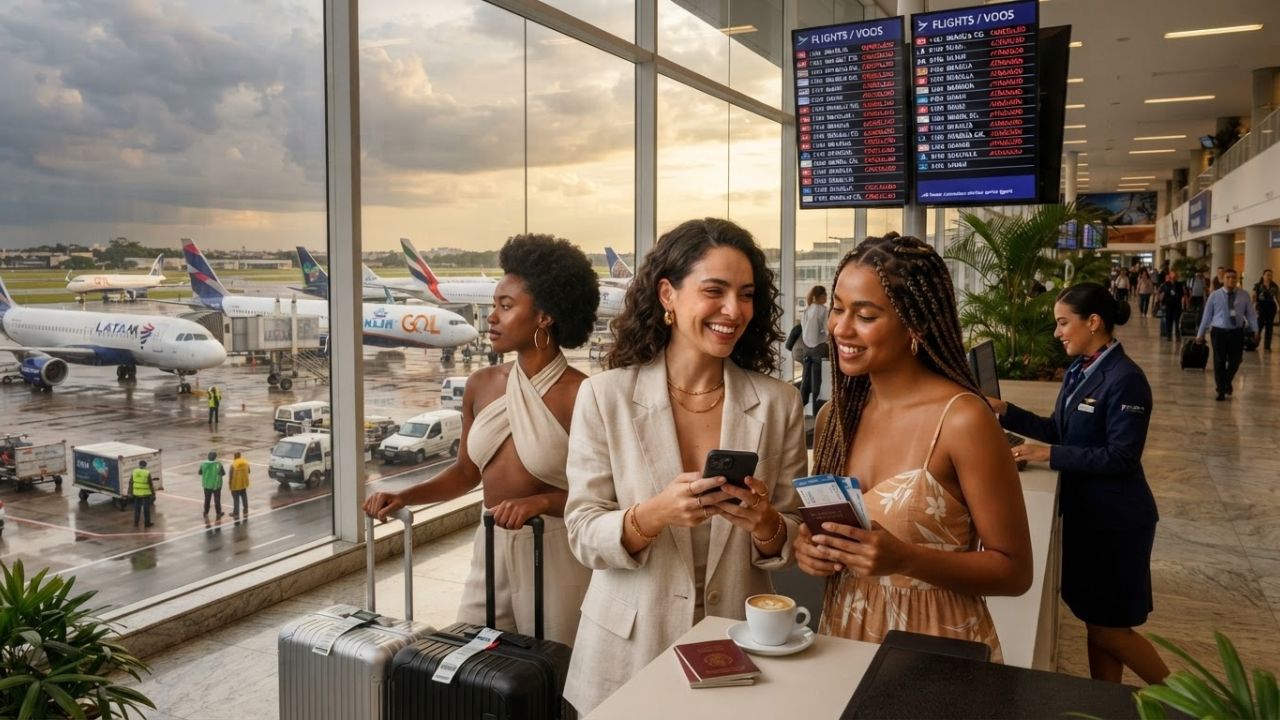
Image generated by AI
[São Paulo, Brazil – July 2, 2026]
Severe Brazilian airports flight disruptions grounded thousands of passengers on July 2, 2026, with 53 cancellations and 239 delays. The operations crisis affected major hubs including São Paulo-Guarulhos and Viracopos.
Our analysis indicates that LATAM Brasil suffered the most significant scheduling impacts.
Multiple Hub Meltdown Across the Brazilian Aviation Network
A system-wide scheduling disruption has swept across Brazil’s commercial aviation corridors during the winter vacation surge.
Flight tracking logs show 53 total cancellations alongside 239 delayed services at 15 different domestic gateways.
The primary cause stems from localized severe winter weather fronts passing over southeastern Brazil.
Sustained low visibility and convective storm activity blocked arrival pathways into the São Paulo metropolitan area.
Because Brazil’s network is highly concentrated, delays at Guarulhos triggered immediate ripple effects elsewhere.
Airports in Rio de Janeiro, Brasília, Salvador, and Curitiba reported logjams as planes failed to arrive.
Additionally, the recent closure of Venezuelan airspace has forced reroutings, consuming regional crew hours.
Airlines face severe operational bottlenecks as they work to clear backlogs.
Detailed Breakdown of Affected Brazilian Airports
The operational disruption was concentrated around the country's primary economic and leisure gateways.
São Paulo-Guarulhos International Airport (GRU) recorded 75 delayed flights and 9 complete cancellations.
Guarulhos serves as the main international hub for LATAM Brasil and partner carriers.
Viracopos International Airport (VCP) in Campinas registered 10 cancellations and 17 operational delays.
Viracopos acts as the primary operations base for Azul Brazilian Airlines.
Meanwhile, São Paulo-Congonhas Airport (CGH) reported 39 delays and 1 cancellation.
In Rio de Janeiro, Galeão Airport (GIG) experienced 23 delays and 5 cancelled departures.
Brasília Presidente Juscelino Kubitschek Airport (BSB) registered 17 delays and 2 cancellations.
Further north, Salvador International Airport (SSA) faced 14 delays and 3 cancellations, disrupting vacation schedules.
Airline Performance and Cancellation Metrics
Local carriers bore the brunt of the scheduling cuts due to their high frequency of domestic departures.
LATAM Brasil recorded 23 flight cancellations across its regional network, the highest among all operators.
Azul Brazilian Airlines logged 18 cancellations, which heavily impacted operations at Campinas and Belo Horizonte.
GOL Linhas Aéreas reported 6 cancellations, focusing its recovery efforts on Galeão and Curitiba.
Azul Conecta, the regional feeder subsidiary of Azul, also cancelled 6 flights on smaller runways.
International carriers were not immune to the ground delays at Guarulhos.
United Airlines, Emirates, KLM, Iberia, and Air France experienced delays on their outbound international sectors.
These delays occurred because inbound aircraft were held in regional stack patterns.
Airspace Restrictions and Seasonal Demand Strains
Aviation analysts note that the network was already operating at maximum capacity before the storms hit.
July represents the peak winter vacation month in Brazil, resulting in high load factors.
Furthermore, the ongoing closure of Venezuelan airspace has restricted direct flight corridors to the Caribbean.
Northbound routes must bypass Venezuelan territory, which increases flight times and fuel consumption.
This routing change leaves carriers with less spare aircraft capacity to recover from storm delays.
When a hub like Guarulhos shuts down for two hours, the delays cascade through the fleet.
Crews frequently reach their legally mandated duty limits during these extended ground delays.
Consequently, airlines must cancel flights simply because no backup crews are available.
Essential Passenger Mitigation and Rebooking Protocols
Ground handling agencies at Guarulhos and Galeão deployed extra staff to assist stranded travelers.
Under Brazilian National Civil Aviation Agency (ANAC) Resolution 400, specific consumer rights apply.
Airlines must provide food vouchers for delays exceeding two hours.
For delays exceeding four hours, carriers must offer hotel accommodations and round-trip airport transport.
Passengers can request a full refund or rebooking on the next available flight.
Airlines advised passengers to verify flight status online before leaving for the terminal.
Travelers should keep mobile notifications enabled to track gate changes.
In the event of a cancellation, passengers should contact phone support to avoid long airport queues.
Key Takeaways
- Flight Disruptions: Heavy weather caused 53 cancellations and 239 delays across Brazilian airports on July 2, 2026.
- Guarulhos Delays: São Paulo-Guarulhos (GRU) was the worst hit with 75 delays and 9 cancellations.
- Azul Hub Cancellations: Viracopos (VCP) registered the highest number of cancellations with 10 flights grounded.
- Worst Affected Carrier: LATAM Brasil suffered 23 cancellations across its domestic and regional routes.
- Airspace Factor: The closure of Venezuelan airspace reduced airline capacity and worsened schedule recovery options.
Airport Disruption Log
| Airport Identifier | IATA Code | Delayed Flights | Cancelled Flights | Worst Hit Carrier |
|---|---|---|---|---|
| São Paulo-Guarulhos | GRU | 75 | 9 | LATAM Brasil |
| Viracopos (Campinas) | VCP | 17 | 10 | Azul Brazilian Airlines |
| São Paulo-Congonhas | CGH | 39 | 1 | LATAM Brasil |
| Rio de Janeiro-Galeão | GIG | 23 | 5 | GOL Linhas Aéreas |
| Brasília Juscelino Kubitschek | BSB | 17 | 2 | LATAM Brasil |
| Belo Horizonte (Confins) | CNF | 14 | 7 | Azul Brazilian Airlines |
| Salvador Bahia | SSA | 14 | 3 | LATAM Brasil |
| Curitiba (Afonso Pena) | CWB | 7 | 4 | GOL Linhas Aéreas |
| Porto Seguro | BPS | 6 | 4 | LATAM Brasil |
Airline Cancellation Metrics
| Airline Operator | Flight Cancellations | Primary Hub Impacted | Operational Scope |
|---|---|---|---|
| LATAM Brasil | 23 | São Paulo-Guarulhos (GRU) | Mainline domestic and international |
| Azul Brazilian Airlines | 18 | Viracopos (VCP) | Mainline domestic network |
| GOL Linhas Aéreas | 6 | Rio de Janeiro-Galeão (GIG) | Mainline domestic network |
| Azul Conecta | 6 | Viracopos (VCP) | Regional turboprop connections |
Why This Matters
Market trends suggest that regional airspace closures limit airline recovery options during storms.
Our analysis indicates that the Venezuelan airspace ban removes schedule buffers for Brazilian carriers. Consequently, minor storm delays in São Paulo quickly escalate into nationwide cancellations.
This bottleneck reveals the systemic risk of operating a highly concentrated hub-and-spoke network during peak vacation months. Under ANAC Resolution 400, airlines face significant financial exposure for passenger care.
Industry Outlook
Expect Brazilian regulators to review seasonal runway capacity targets at Guarulhos.
Airlines will build permanent scheduling buffers into routes bypassing Venezuelan airspace.
Guarulhos airport will upgrade low-visibility landing systems to reduce storm delays next season.
FAQ
Why were so many flights cancelled in Brazil today?
Cancellations were caused by severe weather at major hubs like Guarulhos, combined with high summer holiday demand and airspace routing constraints.
What are my rights if my flight in Brazil is delayed?
Under ANAC Resolution 400, airlines must provide food after a two-hour delay and hotel lodging after a four-hour delay.
Which airlines had the most cancellations?
LATAM Brasil recorded 23 cancellations, followed by Azul Brazilian Airlines with 18 cancellations.
Did international flights experience delays?
Yes, international carriers including United, KLM, and Emirates experienced delays at São Paulo-Guarulhos due to runway backlogs.
Related Travel Guides
- Delta Airlines LAX Delta One Lounge Travel Chaos 2026
- Oman Air Muscat Singapore Flights Travel Chaos 2026
- Air India Boeing 777 Melbourne Flights Travel Chaos 2026
Disclaimer: This article is strictly for informational and travel planning purposes. The specific operational data (cancellations, flight delays, airport codes, airline counts) is based on FlightAware logs available at the time of publication. Airport operations, runway capacities, carrier schedule recovery plans, and passenger compensation eligibility are highly dynamic and subject to immediate changes. Travelers should check flight statuses directly with their airline before departing.
Disclaimer
This article is for informational and educational purposes only. It does not constitute legal, financial, or professional advice. While we strive to provide accurate and up-to-date information, travel policies, regulations, and conditions change rapidly. Always verify information with official sources before making travel decisions. Nomad Lawyer makes no representations about the accuracy, reliability, completeness, or suitability of the information provided. Readers should consult qualified professionals for advice specific to their circumstances. The views expressed in this article are those of the author and do not necessarily reflect the views of Nomad Lawyer.
Raushan Kumar
Founder & Lead Developer
Full-stack developer with 11+ years of experience and a passionate traveller. Raushan built Nomad Lawyer from the ground up with a vision to create the best travel and law experience on the web.
Learn more about our team →