
Brazil Airport Disruptions 2026: 174 Delays and 43 Cancellations Hit São Paulo and Rio Hubs
Major Brazilian aviation hubs including São Paulo-Congonhas and Rio de Janeiro's Santos Dumont faced severe operational failures on July 29, 2026, resulting in 217 total flight disruptions.

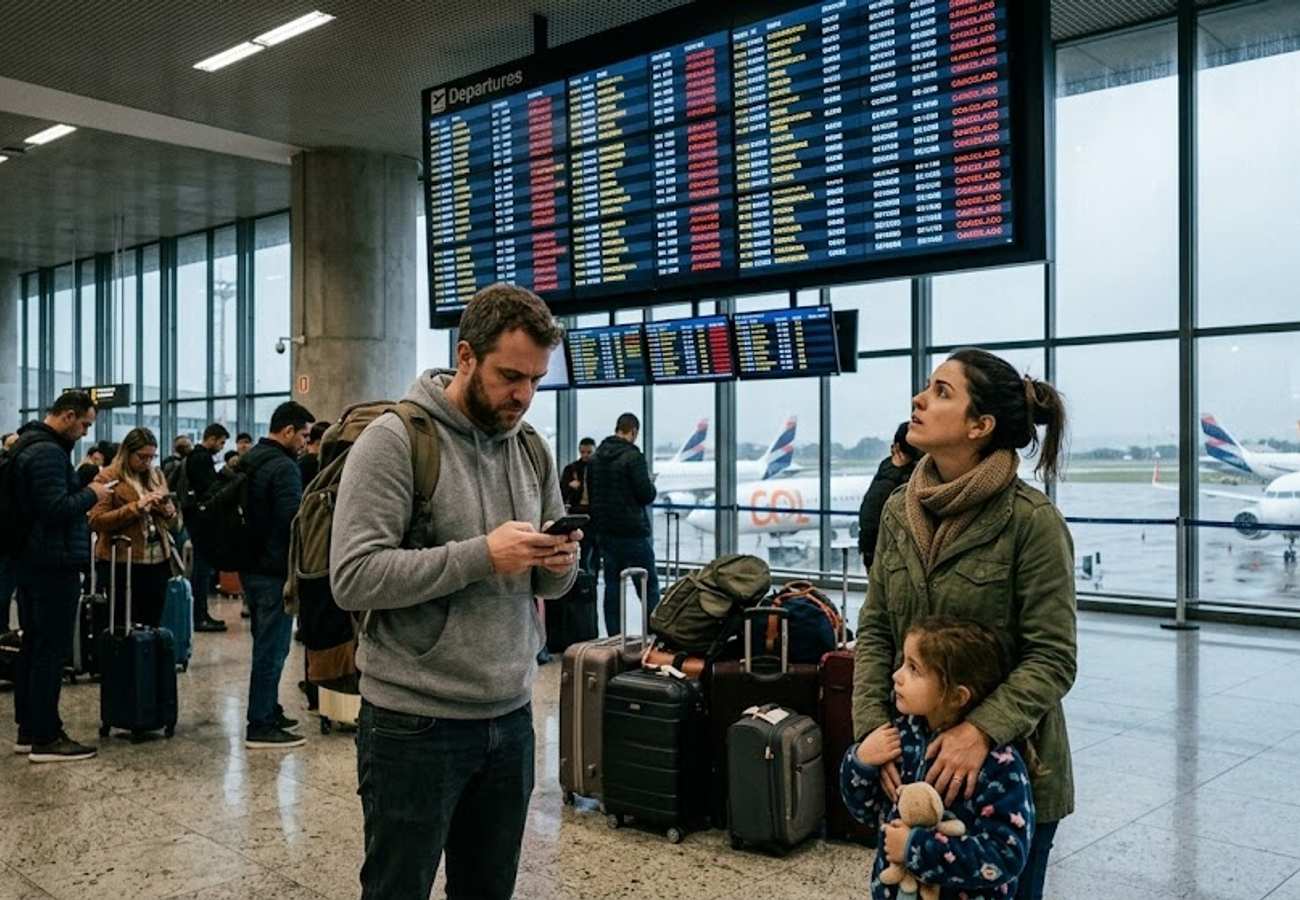
Image generated by AI
Widespread operational failures across Brazil's primary aviation gateways resulted in 174 delays and 43 cancellations on July 29, 2026. The disruptions centered on São Paulo and Rio de Janeiro, severely impacting LATAM Brasil and GOL Linhas Aéreas Inteligentes.
The Brazilian aviation network experienced a systemic breakdown across five major hubs, creating a ripple effect throughout the domestic flight corridor. According to data aggregated via FlightAware as of July 28, 2026 (4:05 pm ET), the instability was driven by a combination of airport congestion, weather-related pressures, and network-wide airspace restrictions.
The impact was most acute at São Paulo-Congonhas, where the high volume of urban passenger movement amplified the effect of operational bottlenecks. Because Congonhas serves as a critical link for the São Paulo metropolitan area, the 95 total disruptions at this single site triggered significant rotation failures for airlines, leading to revised departure schedules and extended waiting times for thousands of passengers.
Regional Airport Disruption Metrics
The following data outlines the specific impact across the most affected Brazilian gateways.
| Airport Name | City | Delays | Cancellations | Total Disruptions |
|---|---|---|---|---|
| São Paulo-Congonhas | São Paulo | 75 | 20 | 95 |
| Santos Dumont | Rio de Janeiro | 21 | 15 | 36 |
| Tancredo Neves Intl | Belo Horizonte | 32 | 6 | 38 |
| Viracopos Intl | Campinas | 27 | 1 | 28 |
| Presidente Juscelino Kubitschek Intl | Brasília | 19 | 1 | 20 |
Carrier Performance and Impact Analysis
The operational strain was not distributed evenly across carriers. Data indicates that the three largest domestic operators bore the brunt of the network instability.
LATAM Brasil recorded the highest volume of delays, totaling 76, alongside 7 cancellations. Given the airline's extensive domestic reach, these delays created significant connectivity issues for passengers traveling to secondary cities.
GOL Linhas Aéreas Inteligentes faced the most severe cancellation rate, reporting 16 cancellations and 61 delays. This suggests a higher rate of flight scrubbing compared to its competitors, likely due to crew timing out or aircraft positioning failures.
Azul Brazilian Airlines reported 59 delays and 3 cancellations. Its regional subsidiary, Azul Conecta, recorded 7 delays and 3 cancellations; while the raw numbers are lower, the proportional impact on its smaller fleet was significant.
Traveler Logistics Guide: Navigating Brazilian Hub Disruptions
From a ground-level perspective, the best way to navigate these disruptions is to avoid relying solely on airport departure boards, which often lag behind real-time operational changes.
1. Digital Verification and Status Tracking Before departing for the airport, verify flight status via the airline's official app or the FlightAware real-time tracker. In Brazil, operational changes at Congonhas often happen rapidly; confirming your flight 4 hours before departure can save hours of unnecessary waiting in the terminal.
2. Managing Connections at Major Hubs If you are connecting through São Paulo or Rio de Janeiro, allow a minimum of 4 hours between flights during periods of reported instability. Delays at these hubs frequently cause missed connections for onward journeys to smaller regional airports.
3. Rights and Rebooking For passengers facing cancellations, immediately request a "rebooking voucher" or an alternative flight. Keep all digital and physical copies of booking confirmations and receipts. Under Brazilian aviation regulations, passengers are entitled to communication, food, and accommodation depending on the length of the delay.
4. Ground Transit Coordination If your arrival is delayed by more than 3 hours, notify your ground transportation or hotel in advance. Congonhas and Santos Dumont are high-traffic urban zones; sudden surges of delayed passengers can lead to extreme congestion at ride-share pickup points.
Infrastructure Impact Assessment
This wave of disruptions underscores the vulnerability of Brazil's "hub-and-spoke" domestic model. The heavy reliance on São Paulo-Congonhas as a central node means that any localized operational failure—be it weather or technical congestion—effectively paralyzes the national network.
The high cancellation rate at Santos Dumont specifically disrupts the critical business corridor between Rio de Janeiro and São Paulo. For the tourism sector, these instabilities highlight a need for increased redundancy in regional airport infrastructure to prevent total network collapse when primary hubs fail.
Travelers are advised to maintain flexibility in their itineraries and monitor official National Civil Aviation Agency (ANAC) updates during peak travel windows.
Related Travel Guides
Disclaimer
This article is for informational and educational purposes only. It does not constitute legal, financial, or professional advice. While we strive to provide accurate and up-to-date information, travel policies, regulations, and conditions change rapidly. Always verify information with official sources before making travel decisions. Nomad Lawyer makes no representations about the accuracy, reliability, completeness, or suitability of the information provided. Readers should consult qualified professionals for advice specific to their circumstances. The views expressed in this article are those of the author and do not necessarily reflect the views of Nomad Lawyer.
Kunal K Choudhary
Co-Founder & Contributor
A passionate traveller and tech enthusiast. Kunal contributes to the vision and growth of Nomad Lawyer, bringing fresh perspectives and driving the community forward.
Learn more about our team →