
Airbus Surpasses Boeing 737 After 58-Year Reign as Aviation's Most-Delivered Jetliner
Breaking airline news and aviation industry updates for 2026.

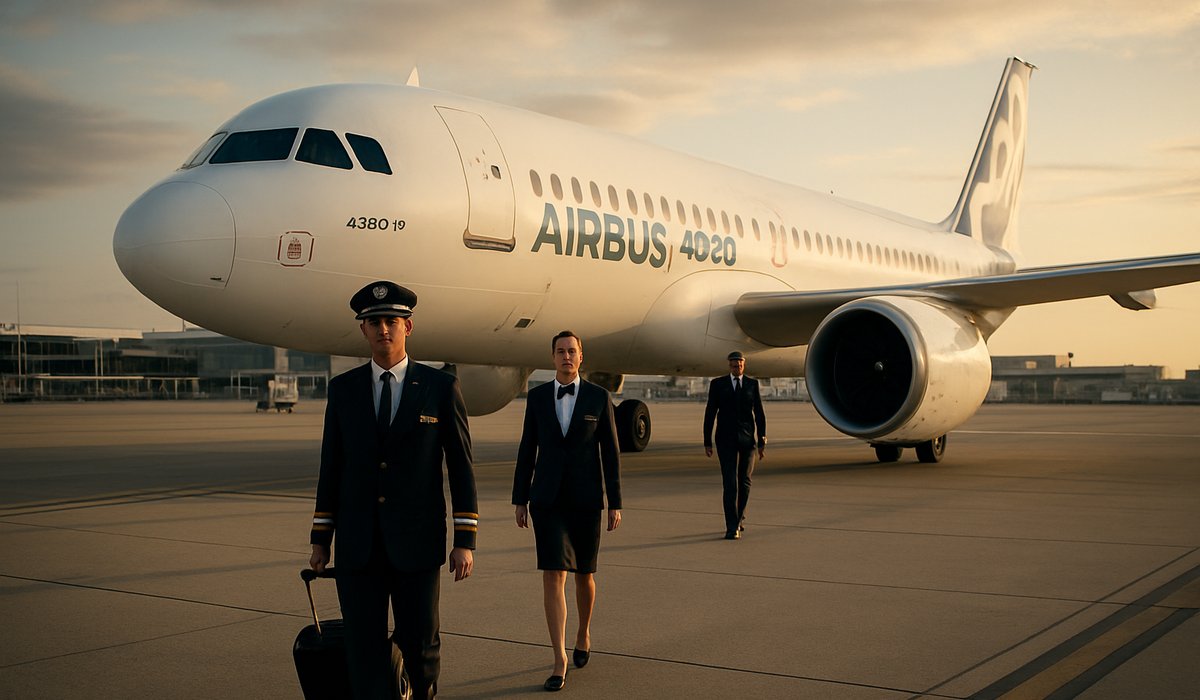
Image generated by AI
Airbus Surpasses Boeing 737 After 58-Year Reign as Aviation's Most-Delivered Jetliner
The European manufacturer's A320 family dethroned the iconic American aircraft in a historic shift that reshapes commercial aviation's competitive landscape
The Historic Milestone
Airbus has achieved an unprecedented milestone in commercial aviation history, officially surpassing Boeing's legendary 737 family as the most-delivered jetliner in the industry after nearly six decades of uninterrupted dominance by the American manufacturer. The European aerospace giant's A320 family has now delivered more aircraft than Boeing's iconic single-aisle workhorse—a seismic shift in the global aviation market that underscores the intensifying competition between the two aerospace superpowers.
How Airbus Claimed the Crown
The A320's ascent to the top reflects a convergence of strategic factors that fundamentally altered the commercial aircraft landscape. Airbus's consistent manufacturing efficiency, coupled with superior aircraft design innovations and customer-focused engineering solutions, enabled the French-led consortium to methodically close the gap on Boeing's commanding historical lead. Meanwhile, Boeing's production challenges—particularly the prolonged grounding of the 737 MAX and subsequent supply chain disruptions—created an opening that Airbus aggressively capitalized upon.
The 737, which first took flight in 1967, held its position as aviation's most-delivered airliner family for 58 uninterrupted years. During that era, the aircraft became synonymous with global air travel, equipping carriers from legacy airlines to low-cost operators worldwide. Its enduring success stemmed from reliability, fuel efficiency improvements across generations, and Boeing's dominant market positioning throughout the late 20th century.
The Competitive Turning Point
The tipping point arrived following the 737 MAX crisis, which temporarily halted deliveries and forced Boeing to recalibrate its manufacturing operations. Simultaneously, Airbus accelerated A320 production rates, fulfilling the massive backlog from airlines seeking modern, fuel-efficient narrow-body aircraft. The A320 family—encompassing the A318, A319, A320, and A321 variants—proved increasingly attractive to carriers navigating volatile jet fuel prices and mounting pressure to reduce operational costs and carbon emissions.
Industry analysts emphasize that Airbus's victory reflects not merely cyclical market advantages, but a fundamental assertion of manufacturing superiority and strategic execution during a critical competitive period.
Global Aviation Industry Implications
This transition carries profound implications for aircraft purchasing decisions, airline procurement strategies, and future technological development in commercial aviation. The shift demonstrates how supply chain resilience and production discipline can overcome historical market dominance, reshaping partnerships between manufacturers and global carriers.
Frequently Asked Questions
What is the difference between the Boeing 737 and Airbus A320? Both are narrow-body aircraft designed for short to medium-haul routes, but they differ in cabin width, cockpit design, and fuel efficiency. The A320 offers slightly larger cabin dimensions, while the 737 emphasizes robust heritage and extensive global support networks.
How many aircraft has Airbus delivered in the A320 family? As of the milestone announcement, the A320 family surpassed the total 737 deliveries, with both families exceeding 10,000 aircraft delivered worldwide since their respective introductions.
Why did Boeing lose its market-leading position? The 737 MAX grounding (2019-2020), subsequent manufacturing disruptions, and supply chain challenges significantly slowed Boeing's delivery rates, while Airbus maintained more consistent production momentum.
Will the Boeing 737 ever regain market leadership? Industry forecasts suggest Boeing's recovery will focus on market share rather than historical delivery records, with both manufacturers competing for future narrow-body orders as airlines modernize fleets.
What does this mean for airline customers? Increased competition benefits carriers through improved pricing, advanced technological features, and enhanced manufacturer support services, ultimately translating to better passenger experiences and operational efficiency.
Related Travel Guides
External Resources
Disclaimer
This article is for informational and educational purposes only. It does not constitute legal, financial, or professional advice. While we strive to provide accurate and up-to-date information, travel policies, regulations, and conditions change rapidly. Always verify information with official sources before making travel decisions. Nomad Lawyer makes no representations about the accuracy, reliability, completeness, or suitability of the information provided. Readers should consult qualified professionals for advice specific to their circumstances. The views expressed in this article are those of the author and do not necessarily reflect the views of Nomad Lawyer.
Raushan Kumar
Founder & Lead Developer
Full-stack developer with 11+ years of experience and a passionate traveller. Raushan built Nomad Lawyer from the ground up with a vision to create the best travel and law experience on the web.
Learn more about our team →