
Türkiye and Canada Sign Landmark Air Transport Agreement, Boosting Direct Flights to 21 Weekly Services
Türkiye and Canada finalized an expanded bilateral Air Transport Agreement in October 2026, increasing direct passenger frequencies by 75% to 21 flights per week and introducing unlimited open-skies air cargo operations.

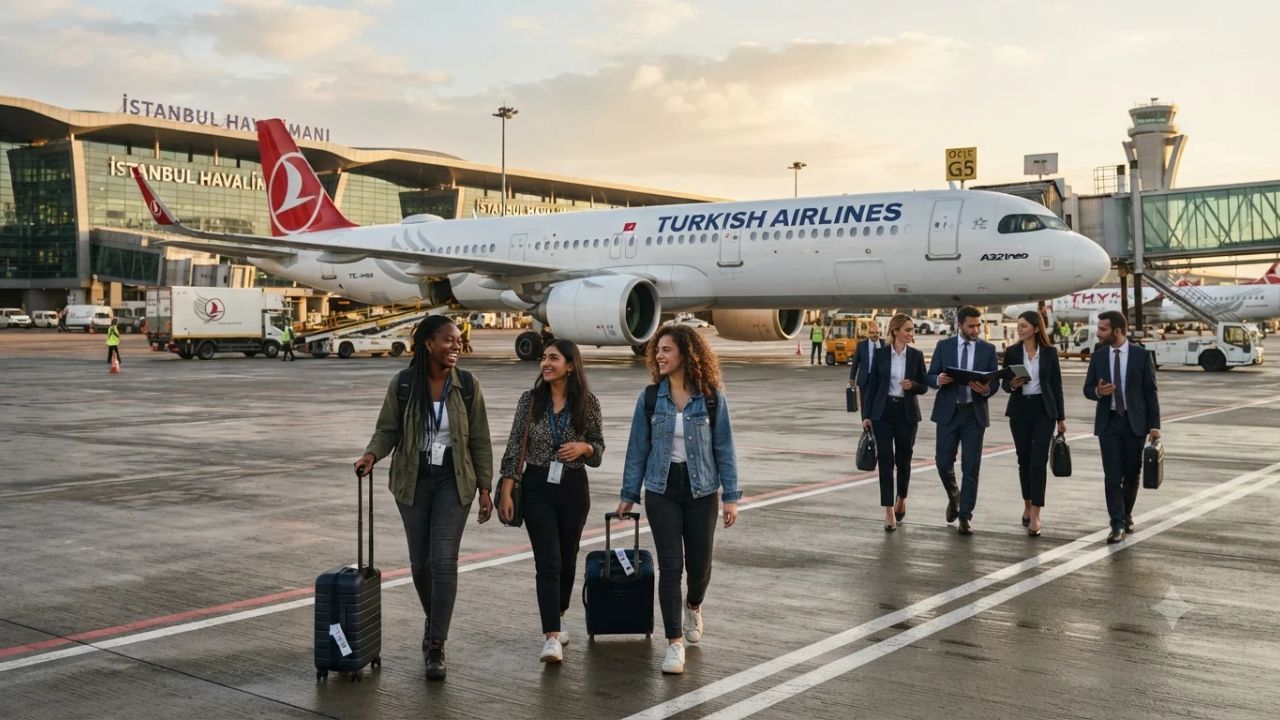
Türkiye and Canada have formally ratified an expanded bilateral Air Transport Agreement, unlocking a 75% increase in direct passenger flight quotas from 12 to 21 weekly frequencies while establishing an unrestricted open-skies regime for dedicated transcontinental air cargo operations.
Formalized during an official summit between October 22 and October 24, 2026, held in Ankara and Istanbul, the modernized aviation treaty serves as an operational pillar of the newly established Canada–Türkiye Strategic Partnership. Negotiated between Transport Canada and the Directorate General of Civil Aviation of Türkiye (SHGM), the pact proactively eliminates long-standing capacity bottlenecks ahead of formal bilateral Free Trade Agreement (FTA) negotiations scheduled for November 2026. The expanded air corridor will immediately reshape transatlantic travel routes, reduce flight durations, and bolster business mobility across North America and Eurasia.
The Modernized Aviation Framework: Core Provisions
The updated bilateral framework replaces restrictive legacy quotas with a flexible, high-capacity regime tailored for contemporary airline alliances, expanding frequencies across both passenger cabins and dedicated freight operations.
                    BILATERAL AIR TRANSPORT AGREEMENT: KEY PROVISIONS
  ========================================================================================
  Operational Dimension      Legacy Framework          Upgraded 2026 Treaty      Strategic Impact
  ----------------------------------------------------------------------------------------
  Weekly Passenger Quotas    Capped at 12 flights/wk   Expanded to 21 flights/wk 75% seat capacity surge
  Air Cargo Operations       Route-restricted quotas   Unlimited Open-Skies      Frictionless supply chains
  Designated Canadian Hubs   YYZ, YUL, YVR             YYZ, YUL, YVR + Calgary   Western Canada connectivity
  Airline Alliances          Limited code-sharing      Broad Star Alliance ties  Seamless Star Alliance bookings
  Transit Overhead           Multi-stop European hubs  Direct point-to-point     Saves 4–6 hrs travel time
  ========================================================================================
The expansion allows national flag carriers Turkish Airlines and Air Canada to ramp up services to key metropolises while exploring non-stop routes into Western Canada, including Calgary International Airport (YYC). By bypassing traditional European transfer hubs like Frankfurt (FRA), London Heathrow (LHR), and Paris Charles de Gaulle (CDG), passengers avoid European air passenger duties and save between four and six hours on end-to-end itineraries.
  FORMER TRANSATLANTIC ROUTING:
  [Canada Hubs] ---> [Intermediate EU Hub (LHR/FRA/CDG)] ---> [Istanbul (IST)]
  * Transit penalty: +4 to 6 hours | Extra transit taxes | Vulnerable to European strikes

  MODERNIZED DIRECT CORRIDOR:
  [Toronto / Montreal / Vancouver / Calgary] ===================> [Istanbul (IST)]
  * Direct long-haul (Boeing 787 / Airbus A350) | Single customs check | Seamless baggage
Transforming Two-Way Leisure and Cultural Tourism
The addition of nine weekly passenger slots directly addresses seasonal seat deficits that previously produced sharp fare spikes during high-summer vacation months and winter holiday periods.
Expanded "Stopover in Istanbul" Programs
Istanbul Airport (IST) has evolved into one of the world's premier mega-hubs, linking more global destinations than any other single airport. Through Turkish Airlines’ Touristanbul and Stopover in Istanbul initiatives, Canadian travelers passing through Istanbul toward destinations across the Eastern Mediterranean, Central Asia, the Middle East, or Africa can take advantage of complimentary transit tours and multi-night hotel accommodation vouchers, embedding Turkish cultural exploration directly into transcontinental flights.
Purchasing Power and Outbound Travel Corridors
Favorable currency valuations continue to give Canadian travelers exceptional purchasing power across Turkish heritage hotspots—from the historic mosques and bazaars of Istanbul and the hot-air-ballooned valleys of Cappadocia to the Greco-Roman ruins of Ephesus and the luxury Aegean coastlines of Bodrum and Antalya.
Concurrently, outbound travel from Türkiye to Canada is projected to expand significantly. The enhanced seat inventory facilitates tourism to iconic Canadian destinations, including Banff and Jasper National Parks in the Canadian Rockies, Niagara Falls, Montreal’s historic cultural core, and Vancouver’s coastal outdoor corridors.
Catalyzing Trade, Corporate Mobility, and the MICE Sector
While leisure traffic provides broad consumer benefits, business travel and corporate mobility serve as the primary economic drivers behind the diplomatic agreement.
Data from Global Affairs Canada indicates that bilateral merchandise trade exceeded $4.3 billion in 2025—comprising $1.1 billion in Canadian exports and $3.2 billion in imports from Türkiye. As both nations commence formal FTA negotiations, executive delegations, trade ministers, and technical teams require reliable, daily flight options.
STRATEGIC BILATERAL SECTORS SUPPORTED BY DIRECT AIR LINKS
| Column 1 |
|---|
| ✦ Aerospace Engineering & Avionics: Montreal & Toronto to Turkish defense/aero hubs |
| ✦ Critical Minerals & Metallurgy: Canadian mining tech paired with Turkish refiners |
| ✦ Clean Energy & Civil Nuclear: Engineering teams supporting energy transition assets |
| ✦ Artificial Intelligence & FinTech: Research partnerships between tech hubs |
| ✦ MICE (Conferences & Exhibitions): Direct transport for international conventions |
Corporate travelers increasingly leverage "bleisure" scheduling, extending business trips to Ankara or Montreal into weekend excursions along the Turkish Turquoise Coast or through the Laurentian mountains, providing incremental revenue to local hospitality operators.
The Open-Skies Cargo Advantage: Frictionless Global Supply Chains
While passenger cabin expansions capture widespread public attention, the complete removal of air freight quotas represents an equally transformative commercial breakthrough.
Transitioning to unlimited, unrestricted air cargo operations allows dedicated freighters to establish direct regular scheduled loops between North American industrial corridors and Eurasian supply centers:
- Aerospace and Precision Manufacturing: High-value, time-sensitive aircraft structures, specialized tooling, and avionics sub-assemblies can transition between Canadian manufacturing clusters in Quebec and Ontario and Turkish aerospace facilities without third-country customs hold-ups.
- Critical Minerals and Advanced Materials: Specialized testing equipment, geological core samples, and advanced battery inputs move quickly between Canadian laboratory complexes and Turkish industrial processing plants.
- Perishable Goods and Agri-Food: Temperature-controlled cargo holds support high-grade seafood, agricultural produce, and culinary exports, ensuring peak freshness across a 9-to-11-hour flight profile.
Diaspora Connections, Education, and Consular Facilitation
Beyond trade balances and corporate balance sheets, bilateral aviation agreements serve as vital lifelines for people-to-people connections.
- Support for the Visiting Friends and Relatives (VFR) Market: The Turkish-Canadian community—concentrated primarily across the Greater Toronto Area, Greater Montreal, Metro Vancouver, and Calgary—benefits from year-round direct flight access, mitigating holiday capacity squeezes.
- Academic Mobility: With thousands of Turkish students attending Canadian colleges and universities, reliable flight options simplify semester-start departures in September and year-end travel in May.
- Consular and Visa Acceleration: Bilateral civil aviation treaties historically catalyze diplomatic efficiency. Both governments have committed to exploring streamlined visa processing regimes and digitized consular portals to facilitate fast-track clearance for accredited business delegates, researchers, and bona fide tourists.
By linking passenger capacity growth to an open cargo framework, Türkiye and Canada have constructed a comprehensive, modern aviation bridge that supports sustainable economic cooperation, resilient transcontinental logistics, and enhanced cross-cultural discovery well into the next decade.
Frequently Asked Questions
How many direct flights are permitted between Türkiye and Canada under the new agreement?
The new agreement expands bilateral direct passenger frequencies to up to 21 flights per week, representing a 75% increase over the previous cap of 12 weekly services.
When was the updated Air Transport Agreement formalized?
The expanded aviation pact was finalized during an official bilateral summit held in Ankara and Istanbul between October 22 and October 24, 2026.
How does the agreement impact air cargo operations?
The treaty introduces an unlimited open-skies cargo regime, lifting previous quota restrictions on dedicated air freight services between both nations.
Which Canadian cities are included in the expanded route network?
In addition to established gateways in Toronto, Montreal, and Vancouver, the agreement creates regulatory flexibility for direct services into Western Canada, such as Calgary.
Related Travel Guides
Disclaimer
This article is for informational and educational purposes only. It does not constitute legal, financial, or professional advice. While we strive to provide accurate and up-to-date information, travel policies, regulations, and conditions change rapidly. Always verify information with official sources before making travel decisions. Nomad Lawyer makes no representations about the accuracy, reliability, completeness, or suitability of the information provided. Readers should consult qualified professionals for advice specific to their circumstances. The views expressed in this article are those of the author and do not necessarily reflect the views of Nomad Lawyer.
Kunal K Choudhary
Co-Founder & Contributor
A passionate traveller and tech enthusiast. Kunal contributes to the vision and growth of Nomad Lawyer, bringing fresh perspectives and driving the community forward.
Learn more about our team →