
Brașov Airport Hits 1 Million Passengers: Wizz Air Bases A321neo in Transylvania 2026

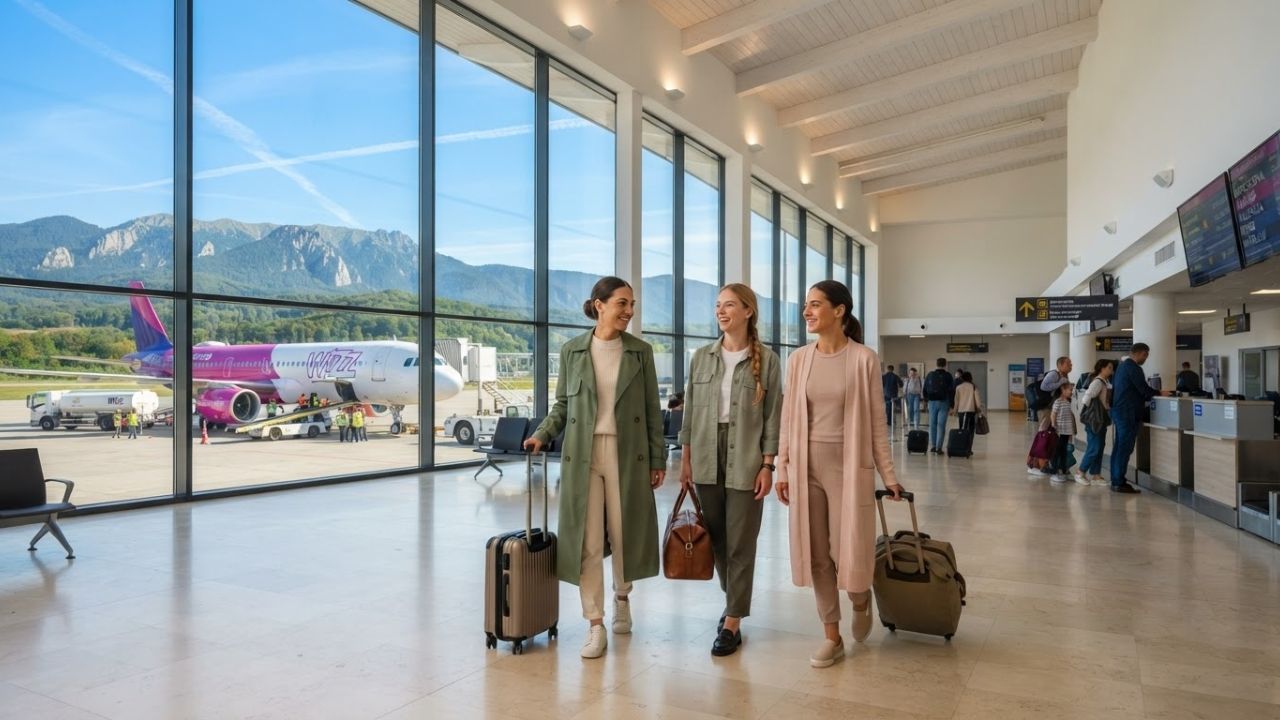
Brașov-Ghimbav International Airport crossed the one-million passenger milestone on August 8, 2026, just three years after opening as Romania’s first new airport in five decades. Accelerated by Wizz Air’s decision to base an Airbus A321neo and launch direct routes to Valencia, Barcelona, Madrid, and Chișinău, this regional aviation hub is transforming Transylvania into a direct international gateway bypassing Bucharest.
Operating commercial flights since June 15, 2023, Brașov-Ghimbav has posted one of the steepest growth curves in Eastern European regional aviation. The airport handled 79,011 passengers during its inaugural operational year in 2023, expanding to 227,900 in 2024. Traffic surged to 337,353 passengers in 2025, marking an annual growth rate of roughly 48%. By the end of May 2026, cumulative passenger throughput reached 857,396 before officially surpassing the one-million flyer benchmark in early August.
| Operational Period | Annual Passengers Handled | Year-on-Year Growth |
|---|---|---|
| 2023 (From 15 June) | 79,011 | Baseline Inaugural Year |
| 2024 Full Year | 227,900 | +188.4% |
| 2025 Full Year | 337,353 | ~48.0% |
| Cumulative Through May 2026 | 857,396 | Sustained Regional Build-Up |
| 8 August 2026 Milestone | 1,000,000 | Three-Year Landmark |
This traffic build-up reflects an important evolution: regional airports in Central and Eastern Europe are increasingly functioning as self-sustaining point-to-point gateways rather than mere feeders to national capitals.
Wizz Air Aircraft Basing Shifts Regional Operating Dynamics
The decision by low-cost carrier Wizz Air to permanently base a 239-seat Airbus A321neo at Brașov starting December 2026 marks a structural shift in Transylvania's air connectivity. Basing an aircraft locally enables the carrier to schedule early morning departures, late evening returns, and dense flight rotations, converting Brașov into an operational launchpad rather than an intermediate destination for aircraft routed from foreign hubs.
Wizz Air's expanding 2026 schedule links Brașov to high-volume outbound business and leisure hubs across Western Europe, the Mediterranean, and Central Europe:
| Destination City | Route Launch Window | Operational Frequency |
|---|---|---|
| Rome Fiumicino | January 2026 | Three weekly services |
| Katowice | March 2026 | Three weekly services (seasonal pause) |
| Warsaw | June 2026 | Two weekly services |
| Valencia | November 2026 | Three weekly services |
| Chișinău | December 2026 | Three weekly services |
| Karlsruhe/Baden-Baden | December 2026 | Two weekly services |
| Barcelona | December 2026 | Two weekly services |
| Madrid | December 2026 | Two weekly services |
These additions complement established connections to London and Milan. By connecting Transylvania directly to primary outbound leisure markets in Spain and key diaspora communities across Italy and Germany, the airport eliminates the three-to-four-hour mountain highway transfer or rail journey traditionally required between Bucharest Henri Coandă Airport and the central Carpathian resorts.
Benchmarking European Regional Gateways: Poland, Varna, and Zadar
Brașov’s emergence aligns with a broader European pattern where secondary airports develop strong standalone identities.
Poland serves as the leading benchmark for this decentralized model. In 2025, Poland's regional airports collectively drove national passenger volumes to 66.1 million (an 11.7% year-on-year increase). Major provincial hubs expanded rapidly alongside Warsaw Chopin: Kraków handled 13.24 million passengers (+19.6%), Gdańsk processed 7.38 million (+10.2%), Katowice recorded 7.29 million (+14.5%), Wrocław reached 4.90 million (+9.7%), Poznań welcomed 4.14 million (+15.0%), and Rzeszów handled 1.23 million (+14.2%).
In the Black Sea region, Bulgaria’s Varna Airport handled more than 1.8 million passengers in 2025, representing roughly 20% annual growth across 61 destinations served by 40 airlines. When Wizz Air placed its second based aircraft in Varna, the carrier added over 400,000 seats in 2025—a 90% capacity increase in a single year. Similarly, Croatia’s Zadar Airport processed 1,639,601 passengers in 2025 through seasonal leisure schedules operated by Ryanair, Eurowings, Lufthansa, easyJet, and Croatia Airlines.
Conversely, Albania’s Tirana International Airport—which processed 8.5 million travelers in 2025—illustrates a centralized model where national visitor traffic remains funneled through a single aviation gateway. Romania is pursuing a more balanced approach. While Bucharest’s two airports handled 17.70 million passengers in 2025 (with Henri Coandă alone exceeding 17 million, up 10.3%), Brașov provides a targeted secondary hub dedicated to mountain leisure, cultural circuits, and regional heritage.
Cultural Heritage and Carpathian Conservation Value
Brașov's primary commercial asset is its immediate proximity to southern Transylvania's historic Saxon heartland and the southern Carpathian Mountains. Eurostat accommodation statistics reveal that Brașov recorded 4.4 million tourist accommodation nights in 2024, ranking third nationwide behind Bucharest (13.1 million nights) and the coastal resort center of Constanța (4.7 million nights).
For the international traveler, arriving directly at Ghimbav provides immediate access to the medieval city center. Guarded by Mount Tâmpa, Brașov features the 14th-century Black Church (Biserica Neagră)—the largest Gothic religious structure in Eastern Europe—alongside intact Saxon guild bastions and Council Square (Piața Sfatului).
Beyond the city perimeter, the surrounding valleys contain the UNESCO-listed Saxon Fortified Churches of Prejmer, Hărman, and Viscri. These fortified villages represent centuries of communal defense, where thick curtain walls sheltered village granaries, schools, and families during regional sieges.
Environmental preservation in this mountain territory is anchored by Piatra Craiului National Park and the Postăvaru Massif. The Carpathian forests host the densest wild populations of brown bears (Ursus arctos), Eurasian wolves, and lynx in Europe outside Russia. The Libearty Bear Sanctuary in nearby Zărnești, managing forested enclosures for rescued captive bears, exemplifies how conservation-focused tourism generates educational revenue while funding lifelong veterinary care. Direct air connectivity supports these rural sanctuaries by attracting eco-conscious travelers who stay in local Saxon guesthouses and hire certified mountain guides.
Local Insider Tips: Navigating Brașov and Southern Transylvania
Experiencing Transylvania through Brașov requires local timing strategies, culinary knowledge, and mountain trail awareness:
- Optimal Off-Peak Windows: Avoid intense mid-summer crowds in July and August. The best visiting window runs from late September to late October, when beech and oak forests across the Carpathian passes display deep amber and crimson foliage, daytime temperatures hover around 15°C, and mountain trails remain clear of early snow. A secondary window runs from January through March for winter sports at Poiana Brașov.
- Under-the-Radar Heritage Enclaves: While Bran Castle draws heavy tour-bus congestion, visit the 13th-century Fortified Church of Hărman, located only 15 minutes east of Brașov Airport. Featuring intact 12-meter-high defense towers and quiet courtyards, Hărman offers a serene alternative to crowded castle tours. For mountain solitude, hike through the limestone canyons of Zărnești Gorges (Prăpăstiile Zărneștilor) in Piatra Craiului National Park.
- Transylvanian Culinary Specialties: Dine in traditional taverns around the Schei district. Request authentic bulz (creamy polenta stuffed with sharp, aged sheep's milk cheese, known as brânză de burduf, then baked over embers until crisp). Follow with ciorbă rădăuțeană (garlicky poultry soup thickened with sour cream) and warm papanași—cottage-cheese dumplings fried golden, slathered in sour smântână and wild bilberry preserve.
- Carpathian Wildlife Safety: When hiking outside designated resort trails, carry bear spray and make consistent noise along forested trails. Never approach wildlife, and avoid hiking at dawn or dusk in dense timber. Stick strictly to paths marked by painted trail symbols managed by the Romanian Salvamont mountain rescue service.
- Regional Transit Advice: Brașov Airport operates dedicated express shuttle bus Line A1 connecting the terminal directly to Livada Poștei in the historic city center, coordinating with scheduled flight arrivals. When renting vehicles for trips into rural Saxon villages like Viscri or Biertan, choose compact models suited for narrow cobblestone streets and rural unpaved lanes.
Tourism Outlook: Year-Round Demand and Regional Sustainability
The true test for Brașov-Ghimbav International Airport lies in overcoming extreme seasonal fluctuations. Romanian tourism records a 3.3-to-one ratio between its peak summer month (5.12 million nights in August 2025) and its lowest operational month (1.57 million nights in March 2025). Across the European Union, where Eurostat logged nearly 3.1 billion tourist nights in 2025, destinations that thrive year-round do so by balancing seasonal leisure flights with corporate travel, ski tourism, and cultural city breaks.
By basing an Airbus A321neo in December 2026, Wizz Air establishes consistent winter capacity tied directly to Poiana Brașov’s ski slopes and Transylvania’s festive seasonal markets. If the airport can follow Varna's model by progressively attracting legacy network carriers and diversifying beyond a single operator, Brașov will solidify its position as an enduring cultural and eco-tourism gateway for southeastern Europe.
Related Travel Guides
Disclaimer
This article is for informational and educational purposes only. It does not constitute legal, financial, or professional advice. While we strive to provide accurate and up-to-date information, travel policies, regulations, and conditions change rapidly. Always verify information with official sources before making travel decisions. Nomad Lawyer makes no representations about the accuracy, reliability, completeness, or suitability of the information provided. Readers should consult qualified professionals for advice specific to their circumstances. The views expressed in this article are those of the author and do not necessarily reflect the views of Nomad Lawyer.
Raushan Kumar
Founder & Lead Developer
Full-stack developer with 11+ years of experience and a passionate traveller. Raushan built Nomad Lawyer from the ground up with a vision to create the best travel and law experience on the web.
Learn more about our team →