Ukraine Border Transit Analysis 2026: Land Routes and Airspace Closures Amid War Risks

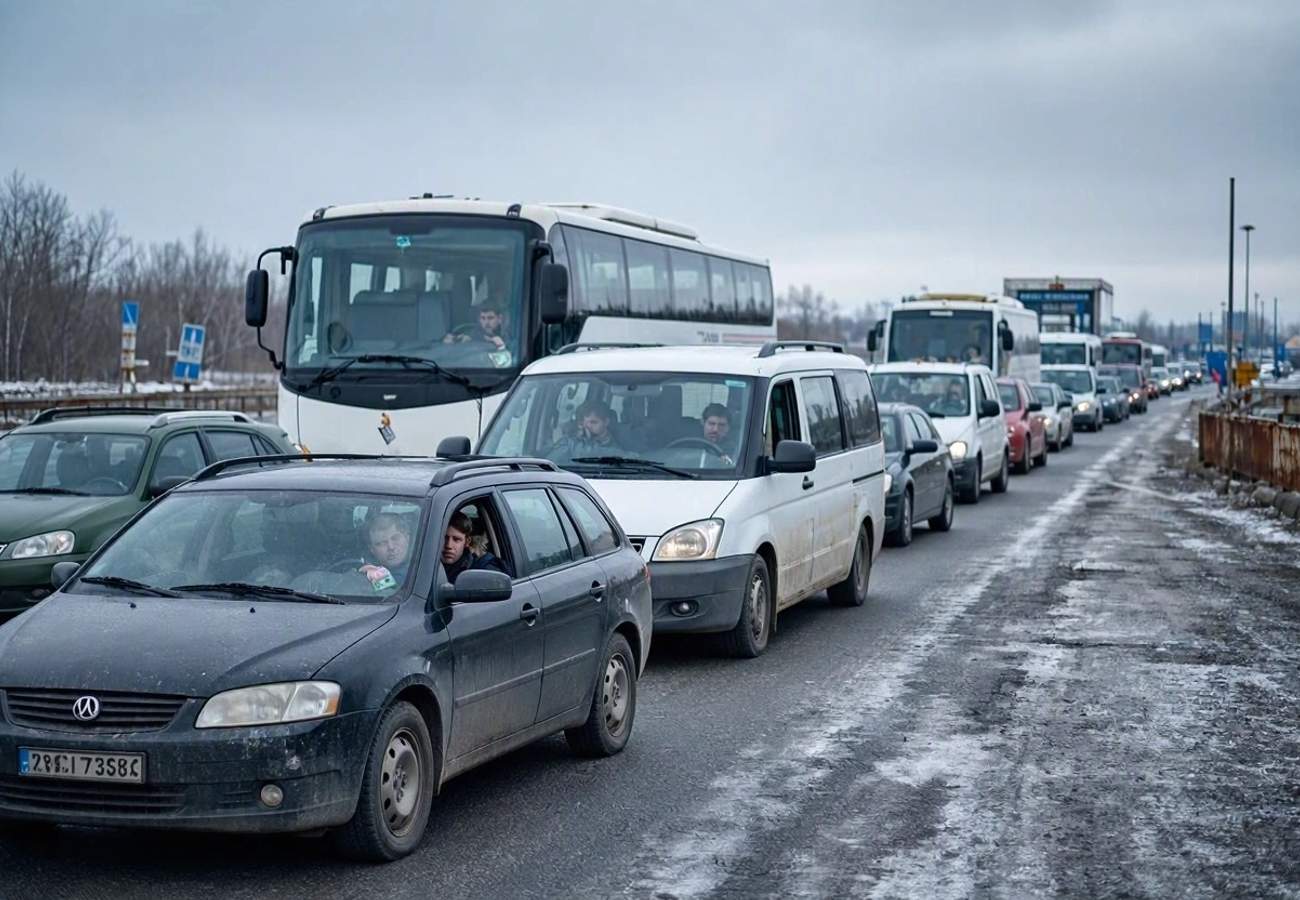
Image generated by AI
Zero commercial flights currently operate within Ukrainian airspace, forcing all international transit to shift exclusively to land-based corridors. This total shutdown of civil aviation has transformed the western frontiers—specifically the borders with Poland, Romania, and Slovakia—into the sole lifelines for those entering or exiting the country. These checkpoints are currently characterized by extreme congestion and rigorous security screenings as the state manages the flow of people amidst an active military conflict.
The Logistics of Terrestrial Transit
The transition from air to land travel is not merely a change in mode but a fundamental shift in risk profile. With the national airspace strictly prohibited for civilian use, the burden of transit has fallen on regional railways and road networks. The State Border Guard Service of Ukraine manages these volatile entry points, where queues are a daily occurrence and security protocols have been tightened to mitigate wartime threats.
For the modern traveler or essential worker, the journey is no longer a matter of a few hours but a multi-day logistical operation. The volatility of these routes is tied directly to tactical military alerts; checkpoints can close without warning, and highways can become bottlenecks during sudden security escalations.
High-Risk Global Transit Comparison
Ukraine is not the only region where state collapse or conflict has rendered traditional travel impossible. When compared to other "Level 4: Do Not Travel" zones, the nature of the risk varies from systemic lawlessness to active kinetic warfare.
| Country | Safety Advisory Level | Primary Hazards | Embassy Operational Status | Key Travel Restrictions |
|---|---|---|---|---|
| Ukraine | Level 4: Do Not Travel | Missile/drone strikes, landmines, utility blackouts | Limited presence; no evacuation guarantees | Total civilian airspace closure; land-only transit |
| Haiti | Level 4: Do Not Travel | Gang control, express kidnapping, health collapse | Skeleton staff; strict curfews | Blockaded ports and highways |
| Sudan | Level 4: Do Not Travel | Civil war, urban shelling, humanitarian crisis | Operations suspended; staff evacuated | Damaged airport infrastructure; volatile land routes |
| Afghanistan | Level 4: Do Not Travel | Terrorism, arbitrary detention, strict religious laws | Most Western embassies closed | Severe movement restrictions; unpredictable borders |
Expert Analysis: The Insurance and Legal Void
For travelers attempting to cross into Ukraine or other conflict zones, the most critical danger is not just physical, but legal and financial. Standard travel insurance policies are almost universally void the moment a passenger enters a designated war zone. This creates a "coverage vacuum" where the individual becomes personally liable for 100% of the costs associated with emergency medical evacuations, which can reach tens of thousands of dollars.
The pricing and logistical pressure on land transit also create a secondary market of high-cost, unregulated transport providers. Because official International Air Transport Association (IATA) standards for safety and scheduling cannot be applied in a closed-airspace environment, travelers are forced to rely on ground operators who may not adhere to international safety norms.
Furthermore, the lack of functional consular support means that in the event of detention or medical emergency, there is no guaranteed mechanism for government intervention. The direct consequence for anyone booking transit into these regions is a total reliance on private security or specialized, high-premium war-risk insurance, which is unavailable to the general public.
Key Takeaways
- Airspace Status: All commercial aviation remains grounded in Ukraine; all entry/exit must occur via land borders in Poland, Romania, or Slovakia.
- Insurance Nullification: Standard travel insurance is invalid in Ukraine, Haiti, Sudan, and Afghanistan, leaving travelers liable for all emergency costs.
- Border Volatility: Land checkpoints are subject to immediate closure based on tactical military alerts, regardless of civilian transit needs.
- Consular Limitations: Diplomatic assistance is virtually non-existent or severely limited in these regions, meaning no guaranteed evacuation support.
- Security Risks: Beyond active combat, travelers face threats from unexploded ordnance in rural areas and systemic utility failures.
FAQ: Ukraine Transit 2026
Can I fly into Ukraine if I have a private jet? No. Civilian airspace is entirely closed to commercial and private aviation. All travel must be conducted via land borders.
Will my travel insurance cover me in Ukraine? Almost certainly not. Most providers exclude active war zones. You would need specialized high-risk or war-zone insurance to have any coverage.
Which countries provide the easiest land access to Ukraine? Poland, Romania, and Slovakia are the primary access points, though all are subject to long queues and strict security checks.
What happens if I get stranded at the border? Due to limited consular presence, you cannot rely on your embassy for immediate evacuation. You must monitor the State Border Guard Service portal for real-time updates.
The transition from the terminal to the trench transforms a journey into a gamble.
Related Travel Guides
This article is for informational purposes. Flight routes, passenger regulations, visa rules, and transit advisories are subject to change by airlines and aviation authorities. Readers are advised to verify schedules and travel documentation with relevant carriers and border agencies before departure.
Related Stories

JetBlue Sparks Controversy After Listing 'Donald J. Trump' as Destination on LaGuardia Flight Boards 2026
Air Canada and United Airlines Partnership Expansion Could Spike Fares on 10 US-Canada Routes in 2026