Why Botswana, Mauritius, and Seychelles Outranked Western Economies in the 2026 Global Lifestyle Index

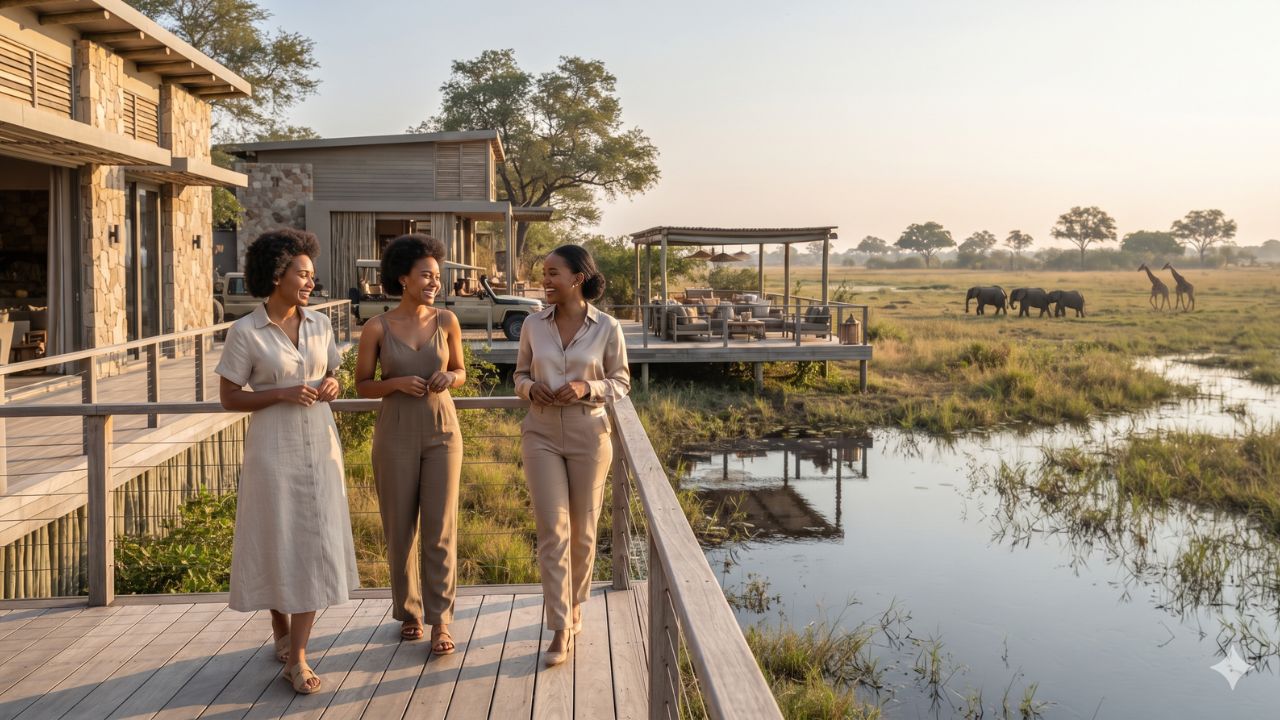
In a striking reassessment of global mobility, four African destinations—Seychelles, Mauritius, Cape Verde, and Botswana—outranked the United Kingdom, Canada, and the United States in the 2026 Nomad Lifestyle Index. Released by international advisory firm Nomad Capitalist, the benchmark evaluated 63 sovereign territories across five equally weighted criteria: taxation structures, residency accessibility, natural climate, personal safety, and physical infrastructure. While legacy Western nations struggle under escalating personal tax burdens and political fatigue, forward-thinking African enclaves are pairing streamlined residency pathways with pristine wilderness to attract high-earning remote professionals and long-stay investors.
The results establish a new hierarchy for international lifestyle migration. Seychelles secured 12th place globally with an overall score of 64.46, followed by Mauritius in 17th position with 62.01 points. Atlantic archipelago Cape Verde earned 36th place with 52.16 points, while southern African powerhouse Botswana claimed 44th place with 49.99 points. By comparison, traditional Western destination markets lagged noticeably: the United Kingdom finished 47th (49.20), Canada held 48th (48.40), and the United States placed 54th (46.33).
Why African Havens Outpaced Western Superpowers in Global Lifestyle Rankings
The primary catalyst separating these African destinations from traditional Western economies is the dramatic divergence in fiscal frameworks. In the taxation metric, which accounts for one-fifth of the overall scoring, Western powerhouses recorded some of the lowest scores in the index: the United Kingdom scored 35, Canada received 24, and the United States scored just 23. In contrast, Seychelles achieved a score of 88 out of 100, Botswana recorded 77, and Mauritius posted 76.
For location-independent founders and remote consultants, high personal tax brackets in North America and Western Europe have increasingly eroded the appeal of traditional metropolitan centers. Yet fiscal incentives alone do not account for the shift. Safety and personal freedom metrics across the African leaders proved highly competitive: Mauritius logged 72.0 points and Seychelles scored 70.9, outscoring both Canada (70.1), the United Kingdom (68.5), and the United States (49.5).
However, index scores must be read with analytical precision. While the United States recorded 57.4 for infrastructure and quality of life, African contenders present distinct operational trade-offs. The index measures relocation attractiveness for mobile capital rather than general living standards or social welfare nets.
Beyond the Fiscal Formulas: What Sets These Four African Enclaves Apart
Each of the four ranked African nations provides a distinct experiential environment that connects high-end lifestyle travel with long-term residency frameworks.
- Seychelles (12th Worldwide, Score: 64.46): Classified by the World Bank as Africa's sole high-income economy, this Indian Ocean archipelago pairs world-class marine conservation with robust financial governance. Economic reports released in September 2026 project that digital modernization and productivity reforms could expand Seychelles' GDP by 13% by 2040, adding 2,900 skilled jobs and lifting real wages by nearly 8%. For long-term foreign residents, the standard five-year residence permit carries a fee of SCR 150,000 alongside an application processing fee of SCR 1,000, while professional employment requires a separate Gainful Occupation Permit (GOP).
- Mauritius (17th Worldwide, Score: 62.01): The undisputed pioneer of Indian Ocean digital nomadism, Mauritius achieved an exceptional 69.1 score for residency accessibility. Through the Economic Development Board Mauritius and the Passport and Immigration Office, foreign nationals can obtain the official Premium Visa. The visa is entirely free of application fees, grants a renewable one-year stay, and requires applicants only to prove foreign-sourced income. World Bank economic reporting from 30 September 2026 highlights Mauritius' successful evolution from an agrarian sugar economy into a diversified financial and tourism center.
- Cape Verde (36th Worldwide, Score: 52.16): Situated in the central Atlantic, Cabo Verde achieved 6.3% real GDP growth in 2025, supported by record tourist arrivals reaching approximately 1.25 million. Expansion continued into the first quarter of 2026, when foreign visitor volume neared 380,000—a 16.8% year-on-year increase. To institutionalize long-stay travel, the government established an accessible Digital Nomad Visa with a processing fee of just CVE 5,000, welcoming remote workers to experience the archipelago's rich Creole musical heritage and Atlantic surf.
- Botswana (44th Worldwide, Score: 49.99): The sole mainland African nation featured in the upper tier, Botswana achieved an impressive 65.1 score for nature and climate, anchored by the iconic Okavango Delta—inscribed by the UNESCO World Heritage Centre—and Chobe National Park. However, residency accessibility remains a structural constraint, scoring just 21.1 points. Long-term residence applications submitted through the Department of Immigration and Citizenship require extensive corporate vetting and carry a published processing duration of 30 working days.
Data Breakdown: 2026 Global Lifestyle Rankings and Relocation Metrics
The comparative matrix below details overall rankings, category scores, and immigration fees across the top-performing African destinations and Western benchmarks:
| Country | Global Rank | Overall Score | Taxation Score | Safety & Freedom | Nature & Climate | Residence / Visa Fee Structure |
|---|---|---|---|---|---|---|
| Seychelles | 12 | 64.46 | 88 | 70.9 | High | SCR 150,000 (5-year permit) + GOP requirement |
| Mauritius | 17 | 62.01 | 76 | 72.0 | High | Free Premium Visa (1-year renewable) |
| Cape Verde | 36 | 52.16 | 42 | 57.9 | High | CVE 5,000 Digital Nomad Visa fee |
| Botswana | 44 | 49.99 | 77 | 54.3 | 65.1 | Formal residence permit (30 working days processing) |
| United Kingdom | 47 | 49.20 | 35 | 68.5 | Moderate | Standard commercial immigration and high-tax tiers |
| Canada | 48 | 48.40 | 24 | 70.1 | High | Points-based immigration with heavy tax brackets |
| United States | 54 | 46.33 | 23 | 49.5 | Varied | Global taxation regime on worldwide personal income |
Visitor Insider Tips
Navigating long-stay travel and relocation across these destinations requires practical understanding of local immigration procedures, digital connectivity, and transport logistics.
- Maximizing the Mauritius Premium Visa: Apply online through the official immigration portal at least six weeks before planned departure. While the visa itself is free, applicants must provide proof of comprehensive health insurance, a confirmed return air ticket, and bank statements showing consistent monthly remote income originating outside Mauritius. Base yourself around Tamarin or Grand Baie for high-speed fiber-optic connectivity and established co-working facilities.
- Navigating Botswana's Residency Hurdles: Tourists can typically enter Botswana for up to 90 days per calendar year. If exploring long-term enterprise opportunities, base yourself in Gaborone for administrative processing or Maun for conservation-focused initiatives. Ensure all corporate documentation is apostilled before arrival, as local immigration boards strictly enforce the published 30-working-day evaluation window.
- Managing Inter-Island Transfers in Cape Verde: While international flights arrive smoothly into Sal or Boa Vista, inter-island passenger ferries and regional domestic flights can face sudden weather disruptions. If planning to live or work across multiple islands like São Vicente or Santo Antão, build flexible multi-day transit buffers into your work schedule.
- Understanding Seychelles Employment Restrictions: A common pitfall for remote entrepreneurs in Seychelles is confusing a residence permit with working rights. Holding a residence permit does not grant permission to undertake local employment. Any work conducted within the domestic economy requires an approved Gainful Occupation Permit (GOP) endorsed by the Ministry of Employment.
Cultural and Environmental Context
The influx of affluent foreign residents and long-stay digital nomads introduces complex social and ecological dynamics across these developing destinations. In Mauritius, growing foreign demand for luxury coastal villas across the Black River district has raised concerns regarding real estate inflation and coastal access for local fishing communities. To ensure inclusive growth, national planning mandates that luxury residential schemes contribute directly to municipal social funds and rural water infrastructure.
In Botswana, conservation policies operate on a deliberate low-volume, high-yield model. Protecting the delicate floodplains of the Okavango Delta requires keeping physical construction footprints minimal. Allowing unrestrained residential subdivisions would disrupt ancestral wildlife migration corridors for elephants and wild dogs. By enforcing rigorous environmental impact assessments on all foreign-backed developments, the government ensures that economic diversification never comes at the expense of biodiversity.
For developing island states like Cape Verde and Seychelles, remote-worker tourism provides valuable economic diversification away from volatile seasonal cruise tourism. When digital nomads spend months in local communities—renting family apartments, shopping at municipal markets, and hiring domestic services—foreign currency circulates directly through neighborhood economies.
FAQ: Relocating and Traveling in Africa's Top Lifestyle Hubs
Which African country offers the easiest visa for remote workers?
Mauritius offers the most accessible pathway through its Premium Visa. It allows eligible digital nomads and retirees to reside on the island for one year with zero application fees, provided income originates from outside the country.
How does Botswana balance wildlife conservation with foreign residency?
Botswana enforces strict land-use zoning and a formal 30-working-day immigration review process, ensuring that long-term foreign investments align with strict environmental protections across the Okavango and Chobe ecosystems.
Is internet connectivity reliable for remote work in Seychelles and Cape Verde?
Seychelles offers dependable fiber-optic internet across the main island of Mahé. In Cape Verde, primary tourism islands like Sal and São Vicente provide reliable 4G and fiber connections, though remote outer islands experience occasional bandwidth throttling.
Why did Western nations rank lower than African destinations in this index?
The Nomad Lifestyle Index weights taxation heavily (20% of the total score). High personal income tax rates and worldwide taxation rules in the US, UK, and Canada dragged down their composite scores despite strong domestic infrastructure.
True wealth in modern travel is measured not by the density of high-rises or the weight of corporate ledgers, but by the freedom to live where the morning sun warms uncrowded shores and the evening belongs entirely to the wild.
Related Travel Guides
Cape Town's Two-Speed Tourism Economy: Why Foreign Voyagers Stay Longer as Domestic Budgets Tighten
Eswatini Tourism Surges as Regional African Travel and Living Heritage Drive Record Arrivals
The 10 Best Digital Nomad and Relocation Hubs in Africa, According To Reddit
This article is for informational purposes. Flight routes, passenger regulations, visa rules, and transit advisories are subject to change by airlines and aviation authorities. Readers are advised to verify schedules and travel documentation with relevant carriers and border agencies before departure.
Related Stories

The PAMOJA Visa Revolution: How Tanzania, Kenya, and Uganda Are Uniting East African Travel for AFCON 2027

Spain's Wilderness Frontier: How Garajonay, Doñana, and Teide Are Pioneering High-Value Nature Escapes