
Boeing 777X Too Large? Scandinavian Airlines Reconsiders Widebody Fleet Strategy
Scandinavian Airlines questions Boeing 777X order in 2026, citing capacity concerns against its A350 fleet. European carrier debates aircraft sizing for competitive route networks and operational efficiency.

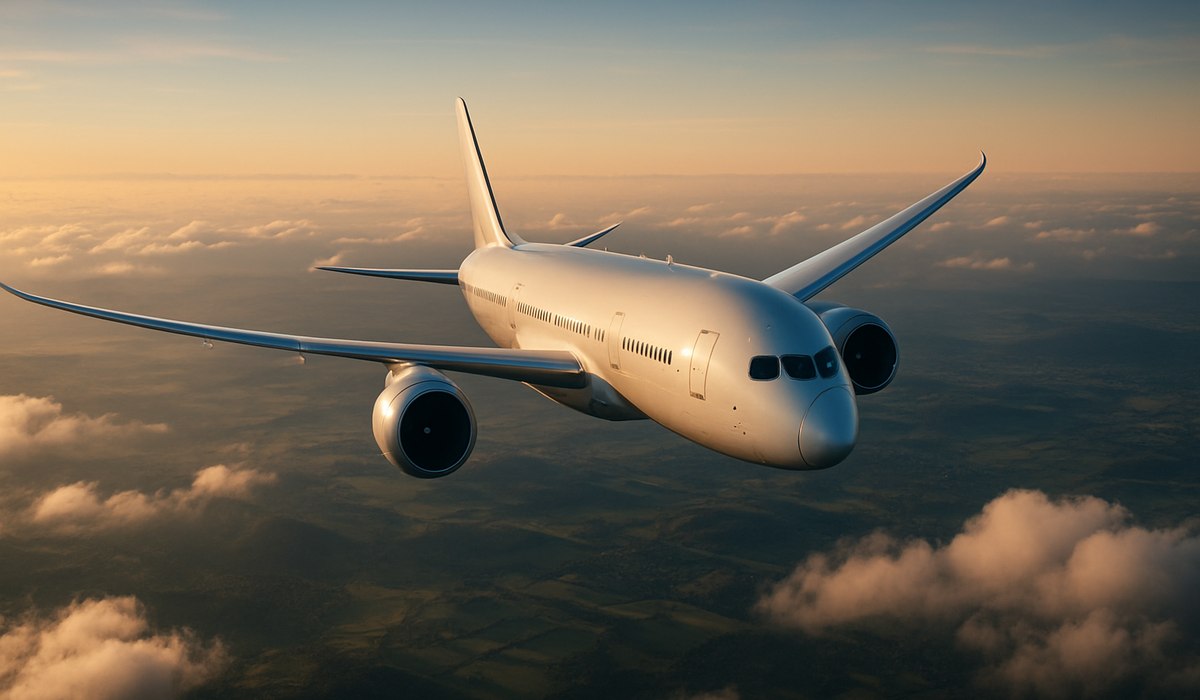
Image generated by AI
Scandinavian Airlines Faces Boeing 777X Fleet Decision
Scandinavian Airlines is carefully evaluating a potential widebody aircraft order involving the Boeing 777X as it balances operational needs against market realities in 2026. The Nordic carrier, which already operates the Airbus A350, must now decide whether introducing Boeing's flagship ultra-widebody serves its European network strategy. Industry analysts question whether the 777X's 400+ seat capacity aligns with SAS's typical route profiles and passenger demand patterns across Scandinavia and continental Europe.
The decision reflects broader tensions within European aviation as carriers balance fleet modernization with route economics. SAS operates extensive networks connecting Copenhagen, Stockholm, and Oslo to major European hubs and transatlantic destinations. Adding the Boeing 777X would represent a significant capacity jump compared to existing narrowbody and widebody operations.
The Boeing 777X vs. Airbus A350: Head-to-Head Comparison
The Boeing 777X and Airbus A350 represent different philosophies for widebody travel. The 777X seats approximately 426 passengers in a three-class configuration, while the A350-900 carries roughly 314 passengers. This 30% capacity difference matters significantly for airlines serving mixed networks.
The A350 prioritizes fuel efficiency and flexibility across longer routes. Its advanced avionics and composite fuselage deliver 25% better fuel consumption than older widebodies. The Boeing 777X counters with longer range capabilities—up to 8,730 nautical miles—and marginally higher speeds. However, range advantages mean little when routes don't demand them.
For SAS, the A350's proven track record within European operations provides operational certainty. Crew training, maintenance schedules, and spare parts inventory are already established. The 777X requires new infrastructure investment despite Boeing's extensive aircraft portfolio. Visit Boeing's official specifications for detailed technical comparisons and certification documentation relevant to European operators.
Capacity Concerns: Is 400+ Seats Too Much for SAS?
Scandinavian Airlines' route network raises fundamental questions about optimal aircraft sizing. The carrier maintains strong position in premium cabin segments, particularly business travel between Nordic capitals and European cities. High-yield passengers typically demand smaller, more frequent service rather than massive capacity.
SAS connects 90+ destinations across Europe, North America, and Asia-Pacific. Most European routes operate 4-6 flights daily across smaller aircraft. Introducing ultra-high-capacity 777X aircraft could force consolidation—eliminating frequency that high-paying corporate clients prefer. Analysts suggest the A350 strikes better balance for SAS's network topology and revenue strategies.
Additionally, the 777X's size creates operational challenges at smaller Nordic airports. While Copenhagen Airport handles larger aircraft comfortably, secondary hubs like Stavanger and Billund present restricted scheduling windows. Underutilized widebodies generate substantial losses, particularly during seasonal demand fluctuations common in Scandinavia. The financial modeling suggests the A350 provides superior utilization rates for SAS's specific market conditions.
Economic Viability and Route Flexibility
Fleet economics ultimately determine aircraft selection decisions. The Boeing 777X requires higher break-even load factors than smaller widebodies—typically 80%+ passengers to achieve profitability on European routes. SAS achieves these thresholds on peak-season transatlantic service but struggles maintaining them year-round.
Fuel efficiency represents another critical factor. While the 777X improves upon earlier 777 variants, the Airbus A350 still delivers superior per-seat fuel consumption. For SAS, operating costs directly impact competitive positioning against larger legacy carriers like Lufthansa and Air France. Every percentage point improvement in fuel economics strengthens bottom-line performance.
Route flexibility matters considerably for Nordic carriers. Smaller widebodies enable profitability on thinner routes connecting secondary cities. The 777X's economics deteriorate on routes below 250-seat demand. SAS would likely concentrate the aircraft on Copenhagen-London, Stockholm-New York, and similar premium lanes—reducing network diversity that differentiates Scandinavian service.
Checking FlightAware's route databases reveals SAS's actual capacity deployment patterns and frequency strategies across major markets. This data demonstrates why aircraft sizing mismatches create operational inefficiencies.
What Airlines Are Choosing Instead
European carriers increasingly favor mid-size widebodies over ultra-high-capacity aircraft. Lufthansa expanded A350 orders while reducing 777X commitments. Air France similarly prioritized A350 production slots. This trend reflects market reality: European routes rarely sustain 400+ seat operations profitably.
British Airways, despite larger network scale than SAS, maintains mixed widebody fleets rather than concentrating on ultra-large aircraft. Swiss International Air Lines selected the A220 and A350 as core fleet modernization strategy, explicitly rejecting 777X capacity for European operations.
The Boeing 787 Dreamliner represents the sweet spot many carriers identified—265-330 seats with exceptional range-efficiency tradeoffs. Norwegian Air, SAS's budget-focused rival, built its long-haul strategy on 787 aircraft, not ultra-widebodies. This demonstrates that operational success in Nordic and European markets requires disciplined capacity management.
Turkish Airlines and Middle Eastern carriers, operating larger networks with different traffic patterns, prove 777X viability—but their context differs fundamentally from SAS's regional focus.
Key Data Table: Widebody Aircraft Comparison for European Operations
| Specification | Boeing 777X | Airbus A350-900 | Boeing 787-9 |
|---|---|---|---|
| Typical Capacity | 426 passengers | 314 passengers | 296 passengers |
| Range | 8,730 nm | 8,100 nm | 7,635 nm |
| Fuel Consumption/Seat | 2.24 L/100km | 1.95 L/100km | 2.05 L/100km |
| Break-Even Load Factor | 82% | 75% | 76% |
| Cabin Width | 6.5m | 6.1m | 6.1m |
| Development Cost Amortization | Higher | Established | Mature |
| European Airport Compatibility | Good | Excellent | Excellent |
| Scandinavian Route Suitability | Moderate | High | High |
What This Means for Travelers
SAS passengers and frequent flyers should understand how this aircraft decision affects their travel experience:
-
Monitor seat availability trends—Fleet composition changes influence seat inventory and pricing across your preferred routes. Smaller aircraft typically command premium fares due to capacity constraints.
-
Track airline announcements—SAS will publish official fleet modernization plans through investor relations channels and press releases. Subscribe to airline newsletters for authentic service updates before media coverage.
-
Evaluate booking timing—Aircraft transitions create uncertainty in schedule reliability. Book confirmation flights 60+ days in advance when possible to ensure aircraft stability.
-
Check baggage policies—Widebody introductions sometimes trigger baggage allowance adjustments. Verify current policies at booking rather than assuming consistency.
-
Understand frequent flyer implications—Different aircraft impact elite benefits, seat map preferences, and amenity availability. Update your elite member profile settings when new aircraft enter service.
-
Review seat selection—New 777X aircraft would offer different seat configurations than current A350 inventory. Familiarize yourself with updated seat maps before booking premium cabin travel.
Frequently Asked Questions
What is the Boeing 777X and why does aircraft size matter for European airlines?
The Boeing 777X represents Boeing's latest ultra-widebody aircraft, seating 400+ passengers with extended range. European airlines serving regional networks priorit
Disclaimer
This article is for informational and educational purposes only. It does not constitute legal, financial, or professional advice. While we strive to provide accurate and up-to-date information, travel policies, regulations, and conditions change rapidly. Always verify information with official sources before making travel decisions. Nomad Lawyer makes no representations about the accuracy, reliability, completeness, or suitability of the information provided. Readers should consult qualified professionals for advice specific to their circumstances. The views expressed in this article are those of the author and do not necessarily reflect the views of Nomad Lawyer.
Raushan Kumar
Founder & Lead Developer
Full-stack developer with 11+ years of experience and a passionate traveller. Raushan built Nomad Lawyer from the ground up with a vision to create the best travel and law experience on the web.
Learn more about our team →