
Boeing 747SP Ultra: Why This Short-Fuselage Design Remains Unmatched
The Boeing 747SP ultra long-range aircraft defied aviation logic by shrinking its fuselage while extending range. In 2026, no modern aircraft has replicated this engineering paradox.

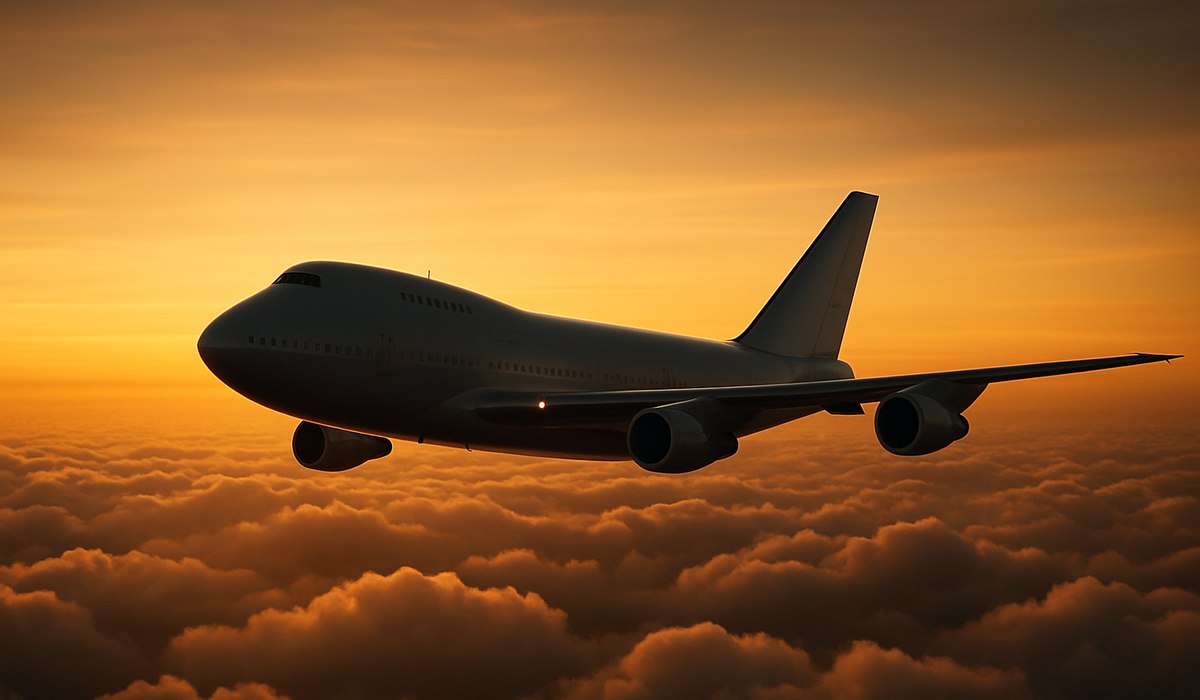
Image generated by AI
The Paradox That Changed Long-Distance Aviation
The Boeing 747SP ultra represents one of aviation's most audacious engineering decisions. Rather than following industry convention, Boeing deliberately shortened the fuselage of its iconic 747 jumbo jet while simultaneously extending its range capabilities. This counterintuitive approach created an aircraft that flew farther than its longer counterparts—a design philosophy that modern manufacturers have yet to successfully replicate in 2026.
The 747SP emerged during an era when intercontinental travel demanded unprecedented range. Airlines required aircraft capable of connecting distant continents without intermediate stops. Boeing's solution? Remove 21.7 feet from the fuselage, reduce passenger capacity, and redistribute the weight savings into massive fuel tanks. The result defied conventional wisdom and created an aircraft unlike anything else in commercial service.
The Unconventional Engineering Behind the 747SP
The Boeing 747SP ultra achieves its remarkable performance through meticulous weight management and fuel capacity optimization. By reducing the fuselage, engineers created a lighter airframe that required less thrust to maintain cruise altitude. This efficiency translated directly into extended range—the 747SP could traverse 7,598 nautical miles without refueling, a distance that astonished competitors.
The shortened fuselage design eliminated approximately 290 tons of structural weight compared to the standard 747. Engineers redirected every gram saved toward additional fuel capacity. The aircraft's center of gravity shifted forward slightly, requiring aerodynamic adjustments to the wing structure and tail surfaces. These modifications maintained stability while preserving the efficiency gains.
Modern aircraft prioritize passenger volume over range flexibility. The Airbus A350 and Boeing 787 offer impressive ranges but maintain conventional fuselage proportions. Neither aircraft attempted the dramatic fuselage reduction strategy that made the 747SP ultra unique. Contemporary manufacturing standards and passenger comfort requirements make such radical redesigns increasingly impractical in 2026.
Why Ultra-Long-Range Requires Rethinking Traditional Aircraft Design
Extending range beyond conventional limits demands fundamental reconsideration of aircraft architecture. Most modern designers assume longer fuselages accommodate more passengers, generating higher revenue per flight. The 747SP ultra proved this assumption doesn't always maximize utility. For specific route networks, eliminating seats in exchange for range creates superior operational economics.
The physics of long-range flight favors high wing loading and lean fuselage design. Aircraft carrying excessive structural weight require proportionally larger engines, consuming more fuel. The 747SP's shortened profile minimized structural mass while maintaining sufficient lift-generating wing area. This balance achieved efficiency ratios that longer aircraft simply cannot match.
Regulatory pressures and modern aviation standards now constrain radical redesigns. Contemporary aircraft must meet stricter noise regulations, requiring advanced engine cowlings that add weight. Cabin pressurization systems, environmental controls, and entertainment infrastructure all contribute to modern aircraft exceeding the 747SP's total weight. These additions prevent contemporary manufacturers from achieving comparable range-to-weight ratios.
The 747SP ultra operated in an era of relatively lighter avionics and mechanical systems. Modern aircraft demand sophisticated digital flight management systems, redundant hydraulic networks, and enhanced structural monitoring equipment. These safety and operational requirements add cumulative weight that erodes the efficiency advantages the 747SP exploited through fuselage reduction.
Modern Alternatives and Why They Miss the Mark
The Boeing 787 Dreamliner and Airbus A350 represent the state-of-art in long-range aircraft design. Both aircraft achieve impressive ranges exceeding 8,000 nautical miles. However, neither adopts the 747SP ultra's philosophy of sacrificing fuselage length for extended capability. Instead, modern designers prioritized passenger capacity and operational flexibility.
The 787's maximum range reaches 7,635 nautical miles with a three-class cabin configuration. The aircraft carries 242 to 330 passengers depending on seating arrangement. Compared to the 747SP's 331-passenger capacity in high-density layouts, the 787 offers competitive carrying potential while achieving similar range. However, the 787 maintains a conventional fuselage-to-wing ratio rather than pursuing the 747SP's radical proportions.
The A350-900 accommodates 314 passengers and achieves a maximum range of 8,000 nautical miles. Airbus designed the aircraft around modern fleet economics emphasizing throughput rather than distance specialization. The A350 represents optimization for diverse route networks rather than point-to-point ultra-long-range services where the 747SP ultra excelled.
Manufacturers in 2026 prioritize fuel efficiency measured through passenger-mile economics rather than absolute range extension. Modern engines like the Rolls-Royce Trent and General Electric GEnx achieve unprecedented efficiency through advanced materials and aerodynamic innovations. These engines enable long-range flight without requiring the structural compromises the 747SP made.
The 747SP's Lasting Legacy in Commercial Aviation
The Boeing 747SP ultra remains in limited service with specialist operators and government agencies. Several aircraft continue supporting ultra-long-range missions where passenger volume matters less than range capability. The aircraft's longevity testifies to the soundness of its engineering approach, despite never becoming a commercial bestseller.
British Airways famously operated 747SP aircraft on routes between London and Buenos Aires, Australia, and other distant destinations. Singapore Airlines, Qantas, and other carriers adopted the type for similarly challenging route networks. The aircraft proved particularly valuable for establishing new intercontinental services where intermediate stops proved operationally inefficient.
The 747SP ultra influenced subsequent aircraft design philosophy, encouraging engineers to question conventional assumptions about fuselage length and passenger capacity relationships. Though modern manufacturers chose different optimization paths, the 747SP demonstrated that radical redesigns could solve genuine operational challenges. This principle remains relevant to contemporary aerospace engineering discussions.
The aircraft's lasting presence in aviation demonstrates how specialized designs can maintain value despite generalist alternatives. In 2026, specific mission requirements still favor the 747SP's unique characteristics. This enduring utility suggests that completely abandoning fuselage-reduction strategies may represent a missed opportunity for future aircraft development.
Key Data: 747SP Ultra Specifications and Performance
| Specification | 747SP Ultra | 787 Dreamliner | A350-900 |
|---|---|---|---|
| Fuselage Length | 184 feet 11 inches | 186 feet 1 inch | 219 feet 4 inches |
| Maximum Passengers | 331 (high-density) | 330 (three-class) | 314 (three-class) |
| Maximum Range | 7,598 nm | 7,635 nm | 8,000 nm |
| Cruise Speed | Mach 0.85 | Mach 0.85 | Mach 0.85 |
| Operating Empty Weight | 735,000 lbs | 412,000 lbs | 440,000 lbs |
| First Service | 1976 | 2009 | 2015 |
What This Means for Travelers in 2026
The 747SP ultra's design principles influence how travelers experience ultra-long-range flights today. Understanding these engineering decisions helps travelers make informed choices about intercontinental travel options.
Traveler Action Checklist:
-
Research aircraft type when booking ultra-long-range flights—older 747SP aircraft differ substantially from modern 787 and A350 offerings in cabin comfort and amenities.
-
Compare seat configurations across aircraft types; the 747SP typically offers higher-density seating, while modern aircraft emphasize onboard comfort.
-
Verify fuel reserve policies with your airline—longer routes require different contingency protocols that may affect scheduling flexibility.
-
Check baggage allowances carefully; weight considerations on ultra-long-range flights sometimes result in stricter baggage restrictions.
-
Review in-flight entertainment systems; the 747SP's avionics differ significantly from
Disclaimer
This article is for informational and educational purposes only. It does not constitute legal, financial, or professional advice. While we strive to provide accurate and up-to-date information, travel policies, regulations, and conditions change rapidly. Always verify information with official sources before making travel decisions. Nomad Lawyer makes no representations about the accuracy, reliability, completeness, or suitability of the information provided. Readers should consult qualified professionals for advice specific to their circumstances. The views expressed in this article are those of the author and do not necessarily reflect the views of Nomad Lawyer.
Preeti Gunjan
Contributor & Community Manager
A passionate traveller and community builder. Preeti helps grow the Nomad Lawyer community, fostering engagement and bringing the reader experience to life.
Learn more about our team →