
Beyond the Day Trip: Western Sydney Airport Unlocks Immersive Overnight Tourism in the Blue Mountains
The passenger opening of Western Sydney International Airport and new eco-lodge proposals at Mount Tomah spark a major shift toward multi-day overnight stays in the Blue Mountains.

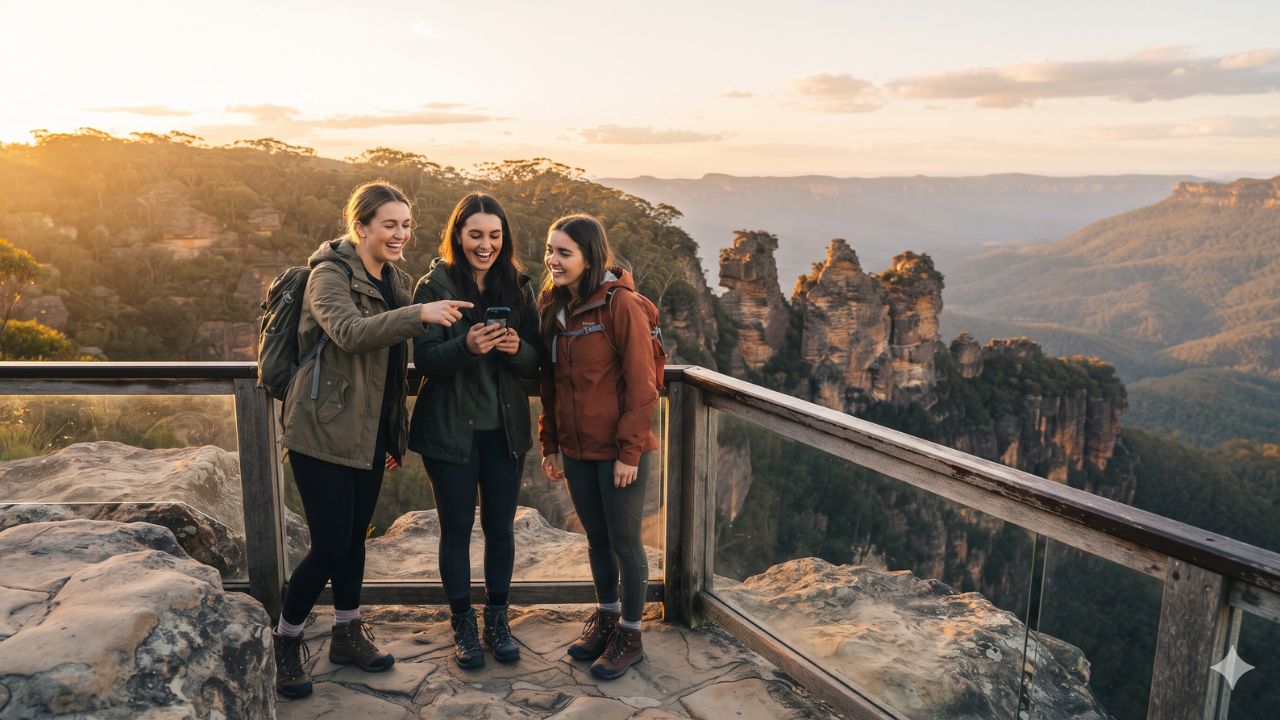
While the Blue Mountains welcomed 2.6 million visitors generating A$1.2 billion in expenditure for the year ending June 2026, the region recorded just 2.7 million visitor nights—revealing that the vast majority of travelers treat the ancient sandstone escarpment as a hurried, single-day photo excursion rather than an overnight retreat. The passenger opening of Western Sydney International Airport on October 25, 2026, followed by trans-Tasman Auckland services on October 26 and daily Singapore flights commencing November 23, dramatically alters this dynamic by establishing an international aviation terminal at the very foot of the Great Dividing Range. Paired with a landmark NSW Government announcement on October 14 inviting commercial proposals for eco-accommodation across three precincts at Blue Mountains Botanic Garden Mount Tomah, regional tourism operators are seizing an unprecedented opportunity to convert passing day-trippers into dedicated multi-night guests.
For decades, international voyagers landing at Sydney Kingsford Smith had to negotiate congested inner-city motorways and two-hour rail commutes before reaching mountain trailheads. Operating from Badgerys Creek, the new airport positions rental vehicles and express regional transfers within direct reach of forested mountain passes, inviting travelers to linger in historic mountain villages, tackle multi-day walking tracks, and absorb the region's deep Indigenous cultural heritage.
The Western Sydney Aviation Gateway: Shifting from Day Trips to Multi-Night Stays
The inauguration of passenger services at Western Sydney International Airport represents more than an aviation milestone; it provides a structural catalyst for regional dispersal across New South Wales. Confirmed by the federal Department of Infrastructure, the airport's phased international rollout—launching with trans-Tasman connections to Auckland on October 26 and scaling to daily Singapore services on November 23—funnels overseas arrivals directly into Sydney’s western corridor.
Airport management has structured ground access to prioritize regional exploration, announcing SIXT as its official car-rental partner alongside rideshare zones, private coach bays, and long-term parking facilities. For travelers bound for the upper mountains, collecting a vehicle at WSI avoids the urban bottlenecks of the M5 and eastern distributors. A straightforward westward drive connects motorists with the Great Western Highway or the scenic Bells Line of Road, allowing visitors to check into mountain lodgings within an hour of clearing airport arrivals.
This spatial proximity creates a compelling incentive to rethink traditional itineraries. According to regional statistics compiled by Destination NSW, which recently updated its domestic reporting to the new Domestic Tourism Statistics system, regional expenditure reached A$1.2 billion across the year ending June 2026. However, with visitor nights averaging barely 1.04 nights per traveler, the economic benefits of tourism have historically concentrated around daytime tour buses that depart by mid-afternoon. The presence of an adjacent international airport provides local guesthouses, artisan bakeries, and wilderness guides with the demographic foundation needed to build sustainable, high-yield overnight stays.
Expanding Mountain Hospitality: Mount Tomah Proposals and the Grand Cliff Top Trail
To meet anticipated demand for experiential travel, the NSW Government and the Botanic Gardens of Sydney initiated a formal market process on October 14, 2026, seeking expressions of interest for low-impact overnight accommodation at Blue Mountains Botanic Garden Mount Tomah. Rising 1,000 meters above sea level along the northern rim of the mountains, the garden has identified three distinct development zones: Jungle Lodge, the Conservation Area, and the Sunrise Area.
Concepts under evaluation range from boutique timber cabins and sustainable eco-lodges to luxury glamping retreats, designed to blend commercial viability with stringent environmental and heritage safeguards. Expressions of interest close on November 20, 2026, supported by an official site briefing on October 27. While these facilities represent future investment pipelines rather than currently bookable rooms, the initiative signals a clear policy commitment to expanding high-standard overnight options within protected natural settings.
Complementing this accommodation push is the development of structured multi-day walking experiences. The NSW National Parks and Wildlife Service highlights the Grand Cliff Top Walk—a curated 19-kilometer, two-day hiking route linking the heritage villages of Wentworth Falls, Leura, and Katoomba along the cliff edges of the Jamison Valley. Official park guidelines encourage hikers to take two or three nights, pairing backcountry ridge walking with cozy stays in village heritage guesthouses. This trail model proves that the Blue Mountains possesses the walking infrastructure necessary to anchor extended vacations, turning the physical journey between villages into the core attraction.
Blue Mountains Visitor Economy and Tourism Development Benchmarks
The table below outlines verified baseline economic data from Destination NSW, airport flight milestones, and major accommodation and trail frameworks defining the region's overnight tourism strategy.
| Strategic Category | Official Metric / Milestone | Detail & Implementation Timeline |
|---|---|---|
| Annual Visitor Volume | 2.6 million visitors | Baseline year ending June 2026 (Destination NSW) |
| Annual Visitor Nights | 2.7 million visitor nights | Indicates heavy day-trip skew; average stay ~1.04 nights |
| Regional Expenditure | A$1.2 billion | Direct tourism spending prior to WSI passenger opening |
| WSI Passenger Opening | 25 October 2026 | Federal Department of Infrastructure confirmed launch |
| WSI Auckland Route | 26 October 2026 | Initial trans-Tasman passenger flight operations |
| WSI Singapore Route | 23 November 2026 | Daily widebody international services commence |
| WSI Ground Transport | SIXT Car Rental Partner | On-site car hire, rideshare, public bus, and parking hubs |
| Mount Tomah EOI Launch | 14 October 2026 | Botanic Gardens of Sydney accommodation tender |
| Mount Tomah Briefing & Close | 27 Oct briefing / 20 Nov close | EOI evaluation across Jungle Lodge, Conservation, Sunrise zones |
| Grand Cliff Top Walk | 19 km over 2 days | Connects Wentworth Falls, Leura, and Katoomba cliff tracks |
| Cultural Heritage Status | Declared Aboriginal Place | Three Sisters recognized for Gundungurra and Darug heritage |
Visitor Insider Tips: Crafting the Perfect Blue Mountains Overnight Itinerary
Maximizing a multi-day journey into the Blue Mountains requires local navigational insight, weather awareness, and thoughtful route planning:
- Choose the Bells Line of Road for Northern Solitude: Rather than following the heavy freight traffic of the Great Western Highway, collect your rental vehicle at Western Sydney Airport and journey via Richmond along the Bells Line of Road. This elevated route winds through the apple orchards of Bilpin and delivers travelers directly to the cool-climate displays of the Blue Mountains Botanic Garden Mount Tomah before continuing toward Blackheath.
- Experience the Three Sisters Away from Crowds: Echo Point in Katoomba attracts heavy midday tour buses. Because The Three Sisters is a declared Aboriginal Place of profound cultural significance, visit during sunrise when golden morning light illuminates the sandstone towers and native birds echo across the Jamison Valley, or view the illuminated monoliths under night floodlights.
- Lodge Park Safety Forms and Carry a Beacon: Mountain weather is notoriously volatile, with sudden cold fronts and thick cloud banks dropping temperatures rapidly. If undertaking sections of the Grand Cliff Top Walk or remote valley descents, always submit a Trip Intention Form online and borrow a complimentary Personal Locator Beacon (PLB) from the Blue Mountains Heritage Centre in Blackheath or Katoomba Police Station.
- Base Yourself in Village Clusters: Avoid moving hotels every night. Settle into a historic Art Deco hotel in Katoomba or a private garden cottage in Leura for three consecutive nights. This central base allows you to catch the local mountain train between trailheads while leaving evenings free to explore regional dining, craft cideries, and independent bookstores.
Cultural and Environmental Context: Ancient Songlines and Escarpment Ecology
The Blue Mountains plateau is far more than a scenic recreation area; it forms a sacred cultural homeland stewarded for tens of thousands of years by the Gundungurra and Darug Traditional Owners. Sandstone cliff lines, waterholes, and soaring rock pillars are woven into enduring ancestral Creation stories. The formal declaration of The Three Sisters as an Aboriginal Place legally acknowledges this sacred heritage, reminding travelers that walking these ridgelines means treading upon an ancient living cultural landscape.
Ecologically, the region forms the western spine of the Greater Blue Mountains Area, inscribed on the UNESCO World Heritage list across more than one million hectares of sandstone plateaus, deep gorges, and temperate eucalypt forests. The park protects extraordinary biodiversity, serving as the evolutionary refuge for ancient Wollemi pines and more than one hundred distinct eucalyptus species whose volatile organic oils create the characteristic blue atmospheric haze.
As Western Sydney International Airport ramps up flight operations, the imperative to balance accessibility with ecological integrity becomes paramount. Overdevelopment and unmanaged trail traffic risk degrading delicate hanging swamps and canyon ecosystems. By directing tourism into managed multi-day walking tracks, encouraging high-standard conservation lodges like those planned at Mount Tomah, and channeling visitor expenditure directly into village enterprises, the Blue Mountains can preserve its wild silence while extending a warm, authentic welcome to overnight voyagers.
FAQ: Visiting the Blue Mountains via Western Sydney Airport 2026
How far is the Blue Mountains from Western Sydney International Airport?
Western Sydney Airport is located in Badgerys Creek, approximately 45 to 60 minutes by road from the lower Blue Mountains, cutting travel times compared to transfers from central Sydney.
Can travelers book the proposed Mount Tomah accommodation right now?
No. The NSW Government and Botanic Gardens of Sydney are currently evaluating expressions of interest for eco-accommodation proposals, which close on November 20, 2026, with opening dates to be determined.
Do walkers need to complete all 19 kilometers of the Grand Cliff Top Walk?
No. The route is divided into accessible day sections between Wentworth Falls, Leura, and Katoomba, allowing travelers to walk short segments or book guided overnight itineraries matching their fitness.
What safety equipment is recommended for hiking in Blue Mountains National Park?
NSW National Parks recommends checking current fire and track alerts, filing a trip intention form, packing warm waterproof layers, and carrying a Personal Locator Beacon (PLB) for remote walks.
Trading the hurried day trip for the stillness of a mountain evening transforms a simple visit into an unforgettable journey through one of Earth's great wilderness sanctuaries.
Related Travel Guides
Disclaimer
This article is for informational and educational purposes only. It does not constitute legal, financial, or professional advice. While we strive to provide accurate and up-to-date information, travel policies, regulations, and conditions change rapidly. Always verify information with official sources before making travel decisions. Nomad Lawyer makes no representations about the accuracy, reliability, completeness, or suitability of the information provided. Readers should consult qualified professionals for advice specific to their circumstances. The views expressed in this article are those of the author and do not necessarily reflect the views of Nomad Lawyer.
Kunal K Choudhary
Co-Founder & Contributor
A passionate traveller and tech enthusiast. Kunal contributes to the vision and growth of Nomad Lawyer, bringing fresh perspectives and driving the community forward.
Learn more about our team →