
Biman Bangladesh Airlines Flight BG136 Stranded at Muscat International Airport After Passenger Death
Biman Bangladesh Airlines flight BG136 remains grounded at Muscat International Airport following an onboard fatality, disrupting a critical migrant worker corridor between Oman and Dhaka.

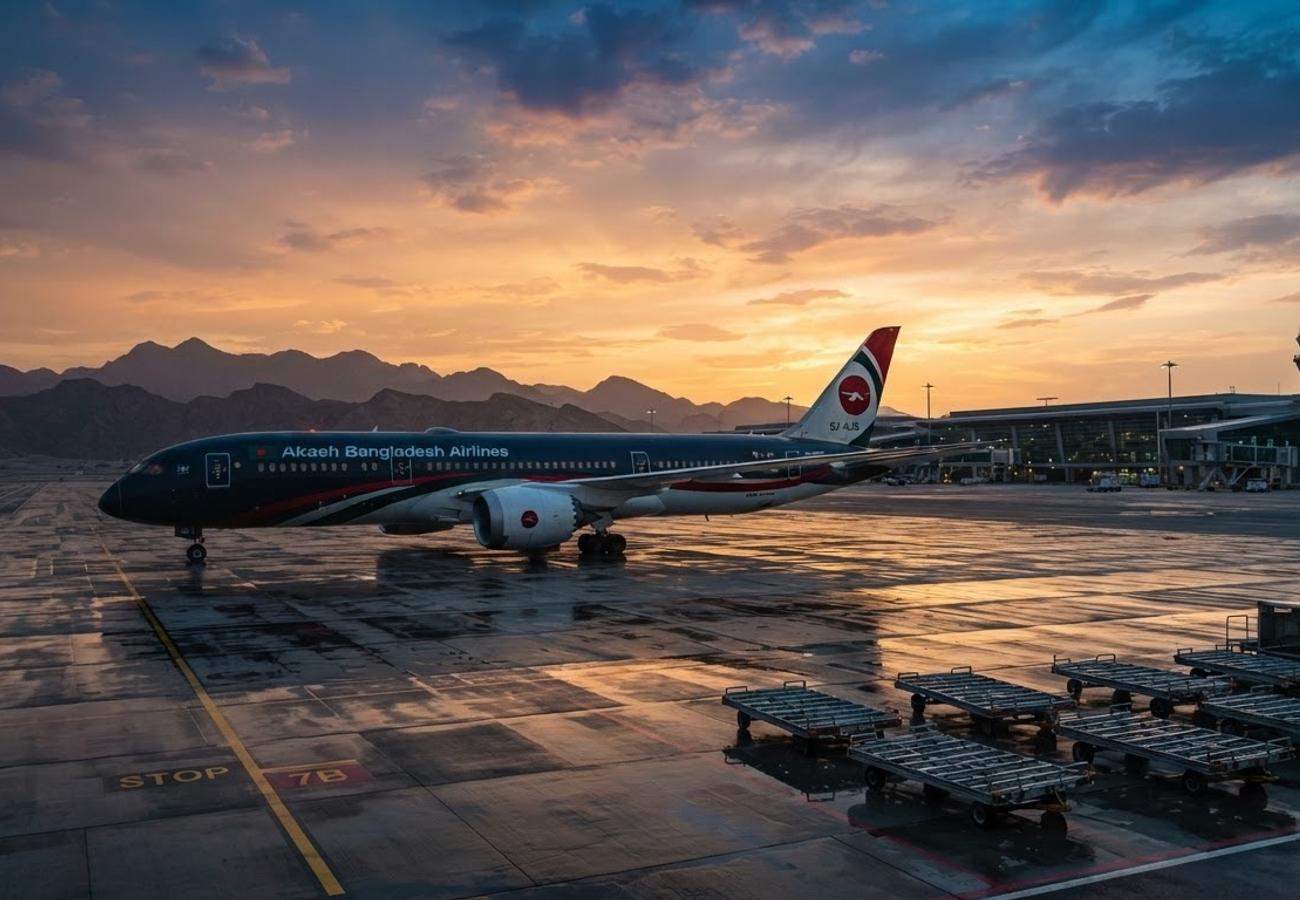
Image generated by AI
A Biman Bangladesh Airlines flight carrying over 200 passengers remains grounded at Muscat International Airport after a passenger died shortly after departure. The incident has halted operations for flight BG136, stalling a vital transit link for expatriate workers traveling to Dhaka.
Operational Halt on the Muscat-Dhaka Corridor
Biman flight BG136, scheduled to transport passengers from Muscat to Hazrat Shahjalal International Airport in Dhaka, has been forced into an unscheduled hold. Reports from regional media in Oman and Bangladesh confirm that a passenger became critically ill shortly after takeoff and was pronounced dead while the aircraft was in the air.
Rather than proceeding to Bangladesh, the aircraft remained at Muscat International Airport to comply with Omani legal and medical mandates. This specific route serves as a primary artery for Bangladeshi expatriate workers and their families, meaning any grounding creates a significant ripple effect across labor migration schedules and connecting itineraries.
Legal and Consular Protocols in Oman
The grounding of BG136 is not merely an operational delay but a legal requirement. Under Omani law, a death on board triggers a rigorous multi-step verification process. For the visitor or traveler caught in such a delay, the real impact is the extended waiting period required for the following formalities:
- Medical Certification: Airport medical teams must officially certify the cause of death.
- Police Documentation: Local law enforcement must clear the scene and document the incident to rule out foul play.
- Consular Coordination: Representatives from the deceased's home country must be notified to manage repatriation or burial arrangements.
- Mortuary Formalities: The body must be formally transferred from the aircraft to a licensed facility before the plane is cleared for turnaround.
These requirements, mirrored in guidance provided by diplomatic missions such as the Indian Embassy in Muscat, explain why an aircraft may remain on the apron for several hours or even days. Until Omani authorities grant clearance to remove the body and finalize the paperwork, the aircraft cannot be repositioned for its return journey to Dhaka.
The Human Impact on Migrant Routes
The Muscat-Dhaka corridor is characterized by high-density travel, often involving workers with tight contractual deadlines. When a flight like BG136 is stranded, the vulnerability of these migrant-worker routes becomes apparent. Unlike luxury leisure travel, these passengers often lack the flexibility to easily rebook or absorb the costs of extended airport stays.
Aviation records indicate that while in-flight medical emergencies are statistically rare, they are a known risk on medium-haul routes. Cabin crews are trained in basic life support, but when a passenger cannot be stabilized, the priority shifts from punctuality to legal compliance and safety.
Visitor Insider Tips for Transit in Muscat
For travelers navigating Muscat International Airport during unexpected delays or routine transit, these local insights can improve the experience:
- Communication Hubs: If stranded, utilize the airport's official flight status boards immediately rather than relying solely on airline apps, as ground-level updates in Muscat are often more current.
- Expense Tracking: Retain every single receipt for food, water, and communication. While Biman's compensation policies vary, documented out-of-pocket expenses are essential for any future claims.
- Cultural Etiquette: When interacting with airport staff during high-stress disruptions, maintain a patient and formal tone; Omani culture highly values courtesy and respect, which often leads to more helpful service from ground crew.
- Quiet Zones: If the terminal becomes overcrowded during a grounding, seek out the prayer rooms or designated quiet zones for a reprieve from the noise of the main concourse.
Tourism and Aviation Outlook
This incident highlights the ongoing tension between the demand for high-frequency migrant transit and the rigid legal frameworks of international aviation. As Biman Bangladesh Airlines continues to expand its footprint in the Gulf region, the integration of more robust onboard medical coordination and faster consular liaison processes will be key to minimizing passenger distress during fatalities.
Currently, Muscat International Airport continues to list regular Biman operations, suggesting that the BG136 incident is an isolated operational failure rather than a systemic schedule change. However, it serves as a reminder that the "invisible" side of aviation—consular law and medical forensics—can bring even the busiest corridors to a complete standstill.
A sobering reminder that the journey is governed as much by law as it is by flight paths.
Related Travel Guides
Disclaimer
This article is for informational and educational purposes only. It does not constitute legal, financial, or professional advice. While we strive to provide accurate and up-to-date information, travel policies, regulations, and conditions change rapidly. Always verify information with official sources before making travel decisions. Nomad Lawyer makes no representations about the accuracy, reliability, completeness, or suitability of the information provided. Readers should consult qualified professionals for advice specific to their circumstances. The views expressed in this article are those of the author and do not necessarily reflect the views of Nomad Lawyer.
Raushan Kumar
Founder & Lead Developer
Full-stack developer with 11+ years of experience and a passionate traveller. Raushan built Nomad Lawyer from the ground up with a vision to create the best travel and law experience on the web.
Learn more about our team →