
Best Neighborhoods for Renters in Washington DC 2026: Comprehensive Rental Market Analysis and Area Guides
An analysis of the top neighborhoods for renters in Washington DC, evaluating rental availability, average costs, and transit scores across five key districts.

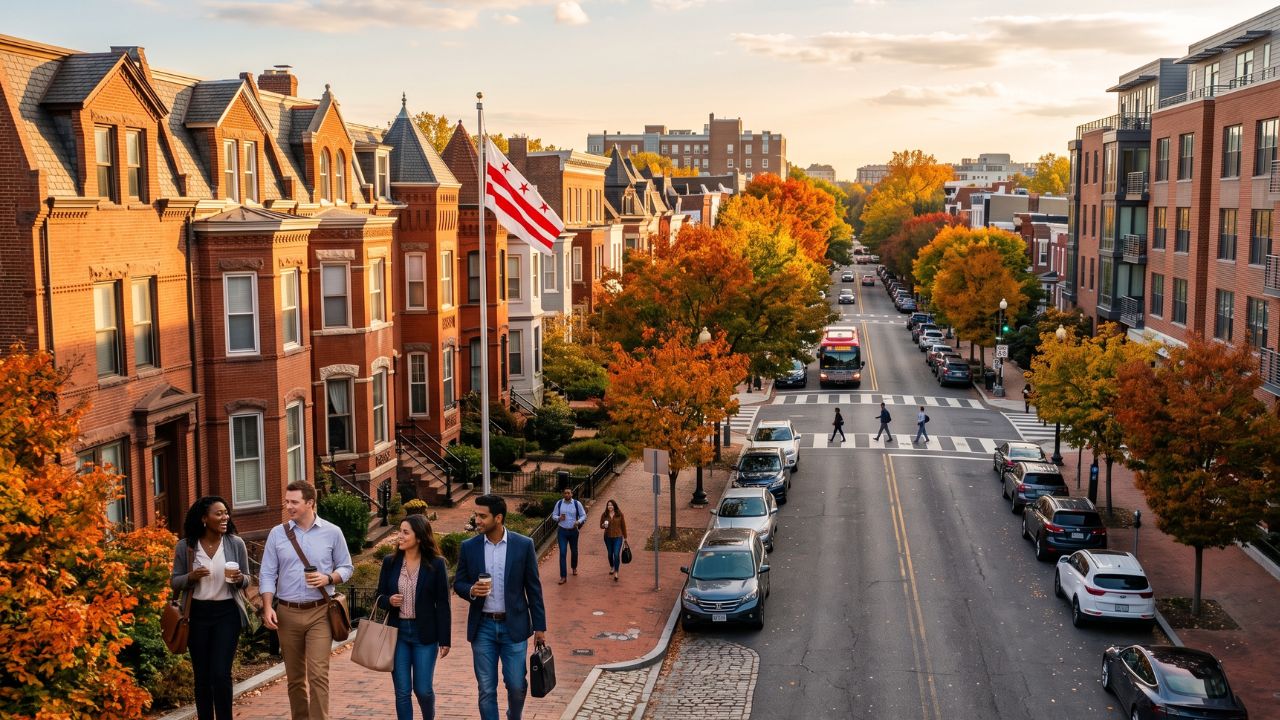
Image generated by AI
[Washington, DC] — The rental landscape in the United States capital remains highly competitive as of mid-2026, with housing costs significantly exceeding national benchmarks. Current data indicates that the average monthly rent for a one-bedroom unit in Washington, DC, stands at $2,248, representing a 37% increase over the national average of $1,640.
For professionals and newcomers navigating this market, the choice of neighborhood depends on a balance of rental availability, proximity to employment hubs, and local infrastructure. Industry reports highlight five specific districts—Columbia Heights, Capitol Hill, Navy Yard, Adams Morgan, and Petworth—as the primary options for those seeking a mix of accessibility and value.
Analyzing the Washington DC Rental Economy
The cost of living in the District of Columbia continues to be a primary hurdle for new residents. According to cost-of-living data, housing in the city is approximately 104.7% more expensive than the national average. For a single adult without dependents to maintain a comfortable lifestyle—covering housing, utilities, and basic goods—industry observers suggest a pre-tax annual salary of roughly $115,000.
The diversity of the rental stock, ranging from historic row houses to modern high-rise developments, creates a fragmented market where pricing varies sharply by a few city blocks.
High-Energy Living in Columbia Heights
Columbia Heights has emerged as a strategic choice for renters seeking a balance between city vibrancy and cost. The average monthly rent for a one-bedroom here is $2,240, which sits slightly below the city-wide average. Units typically average around 661 square feet.
This area is characterized by a dense concentration of retail and dining options, making it one of the most accessible points in the city. Reports indicate that the neighborhood achieves a perfect score for both walkability and public transit access. However, high demand often leads to intense competition for the most desirable units and a higher turnover rate in rental buildings.
Historic Appeal and Professional Hubs in Capitol Hill
For those prioritizing architectural character and proximity to government centers, Capitol Hill remains a premier destination. One-bedroom apartments here average $2,247 per month, with a larger average size of 750 square feet compared to other districts.
The neighborhood is praised for its tree-lined streets and a wealth of local cafés. While the area is exceptionally bikeable and walkable, renters should be aware that the historic nature of the housing stock can result in fewer modern amenities and less efficient interior layouts.
Modern Development and Waterfront Access in Navy Yard
The Navy Yard district represents the city's shift toward modern, luxury living. It is one of the few areas where the average one-bedroom rent exceeds the city average, currently sitting at $2,498 per month for units averaging 702 square feet.
The area is defined by new construction, waterfront green spaces, and high-density apartment complexes. While it offers the best drivability scores among the top neighborhoods, the rapid pace of development means that some community infrastructure is still catching up, and active construction is a common occurrence.
Cultural Vibrancy and Nightlife in Adams Morgan
Adams Morgan is the primary hub for renters who prioritize culture, dining, and nightlife. This is the most expensive of the analyzed neighborhoods, with average one-bedroom rents reaching $2,568 per month for units averaging 727 square feet.
The district is highly rated for its eclectic architecture and exceptional transit and bikeability. The trade-off for this energy is a higher noise level and a premium price tag, making it less suitable for those seeking a quiet residential atmosphere.
Residential Quiet and Value in Petworth
Petworth serves as the most affordable alternative for those willing to live slightly further from the central business district. The average rent for a one-bedroom is significantly lower than the city average, at $1,848 per month, with units averaging 664 square feet.
This neighborhood offers a more relaxed, residential environment while still maintaining strong transit links. Renters in Petworth often find better overall value, though they may face slightly longer commutes to downtown hubs and may encounter older building conditions.
Comparative Neighborhood Data Matrix
The following table provides a direct comparison of the key metrics across the top five rental districts in Washington, DC.
| Neighborhood | Avg 1-BR Rent | Avg Size (sq ft) | Walk Score | Transit Score | Drive Score | Bike Score |
|---|---|---|---|---|---|---|
| Columbia Heights | $2,240 | 661 | 100 | 100 | 50 | 80 |
| Capitol Hill | $2,247 | 750 | 90 | 80 | 50 | 90 |
| Navy Yard | $2,498 | 702 | 70 | 80 | 90 | 80 |
| Adams Morgan | $2,568 | 727 | 100 | 90 | 40 | 90 |
| Petworth | $1,848 | 664 | 90 | 80 | 30 | 70 |
Why This Matters: The Broader Urban Impact
The disparity between Petworth's $1,848 average rent and Adams Morgan's $2,568 illustrates a widening gap in the DC rental market. This trend suggests that the "city center" premium is increasing, pushing middle-income renters toward the periphery of the city.
From an industry perspective, the high walkability and transit scores across these neighborhoods indicate that Washington, DC, is successfully transitioning into a "15-minute city" model, where essential services are reachable without a car. This is particularly evident in Columbia Heights and Adams Morgan, where the 100-point walkability scores reduce the necessity of vehicle ownership, potentially offsetting the higher rental costs through lower transportation expenses.
Furthermore, the growth of the Navy Yard highlights a trend toward "lifestyle-led" real estate, where renters pay a premium not just for the unit, but for the surrounding curated environment (waterfronts, new retail). For the legal and government professional, the choice between the historic stability of Capitol Hill and the modern luxury of Navy Yard represents a broader shift in how the city's elite workforce chooses to integrate work and home life.
Strategic neighborhood selection remains the most effective way to manage the high cost of living in the nation's capital.
Related Travel Guides
Disclaimer
This article is for informational and educational purposes only. It does not constitute legal, financial, or professional advice. While we strive to provide accurate and up-to-date information, travel policies, regulations, and conditions change rapidly. Always verify information with official sources before making travel decisions. Nomad Lawyer makes no representations about the accuracy, reliability, completeness, or suitability of the information provided. Readers should consult qualified professionals for advice specific to their circumstances. The views expressed in this article are those of the author and do not necessarily reflect the views of Nomad Lawyer.
Kunal K Choudhary
Co-Founder & Contributor
A passionate traveller and tech enthusiast. Kunal contributes to the vision and growth of Nomad Lawyer, bringing fresh perspectives and driving the community forward.
Learn more about our team →