
Bengaluru-Mangaluru Vande Bharat Express: Trial Runs Begin Across the Western Ghats
South Western Railway initiates technical trial runs for the 16-coach Vande Bharat Express between Bengaluru and Mangaluru, traversing 363 km across the Western Ghats.

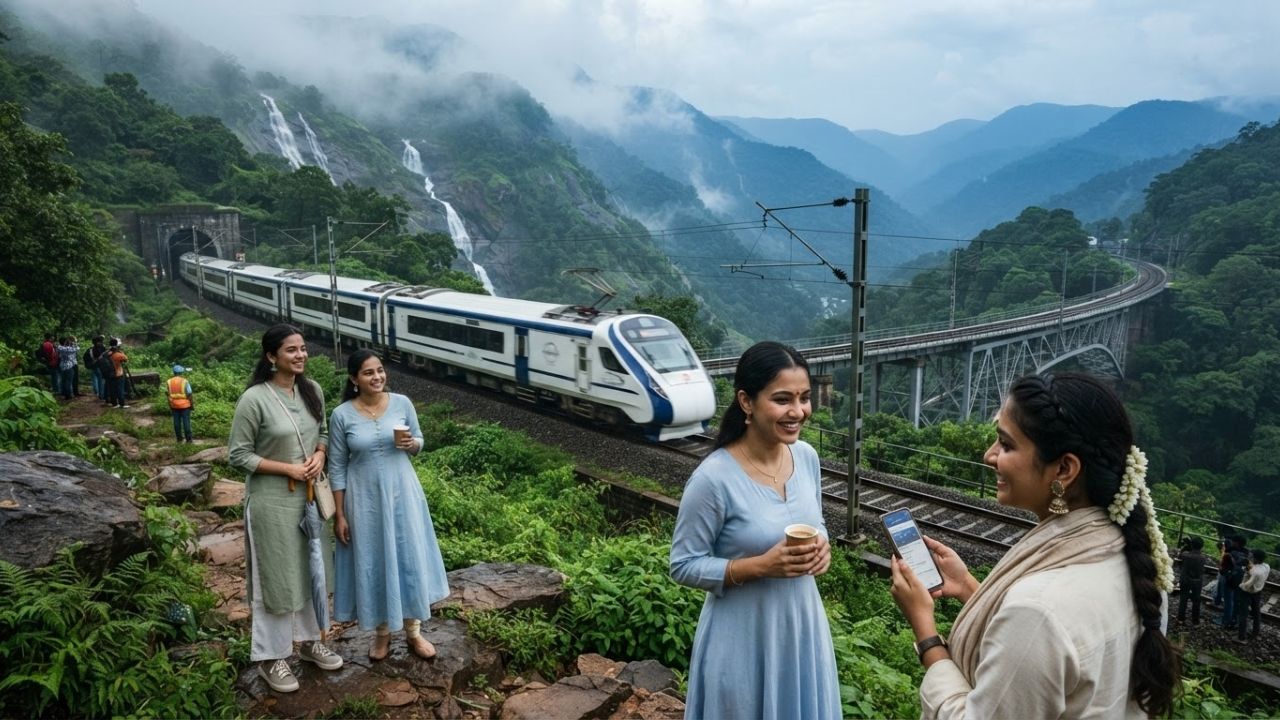
Image generated by AI
South Western Railway has commenced trial runs for the 16-coach Vande Bharat Express connecting Bengaluru and Mangaluru, conquering the steep gradients of the Western Ghats to deliver an eight-hour journey over the 363-kilometre mountain rail corridor.
YESVANTPUR, Karnataka — In a historic leap for rail transit in southern India, South Western Railway (SWR) has formally launched operational trials of the semi-high-speed Vande Bharat Express linking Karnataka’s state capital with its coastal economic center. Traversing the famed "Green Route"—renowned for its misty peaks, cascading cataracts, and emerald valleys—the deployment represents one of the most demanding engineering achievements in the nation's railway modernization campaign.
Historically, operating self-propelled, semi-high-speed trainsets across the Western Ghats was blocked by severe mountain inclines, tight curvature, and dozens of tunnel passes between Sakleshpur and Subrahmanya Road. Following the complete overhead electrification of the mountain segments and comprehensive track reinforcement, railway engineers have initiated rigorous timetable and safety evaluations before opening commercial passenger bookings.
The Local Trend Revealed: Semi-High-Speed Rail Tames the Green Route
The new Vande Bharat service promises a transformative upgrade for business commuters, pilgrims, and coastal vacationers. Covering a 363-kilometre alignment, the semi-high-speed train targets an end-to-end running time of approximately eight hours. This performance outpaces conventional express services, which have historically required prolonged travel times to negotiate the rugged mountain geography.
Unlike alternative long-distance trains that skirt city centers, this premier service terminates directly at Mangaluru Central, placing travelers steps away from the heart of the port city. Featuring panoramic glass windows, aerodynamically contoured coaches, ergonomic reclining seating, and whisper-quiet interiors, the train converts a routine transit corridor into an immersive visual voyage through Karnataka’s biodiverse highlands.
The inaugural trial run departed Yesvantpur Junction in the early morning hours, observing a carefully calibrated schedule to assess real-world operating conditions across varied elevations. Scheduled stops were executed at major regional junctions including Hassan, Sakleshpur, and Subrahmanya Road to measure station dwell times and crew adaptation. The return journey departed Mangaluru Central in the afternoon, climbing back through the mountain passes before pulling into Yesvantpur late at night.
Technical & Operational Specifications: Bengaluru–Mangaluru Vande Bharat Route
| Parameter / Feature | Operational Metric & Details | Engineering & Passenger Significance |
|---|---|---|
| Total Route Distance | 363 kilometres | Direct link between Yesvantpur Junction and Mangaluru Central |
| Target Travel Time | Approximately 8 hours | Substantially faster than conventional legacy express trains |
| Trainset Configuration | 16-coach self-propelled electric multiple unit (EMU) | High acceleration, distributed traction, and aerodynamic exterior |
| Challenging Sector | Sakleshpur to Subrahmanya Road (Ghat section) | Steep down-gradients, sharp curves, viaducts, and dozens of tunnels |
| Advanced Braking Mechanism | Automated Emergency Braking (AEB) & electro-pneumatic controls | Precision downhill speed control on steep mountain slopes |
| Designated Trial Stations | Yesvantpur, Hassan, Sakleshpur, Subrahmanya Road, Mangaluru Central | Timetable validation, telemetry monitoring, and crew readiness |
| Traction Infrastructure | 100% 25 kV AC overhead electric traction | Replaces older diesel-hauled locomotives with clean electric power |
Cultural & Environmental Value: Ecological Transit Across a UNESCO Biodiversity Hotspot
The Western Ghats of Karnataka rank among the world's eight "hottest hotspots" of biological diversity, harboring rare endemic flora, elephant migration corridors, and virgin rainforest canopies. In previous decades, passenger transit across the mountain ridge relied exclusively on heavy diesel locomotives. These older engines struggled with low adhesion on steep inclines and generated localized emissions within pristine forest reserves.
Transitioning to 100% electric traction via the Vande Bharat Express represents a major environmental victory. Distributed electric power eliminates tailpipe emissions across the ghats, while regenerative braking feeds electrical energy back into the overhead power grid during descent. By providing a swift, dependable rail alternative, the service also relieves heavy vehicular congestion along the ecologically fragile Shiradi Ghat highway (NH-75), reducing highway accidents and roadside carbon emissions.
For regional communities, the service unlocks sustainable economic opportunities. By linking Hassan directly with both Bengaluru and coastal ports, the corridor strengthens cultural tourism to the 12th-century Hoysala temple complexes at Belur and Halebidu—inscribed on the UNESCO World Heritage list—while supporting Malnad coffee growers, artisan spice plantations, and community-run eco-resorts.
Local Visitor Insider Tips: Scenic Vistas, Pilgrimage Corridors, and Coastal Dining
Travelers planning to experience this premier scenic rail journey should keep these expert recommendations in mind:
- Optimal Window Seat Selection: When booking the morning departure from Yesvantpur down to Mangaluru, choose window seats on the right side of the coach. As the train descends from Sakleshpur into the valley of Subrahmanya Road, this orientation provides unobstructed panoramas of cascading monsoon waterfalls, deep river gorges, and cloud-shrouded mountain ridges.
- Peak Scenic Travel Season: While the train will operate year-round, the prime visual window falls between July and November. During the monsoon and post-monsoon months, the Western Ghats burst into brilliant green life, with hundreds of seasonal waterfalls tumbling down granite cliff faces alongside the tracks. For clear, sunny views with mild temperatures, December through February offers crisp mountain mornings.
- Pilgrimage & Heritage Gateways: Use intermediate stops to access world-renowned heritage sites. Alight at Hassan to catch local connections to the monolithic Gommateshwara statue at Shravanabelagola or the intricately carved Hoysaleshwara temple at Halebidu. Alight at Subrahmanya Road station for immediate taxi connections to the sacred Kukke Subrahmanya Temple, located at the base of the majestic Kumara Parvatha peak.
- Coastal Culinary Indulgence: Upon arriving at Mangaluru Central, explore authentic coastal Tuluva cuisine. Head to iconic local establishments like Hotel Narayana near the Old Port or Giri Manja’s for fresh, masala-fried catch of the day served on banana leaves. Savor tender neer dosa paired with spicy kori rotti (crispy rice sheets drenched in rich chicken gravy), and conclude your food journey with the world-famous "Gadbad" multi-layered sundae at Pabbas Ideal Cafe.
- Mountain Travel Etiquette: The ghat segment passes through protected reserve forest territory. Passengers are requested to observe zero-litter policies onboard and avoid throwing items from vestibules or coach doors. Respect the peace and sacred traditions of temple towns along the route.
Tourism Outlook: Strengthening Karnataka's Multi-Modal Connectivity
The trial operations between Yesvantpur and Mangaluru Central mark a watershed moment in India's regional transport evolution. By proving that advanced 16-coach electric trainsets can safely and efficiently master steep mountain gradients, South Western Railway establishes an operational blueprint for expanding semi-high-speed rail across complex geographical terrains nationwide.
As the Commissioner of Railway Safety (CRS) and multi-disciplinary engineering divisions finalize telemetry assessments and brake-response validations, public interest continues to mount. Once commercial operations receive formal clearance, the Bengaluru–Mangaluru Vande Bharat Express will serve as an engine of regional prosperity—bringing Karnataka's bustling technology center, historic heritage belts, and Arabian Sea shoreline into seamless, sustainable alignment.
Related Travel Guides
Disclaimer
This article is for informational and educational purposes only. It does not constitute legal, financial, or professional advice. While we strive to provide accurate and up-to-date information, travel policies, regulations, and conditions change rapidly. Always verify information with official sources before making travel decisions. Nomad Lawyer makes no representations about the accuracy, reliability, completeness, or suitability of the information provided. Readers should consult qualified professionals for advice specific to their circumstances. The views expressed in this article are those of the author and do not necessarily reflect the views of Nomad Lawyer.
Raushan Kumar
Founder & Lead Developer
Full-stack developer with 11+ years of experience and a passionate traveller. Raushan built Nomad Lawyer from the ground up with a vision to create the best travel and law experience on the web.
Learn more about our team →