
Bahrain International Airport Experiences Six Flight Cancellations and Fifty-Five Delays Affecting Major Regional and International Routes
Bahrain International Airport records 6 cancellations and 55 delays on major routes to Dubai, Kuwait, Frankfurt, and London. Check latest flight updates.

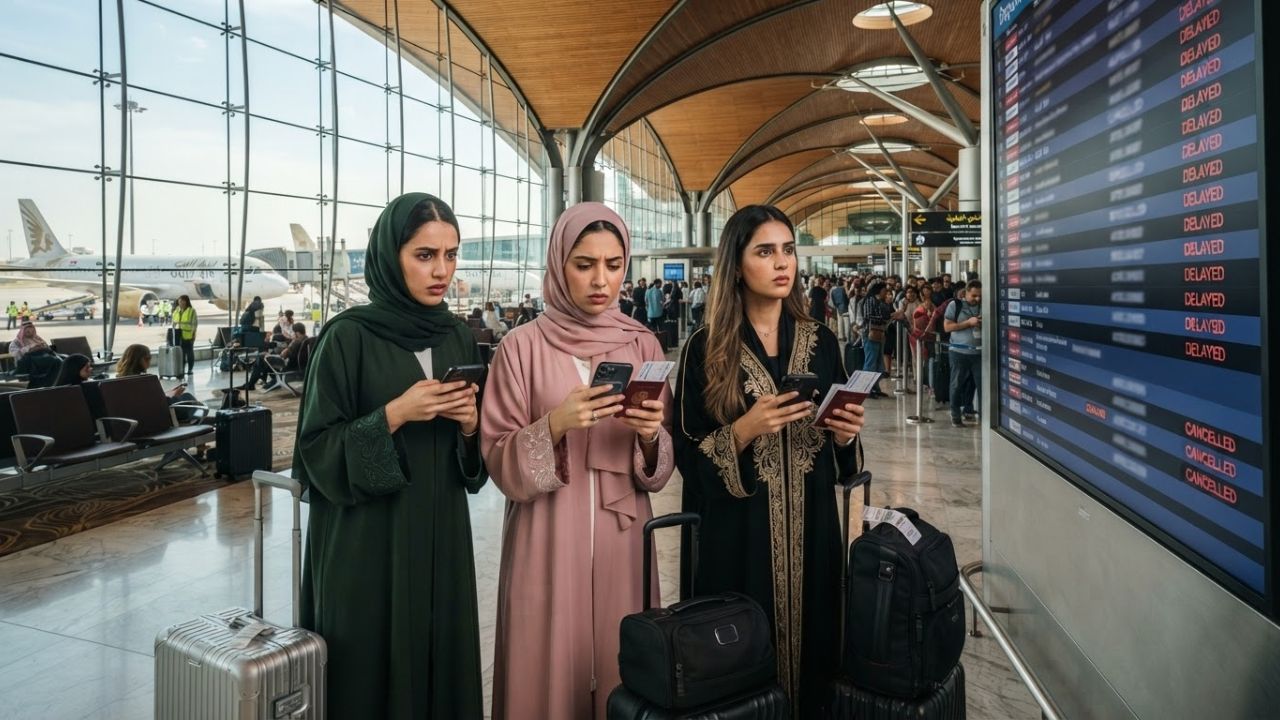
Image generated by AI
[Manama, July 9, 2026] — A wave of flight disruptions at Bahrain International Airport has impacted thousands of regional and international travelers. Six flights were cancelled and fifty-five flights experienced delays, leading to terminal congestion and baggage handling backlogs.
Airlines are urging passengers to monitor schedule updates before departing for the airport. The disruptions have affected travelers heading to destinations in the United Kingdom, the United States, Germany, Kuwait, and Turkey.
Ground crews and airport officials are coordinating efforts to clear the backlogs. However, the volume of delayed arrivals has strained terminal gate capacity, causing further departures to slip behind schedule.
Operational Bottlenecks Across Gulf Cooperation Council Transit Hubs
The flight delays have affected a wide network of international destinations across the Middle East, South Asia, Europe, Africa, and North America. Routes connecting Manama with London, Cairo, Nairobi, and New York have faced significant scheduling changes.
Within the Gulf region, routes to Dammam, Jeddah, Medina, Riyadh, Kuwait City, Abu Dhabi, Sharjah, Muscat, and Doha recorded notable delays. The high concentration of delays on the Manama-Dubai corridor has caused the largest backup of passengers.
Additionally, flights serving South Asian and European hubs, including Mumbai, Dhaka, Manchester, Kozhikode, Chennai, Malé, Frankfurt, and Munich, experienced delays. Travel coordinators recommend checking transit visa requirements when flights are rerouted.
Statistical Breakdown of Carrier Cancellations and Delays
Our analysis of the flight data indicates that cancellations were confined to two major Gulf carriers. FlyDubai grounded four flights, representing approximately 66% of its scheduled operations in this dataset, while Emirates suspended two flights, accounting for 50% of its flights.
In contrast, several other carriers experienced delays rather than outright suspensions. Gulf Air recorded the highest number of delayed services, with thirty-four flights falling behind schedule.
Other carriers experiencing operational delays included Etihad Airways with four delays, Air Arabia with four delays, Qatar Airways with three delays, and Air Arabia Abu Dhabi with three delays. Rebooking demand remains high as passengers seek alternate connections.
Passenger Rights and Rebooking Assistance Guidelines
Passengers facing cancelled flights should check their carrier's app or email for rebooking confirmation details. Travelers should contact customer service representatives in person at the airport service desks or through online chat systems.
Under international aviation guidelines, passengers may be entitled to food vouchers, hotel lodging, and alternative transport. Travelers should preserve all receipts for out-of-pocket expenses to submit for reimbursement.
Airlines are expected to prioritize passengers with immediate connecting flights. Travelers should avoid making independent flight arrangements before confirming details with their original carrier.
The table below summarizes the cancellations and delays by airline at Bahrain International Airport:
| Airline | Cancelled Flights | Delayed Flights |
|---|---|---|
| FlyDubai | 4 | 0 |
| Emirates | 2 | 0 |
| Air Arabia Abu Dhabi | 0 | 3 |
| Air India Express | 0 | 1 |
| Etihad Airways | 0 | 4 |
| Gulf Air | 0 | 34 |
| IndiGo | 0 | 2 |
| Kuwait Airways Corporation | 0 | 2 |
| EgyptAir | 0 | 2 |
| Qatar Airways | 0 | 3 |
| Air Arabia | 0 | 4 |
Why This Matters
The concentration of cancellations on the Manama-Dubai route highlights the vulnerability of the Gulf's high-frequency shuttle corridors. Because regional business travel and tourism depend on hourly connections between Bahrain and the UAE, even minor disruptions quickly compound.
Our analysis of the flight data indicates that carriers like Gulf Air prioritized maintaining their schedules with delays rather than cancellations. By delaying thirty-four flights instead of cancelling them, the carrier kept its aircraft in rotation, avoiding a complete network collapse.
However, this strategy shifts the burden to the hub airport, where delayed aircraft occupy gates and strain ground operations. This incident shows that modern airports need stronger contingency systems to manage simultaneous regional delays.
Future Outlook
Market trends suggest that regional air traffic volume in the Gulf will continue to grow, placing greater pressure on existing airport infrastructure. Ground handling systems must be upgraded to prevent recurring delays.
Additionally, airlines may need to adjust their flight schedules to build longer buffer times during peak summer travel periods. Passengers should prepare for continued scheduling volatility by purchasing comprehensive travel insurance.
Related Aviation News Guides
Disclaimer
This article is for informational and educational purposes only. It does not constitute legal, financial, or professional advice. While we strive to provide accurate and up-to-date information, travel policies, regulations, and conditions change rapidly. Always verify information with official sources before making travel decisions. Nomad Lawyer makes no representations about the accuracy, reliability, completeness, or suitability of the information provided. Readers should consult qualified professionals for advice specific to their circumstances. The views expressed in this article are those of the author and do not necessarily reflect the views of Nomad Lawyer.
Preeti Gunjan
Contributor & Community Manager
A passionate traveller and community builder. Preeti helps grow the Nomad Lawyer community, fostering engagement and bringing the reader experience to life.
Learn more about our team →