
Emirates Issues Emergency Summer Travel Advisory for Dubai Airport
Emirates issues an urgent summer travel advisory for Dubai International Airport (DXB) due to a surge of three million passengers in early July.

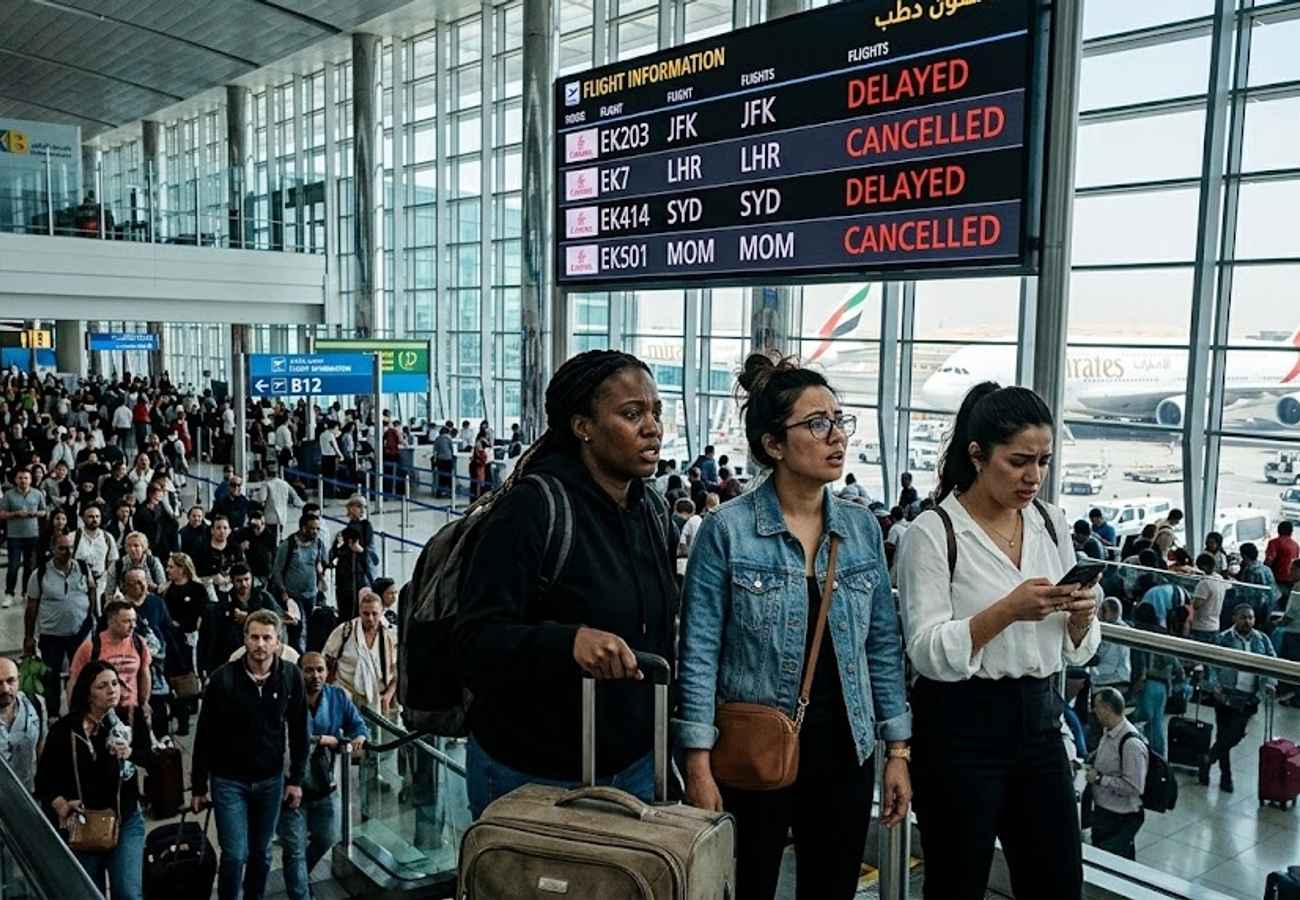
Image generated by AI
[Dubai, UAE – July 2, 2026] — The newly issued Emirates Dubai airport travel advisory warns passengers of extreme terminal congestion at Dubai International Airport (DXB) during early July. Over three million travelers are expected to transit through Terminal 3, prompting the airline to enforce strict check-in and boarding deadlines to prevent missed flights. Aviation planners indicate that the primary outbound surge will peak intensely between Friday, July 3, and Sunday, July 5, 2026.
Strict New Passenger Deadlines for Terminal 3 Departures
To manage the enormous flow of travelers, Emirates has established rigid, non-negotiable timing thresholds that all departing passengers must observe. Airport authorities require travelers to arrive at Terminal 3 at least three hours before their scheduled departure time. This window is necessary to absorb delays at check-in counters and baggage drop points.
Additionally, immigration guidelines dictate that all passengers clear passport control desks no later than 90 minutes before flight departure. The final cutoff requires passengers to arrive at their boarding gates one full hour before takeoff. Gate staff will enforce these rules strictly, and late-arriving travelers face immediate denial of boarding.
Out-of-Terminal Check-in and Luggage Drop Alternatives
Travelers can bypass the main terminal queues by using remote check-in facilities located throughout the city. The airline allows passengers to check in online or via the mobile application up to 48 hours before departure. Outbound flyers can drop off their bags at designated off-site facilities up to 24 hours in advance.
For passengers traveling to the United States, this pre-travel baggage drop window is capped at 12 hours. Alternatively, travelers can visit the premium city check-in facility located at ICD Brookfield Place within the Dubai International Financial Centre (DIFC). This urban check-in hub has extended its operating hours from 8:00 a.m. to midnight to accommodate the seasonal passenger rush.
Key Takeaways of the Emirates Travel Advisory
- Seasonal Peak: Over three million passengers will transit through Terminal 3 during the first half of July.
- Three-Hour Rule: Travelers must arrive at the airport at least three hours prior to flight departure.
- Immigration Cutoff: Passport control must be cleared 90 minutes before scheduled takeoff.
- Gate Arrival: Passengers must reach their designated boarding gates one full hour before departure.
- Remote Check-in: Off-site baggage drop points and urban check-in hubs are open to bypass queues.
- Hazardous Cargo: Power banks and e-cigarettes are banned from checked luggage and must go in carry-ons.
Transit Access and Luggage Safety Standards
Congestion on the roads leading to Dubai International Airport is expected to cause major delays for motorists. Aviation chiefs are advising the public to avoid private vehicles and use the Dubai Metro transit system. The train network operates from 5:00 a.m. to midnight on weekdays, extending until 1:00 a.m. on peak travel Fridays.
Furthermore, passengers must comply with updated electronic device safety standards to prevent cargo hold hazards. Lithium-ion power banks, electronic cigarettes, and personal vaporizers are strictly prohibited inside checked baggage. These items must be packed within cabin hand luggage to prevent thermal incidents during flight operations.
Dedicated Support Services for Families and Vulnerable Travelers
Despite the high volume of travelers, airport operators have deployed specialized support services for vulnerable passenger groups. Free terminal buggies are available throughout the concourses to assist families and elderly travelers. Staff are positioned at main intersections to guide passengers through the security and boarding zones.
Additionally, the airport support framework ensures that individuals with disabilities receive priority through passport control. These travelers are eligible for two hours of complimentary parking and access to quiet check-in lanes to minimize sensory overload. These measures help maintain service quality and reduce stress during the chaotic summer travel peak.
Emirates Peak Summer Passenger Deadlines at DXB Terminal 3
| Operational Step | Minimum Pre-Departure Window | Strategic Purpose |
|---|---|---|
| Airport Terminal Arrival | 3 Hours (180 Minutes) | Absorbs check-in, bag tag, and security screening delays |
| Passport Control Clearance | 90 Minutes (1.5 Hours) | Prevents boarding bottlenecks at immigration desks |
| Boarding Gate Presence | 60 Minutes (1.0 Hour) | Allows on-time aircraft boarding and luggage reconciliation |
| US Flight Baggage Drop | 12 Hours (Max Advance) | Complies with TSA pre-clearance and screening rules |
| General Flight Baggage Drop | 24 Hours (Max Advance) | Minimizes counter queue congestion on departure day |
DXB Terminal Congestion Risk Breakdown
| Airport Terminal | Primary Carrier Focus | Projected Congestion Level | Primary Operational Solution |
|---|---|---|---|
| Terminal 3 | Emirates & Qantas | Extreme (Peak Holiday Banks) | City check-in hubs, online check-in, early baggage drop |
| Terminal 1 | Foreign International Carriers | High (Long-haul banks) | Off-peak arrival scheduling, carry-on only travel |
| Terminal 2 | flydubai & Budget Carriers | Moderate (Regional flights) | Self-service kiosks, mobile boarding passes |
Why This Matters
Our analysis of airport operations indicates that regional surges at global transit hubs can disrupt international schedules. Because Dubai International Airport serves as a primary aviation junction, local terminal bottlenecks can cause cascading delays across Europe and Asia. Consequently, Emirates is enforcing strict boarding deadlines to ensure flights depart on time and maintain slot reliability.
By pushing baggage drop operations off-site, the airline reduces passenger processing times inside the main terminal building. This strategy helps prevent security screening lines from backing up into the main lobby. The strict enforcement of gate closures highlights the priority placed on network punctuality during peak seasonal operations.
Industry Outlook
Expect airport managers to monitor security checkpoint wait times in real-time, shifting staff to high-pressure screening zones. Ground handling agents will deploy additional mobile check-in teams to assist passengers in the check-in halls. Additionally, regional transit networks will increase train frequencies on the Dubai Metro to handle the shift in passenger traffic away from airport access roads.
Related Travel Guides
- Breeze Airways Commences Salisbury to Fort Lauderdale Direct Flights
- Delta Airlines LAX Delta One Lounge Travel Chaos 2026
- Air India Boeing 777 Melbourne Flights Travel Chaos 2026
Disclaimer: This article is strictly for informational and travel planning purposes. Airport guidelines, cut-off times, baggage rules, and remote check-in hours are based on airline and airport disclosures available at the time of publication. Terminal queues, parking availability, transit schedules, and security protocols are highly dynamic and subject to change. Travelers should verify flight statuses and road conditions before departing for the airport.
Disclaimer
This article is for informational and educational purposes only. It does not constitute legal, financial, or professional advice. While we strive to provide accurate and up-to-date information, travel policies, regulations, and conditions change rapidly. Always verify information with official sources before making travel decisions. Nomad Lawyer makes no representations about the accuracy, reliability, completeness, or suitability of the information provided. Readers should consult qualified professionals for advice specific to their circumstances. The views expressed in this article are those of the author and do not necessarily reflect the views of Nomad Lawyer.
Raushan Kumar
Founder & Lead Developer
Full-stack developer with 11+ years of experience and a passionate traveller. Raushan built Nomad Lawyer from the ground up with a vision to create the best travel and law experience on the web.
Learn more about our team →