
Avinor Reports 25.9 Million Passengers and NOK 7.1 Billion Revenue in Norway Aviation Growth 2026
Norway's airport operator Avinor reports a significant financial recovery in H1 2026, with operating income hitting NOK 7.1 billion and passenger traffic rising to 25.9 million.

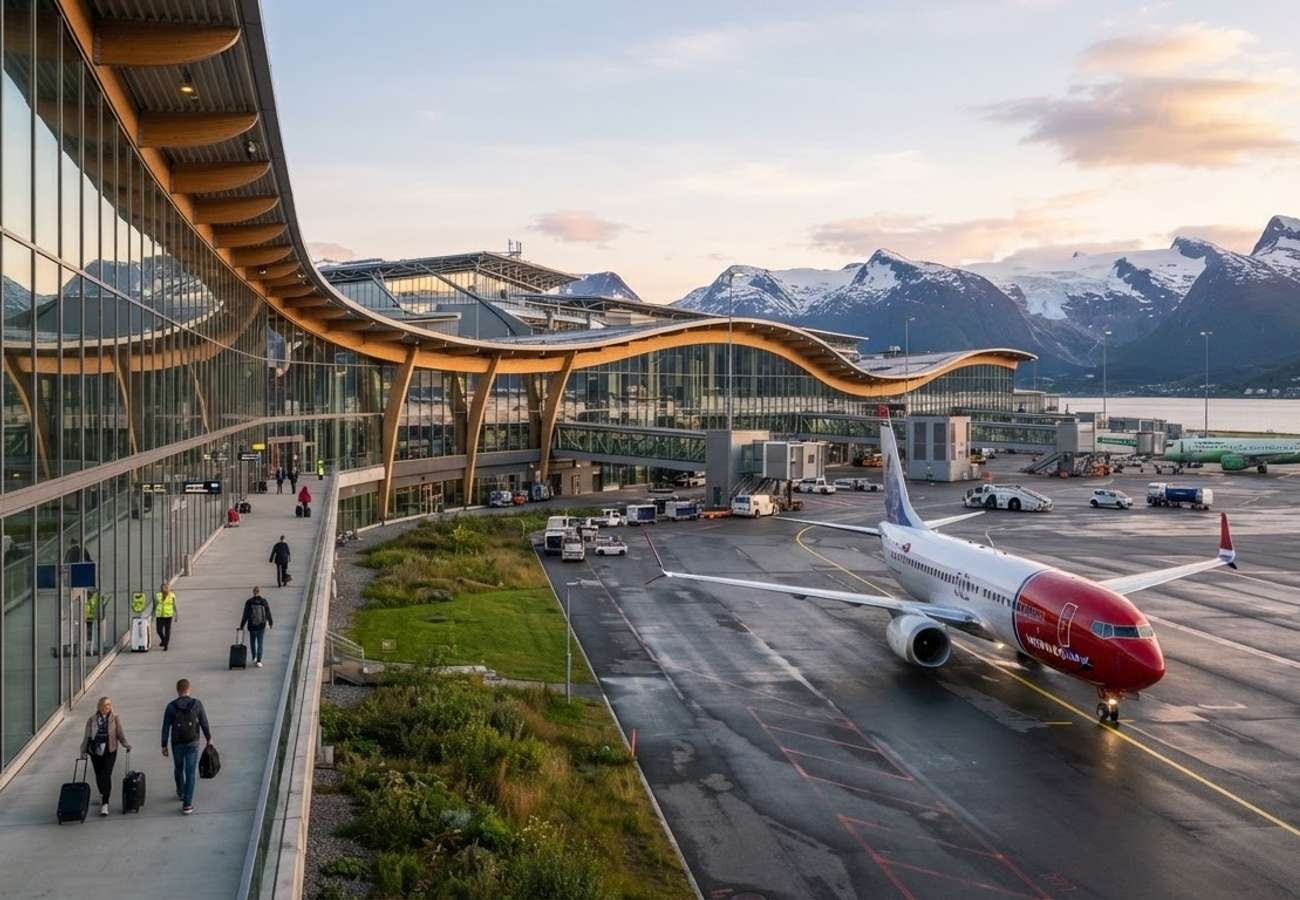
Image generated by AI
Avinor has recorded a significant financial and operational rebound in the first half of 2026, generating NOK 7.1 billion in operating income. International travel is now the primary engine of growth, with passenger volumes reaching 25.9 million across the Norwegian network.
Financial Recovery and Operational Expenditure
Avinor’s financial position strengthened during the first six months of 2026, characterized by a notable increase in commercial performance. The operator reported operating income of NOK 7.1 billion, marking an 8.6 percent rise compared to the first half of 2025 (after adjustments for other income). This growth is attributed to a combination of increased passenger volumes and higher revenue generated per traveler.
However, this revenue growth occurred alongside rising operational pressures. Total expenses for the period reached NOK 4.6 billion, a 4.7 percent increase year-on-year. This expenditure spike is linked to systemic inflation, increased salary costs, and elevated energy prices affecting airport facility management. Despite these headwinds, the adjusted operating profit rose to NOK 1.1 billion, an improvement of NOK 288 million over the previous year.
Passenger Traffic and Regional Performance
The network handled 25.9 million passengers in H1 2026, representing a 2.1 percent increase over the same period in 2025. The second quarter alone accounted for 14 million passengers, showing a 0.7 percent year-on-year increase.
Growth patterns reveal a strong preference for international arrivals and specific regional hubs:
- Bergen Airport: Led the major airports with a 6.9 percent increase in traffic.
- Regional Hubs: Passenger numbers rose by 4.8 percent, with significant contributions from Tromsø, Bodø, and Harstad/Narvik.
- International vs. Domestic: International traffic grew by 3.6 percent, while domestic growth remained modest at 1.2 percent. International travelers now comprise 41.5 percent of total airport traffic.
Aviation Traffic and Punctuality Metrics
Avinor has successfully exceeded its operational targets, specifically regarding flight reliability and punctuality.
| Metric | H1 2026 Value | Year-on-Year Change / Status |
|---|---|---|
| Total Passenger Count | 25.9 Million | +2.1% |
| Operating Income | NOK 7.1 Billion | +8.6% |
| Operating Expenses | NOK 4.6 Billion | +4.7% |
| Adjusted Operating Profit | NOK 1.1 Billion | +NOK 288 Million |
| Average Punctuality | 87% | +2 percentage points |
| Flight Regularity | 98% | Stable |
| Offshore Movements | +8.4% | Strongest Segment Growth |
| Total Aircraft Movements | +0.4% | Moderate Increase |
Traveler Logistics Guide: Navigating Norway's Aviation Network
From a ground-level perspective, the best way to navigate the current growth in Norway's aviation sector is to prioritize digital integration and regional planning.
Booking and Connections With Bergen and the northern regional airports (Tromsø, Bodø) seeing the highest growth, layovers in Oslo (OSL) can become congested. Travelers should allow a minimum of 90 to 120 minutes for domestic-to-international transfers. For those heading to regional destinations, booking "through-tickets" is highly recommended to ensure protection against delays, as regularity remains high at 98% but regional weather can cause sudden shifts.
Digital Transit and Customs Norway is increasingly leaning into digitized border controls. Ensure your passport is biometric and check for updated ETIAS requirements if traveling from a non-EU/Schengen country. For those utilizing regional airports like Harstad/Narvik, be aware that ground transportation to the city centers is often limited; pre-booking shuttles or rental cars is essential during the peak summer surge.
Customs and Security Avinor is currently updating security screening systems across several locations. While this aims to improve efficiency, travelers should expect occasional lane closures during the transition. Arriving at the airport 3 hours prior to international departures remains the safest baseline.
Infrastructure Impact and Future Outlook
Avinor is currently managing several critical national infrastructure projects that will redefine regional connectivity. This includes the construction of new airports in Bodø and Mo i Rana, as well as the modernization of air navigation technology. Additionally, the operator is managing defense-related aviation responsibilities at Evenes and Andøya, which may lead to fluctuating investment costs based on national security requirements.
Looking toward 2032, Avinor projects an annual passenger volume of 59 million. This expansion is expected to be driven almost exclusively by international tourism and nature-based travel, while domestic aviation is predicted to plateau as new mobility patterns emerge.
Despite global volatility—specifically security concerns in the Middle East affecting certain long-haul routes—the Norwegian aviation sector remains resilient, supported by a steady increase in offshore aviation movements (+8.4%) and a growing appetite for sustainable, nature-centric tourism.
Norway's aviation infrastructure is pivoting from a recovery phase to a strategic expansion phase.
Related Travel Guides
Disclaimer
This article is for informational and educational purposes only. It does not constitute legal, financial, or professional advice. While we strive to provide accurate and up-to-date information, travel policies, regulations, and conditions change rapidly. Always verify information with official sources before making travel decisions. Nomad Lawyer makes no representations about the accuracy, reliability, completeness, or suitability of the information provided. Readers should consult qualified professionals for advice specific to their circumstances. The views expressed in this article are those of the author and do not necessarily reflect the views of Nomad Lawyer.
Raushan Kumar
Founder & Lead Developer
Full-stack developer with 11+ years of experience and a passionate traveller. Raushan built Nomad Lawyer from the ground up with a vision to create the best travel and law experience on the web.
Learn more about our team →