
Phoenix Sky Harbor International Airport Reports 59 Flight Delays and 5 Cancellations Affecting Southwest and American Airlines Operations
Phoenix Sky Harbor International Airport (PHX) recorded 59 flight delays and 5 cancellations affecting American Airlines, Southwest, and Delta.

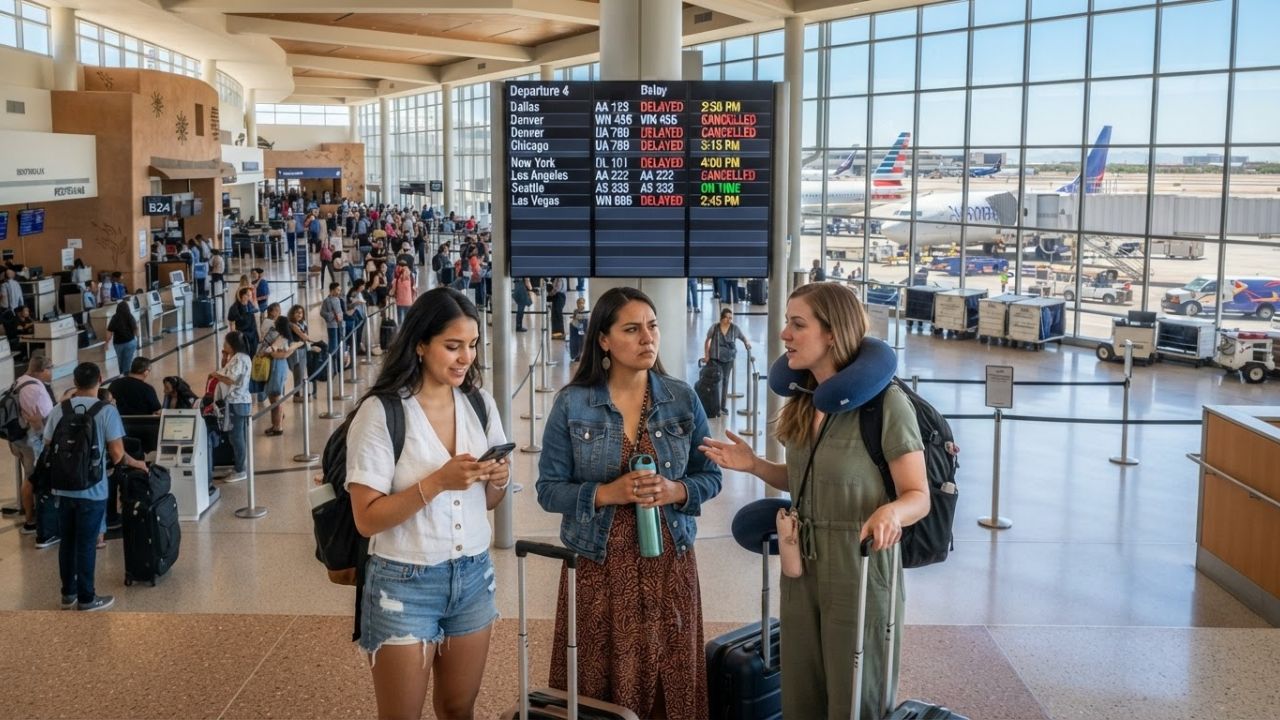
Image generated by AI
Moderate flight disruptions at Phoenix Sky Harbor International Airport have delayed summer itineraries. The airport reported 59 delays and 5 cancellations as heavy passenger volumes pressured Southwest and American Airlines operations.
Summer Travel Volumes Strain Southwestern Aviation Networks
According to reports, the peak vacation period has increased passenger traffic across the Southwest region.
Operational updates issued by Phoenix Sky Harbor International Airport (PHX) confirm that terminal gates, check-in desks, and security checkpoints remained fully staffed.
However, the high volume of daily flights means that even minor delays can cause schedule disruptions.
Passengers traveling on high-frequency routes to western and midwestern hubs experienced the most schedule adjustments.
The table below outlines the scope of the flight disruptions and the primary carriers and routes affected.
Flight Disruptions at Phoenix Sky Harbor International Airport
| Disruption Type | Quantity | Key Affected Carriers | Primary Routes Affected |
|---|---|---|---|
| Delayed Departures / Arrivals | 59 | American Airlines, Southwest, Delta, United, Alaska Airlines | Dallas, Denver, Los Angeles, Chicago, New York, Seattle, Las Vegas, London |
| Canceled Flights | 5 | American Airlines, Southwest, Delta | Short-haul regional connections and domestic corridors |
National Traffic Flow Management Triggers Regional Delays
Aviation industry analysts note that commercial air travel operates as an interconnected national network.
Advisories monitored by the Federal Aviation Administration (FAA) indicate that weather or congestion in other regions frequently causes delays in Phoenix.
When an inbound aircraft is delayed at a midwestern hub, its next scheduled departure from Phoenix is also pushed back.
To maintain safety during busy travel periods, the FAA uses flow management programs to space aircraft arrivals.
Additionally, the Transportation Security Administration has kept checkpoints fully open to handle seasonal traveler volume.
Safety and Maintenance Standards Prioritize Passenger Welfare
Although flight delays can be frustrating, airline representatives emphasize that safety protocols always take priority.
Aplanes may be held at the gate for unscheduled maintenance checks, aircraft inspections, or crew rest requirements.
Aviation regulations enforce strict limits on crew duty hours to prevent fatigue during busy summer schedules.
These mandatory safety checks are designed to meet federal standards rather than prioritize schedule punctuality.
Airlines continually update departure boards as technicians resolve issues and clear planes for takeoff.
Travel Guidelines for Navigating Airport Disruptions
Travel experts recommend several strategies to help passengers navigate flight disruptions during high-traffic seasons:
- Monitor Airline Mobile Apps: Enable push notifications to receive real-time updates on gate changes and departures.
- Arrive Early at Check-in: Allow extra time for baggage drop-off and security screening during peak morning hours.
- Review Rebooking Options: Understand carrier policies regarding seat transfers and hotel vouchers if a cancellation occurs.
- Check Live Flight Trackers: Verify the status of incoming planes before heading to the airport.
Why This Matters
Our analysis of the flight data indicates that Phoenix's position as a primary hub for American and Southwest makes it sensitive to network-wide disruptions. Because these carriers rely on high aircraft turn times, small delays propagate quickly.
When an inbound flight from Chicago arrives 20 minutes late, it delays the plane's subsequent leg to Los Angeles.
This pattern suggests that point-to-point and hub-and-spoke systems must build more schedule margin during the summer months.
Additionally, high ground temperatures in Phoenix can impact aircraft performance, requiring weight adjustments or longer takeoff runs.
Ultimately, these disruptions show that managing high passenger volumes requires flexible schedules and proactive crew management.
Forward Outlook
Market trends suggest that carriers will adjust flight schedules to prevent crew timeouts during afternoon peak hours. Airports in the Southwest are investing in digital passenger info systems to streamline terminal navigation.
Expect flight operations at Phoenix to return to normal patterns as seasonal traffic stabilizes. The regional aviation sector is projected to see steady traveler volumes through the late summer.
Disclaimer
This article is for informational and educational purposes only. It does not constitute legal, financial, or professional advice. While we strive to provide accurate and up-to-date information, travel policies, regulations, and conditions change rapidly. Always verify information with official sources before making travel decisions. Nomad Lawyer makes no representations about the accuracy, reliability, completeness, or suitability of the information provided. Readers should consult qualified professionals for advice specific to their circumstances. The views expressed in this article are those of the author and do not necessarily reflect the views of Nomad Lawyer.
Kunal K Choudhary
Co-Founder & Contributor
A passionate traveller and tech enthusiast. Kunal contributes to the vision and growth of Nomad Lawyer, bringing fresh perspectives and driving the community forward.
Learn more about our team →