
Austria's Semmering Railway: How a 1854 Mountain Train Created Alpine Resort Tourism
Built between 1848 and 1854 by Carl Ritter von Ghega, Austria's 41-km Semmering Railway transformed an impassable mountain pass into the world's first alpine resort.

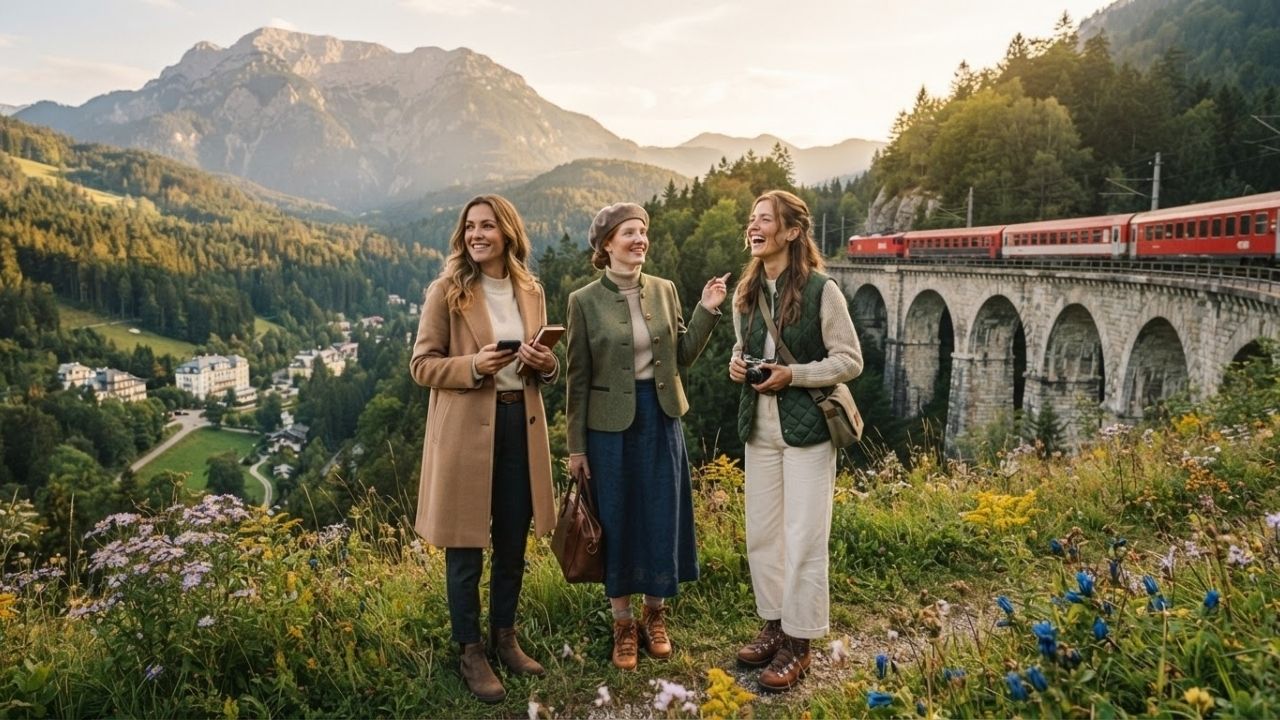
Image generated by AI
Built between 1848 and 1854 by civil engineer Carl Ritter von Ghega, Austria’s historic Semmering Railway permanently transformed an impassable mountain barrier into the birthplace of modern alpine resort tourism. The 41-kilometer railway established a revolutionary blueprint for experience-driven travel, leading to its designation as a UNESCO World Heritage Site.
The 1854 Semmering Engineering Feat: Tunnels, Viaducts, and Elevation
[VIENNA, Austria] — Prior to the mid-nineteenth century, the formidable Semmering mountain pass existed as a dangerous natural barrier separating Vienna from Austria’s southern territories. Crossing the steep terrain required grueling 12 to 14-hour journeys by horse-drawn carriage over rough mountain roads.
Between 1848 and 1854, civil engineer Carl Ritter von Ghega masterminded the construction of the Semmering Railway (Semmeringbahn). Operating without modern heavy machinery, a workforce of over 20,000 laborers, stonemasons, and engineers chiseled through solid rock using hand tools and black powder explosives.
The resulting 41-kilometer (25.5-mile) mountain rail line achieved unprecedented structural milestones:
- Elevation Climb: Overcame a 460-meter elevation gain, reaching peak elevations of 895 to 1,000 meters above sea level.
- Maximum Gradient: Established a maximum gradient of 2.5 percent for heavy locomotive transit through steep terrain.
- Tunnels & Viaducts: Engineered 14 mountain tunnels (spanning a cumulative length of 1,477 meters), 16 double-tiered stone viaducts, and over 100 stone arch bridges.
When steam locomotives began operating in 1854, transit times between urban Vienna and the alpine pass dropped from 14 hours down to just 2.5 to 3 hours.
Transit Time Reduction and the Rise of "High Vienna" Resort Culture
The rapid reduction in travel time triggered an unprecedented surge in leisure travel. Annual passenger volume expanded from a few hundred intrepid mountain explorers per year in the early 1840s to over 100,000 annual rail passengers by the late nineteenth century.
Affluent families and Viennese high-society established extended seasonal residencies lasting 4 to 12 weeks, transforming the pass into an elite summer and winter retreat dubbed "High Vienna."
To accommodate soaring demand, luxury hospitality infrastructure expanded rapidly:
- The Südbahnhotel: Opening in 1882 at an elevation of 1,000 meters, the property underwent major expansions between 1893 and 1912, eventually featuring over 350 luxury guest rooms, heated indoor pools, and indoor athletic facilities.
- Premium Service Standards: Grand hotels maintained a staff ratio of 1.2 service personnel per guest, setting an international benchmark for high-altitude luxury.
- Real Estate Boom: Regional land values surged by over 400 percent within two decades of the railway's inauguration.
- Cottage-Stil Architecture: Multi-story hotels combined locally quarried stone bases (60% of foundations) with timber framing, 15-meter wooden balconies, and over 1,000 square meters of panoramic glass verandas. Regional zoning enforced a 70 percent land preservation rule to protect surrounding pine forests.
High-Altitude Climate Therapy and Macroeconomic Multipliers
During the nineteenth century, severe air pollution in industrial Vienna led residents to seek clean mountain air. Situated between 895 and 1,000 meters above sea level, Semmering offered an ideal alpine sanctuary with 30 percent less atmospheric particulate matter than urban Vienna, summer temperatures 5°C to 8°C cooler than lowland cities, and over 1,800 hours of annual sunlight.
Specialized health sanatoriums established climate therapy regimens (Luftkur), where guest stays averaged 21 to 30 days for respiratory recovery and alpine walking.
From a macroeconomic perspective, building the line required a public capital investment of 15 million guilders (florins). Although commissioned initially for military movement and trade toward the Adriatic port of Trieste, passenger leisure travel quickly generated over 35 percent of total line revenue within its first decade. Economic analyses show that every 1 florin spent on construction generated 3.5 florins in secondary economic activity across regional hospitality, agriculture, and retail.
The table below outlines technical engineering metrics, climate health factors, and macroeconomic performance indicators for the Semmering Railway:
| Indicator Category | Historical Metric / Operational Specification | Strategic Significance & Long-Term Legacy |
|---|---|---|
| Construction Period | 1848 to 1854 (Inaugurated 1854) | World's first mountain railway through high terrain |
| Master Civil Engineer | Carl Ritter von Ghega | Pioneer of heavy locomotive mountain transit |
| Total Track Length | 41 Kilometers (25.5 Miles) | Connects Vienna across the Semmering Pass |
| Elevation Climb & Gradient | 460m Elevation Gain / 2.5% Max Gradient | Technical benchmark for steep mountain railways |
| Tunnels & Viaducts | 14 Tunnels (1,477m total) / 16 Stone Viaducts | 100+ stone arch bridges engineered by 20,000 workers |
| Transit Time Reduction | 12–14 Hours (Carriage) to 2.5–3 Hours (Rail) | Enabled spontaneous weekend & seasonal travel |
| Annual Passenger Growth | ~A Few Hundred (1840s) to 100,000+ (Late 1800s) | Catalyzed global alpine resort tourism industry |
| Iconic Luxury Hotel | Südbahnhotel (Opened 1882, 350+ Rooms) | Established 1.2 staff-per-guest service benchmark |
| Real Estate Surge | >400% Land Value Increase in 20 Years | Proved rail infrastructure drives real estate growth |
| Climate & Health Factors | 30% Less Particulate Matter / 1,800+ Sun Hours | Birthplace of high-altitude Luftkur climate therapy |
| Initial Capital Cost | 15 Million Guilders (Florins) | 1 florin invested yielded 3.5 florins secondary return |
| UNESCO & Carbon Metrics | UNESCO Site (1998) / 75–85% Less CO2 vs Cars | Electrified heritage line protects mountain ecology |
UNESCO World Heritage Recognition and Semmering Base Tunnel
Recognizing its technical, architectural, and historical significance, UNESCO designated the Semmering Railway as a World Heritage Site in 1998, preserving a 41-kilometer cultural landscape corridor spanning over 170 years of railway history.
Today, modern electric passenger trains operating along the line emit 75 to 85 percent less carbon dioxide per passenger-kilometer compared to private automobile transit, highlighting the environmental sustainability of heritage rail infrastructure.
Looking ahead, the ongoing construction of the Semmering Base Tunnel will shorten travel times between Vienna and Graz to under two hours while shifting up to 50,000 tons of daily freight off highways onto electrified rail, ensuring that Carl Ritter von Ghega's historic corridor remains central to European sustainable transport networks.
Why This Matters for Passengers and Railway Enthusiasts
For modern travelers and railway enthusiasts, riding the Semmering Railway offers an immersive journey through civil engineering history and Alpine beauty. Passengers traveling from Vienna can cross 16 stone viaducts and 14 mountain tunnels in under three hours, experiencing the same panoramic views that launched global mountain resort culture in 1854. With modern electric trains offering zero-emission travel and historic hotels like the Südbahnhotel showcasing 19th-century architecture, Semmering remains a premier destination for heritage rail travel.
Frequently Asked Questions
Who built the historic Semmering Railway and when was it completed?
The Semmering Railway was designed by civil engineer Carl Ritter von Ghega and constructed by a workforce of over 20,000 laborers between 1848 and 1854.
How did the Semmering Railway change travel times between Vienna and the Alps?
Prior to the railway, traveling across the Semmering Pass took 12 to 14 hours by horse-drawn carriage. Steam locomotives reduced the journey time down to 2.5 to 3 hours, allowing rapid access to mountain resorts.
Why is the Semmering Railway recognized as a UNESCO World Heritage Site?
UNESCO designated the Semmering Railway as a World Heritage Site in 1998 because it represents a pioneering engineering achievement that harmoniously integrated heavy rail infrastructure into a rugged mountain landscape, inventing modern alpine resort tourism.
Related Travel Guides
Austria Scenic Heritage Railway Routes and Ticket Guide
Disclaimer
This article is for informational and educational purposes only. It does not constitute legal, financial, or professional advice. While we strive to provide accurate and up-to-date information, travel policies, regulations, and conditions change rapidly. Always verify information with official sources before making travel decisions. Nomad Lawyer makes no representations about the accuracy, reliability, completeness, or suitability of the information provided. Readers should consult qualified professionals for advice specific to their circumstances. The views expressed in this article are those of the author and do not necessarily reflect the views of Nomad Lawyer.
Raushan Kumar
Founder & Lead Developer
Full-stack developer with 11+ years of experience and a passionate traveller. Raushan built Nomad Lawyer from the ground up with a vision to create the best travel and law experience on the web.
Learn more about our team →