Austria and European Allies Pioneer Continental Model for Balanced Regional Dispersal and Anti-Overtourism

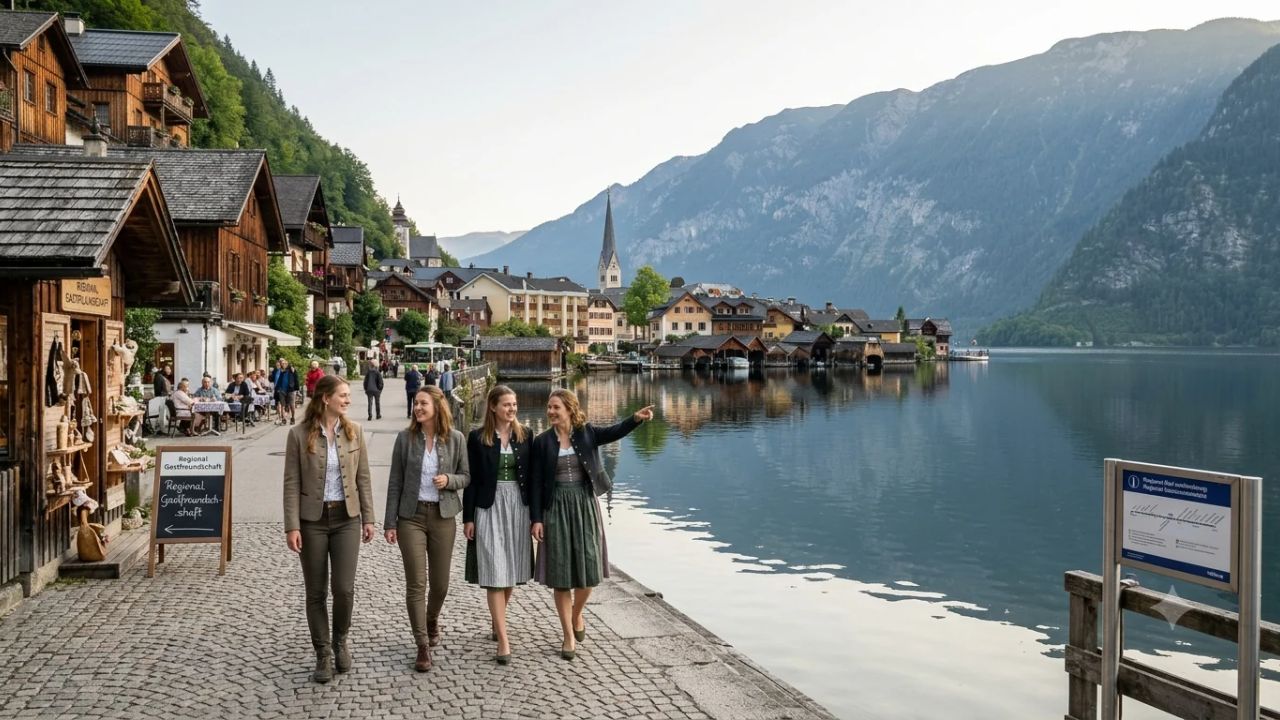
VIENNA / BRUSSELS — In an era defined by mounting friction over hyper-tourism, European governments are orchestrating an unprecedented operational transformation, dismantling decades of volume-driven travel metrics in favor of territorial equity, seasonal balancing, and community-first stewardship.
For more than half a century, national tourism ministries and regional commercial boards celebrated unbroken records in airport passenger traffic, cruise ship berth calls, and hotel room nights. That single-minded pursuit of gross volume transformed European leisure travel into a global economic titan—commanding approximately 40 percent of worldwide tourist arrivals and generating more than €1 in every €10 of European Union gross value added.
However, that relentless influx concentrated into a tiny handful of historic city centers, alpine lakes, and Mediterranean coastlines, inflicting heavy collateral damage on local populations. From Venice and Amsterdam to Hallstatt and the Balearic Islands, residents faced housing displacement, overtaxed public sanitation systems, gridlocked transit arteries, and the degradation of fragile natural ecosystems.
Today, Europe is answering these crises with a unified strategic doctrine. Rather than retreating from its standing as the world’s preeminent vacation destination, the continent is fundamentally redesigning how travel operates.
With Austria stepping into the vanguard alongside pioneer member states, European destinations are implementing a coordinated matrix of carrying-capacity quotas, car-free alpine mobility, rural revitalization grants, and smart data tracking.
Backed by the European Agenda for Tourism 2030 and more than €18 billion in European Union recovery and cohesion funding, this continental blueprint seeks to permanently decouple economic prosperity from unmanageable crowd density.
       THE CONTINENTAL PARADIGM SHIFT: VOLUME VS. VALUE STEWARDSHIP

  The Legacy Mass-Tourism Model          The European 2030 Stewardship Doctrine
  -----------------------------------------------------------------------------
  Metric: Gross visitor headcounts and   Metric: Resident quality of life, net
  record airport arrival statistics      local economic retention, ecology

  Spatial Pattern: Hyper-concentration   Spatial Pattern: Deliberate dispersal
  in saturated urban and coastal cores   into interior provinces & rural villages

  Seasonality: Severe summer and winter  Seasonality: Year-round calendar flow;
  peaks with offseason economic slump    promotion of autumn and spring travel

  Transit Mode: Short-haul budget air    Transit Mode: Integrated rail grids,
  travel and private rental vehicles     Klimaticket passes, and e-mobility

  Local Impact: Housing shortages,       Local Impact: Preservation of housing,
  inflated living costs, and friction    living wages, and community consent
The Policy Architecture: Deconstructing the European Agenda for Tourism 2030
The continental transition is anchored in the European Agenda for Tourism 2030, endorsed by the European Council and supported through the European Commission’s Tourism Transition Pathway.
Recognizing that regional overtourism cannot be resolved through fragmented municipal ordinances alone, the European Union has structured an overarching strategy backed by substantial financial instruments, notably the Recovery and Resilience Facility (RRF) and European Regional Development Fund (ERDF) allocations exceeding €18 billion.
THE FOUR PILLARS OF EUROPE'S DISPERSAL ARCHITECTURE
| Column 1 |
|---|
| 1. FROM VOLUME TO NET VALUE RETENTION |
| - Abandoning arrival volume records as the core performance indicator |
| - Measuring economic yield per visitor and local community benefit |
| 2. TEMPORAL AND SPATIAL REDISTRIBUTION |
| - Active diversion of travelers to secondary provinces and rural valleys |
| - De-marketing peak summer weeks; incentivizing shoulder-season travel |
| 3. DATA-DRIVEN CAPACITY GOVERNANCE |
| - Deployment of the Common European Tourism Data Space |
| - Real-time mobile analytics, reservation algorithms, and quota caps |
| 4. COMMUNITY-CENTRIC WORKFORCE EMPOWERMENT |
| - Reversing seasonal employment precarity through year-round contracts |
| - Protecting local residential housing stock from short-term holiday lets |
The European doctrine establishes four actionable principles that guide national legislation across the continent:
- Prioritizing Net Local Retention Over Gross Volume: Regional tourism strategies are abandoning marketing campaigns designed solely to inflate headcount. Performance evaluations now measure local spending retention, year-round employment stability, municipal carbon accounting, and resident sentiment indices.
- Coordinated Spatial and Temporal Dispersal: Governments are investing in secondary transport connections and targeted seasonal campaigns to distribute travelers away from congested July and August windows into mild spring, autumn, and winter intervals.
- Smart Capacity Governance: Utilizing shared European digital tracking spaces, destination managers monitor foot-traffic density in real time, implementing automated reservation quotas, timed ticketing, and dynamic pricing before physical carrying capacities are breached.
- Community and Housing Protection: Municipalities are reclaiming residential neighborhoods from speculative holiday rentals through strict licensing caps, hotel construction moratoria, and targeted taxation to protect local housing affordability.
| Country | Anchor National Strategy | Core De-escalation Mechanism | Primary Rural Dispersal Focus |
|---|---|---|---|
| Austria | Plan T (Master Plan for Tourism) | Bus quotas and car-free alpine transit | Tyrol, Carinthia, and Styria valleys |
| The Netherlands | Perspective 2030 | DMO de-marketing; hotel and cruise bans | Utrecht, Zeeland dunes, and Giethoorn |
| Italy | Strategic Tourism Plan (PST) | Venice entry fees; short-term let limits | I Borghi d’Italia (historic hamlets) |
| France | Destination France Plan | Ban on short-haul domestic flights (<2.5h) | Jura, Auvergne, and Occitanie terroirs |
| Spain | Sustainable Tourism Strategy 2030 | Barcelona holiday let bans; island caps | España Vaciada (inland heritage hubs) |
| Greece | All-Season Greece Strategy | Digital cruise slot caps; off-peak focus | GR-Eco Islands (Astypalea, Chalki) |
| Croatia | Sustainable Tourism Strategy 2030 | Dubrovnik cruise berth & pedestrian limits | Continental Slavonia and Zagorje basins |
| Nordic Nations | Allemansrätten Stewardship Code | De-commercialized wilderness roaming | Lapland and Norrland boreal zones |
Austria: The Alpine Pioneer of Four-Season Valley Stewardship
Austria stands at the forefront of Europe’s transition, transforming its alpine travel model through Plan T (Master Plan for Tourism), drafted by the Federal Ministry of Labour and Economy.
For generations, Austrian mountain economies operated on a high-intensity winter monoculture, relying on massive ski infrastructure, mechanical snowmaking, and congested road access.
Plan T fundamentally reframes alpine tourism around ecological equilibrium, community consent, and family-owned regional hospitality.
       AUSTRIA'S ALPINE FOUR-SEASON DISPERSAL MODEL (PLAN T)

  [ Winter Monoculture ]              [ Sustainable Four-Season Model ]
  - Energy-intensive snowmaking       - Year-round wellness retreats
  - Heavy weekend road congestion     - E-bike and alpine gravel cycling
  - Seasonal hospitality burnout      - Farm-to-table culinary trails
  - Valley housing inflation          - Family-run boutique guest houses
               \                                   /
                \                                 /
                 v                               v
       [ The Klimaticket: Nationwide Car-Free Rail Connectivity ]
       High-speed rail (ÖBB Railjet) links major airports directly to
       valley feeder buses, eliminating private vehicle congestion.
Austria’s strategy is executing three operational breakthroughs:
1. Decoupling Alpine Valleys from Winter Monocultures
To insulate mountain communities from climate volatility and eliminate extreme seasonal boom-and-bust cycles, Austria has invested heavily in diversifying valley economies.
In federal provinces such as Tyrol, Carinthia, and Styria, public development grants incentivize hotels and regional operators to transition into four-season wellness sanctuaries. Mountain valleys are constructing world-class alpine cycling networks, thermal spa facilities, and certified culinary heritage routes that showcase artisanal alpine dairying and forestry.
By spreading visitor footfall across twelve months, alpine businesses retain permanent, year-round staff, avoiding seasonal layoffs and stabilizing local housing markets.
2. The Klimaticket: Integrated Car-Free Alpine Transit
Private vehicle traffic has long been the primary environmental scourge of narrow alpine valleys. Austria resolved this bottleneck through the Klimaticket (Climate Ticket), an internationally acclaimed national transport pass that permits unlimited travel across all Austrian Federal Railways (ÖBB) trains, regional valley buses, and municipal transit systems.
International visitors landing at Vienna, Salzburg, or Innsbruck can step directly onto modern electric trains and connect seamlessly to rural valley post-buses.
Municipalities in regions such as the Zillertal, Bregenzerwald, and Gailtal have introduced luggage-forwarding services and subsidized electric bike rentals at rail stations, proving that remote mountain hamlets can thrive without parking garages or private automobile pollution.
3. Hallstatt: Hard Carrying-Capacity Quotas
The lakeside village of Hallstatt in the Salzkammergut region—a UNESCO World Heritage site of just 800 residents—became a global symbol of hyper-tourism after social media virality pushed annual visitor arrivals past one million.
Rather than tolerating permanent gridlock, the municipality enacted Europe’s strictest municipal carrying-capacity framework.
Hallstatt implemented an automated slot-reservation system that caps the daily number of tour buses permitted to enter the valley. Tour operators must register arrival windows months in advance, with priority granted to buses whose passengers remain in the village for extended dining, museum visits, and overnight lodging rather than rapid 30-minute photo stops.
Complementary barriers on private vehicle access have preserved the village’s physical tranquility, showing how mathematical capacity limits can restore civic dignity to historic landscapes.
The Netherlands: From International Promotion to Destination Management
Long before other Western capitals confronted public backlash, the Netherlands fundamentally altered its national tourism trajectory through the landmark Perspective 2030 policy framework, authored by the Netherlands Board of Tourism & Conventions (NBTC).
The agency took the bold step of ending international advertising campaigns aimed at inflating foreign arrival numbers.
Instead, the NBTC repositioned itself as a national destination management organization dedicated to crowd redistribution, ecological protection, and resident livability.
       NETHERLANDS INTERMODAL SMART ROUTING ARCHITECTURE

                      [ Amsterdam Schiphol Airport (AMS) ]
                                       |
                                       v
                      [ Nederlandse Spoorwegen (NS) Rail ]
                                       |
         +-----------------------------+-----------------------------+
         |                             |                             |
         v                             v                             v
  [ Utrecht City Hub ]        [ Zeeland Coastal Dunes ]      [ Eindhoven Design Hub ]
  Canal heritage & culture    Eco-resorts & coastal cycling  Industrial innovation
  (15 mins by train)          (Accessible car-free travel)   (High-tech modern arts)
The Dutch dispersal strategy operates through two coordinated mechanisms:
- De-escalation of Amsterdam’s Historic Core: The municipality of Amsterdam has enacted some of the most aggressive anti-nuisance and anti-saturation policies in the Western world. The city has outlawed new tourist-oriented souvenir and snack shops in historic quarters, prohibited the construction of new hotels within city borders, banned sea-going cruise ships from docking at the central terminal, and levied Europe’s highest municipal tourist tax. Parallel enforcement initiatives have banned street consumption of cannabis in the Red Light District and cracked down on rowdy party tourism.
- The "Country as a Single Park" Doctrine: The NBTC’s marketing reframes the entire Netherlands as an interconnected cultural park. Utilizing the high-frequency Nederlandse Spoorwegen (NS) rail network, international travelers landing at Schiphol are directed away from central Amsterdam and guided toward secondary urban and provincial centers. Destinations such as Utrecht, the historical textile and design centers of Eindhoven, the windmill canals of Giethoorn, and the coastal dunes of Zeeland offer world-class cultural experiences accessible within 15 to 45 minutes by train, spreading visitor spending equitably across all twelve provinces.
Italy: Reviving Historic Borghi and Regulating Fragile Centers
Italy’s travel economy has historically suffered from acute geographical concentration, with the vast majority of international visitors crowded along an over-trafficked corridor connecting Venice, Florence, and Rome.
To break this bottleneck, Italy’s Ministry of Tourism deployed the Strategic Tourism Plan (Piano Strategico del Turismo - PST), pairing stringent crowd barriers at fragile monuments with massive capital investments in its rural interior.
       ITALY'S TWO-PRONGED BALANCE: URBAN QUOTAS & RURAL BORGHI

  [ Historic Epicenters: Strict Quotas ]    [ Depopulated Interior: Regeneration ]
  * Venice: €5 Access Fee for day trips     * €1 Billion PNRR National Recovery Fund
  * Florence: Ban on key-boxes for lets     * I Borghi d'Italia: Medieval hamlets
  * Amalfi: Alternate license plate rules   * Alberghi Diffusi: Scattered hotels
  * Cinque Terre: Timed trail ticketing     * Via Francigena: Ancient walking trail
The Italian model combines defensive crowd regulation with proactive rural regeneration:
The Borghi Regeneration Program
Using more than €1 billion allocated under the European Union-funded National Recovery and Resilience Plan (PNRR), Italy has mounted a nationwide campaign to repopulate and revitalize hundreds of deteriorating medieval villages (borghi).
Capital grants support the conversion of abandoned historic stone residences into alberghi diffusi (scattered hotels). Under this hospitality concept, guest suites, artisan workshops, and dining rooms are integrated into living village structures rather than built as isolated resorts.
Travelers booking an albergo diffuso in regions like Abruzzo, Umbria, Basilicata, and Molise live alongside resident elders, supporting local bakeries, olive oil cooperatives, and craft guilds.
Regulating Venice, Florence, and the Amalfi Coast
In Venice, municipal authorities enacted the world’s first municipal access reservation fee for day-trippers visiting during peak spring and summer weekends.
The €5 digital voucher requirement deters non-spending excursionists who crowd historic bridges without contributing to the local tax base.
In Florence, municipal regulations banned external key-boxes used for automated self-check-ins on short-term holiday rentals, curbing the rapid turnover of residential apartments.
Along the Amalfi Coast, authorities implemented an alternate-day license plate rationing system along the congested SS163 highway during peak summer months, eliminating traffic gridlock along cliff-side fishing villages.
France: Slow Rail Mobility and Territorial Terroirs
As the world’s most visited international destination, France could easily rely on the gravitational pull of Paris, the Loire Valley, and the Côte d’Azur.
Instead, through the Destination France Plan—backed by €1.9 billion in state funding—the French Republic is executing an intentional campaign to direct incoming travelers into rural and provincial departments.
THE FRENCH REGIONAL DECENTRALIZATION ENGINE
| Column 1 |
|---|
| LEGISLATIVE RAIL MANDATE: |
| - Commercial domestic flights banned where direct rail alternatives exist |
| under 2.5 hours (shifting travelers to high-speed TGV & regional TER) |
| NATIONAL CROWD MONITORING & ACCESS CAPS: |
| - Real-time mobile density tracking deployed by Ministry of Tourism |
| - Daily visitor quotas enforced at Calanques National Park & Mont Saint-Michel |
| TERRITORIAL GASTRONOMY & SLOW-TRAVEL: |
| - National backing for agricultural terroirs in Jura, Auvergne, & Occitanie |
| - Expansion of long-distance cycling routes (La Vélodyssée / Loire à Vélo) |
The French strategy hinges on structural policy shifts:
- The Domestic Aviation Ban: Under landmark climate legislation, France banned commercial passenger flights on domestic routes where direct, high-frequency train services connect destinations in less than two and a half hours. This legislative move funnels travelers onto the high-speed TGV and regional TER rail networks, transforming journeys between major cities into slow-travel opportunities that encourage intermediate stops in regional hubs like Lyon, Bordeaux, and Dijon.
- Carrying-Capacity Caps at Natural Wonders: To protect fragile maritime and historical ecosystems, France deployed strict daily reservation quotas. In Calanques National Park near Marseille, visitor numbers along delicate limestone coves were reduced from several thousand to a strict cap of 400 people per day via a free mobile reservation application, allowing native vegetation to recover. Similar ticketing caps manage visitor flows at the tidal landmark of Mont Saint-Michel in Normandy.
- Championing Regional Terroirs: National tourism promotions actively steer international food and wine connoisseurs away from saturated cellars in Champagne and Bordeaux into emerging rural culinary regions. Departments in the volcanic Auvergne, the Jura mountain valleys, and the sun-baked plains of Occitanie receive substantial marketing support, channeling gastronomic tourism capital directly to family-owned vineyards and artisan cheese producers.
Spain: Revitalizing "Empty Spain" and Cooling the Coasts
Spain’s visitor economy has historically been concentrated in dense coastal strips along the Mediterranean and the Balearic and Canary archipelagos.
Under the Sustainable Tourism Strategy 2030, backed by EU NextGeneration funding, Spain is addressing the challenges of coastal saturation while injecting economic vitality into its sparsely populated interior.
       SPAIN'S TERRITORIAL BALANCING STRATEGY

  [ Coastal & Urban Cooling ]              [ Interior Revitalization ]
  * Barcelona: Total phase-out of          * "España Vaciada" (Empty Spain)
    10,000 short-term rental permits         rural investment programs
  * Balearic Islands: Ban on party-        * Castile & León / Extremadura:
    boat alcohol & hotel bed freezes         astrotourism & monastery trails
  * Canary Islands: Moratoriums on         * High-speed broadband installation
    new mass mega-resort complexes           for digital nomads & eco-travelers
Spain’s operational pivot tackles both ends of the regional spectrum:
Cooling the Saturated Coasts
In Barcelona, municipal leadership made global headlines by announcing the total elimination of all 10,000 short-term tourist apartment licenses by November 2028, returning residential properties to the local housing market.
In the Balearic Islands (Mallorca, Ibiza, Menorca), the regional government enacted strict legislation freezing overall hotel bed capacity, outlawing all-inclusive alcohol packages linked to disruptive party tourism, and restricting party-boat excursions in protected marine reserves.
Revitalizing "España Vaciada" (Empty Spain)
Simultaneously, Spain is channeling public funds into the historical heartlands of Castile and León, Extremadura, and Aragon—regions historically afflicted by severe rural depopulation.
By investing in high-speed optical fiber infrastructure, restored heritage monasteries, and certified dark-sky astrotourism reserves, Spain is positioning its quiet interior as an idyllic haven for eco-tourists, remote professionals, and cultural heritage enthusiasts seeking unhurried, authentic Spanish traditions.
Greece, Croatia, and the Nordic Model: Diversified Regional Paradigms
Across Southern, Eastern, and Northern Europe, companion member states are deploying localized solutions that align with the broader continental blueprint:
Greece: All-Season Expansion and Decarbonized Smart Islands
Greece has moved aggressively to break its extreme three-month summer concentration in Athens, Santorini, and Mykonos.
Through the "All-Season Greece" campaign, the Ministry of Tourism promotes autumn city breaks in Thessaloniki, winter hiking through the rugged mountain gorges of Epirus, and heritage exploration in the Peloponnese.
On remote archipelagos, Greece launched the pioneering GR-Eco Islands initiative on Astypalea and Chalki. Developed in partnership with clean mobility innovators, these islands have transitioned to 100 percent electric municipal transit, localized solar microgrids, and smart waste processing.
Simultaneously, the Hellenic Ports Association introduced a digitized berth-reservation management platform to cap simultaneous cruise ship disembarkations at Santorini and Mykonos, spreading luxury liners across smaller ports in the Dodecanese and Ionian seas.
Croatia: Dubrovnik’s Recovery and Continental Exploration
Following severe warnings from UNESCO regarding the potential loss of World Heritage status due to acute overcrowding, Dubrovnik pioneered the "Respect the City" management program.
The municipality installed smart video cameras at historic gate portals, capped cruise passenger arrivals to a maximum of 4,000 concurrent visitors, and deployed algorithm-driven pedestrian routing systems that disperse foot traffic into surrounding neighborhoods.
At the national level, the Croatian Ministry of Tourism has directed substantial funding into Continental Croatia, highlighting the thermal spas of Zagorje, the sweeping plains of Slavonia, and inland cycling routes along the Danube River to build a resilient tourism economy away from the Adriatic coastline.
The Nordic Model: Sweden and Finland’s Wilderness Stewardship
In Northern Europe, Sweden and Finland showcase how vast natural landscapes can be managed through ancestral social compacts. Under the codified principle of Allemansrätten (the Right to Public Access), individuals possess the legal freedom to wander through forests, coastlines, and national parks, provided they leave no trace.
Both nations actively divert international travel toward Swedish Norrland and Finnish Lapland during non-traditional seasons, promoting summer hiking under the midnight sun, autumn mushroom and berry foraging (ruska), and silent dark-sky retreats.
In the Arctic north, destination managers coordinate directly with indigenous Sámi community councils, ensuring that Arctic nature expeditions respect ancestral reindeer pastures and preserve indigenous cultural intellectual property from commercial exploitation.
       COMMON EUROPEAN TOURISM DATA SPACE: DIGITAL ORCHESTRATION

    [ Real-Time Data Feeds ]              [ Local Municipal Action ]
  * Telecom mobility telemetry    ====>  * Dynamic shuttle bus dispatch
  * Hotel occupancy rates        ====>  * Dynamic museum ticket pricing
  * Smart highway sensor data    ====>  * Automatic trail quota closures
  * Environmental water gauges   ====>  * Public alert broadcasts via apps
The Digital Backbone: EU Tourism Data Space and Smart Observatories
Underpinning these national initiatives is a shared digital infrastructure deployed by the European Union: the Common European Tourism Data Space and the EU Tourism Dashboard.
Modern destination management cannot function on intuition or outdated seasonal surveys; it demands granular, real-time mobility telemetry.
By aggregating anonymized mobile network data, credit card transaction metrics, public transport tap-in feeds, and satellite environmental monitoring, the European Data Space enables local destination management organizations (DMOs) to anticipate crowd bottlenecks days in advance.
If predictive algorithms indicate that mountain roads in the Austrian Salzkammergut or hiking paths in Italy’s Cinque Terre will approach 90 percent of their carrying capacity on an upcoming weekend, municipal platforms automatically activate mitigation playbooks:
- Disseminating real-time rerouting notifications to traveler smartphones via local tourism apps.
- Dispatching additional regional train cars and electric valley shuttles.
- Adjusting entrance fees dynamically to incentivize visits during early-morning or late-afternoon windows.
- Restricting vehicle access to perimeter park-and-ride facilities outside historic cores.
Practical Travel Playbook: Navigating Europe's Sustainable Tourism Landscape
For travelers, travel advisors, and tour operators planning European journeys in 2026 and 2027, adapting to this sustainable regulatory landscape is essential to enjoying seamless, high-quality experiences.
       PRACTICAL TRAVEL PLAYBOOK: THE SUSTAINABLE EUROPEAN JOURNEY

  [ Temporal Planning ]
  * Avoid peak July/August; book shoulder windows (April-May / Sept-Oct)
  * Experience alpine destinations during spring wildflower and autumn foliage
  * Secure pre-booked reservations for cultural monuments at least 60 days prior

  [ Transport & Mobility Choices ]
  * Utilize national rail passes (Klimaticket in Austria, Eurail across borders)
  * Choose secondary rail stops instead of renting cars in narrow valleys
  * Plan itineraries around direct high-speed TGV, ICE, and Railjet corridors

  [ Accommodation & Community Impact ]
  * Book certified boutique hotels, agriturismi, and alberghi diffusi
  * Support locally owned family restaurants and artisan food cooperatives
  * Verify that short-term rental properties hold official municipal permits
1. Embracing the Shoulder and Off-Peak Calendar
The most effective way to experience Europe’s cultural majesty is to travel outside peak summer weeks.
Visiting Italy in November, Greece in April, or Austria in October provides distinct advantages: lower accommodation tariffs, temperate weather, uncrowded museums, and genuine, relaxed interactions with local residents.
Travelers should monitor regional holiday calendars and book required museum or monument admissions weeks in advance, as quota systems fill rapidly during holiday intervals.
2. Prioritizing Rail-Linked Secondary Hubs
Rather than centering an entire itinerary around world-famous capitals, travelers are discovering superior value and richer cultural immersion by basing themselves in secondary regional cities:
- In the Netherlands, base in Utrecht or Haarlem instead of central Amsterdam.
- In Austria, explore the mountain architecture of Villach or the vineyards of Graz rather than confining visits to Salzburg and Vienna.
- In Italy, venture into the hill towns of Umbria or the mountain villages of Abruzzo rather than joining queues in Florence.
- In Spain, explore the Romanesque treasures of Zamora or the monasteries of La Rioja instead of fighting crowds on coastal beaches.
3. Respecting Local Carrying-Capacity Regulations
Travelers must familiarize themselves with municipal access rules. When visiting Venice, register for the digital entry pass prior to arrival; when hiking in the Calanques or Cinque Terre, verify trail reservation mandates; and when driving through alpine valleys, utilize perimeter park-and-ride rail links rather than attempting to navigate historic village centers.
Europe’s comprehensive transition from mass headcount tourism to balanced regional dispersal marks a defining moment in global travel governance.
By refusing to sacrifice the livability of historic neighborhoods and the pristine beauty of alpine landscapes for short-term commercial volume, Austria and its European allies are safeguarding their cultural soul.
In doing so, Europe is proving that the future of travel does not belong to mindless mass consumption, but to thoughtful, unhurried exploration that enriches both the visitor and the host community.
Related Travel Guides
- Colorado and Southwest Tourism Paralyzed as Atmospheric River Flash Floods Batter Ski Resorts, Rails, and Desert Parks
- UK Travel Safety Under Scrutiny as Carlisle Safest Places Claim Resurfaces Amid Geopolitical Tensions
- Brazil Tornado Shuts Chapecó Airport as GOL Cancels Flights and Southern Travel Faces Gridlock
- Canada Ranked World's Safest Country for 2027 as US Travelers Prioritize Provincial Parks and Worry-Free Trails
This article is for informational purposes. Flight routes, passenger regulations, visa rules, and transit advisories are subject to change by airlines and aviation authorities. Readers are advised to verify schedules and travel documentation with relevant carriers and border agencies before departure.
Related Stories
Qatar Joins PATA and Doha Named GCC Tourism Capital 2026: Logistics Guide for Asia-Pacific Travelers

US November 2026 Tourism Trends: Festive Festivals and Passenger Rights for Holiday Travel