
Australia’s Tourism Industry Gains Momentum As Seasonal Workers Support Regional Jobs And Economic Growth
Australia’s Tourism Industry Gains Momentum As Seasonal Workers Support Regional Jobs And Economic Growth

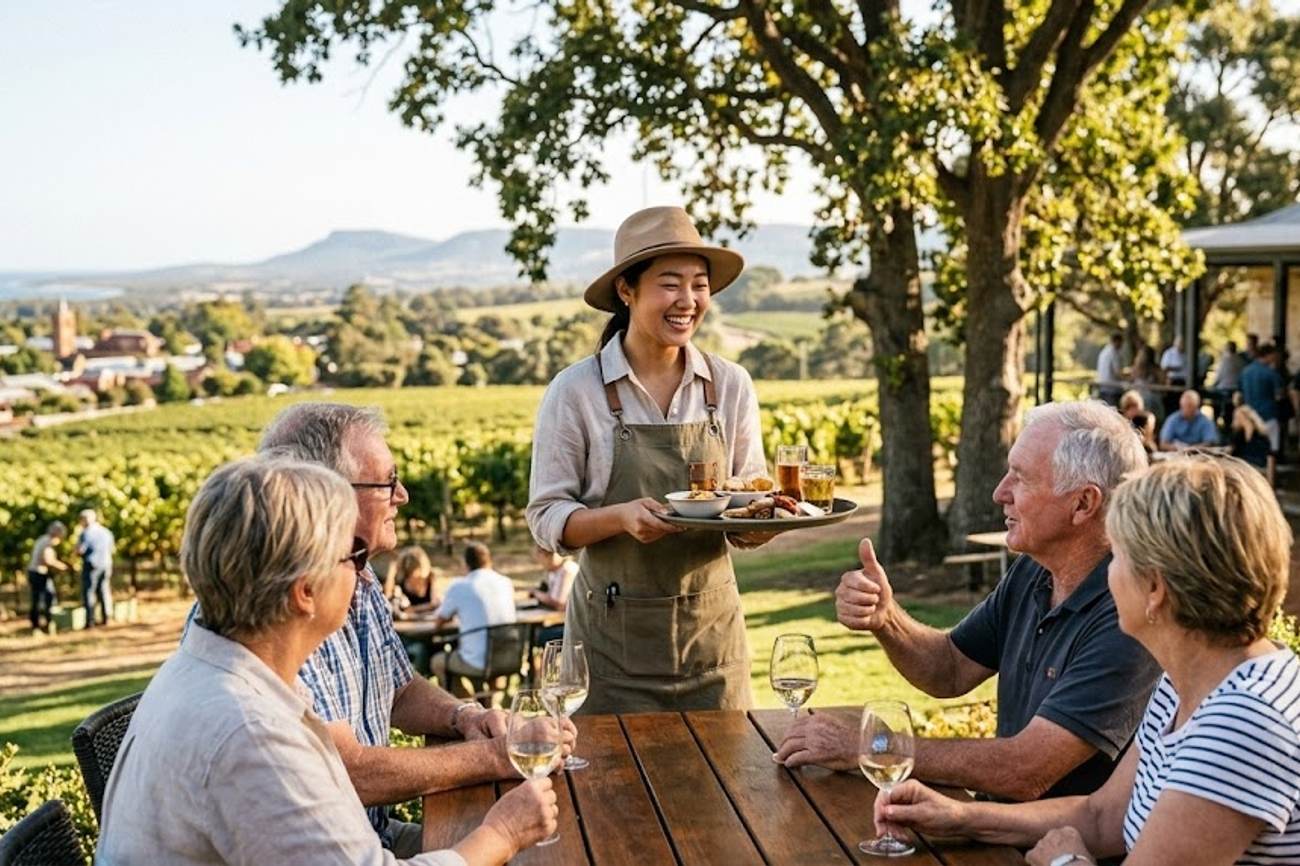
Image generated by AI
Only a fraction of international visitors to Australia ever venture beyond the coastal capitals, yet the entire regional economy relies on a nomadic army of Working Holiday Makers to keep its doors open. These seasonal workers do not just fill vacancies; they act as a dual-force economic engine, serving as the essential labor that runs the hotels and tour companies by day and the paying customers who frequent local pubs and galleries by night.
The Regional Workforce Renaissance
Australia is currently witnessing a strategic shift in how it manages its tourism growth, moving away from a city-centric model toward a robust regional revitalization. The current momentum in the industry is heavily tethered to the availability of seasonal labor, particularly through the Working Holiday Maker program. In the remote reaches of the Outback or the coastal fringes of the Great Ocean Road, the labor market is inherently volatile. Regional centers lack the population density to sustain a permanent workforce capable of handling the massive spikes in visitor numbers during school holidays or major festivals.
This creates a symbiotic relationship. Tourism operators in regional hubs—ranging from boutique motels to adventure tour outfits—depend on a flexible, international workforce to maintain service standards. Without this influx of temporary staff, many regional businesses would be forced to reduce their operating hours or limit their service offerings, directly impacting the quality of the visitor experience. The current trend is not merely about filling roles; it is about creating a sustainable pipeline of talent that can migrate where the demand is highest at any given moment.
What Makes Regional Australia Different
Traveling through regional Australia is a fundamentally different experience than visiting Sydney or Melbourne. It is a world of vast distances and hyper-local economies where a single tourism business can be the primary employer for an entire village. The geographic isolation means that these communities are often more welcoming and integrated than their urban counterparts, but it also makes them vulnerable to workforce shortages.
The uniqueness of the regional experience lies in the intersection of nature-based tourism and rural grit. Whether it is navigating the rugged terrain of the Northern Territory or the vineyards of the Barossa Valley, the infrastructure is often lean. The "magic" of these destinations—the personalized service, the guided wilderness treks, and the authentic country hospitality—is powered by a workforce that is often as transient as the tourists they serve. This creates a unique cultural atmosphere in regional hostels and staff quarters, where international perspectives blend with rural Australian traditions, fostering a globalized community in the heart of the bush.
For those looking to explore these areas, the Official Australia Tourism board provides comprehensive guides on venturing beyond the cities, while those visiting protected natural sites should consult the UNESCO World Heritage listings to understand the ecological significance of the land they are traversing.
Visitor Insider Tips
To truly experience regional Australia without the "tourist trap" feel, you need to align your travel with the local rhythms.
Timing the Trip: Avoid the peak Australian school holiday windows if you want a more intimate experience. While the industry ramps up staffing for these periods, the crowds can overwhelm small-town infrastructure. Instead, aim for the "shoulder seasons"—autumn in the south and spring in the north—when the weather is mild and the local staff have more time to share insider stories.
Transport Hacks: Do not rely on public transport in regional areas; it is virtually non-existent outside of major hubs. Renting a 4WD is the only way to access the truly remote spots. If you are traveling between regional towns, look for local shuttle services or car-pooling groups often organized through regional hostels.
Local Etiquette: In small regional towns, the "local pub" is the community living room. When visiting, be mindful that you are entering a tight-knit social ecosystem. A friendly conversation with the publican often leads to the best recommendations for "secret" swimming holes or lookout points that aren't on any map.
Regional Specialties: Move beyond the standard meat pies. Seek out regional delicacies like Barramundi in the North, fresh truffles in the Manly/Margaret River regions, or authentic bush tucker experiences guided by Indigenous locals.
Cultural and Environmental Context
The reliance on seasonal workers highlights a complex tension between economic necessity and social sustainability. In many regional towns, the arrival of thousands of Working Holiday Makers creates a temporary population boom. While this injects vital capital into local grocery stores, pharmacies, and transport services, it also puts pressure on limited local housing and infrastructure.
Furthermore, the intersection of tourism and agriculture is profound. Both sectors share a dependency on the same pool of seasonal labor. During harvest seasons, tourism workers often migrate to the farms, and vice versa. This fluidity is essential for the survival of rural Australia, but it requires a delicate balance of visa policies and labor laws to ensure that neither sector is left stranded.
From an environmental perspective, the push to move tourists into regional areas is a double-edged sword. While it spreads the economic benefits away from overcrowded cities, it increases the human footprint in fragile ecosystems. The challenge for the future of Australian tourism is ensuring that the growth supported by this seasonal workforce does not come at the cost of the natural landscapes—the very things that attract visitors in the first place.
FAQ: Visiting Australia 2026
What is the best time to visit regional Australia? The ideal time depends on the region. Visit the tropical north (Queensland/NT) between May and October to avoid the monsoon. For the south (Victoria/Tasmania/NSW), spring (September to November) and autumn (March to May) offer the best weather and fewer crowds.
Do I need a visa to work and travel in Australia? Yes. Most young international travelers utilize the Working Holiday Maker visa (subclass 417 or 462). These visas allow you to work temporarily to fund your travels, provided you meet the age and nationality requirements.
How do I get to regional areas from major hubs? The most effective method is renting a car or a campervan from airports in Sydney, Melbourne, or Brisbane. For very remote areas, domestic flights to regional airports followed by a local 4WD rental are recommended.
Is it safe for solo travelers in the Outback? Generally, yes, but preparation is mandatory. Always notify someone of your itinerary, carry a satellite phone or PLB (Personal Locator Beacon) in remote areas, and carry significantly more water than you think you will need.
The heart of Australia doesn't beat in its cities, but in the dusty, welcoming stretches of the regions where the world comes to work and wander.
#AustraliaTravel2026 #RegionalAustralia #WorkingHolidayAustralia #OutbackTourism #AustraliaWorkAndTravel
Related Travel Guides
- India Teams Up Eurasian Economic Union As Powerful New Partnership Could Redefine Travel And Economic Connections
- Cornwall Tourism Faces Major Shift As England Visitor Levy Powers Could Transform Holiday Costs And Local Investment
- Oman Teams Up Iran On Major Strait Of Hormuz Deal Bringing New Tourism Opportunities And Stronger Gulf Travel Connections
Disclaimer
This article is for informational and educational purposes only. It does not constitute legal, financial, or professional advice. While we strive to provide accurate and up-to-date information, travel policies, regulations, and conditions change rapidly. Always verify information with official sources before making travel decisions. Nomad Lawyer makes no representations about the accuracy, reliability, completeness, or suitability of the information provided. Readers should consult qualified professionals for advice specific to their circumstances. The views expressed in this article are those of the author and do not necessarily reflect the views of Nomad Lawyer.
Preeti Gunjan
Contributor & Community Manager
A passionate traveller and community builder. Preeti helps grow the Nomad Lawyer community, fostering engagement and bringing the reader experience to life.
Learn more about our team →