
Oman Teams Up Iran On Major Strait Of Hormuz Deal Bringing New Tourism Opportunities And Stronger Gulf Travel Connections
Oman Teams Up Iran On Major Strait Of Hormuz Deal Bringing New Tourism Opportunities And Stronger Gulf Travel Connections

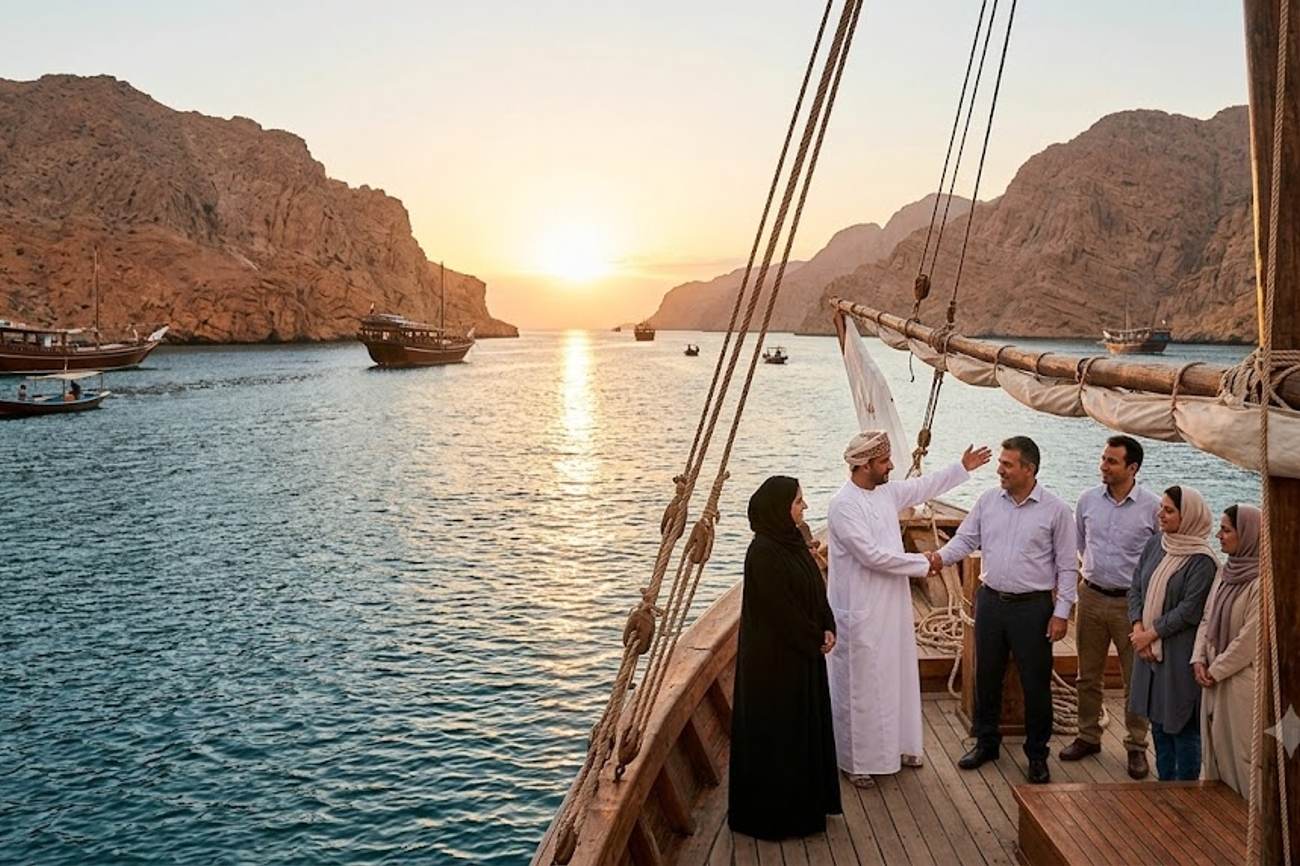
Image generated by AI
[Muscat, September 13, 2026] — Oman and Iran are finalizing a strategic maritime agreement to establish designated shipping routes through the Strait of Hormuz, a move intended to stabilize one of the world's most critical chokepoints and unlock new regional tourism corridors.
The initiative, revealed by Iranian President Masoud Pezeshkian, involves the creation of specific entry and exit pathways for vessels navigating the narrow waterway between the two nations. Discussions held in Muscat have included representatives from various Gulf Arab states to ensure regional alignment on safe passage arrangements and maritime coordination. The deal seeks to transition the Strait from a zone of geopolitical tension into a predictable transit corridor, directly benefiting commercial shipping and the burgeoning cruise industry in the Persian Gulf.
The Catalyst for Maritime Coordination
The immediate driver for this agreement is the need for a formalized framework to manage vessel traffic in the Strait of Hormuz. As the primary link between the Persian Gulf and the Gulf of Oman and the Arabian Sea, the waterway is essential for global energy shipments and commercial cargo. However, historical volatility has often led to fluctuating insurance costs and erratic shipping schedules.
By establishing a joint shipping route, Oman and Iran aim to reduce navigation uncertainty. This coordination is not merely a diplomatic gesture but a logistical necessity to lower the risk profile of the region. The International Maritime Organization (IMO) often emphasizes the importance of such regional cooperation to ensure the safety of life at sea and the protection of the marine environment. By creating a predictable operational environment, the two nations intend to signal to international markets that the corridor is secure for non-military commercial use.
Entities and Routes Impacted
The scope of this agreement extends beyond the bilateral relationship between Muscat and Tehran, affecting the broader logistics and travel ecosystem of the Middle East.
| Impacted Group | Specific Area of Influence | Expected Outcome |
|---|---|---|
| Cruise Operators | Persian Gulf $\rightarrow$ Arabian Sea | Lower risk premiums and more stable itinerary planning. |
| Regional Ports | Oman and Iran Coastal Hubs | Increased passenger throughput and port-call frequency. |
| Gulf Arab States | Regional Transit Corridors | Enhanced synchronization of maritime security and traffic. |
| International Cargo | Strait of Hormuz Transit | Reduced volatility in shipping schedules and insurance. |
| Tourism Planners | Multi-country Gulf Packages | New viability for Oman-Iran-GCC combined itineraries. |
The Ministry of Heritage and Tourism of Oman has been aggressively positioning the Sultanate as a hub for cultural and adventure travel. This agreement provides the maritime infrastructure necessary to support that vision by ensuring that the "gateway" to Oman remains open and efficient.
What This Means for Travelers
For the average traveler or luxury cruiser, this corporate and diplomatic maneuvering translates into tangible changes in how the Gulf is accessed and experienced.
1. New Multi-Country Itineraries Until now, combining a visit to Iran with a tour of the GCC (Gulf Cooperation Council) countries was logistically complex and often discouraged by travel insurers. A formalized shipping route increases the likelihood of "multi-stop" regional packages, allowing tourists to visit Iranian coastal cities and Omani heritage sites in a single trip.
2. Expansion of Cruise Offerings International cruise lines are notoriously risk-averse. They require absolute certainty regarding safe passage before deploying high-capacity vessels. This agreement reduces the "security friction" of the Strait of Hormuz, which likely encourages lines to add more ports of call in Oman and potentially explore Iranian coastal destinations.
3. Lower Costs and Better Reliability When maritime insurance premiums drop due to increased stability, the cost of operating cruises and ferries decreases. Over time, this can lead to more competitive pricing for passengers and a reduction in last-minute itinerary changes caused by regional maritime alerts.
4. Enhanced Coastal Access Travelers can expect a surge in "port-based experiences." As shipping routes become more organized, the development of luxury terminals and shore excursions in previously underutilized coastal areas is expected to accelerate.
The Road to Implementation
The next phase of the agreement involves a regional meeting in Oman, where the specific operational details of the entry and exit pathways will be presented to Gulf Arab states. While President Pezeshkian has framed the discussions as a success, the final impact depends on the technical execution of the "safe passage" protocols.
Industry analysts suggest that this is an iterative process. The initial meetings focus on coordination rather than an immediate, comprehensive solution to all maritime disputes. However, Oman’s role as a neutral mediator is central to the timeline. Muscat’s ability to maintain open channels with both Tehran and the GCC members makes it the only viable location for these negotiations.
Looking forward, the success of this route will be measured by the reaction of the World Tourism Organization (UN Tourism). If the international community views the Strait of Hormuz as a stabilized zone, the Gulf will likely see a shift from "stop-over" tourism to "destination" tourism, where the maritime journey itself becomes part of the attraction.
FAQ: Strait of Hormuz Travel 2026
Will this agreement make it easier to visit Iran from Oman? Yes. By establishing formalized shipping routes and improving maritime coordination, the logistical barriers and security concerns associated with traveling between the two countries are expected to decrease, facilitating new tourism links.
Does this mean cruise ships will now regularly stop in Iran? While not guaranteed, it creates the necessary security framework. Cruise lines require stable navigation environments; this agreement is a prerequisite for the industry to consider adding Iranian ports to their Gulf itineraries.
Will this affect flight schedules in the region? The agreement focuses on maritime shipping and passenger vessels. While it does not directly change aviation laws, overall regional stability often leads to increased confidence in both sea and air travel corridors.
Is the Strait of Hormuz currently safe for tourists? The Strait is a commercial waterway. Most tourists experience it via large cruise ships or flights. This agreement is designed to further enhance that safety and predictability for commercial and leisure traffic.
A strategic pivot in the Gulf's most volatile waterway could soon turn a geopolitical chokepoint into a tourism gateway.
#OmanIranMaritime2026 #StraitOfHormuzShipping #MuscatTourismHub #GulfCruiseExpansion #MaritimeSecurity2026 #OmanIranTravel
Related Travel Guides
Disclaimer
This article is for informational and educational purposes only. It does not constitute legal, financial, or professional advice. While we strive to provide accurate and up-to-date information, travel policies, regulations, and conditions change rapidly. Always verify information with official sources before making travel decisions. Nomad Lawyer makes no representations about the accuracy, reliability, completeness, or suitability of the information provided. Readers should consult qualified professionals for advice specific to their circumstances. The views expressed in this article are those of the author and do not necessarily reflect the views of Nomad Lawyer.
Raushan Kumar
Founder & Lead Developer
Full-stack developer with 11+ years of experience and a passionate traveller. Raushan built Nomad Lawyer from the ground up with a vision to create the best travel and law experience on the web.
Learn more about our team →