Oceania Shifts Tourism Into the Night: How Twilight Events, Thermal Engineering, and Overlanding Reshape Regional Economies

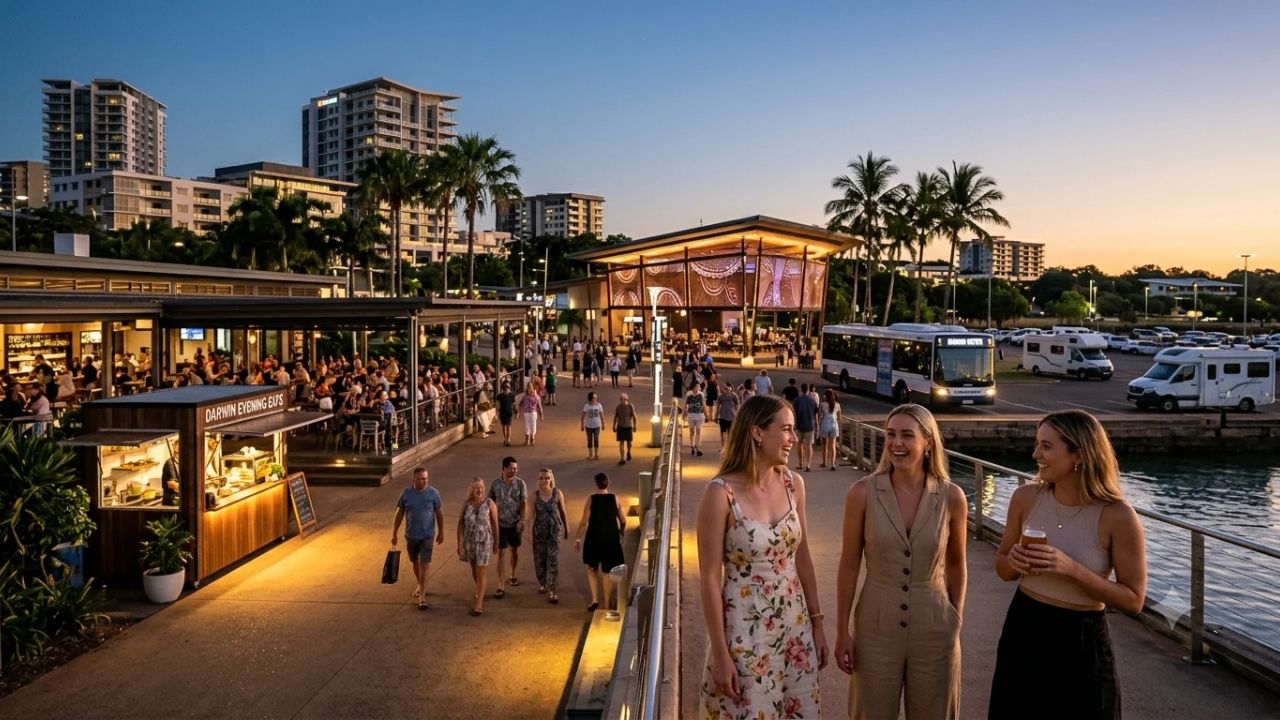
SYDNEY / DARWIN / AUCKLAND — Intensifying daytime heatwaves, extreme solar irradiation, and shifting visitor habits have ignited a structural transformation across Oceania’s tourism and event economies, as destinations pivot toward climatically adaptive twilight and nocturnal operating models. Across Australia, New Zealand, and the South Pacific, public authorities and private organizers are confronting an unprecedented operational reality. For decades, regional tourism strategies were anchored to daytime schedules: mid-afternoon sporting competitions, open-air agricultural expositions, sunlit coastal touring, and early-evening restaurant dining followed by hotel confinement. However, as summer and shoulder-season heatwaves push ambient temperatures and solar radiation past physiological safety thresholds, midday operational envelopes have become acute health and commercial liabilities.
To safeguard athlete welfare, protect spectator health, and insulate regional visitor economies against multi-million-dollar weather cancellation claims, destination management organizations are comprehensively redesigning the temporal architecture of major gatherings. Outdoor sporting championships, motorsport rounds, and open-air music festivals are being systematically transferred into twilight and nocturnal timeframes, taking advantage of rapid post-sunset radiative cooling. Far from being merely a reactive risk-mitigation tactic, this operational evolution is unlocking lucrative after-hours commercial ecosystems, stimulating regional overnight stays, and establishing an overlanding "halo effect" that channels metropolitan event expenditure across thousands of kilometers of regional highway corridors.
       OCEANIA CLIMATE-ADAPTIVE TWILIGHT DESTINATION ECOSYSTEM (2026)
       ==============================================================

       [ SOLAR IRRADIATION & DIURNAL HEAT HAZARD ]
       Midday Solar Peaks (11:00–15:00) | WBGT Readings Exceeding 30°C
       Black Globe Ground Temperatures Reaching 57.6°C | Extreme Heatstroke Risk
                                      |
                                      v
       [ OPERATIONAL PARADIGM SHIFT: TWILIGHT REGIMES ]
       Event Windows Deferred to Twilight (17:00–21:30) & Night (21:30–03:00)
       Post-Sunset Radiative Cooling Drops WBGT by 4.5°C to 7.8°C within 2 Hours
                                      |
                +---------------------+---------------------+
                |                                           |
                v                                           v
       [ PRECISION BIOACOUSTIC ZONING ]            [ NOCTURNAL PRECINCT DIVIDEND ]
       * Atmospheric Inversion Mitigation          * 27% to 41% Higher POS Spend
       * Directional Earthen Berms & Arrays        * Extended Late-Night Transit & Licences
       * Shielding Penguin Colonies & Sanctuaries   * Darwin, Perth, Gold Coast, Auckland
                |                                           |
                +---------------------+---------------------+
                                      |
                                      v
       [ REGIONAL OVERLANDING HALO EFFECT ]
       * 17.3M Caravan/Camping Trips ($12.6B Spend; 87% in Regional Australia)
       * Stuart Highway, Savannah Way, Pacific Coast Way, NZ Touring Loops
       * Off-Grid Solar Microgrids & Fast EV Charging Every 150 km
Thermal-Load Engineering: Wet-Bulb Globe Temperature and Physiological Safety
The operational foundation of Oceania’s nocturnal transition rests upon biometeorological modeling. Standard meteorological readings that record solely ambient dry-bulb shade air temperatures fail to reflect the true physiological strain experienced by human bodies during outdoor physical exertion. In warm environments, metabolic heat dissipation relies predominantly upon the evaporation of sweat from the skin. However, the efficiency of evaporative cooling is strictly determined by ambient relative humidity, convective air movement, and the surrounding radiant heat load. When high ambient temperatures coincide with intense solar radiation and elevated humidity, the physiological cooling mechanism fails, inducing exertional heat exhaustion and life-threatening heat stroke.
To measure this multifactorial environmental load, military agencies, athletic federations, and public health departments rely on the Wet-Bulb Globe Temperature (WBGT) index. The outdoor WBGT formula integrates natural wet-bulb temperature (measuring evaporative capacity, weighted at 70 percent), black globe temperature (measuring radiant heat flux, weighted at 20 percent), and dry-bulb temperature (ambient air temperature, weighted at 10 percent). In shaded environments or during nocturnal hours where direct solar radiation is absent, radiant globe temperature converges toward ambient air temperature, dramatically reducing overall thermal strain.
WET-BULB GLOBE TEMPERATURE (WBGT) REGULATORY ACTION MATRIX
| Entity / Facility | Delays | Cancellations | Details |
|---|---|---|---|
| WBGT Band (°C) | Ambient Conditions | Physiological Risk | Mandated Operational Action |
| < 20.0°C | < 24°C, Moderate RH | Low Thermal Risk | Unrestricted activity |
| 20.0°C – 25.9°C | 24°C–29°C, RH > 60% | Moderate Risk | Scheduled water breaks |
| 26.0°C – 29.9°C | 30°C–35°C, RH > 50% | High Thermal Risk | Strict 60-minute caps, |
| active misting stations | |||
| ≥ 30.0°C | > 36°C, RH > 30% | Extreme Heat Risk | Mandatory suspension; |
| shift to twilight/night |
During midday hours across northern Australian hubs such as Darwin, Townsville, and Cairns, black globe sensors—which absorb both incoming direct shortwave solar radiation and ground-reflected longwave thermal radiation—consistently register readings 12°C to 16°C above ambient shade temperatures. On asphalt motorsport circuits and synthetic athletic playing surfaces, peak black globe temperatures exceeding 57.6°C have been officially documented during periods when ambient air temperatures registered 41.9°C. This massive disparity stems from the thermal inertia of dense civil infrastructure, where dark asphalt and concrete substrates act as massive thermal sponges, trapping heat and continually re-radiating high-intensity infrared energy upward toward athletes and grandstand spectators. Under these severe radiant loads, the human body cannot dissipate metabolic heat, forcing heart rates into dangerous cardiovascular drift zones and causing rapid dehydration even among conditioned competitors.
The biometeorological hazard varies markedly across Oceania's distinct climate zones. In the wet tropical belt encompassing Far North Queensland and the Top End of the Northern Territory, relative humidity regularly hovers between 65 and 85 percent during summer and shoulder months. Under these muggy conditions, sweat simply rolls off the skin without evaporating, neutralizing the human body's primary cooling mechanism and accelerating internal core temperature spikes. Conversely, in the arid and semi-arid interior spanning the Red Centre, South Australia, and inland New South Wales, ambient temperatures may climb higher, but extreme direct solar irradiance and dry wind currents create severe thermal exhaustion and dehydration hazards that threaten spectator safety within forty-five minutes of unshaded exposure.
Strict institutional intervention thresholds based on WBGT readings are enforced under regional frameworks such as the South Australian Sports Institute Extreme Heat Policy and Sports Medicine Australia guidelines. When WBGT readings surpass 28.0°C, event directors must enforce mandatory hydration breaks every fifteen minutes and exclude vulnerable populations. Once WBGT measurements cross the 30.0°C threshold, conditions enter the extreme-risk category, compelling the mandatory cancellation or postponement of strenuous daytime outdoor gatherings.
By shifting event programming from peak daytime intervals (11:00 to 15:00) into twilight windows (17:00 to 21:00), organizers achieve thermodynamic relief. As the sun dips beneath the horizon, solar radiant flux drops to zero, and terrestrial ground surfaces undergo rapid radiative cooling. Across tropical and semi-arid Australian centers, effective WBGT values decline by 4.5°C to 7.8°C within two hours of dusk, maintaining environmental conditions safely beneath statutory cancellation ceilings without sacrificing commercial operations. This temperature plunge fundamentally stabilizes core body temperatures for participants and eliminates radiant sunburn and heat stress for families seated across open-air grandstands.
Venue Illumination Capital Expenditure and Actuarial Risk Mitigation
Transitioning major regional fixtures into twilight and night-time slots requires targeted capital expenditure (CapEx) in broadcast-grade sports lighting, upgraded electrical sub-stations, and spectator shade infrastructure. Across Oceania, regional and municipal governments are allocating public funding to transform daytime-only sporting facilities into broadcast-ready nocturnal entertainment hubs.
A prominent regional case study is the Hidden Valley Raceway in Darwin, Northern Territory. Capital investments totaling $3 million funded by the Northern Territory Government modernized the circuit's pit facilities, installed high-efficiency solar-reflective shade canopies, and reinforced high-voltage electrical distribution infrastructure. These upgrades allowed the betr Darwin Triple Crown Supercars round to introduce floodlit night racing on Friday evening and twilight racing on Saturday, establishing Hidden Valley as only the fifth circuit in Australian touring car history to host nocturnal championship rounds.
REGIONAL VENUE ILLUMINATION & CAPEX MODERNIZATION PROFILES
| Entity / Facility | Delays | Cancellations | Details |
|---|---|---|---|
| Venue & Location | Public / Corp CapEx | Technical Upgrades | Operational Result |
| Hidden Valley | $3.0 Million | High-voltage grid, | Friday night racing, |
| Raceway (Darwin, NT) | NT Government | broadcast lighting | 40,000+ attendees |
| Reid Park Street | Part of $100M/yr | Twilight circuit | Fan parades shifted to |
| Circuit (Townsville) | Tourism Events QLD | re-timing (16:30) | 16:30; 280,000 nights |
| HFC Bank Stadium | $2.0+ Million | Synthetic track & | Night staging of Coca- |
| (Suva, Fiji) | Fiji Sports Council | international flood | Cola Games & rugby |
| Te Kaha Stadium | $736.1 Million | Fully enclosed, | Nocturnal sports linked |
| (Christchurch, NZ) | Civic Program | multi-use venue | to Avon River dining |
In Queensland, organizers of the NTI Townsville 500 at the Reid Park Street Circuit restructured their operational schedules due to intense tropical afternoon humidity and radiant heat. The marquee Track to Town fan parade along Flinders and Palmer streets was repositioned into late-afternoon and twilight periods (16:30 to 17:30). Backed by multi-year funding extensions through 2027 by Tourism and Events Queensland, the Townsville and Gold Coast rounds generate an estimated $100 million in annual economic output for the state, driving more than 280,000 visitor bed-nights across regional accommodation networks.
In the South Pacific, the Fiji Sports Council executed an ambitious $2 million modernization program at Suva’s HFC Bank Stadium. By installing international-standard synthetic tracks and advanced floodlighting systems, premier sporting events—including the Coca-Cola Games and international rugby fixtures—are now staged under nocturnal skies, bypassing the debilitating midday equatorial heat and tropical humidity of Suva.
These sports lighting retrofits provide attractive financial returns and technical advantages. Solid-state LED luminaires reduce operational electrical consumption by up to 60 percent compared to legacy metal-halide arrays, allowing venues to recover capital expenditures within three to five operating seasons. Modern digital LED systems offer dynamic instant-strike capability, eliminating the lengthy twenty-minute warm-up cycles associated with older high-intensity discharge systems. Concurrently, modern arrays meet rigorous 4K ultra-high-definition television broadcast requirements, delivering a Color Rendering Index (CRI) exceeding 90 and Television Lighting Consistency Index (TLCI) ratings above 85. This precision optical control eliminates camera flicker during extreme slow-motion replays at 1,000 frames per second, elevating the commercial value of global broadcast feeds. Additionally, venues amortize lighting investments across longer seasonal operating calendars, generating incremental ticket sales during midsummer months and commanding higher television broadcast licensing fees during prime-time evening viewing slots.
Simultaneously, twilight scheduling delivers substantial actuarial savings. Event-cancellation insurance has become one of the single largest expense categories for outdoor festival and sports organizers across Australasia, with underwriters imposing punitive surcharges on daytime events staged between November and March. In recent years, unpredictable heat extremes have triggered multi-million-dollar force majeure claims, prompting commercial underwriters to tighten policy language regarding extreme heat thresholds. By shifting competition windows past 17:30, organizers minimize the actuarial probability of WBGT measurements exceeding contractual cancellation limits. Underwriters routinely lower cancellation insurance premiums by 18 to 32 percent for organizers that formally adopt thermal-load twilight scheduling protocols, delivering direct overhead savings to regional event budgets and improving the financial feasibility of ambitious cultural and sporting programs.
The Nocturnal Economy Dividend: Precinct Reallocation and Dwell-Time Growth
Beyond managing heat risk, deferring major event schedules into twilight hours fundamentally alters consumer spending patterns, generating a sustained economic dividend for municipal hospitality and retail sectors. Under traditional daytime scheduling models, visitor spending is compressed into early afternoons and drops precipitously at dusk as attendees return to hotels, restricting overall hospitality revenue.
Conversely, climate-adaptive twilight economies distribute economic activity across the entire 24-hour cycle. Mornings and early afternoons are repurposed into relaxed, decentralized retail and café patronage. The primary ticketed event anchors the late afternoon and twilight period from 17:00 to 21:30. Following the event, a secondary nocturnal expenditure wave is sustained from 21:30 through 03:00 across surrounding bars, restaurants, and entertainment venues.
       CONVENTIONAL DAYLIGHT VS. CLIMATE-ADAPTIVE TWILIGHT SPEND CYCLES
       ================================================================

       [ CONVENTIONAL DAYTIME MODEL ]
       10:00–12:00: Travel to Venue ===> 12:00–16:00: Main Event (Heat Exhaustion)
       ===> 16:00–17:00: Brief 45-min POS Spike ===> 17:00+: Visitors Disperse to Hotels
       (Total Daily Per-Capita Commercial Yield: Constrained)

                                      vs.

       [ CLIMATE-ADAPTIVE TWILIGHT MODEL ]
       10:00–15:00: Distributed Daytime Retail, Boutique Cafés & Indoor Culture
       16:30–20:30: Primary Anchor Event under Radiative Cooling
       20:30–03:00: Sustained Nocturnal Hospitality Wave (Late-Night Dining & Bars)
       (Total Daily Per-Capita Commercial Yield: +27% to +41% Higher POS Value)
Point-of-Sale (POS) electronic payment data and mobile cellular tracking confirm marked behavioral differences between daytime and evening attendees. Spectators leaving afternoon events create a brief, 45-minute spending spike before foot traffic rapidly dissipates as attendees head back to air-conditioned hotel rooms or prepare for departure. In contrast, evening fixtures concluding between 20:30 and 21:30 stimulate sustained commercial dwell times across adjacent dining quarters. Merchant terminal analytics indicate that average transaction sizes within hospitality precincts adjacent to twilight events are 27 to 41 percent higher than daytime averages, driven by late-night dining orders, craft beverage purchases, and pop-up retail trade.
This nocturnal dwell-time expansion fundamentally reshapes regional hotel room metrics. When major competitions run during daytime hours, regional visitors living within a three-hour driving radius routinely commute to the venue in the morning and return home immediately following the final whistle or chequered flag, denying local hoteliers overnight accommodation revenue. By rescheduling marquee proceedings into late evening windows, regional organizers effectively convert day-trippers into overnight guests. Average lengths of stay across host destinations expand from 1.2 nights under daytime frameworks to 2.8 nights under twilight regimes, boosting regional revenue per available room (RevPAR) and evening retail turnover.
Capitalizing on this nocturnal spending wave requires coordinated municipal governance and public infrastructure alignment across key regional hubs:
- Darwin, Northern Territory: The Darwin Waterfront Precinct, the Mitchell Street restaurant strip, and the famous Mindil Beach Sunset Markets operate as an integrated nocturnal network. During the Darwin Triple Crown Supercars event—which attracts over 40,000 visitors—municipal authorities coordinate illuminated taxi ranks, high-frequency transit shuttles, and late-night harbor ferry sailings to channel fans directly into dining districts.
- Perth, Western Australia: Optus Stadium is connected across the Swan River to the Burswood Entertainment Complex and central dining corridors via the illuminated Matagarup Pedestrian Bridge. Municipal authorities issue extended trading permits to hospitality venues, allowing bars and restaurants to operate late into the night.
- Gold Coast, Queensland: Major sporting fixtures in Surfers Paradise and Broadbeach are synchronized with the G:link light rail line, ensuring rapid, safe pedestrian transit between beachfront venues and late-night dining promenades.
- Auckland, New Zealand: The Auckland Council City Centre Action Plan actively promotes nocturnal hospitality and evening cultural programming across the Wynyard Quarter, Viaduct Harbour, and the Karangahape Road arts district.
- Christchurch, New Zealand: A $736.1 million civic expenditure program is completing the Te Kaha multi-use stadium while enhancing the Ōtākaro Avon River Corridor, linking evening stadium crowds directly to riverside dining spaces.
Acoustic Ecology and Precision Sensory Zoning in Fragile Bioregions
While twilight and nocturnal event scheduling eliminates midday heat hazards, it introduces complex environmental challenges in acoustic ecology. The physical propagation of sound waves through the atmosphere changes dramatically between day and night due to atmospheric boundary layer dynamics.
During sunlit daytime hours, solar radiation heats the ground surface, establishing a negative temperature lapse rate where air temperatures decline with altitude. This thermal gradient causes sound waves to refract upward into the higher atmosphere, accelerating the dissipation of ground-level noise. However, following sunset, rapid ground radiation gives rise to a nocturnal temperature inversion, wherein a layer of cooler air is trapped beneath a warmer upper atmospheric layer. Under inversion conditions, sound waves traveling upward are refracted back toward the ground, channeling high-decibel acoustic energy along the surface and substantially extending noise propagation across regional landscapes.
High-performance motorsport competitions, open-air concert sound systems, and pyrotechnic displays routinely generate sound pressure levels between 110 dB(A) and 118 dB(A). Low-frequency sound waves (below 250 Hz) experience minimal atmospheric attenuation, allowing deep engine roar and musical bass to travel across regional ecosystems if unmitigated. On calm, clear nights across regional Australia, strong radiative surface cooling intensifies the temperature inversion layer, enabling bass vibrations and high-decibel acoustic energy to travel eight to twelve kilometers from the source without significant dissipation.
To counteract this acoustic waveguide phenomenon, environmental acoustic engineers employ precision directional sound design. Modern touring sound rigs deploy cardioid subwoofer arrays that utilize destructive phase cancellation behind the stage, steering low-frequency bass energy exclusively toward the audience bowl while attenuating rear spillage by up to 25 decibels. Similarly, motorsport facilities construct tiered acoustic deflection walls faced with sound-absorptive porous volcanic rock and composite acoustic lagging, preventing resonant engine roar from penetrating adjacent wilderness sanctuaries and residential settlements.
BIOACOUSTIC SENSORY MANAGEMENT CASE PROFILES
| Entity / Facility | Delays | Cancellations | Details |
|---|---|---|---|
| Sensitive Bioregion | Adjacent Venue | Ecological Species | Mitigation Engineering |
| Summerland Peninsula | Phillip Island GP | 40,000 Little | Engine curfews before |
| (Victoria, Aus) | Circuit (Coastal) | Penguins (Eudyptula) | sunset; noise <55 dB(A) |
| Coorong National Park | The Bend Motorsport | Avian wetlands & | Lateral earthen berms, |
| & Dark Sky Reserve | Park (Tailem Bend) | Dark Sky Sanctuary | downward LED fixtures |
| Taupō Geothermal | Taupō International | Geothermal pools, | Strict noise curfews, |
| Region (New Zealand) | Motorsport Park | luxury eco-lodges | spatial buffer zones |
| South Esk River | Symmons Plains | Rural agricultural | Directional PA arrays, |
| Valley (Tasmania) | Raceway (Tasmania) | valley & estates | perimeter sound limits |
| Sleep-Tourism Belts | Regional Wellness | High-yield human | GIS dispersion models; |
| (Australasia-wide) | Retreat Precincts | circadian recovery | 40–45 dB(A) night caps |
Across Oceania, sensory coexistence is maintained through strict bioacoustic spatial zoning:
The Little Penguins of Phillip Island
A premier benchmark in sensory management is the Phillip Island Grand Prix Circuit in Victoria, perched atop coastal cliffs directly adjacent to the Summerland Peninsula. The peninsula is home to a world-famous breeding colony of approximately 40,000 little penguins (Eudyptula minor). Little penguins possess sensitive hearing specialized between 200 Hz and 6,000 Hz, relying on distinct individual acoustic vocalizations to locate mates and identify chicks when returning ashore across the beaches at dusk. Uncontrolled evening noise can mask these vital mating and feeding calls, disrupting reproductive success.
To protect the colony, event organizers enforce mandatory mechanical engine shutdowns prior to the penguins' sunset arrival. Acoustic energy spillage toward coastal nesting burrows is held strictly below ambient ocean surf noise thresholds (< 55 dB(A)) through directional public address arrays, sound-deflecting composite barricades, and natural contoured earthen berms.
Dark Sky and Avian Wetland Preservation in South Australia
In South Australia, The Bend Motorsport Park in Tailem Bend is positioned adjacent to the Ramsar-listed Coorong National Park wetlands and the River Murray International Dark Sky Reserve—a region generating over $223 million in annual visitor spending. Sensory management at the venue requires simultaneous mitigation of light pollution into the dark-sky corridor and sound spill into critical waterfowl breeding zones. Lateral earthen baffles keep nocturnal noise at the wetland boundary beneath 45 dB(A), while upward light spill is eliminated through downward-angled LED luminaires fitted with spectral filters.
Shielding High-Yield Sleep-Tourism and Wellness Sanctuaries
The expansion of nocturnal economies must also coexist with luxury sleep-tourism and wellness retreats. An increasing segment of affluent domestic and international travelers journeys to regional Australasia specifically for circadian restoration, acoustic silence, and unpolluted night skies. Unregulated nocturnal noise from sports and entertainment precincts poses an existential threat to these high-yield retreats.
To resolve this conflict, municipal authorities utilize GIS-based acoustic dispersion modeling to establish formal sensory buffer zones. Between 22:00 and 07:00, maximum permissible sound pressure levels at the boundaries of designated wellness precincts are capped at 40 dB(A) to 45 dB(A), protecting luxury room rates while allowing primary event precincts to operate evening schedules.
The Overlanding Halo Effect: Dispersing Anchor Event Wealth Across Highways
The most transformative economic dimension of Oceania’s event rescheduling is the overlanding "halo effect." Rather than functioning as insular, short-stay gateways, major regional events are leveraged by tourism authorities as geographic anchors for multi-week highway road expeditions.
When long-distance travelers attend marquee events—such as the betr Darwin Triple Crown or the NTI Townsville 500—a significant proportion choose overland highway transit over direct aviation. Tourism Research Australia reports that a record 17.3 million caravan and camping trips were undertaken nationally in 2025, generating $12.6 billion in expenditure across a fleet of more than 938,000 registered recreational vehicles. Significantly, 87 percent of all caravan and camping visitor nights and $8.6 billion in spending are captured within regional Australia, meaning that one in every three domestic overnight stays and one in every four holiday dollars spent in regional areas are generated by this sector.
OCEANIA'S FIVE PREMIER OVERLANDING EVENT CORRIDORS
| Entity / Facility | Delays | Cancellations | Details |
|---|---|---|---|
| Highway Corridor | Route Distance | Core Alignment | Major Anchor Event |
| Stuart Highway | 3,000 Kilometers | Adelaide to Darwin | Darwin Triple Crown |
| (Explorers Way) | via Alice Springs | (June Supercars Round) | |
| Savannah Way | 3,700 Kilometers | Cairns (QLD) to | Shinju Matsuri & |
| (Trans-Continental) | Broome (WA) | Outback Cultural Fests | |
| Pacific Coast Way | 1,700 Kilometers | Brisbane to Cairns | NTI Townsville 500 |
| (Bruce Highway) | via Mackay/Rockh. | Supercars Championship | |
| South Island Loop | 1,800 Kilometers | Christchurch, Lake | Te Kaha Stadium |
| (New Zealand) | Tekapo, Queenstown | International Fixtures | |
| Thermal Explorer | 450 Kilometers | Auckland, Rotorua, | Taupō Supercars & |
| Highway (NZ) | to Lake Taupō | Geothermal Eco-Lodges |
Under Austrade’s national visitor economy strategy (THRIVE 2030), Australia targets $230 billion in annual visitor expenditure by 2030, with a dedicated $95 billion allocation directed to regional destinations. In Queensland, the Drive Tourism Marketing Strategy 2032 projects that drive-tourism will deliver $20 billion—representing 44 percent of the state’s total $44.4 billion overnight visitor expenditure goal. Empirical mobility data demonstrates that multi-destination road-trippers across Queensland spend an average of $2,323 per journey—nearly 2.7 times the expenditure of single-destination visitors.
Overland mobility flows along five primary regional spines:
- The Stuart Highway (Explorers Way, Australia): Spanning 3,000 kilometers from Adelaide through the red desert centers of Coober Pedy, Alice Springs, and Katherine to Darwin, this corridor draws thousands of overland travelers northward every June. The Darwin Triple Crown fills outback roadhouses, caravan parks, and regional motels for three to four weeks before and after the event.
- The Savannah Way (Northern Australia): Extending 3,700 kilometers from Cairns on the Great Barrier Reef across the Gulf Savannah to Katherine, Kununurra, and Broome in Western Australia, connecting outback cultural celebrations with regional tourism.
- The Pacific Coast Way (Queensland, Australia): Tracking the Bruce Highway from Brisbane to Cairns, linking coastal self-drive traffic with major winter sporting fixtures.
- The South Island Touring Loop (New Zealand): Connecting Christchurch, Lake Tekapo, Mount Cook, Wānaka, Queenstown, and Dunedin via State Highways 1, 6, and 8, integrating stadium events in Christchurch with alpine dark-sky tourism.
- The Thermal Explorer Highway (North Island, New Zealand): Linking Auckland through Hamilton, Rotorua, and Lake Taupō, connecting motorsport events with geothermal spa resorts and Māori cultural heritage centers.
To support this overlanding expansion, national infrastructure programs are modernizing remote corridors. Under the Australian Government’s National Electric Vehicle Strategy, fast-charging facilities are being installed every 150 kilometers along primary highway routes. Concurrently, remote outback roadhouses are transforming into resilient service stations. Supported by off-grid solar-battery microgrids, satellite connectivity, and drinking water filtration systems, remote outposts along the Stuart Highway and Savannah Way capture vital tourist spending on fuel, vehicle repairs, regional food, and First Nations art centers.
The economic ripple effect of this seasonal migration provides vital cash flow for remote townships that otherwise experience protracted off-season stagnation. In settlements such as Daly Waters, Mataranka, Elliott, and Tennant Creek, small-business turnover jumps by more than 300 percent during the winter overlanding corridor window. Long-haul touring parties allocate significant discretionary expenditure to indigenous guided tours, regional craft breweries, local butcheries, and mechanical recovery services. By anchoring itineraries around prominent nocturnal fixtures, state tourism bodies succeed in stretching single-day sporting trips into multi-week overland adventures that disperse visitor capital into remote communities far beyond capital city perimeters.
Strategic Governance Blueprint for Destination Management Organisations
To harness the full potential of climate-adaptive twilight economies, destination management organizations (DMOs) must coordinate biometeorological adaptation, nocturnal trade, acoustic zoning, and regional overlanding into a unified strategy:
- Deploy Microclimate Sensory Arrays: Move beyond regional weather forecasts by installing calibrated on-site WBGT sensory stations at major event venues. Incorporate flexible clauses into event host contracts that mandate the automatic shifting of outdoor activities to twilight windows whenever local WBGT readings surpass 28.0°C.
- Harmonize Municipal Nocturnal Regulations: Coordinate with city councils and public transit operators to extend late-night bus, light rail, and ferry services during twilight fixtures. Streamline approvals for outdoor pavement dining and align hospitality trading licenses to support dwell times between 21:00 and 03:00.
- Institute GIS-Based Sensory Buffers: Mandate acoustic dispersion modeling for all high-decibel evening events. Require directional sound arrays, sound-absorbing earthen berms, and strict operational curfews to protect sensitive wildlife habitats and high-yield sleep-tourism retreats.
- Package Multi-Week Overland Touring Corridors: Partner with regional tourism boards and caravan associations to market 14- to 21-day self-drive touring packages anchored by major twilight events, channeling visitor spending into outback roadhouses, regional motels, and rural communities.
By balancing after-dark entertainment with rigorous environmental protection and regional highway infrastructure, Oceania is building a sustainable, climate-resilient blueprint for tourism in an era of climatic change.
Related Travel Guides
- Asia Road Travel Expansion: How Rising Flight Costs Drive Overland Journeys in Vietnam & Thailand
- Texas Cruise Market Shift: Why 76 Percent of Travellers Choose Human Advisors Over Digital Platforms
- Dominican Republic Opens Port Samaná as Caribbean Nations Invest Billions in Ports
- Ocean Living Realities: How Ageing Hulls, Bunker Spikes, and Insolvency Challenge Residential Cruising
- Carnival Freedom Expands Western Mediterranean Itinerary with Malta as Barcelona Redevelops Terminals
This article is for informational purposes. Flight routes, passenger regulations, visa rules, and transit advisories are subject to change by airlines and aviation authorities. Readers are advised to verify schedules and travel documentation with relevant carriers and border agencies before departure.
Related Stories

Wyndham Expands Registry Collection: 40+ Luxury Independent Hotels in Thailand, Greece, and Colombia by 2027
Qatar Joins PATA and Doha Named GCC Tourism Capital 2026: Logistics Guide for Asia-Pacific Travelers